Artwork
St Cecilia with Two Angels
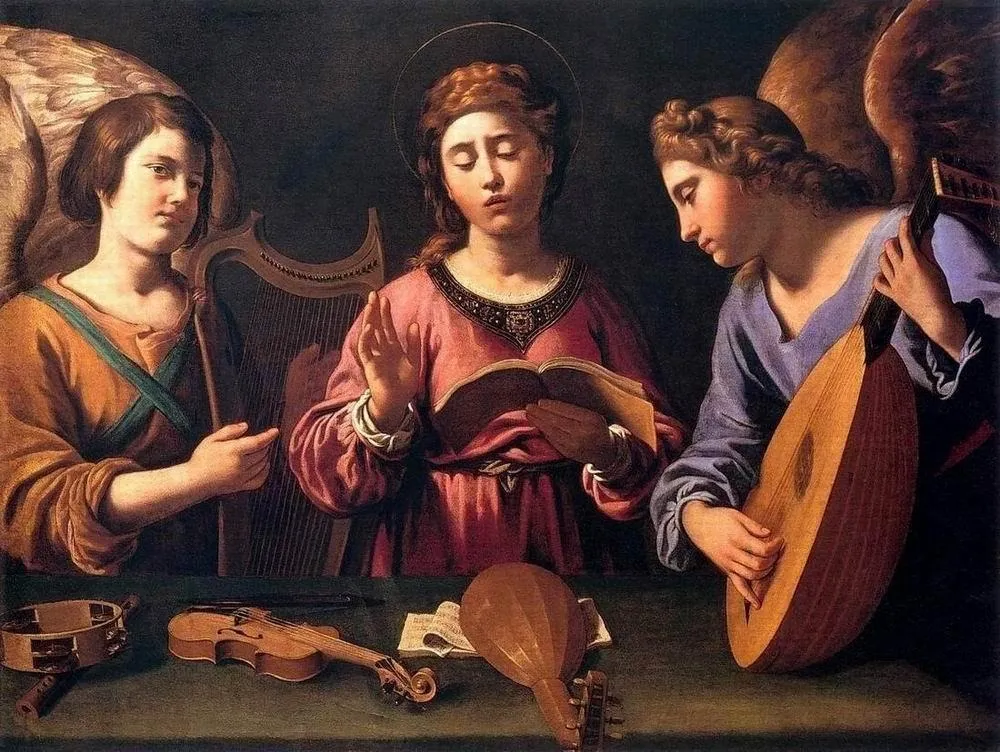
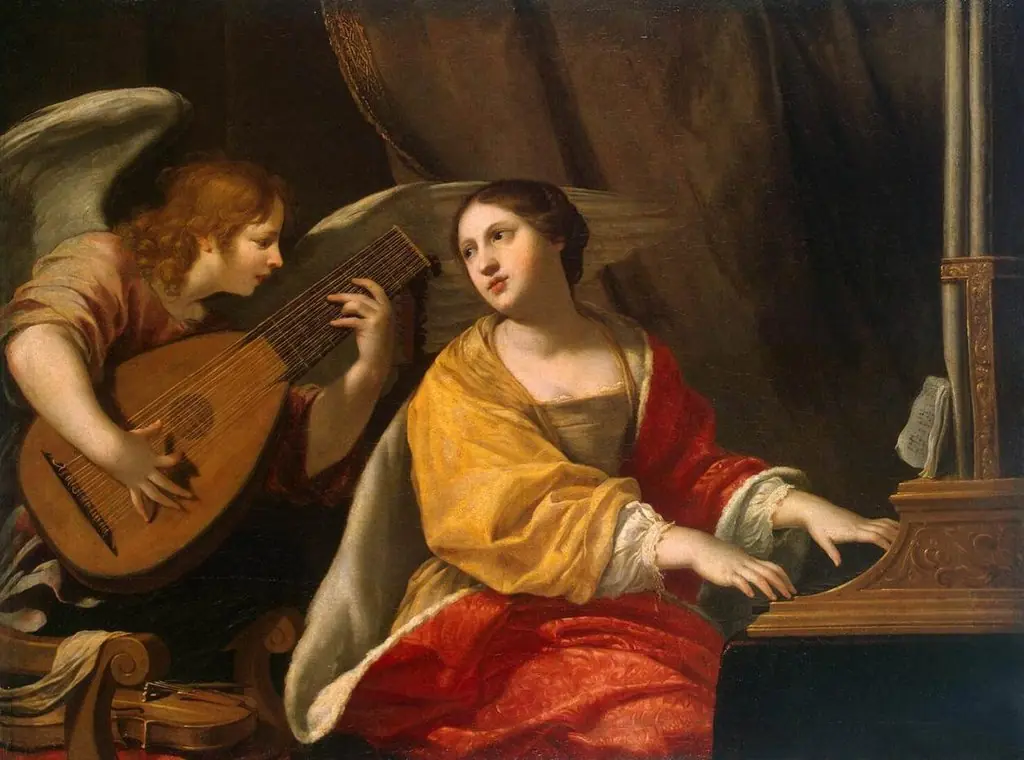
St Cecilia with Two Angels is an oil painting by the Early Baroque Italian artist Antiveduto Grammatica. It dates from 1620 and is held in the collection of the Kunsthistorisches Museum.
About this work
Overview
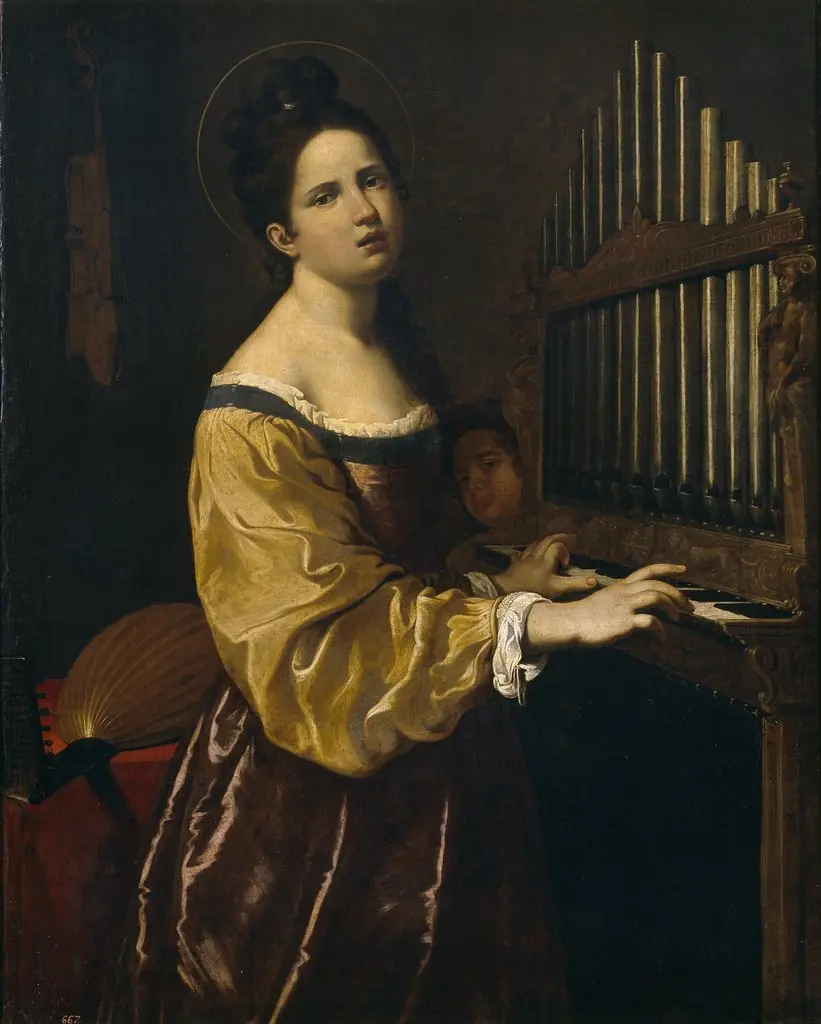
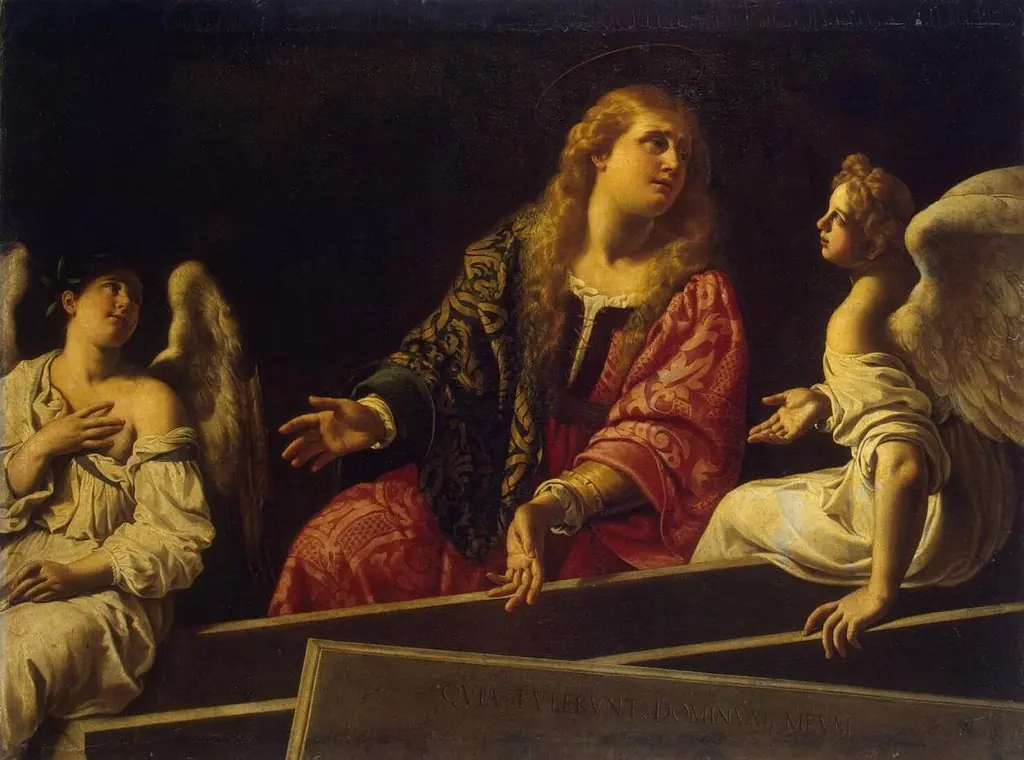
St Cecilia with Two Angels is a 1620 oil painting by Antiveduto Grammatica, a proto-Baroque artist from Rome. The work features three figures in a dimly lit setting, with Saint Cecilia centrally positioned, distinguished by a red dress and gold necklace, surrounded by angels engaged in music.
Subject & Meaning
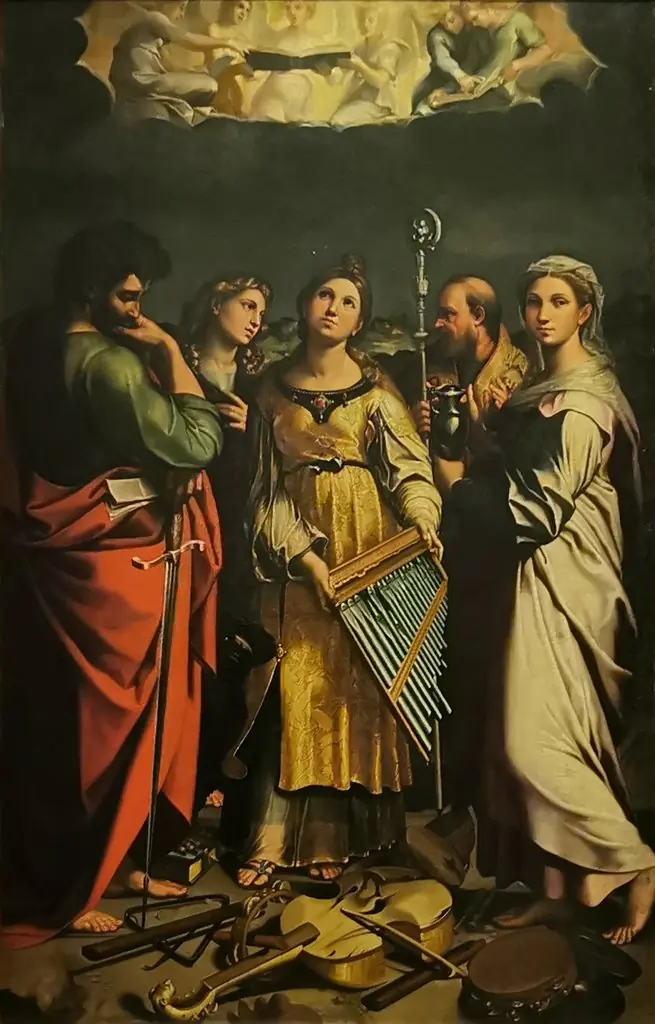
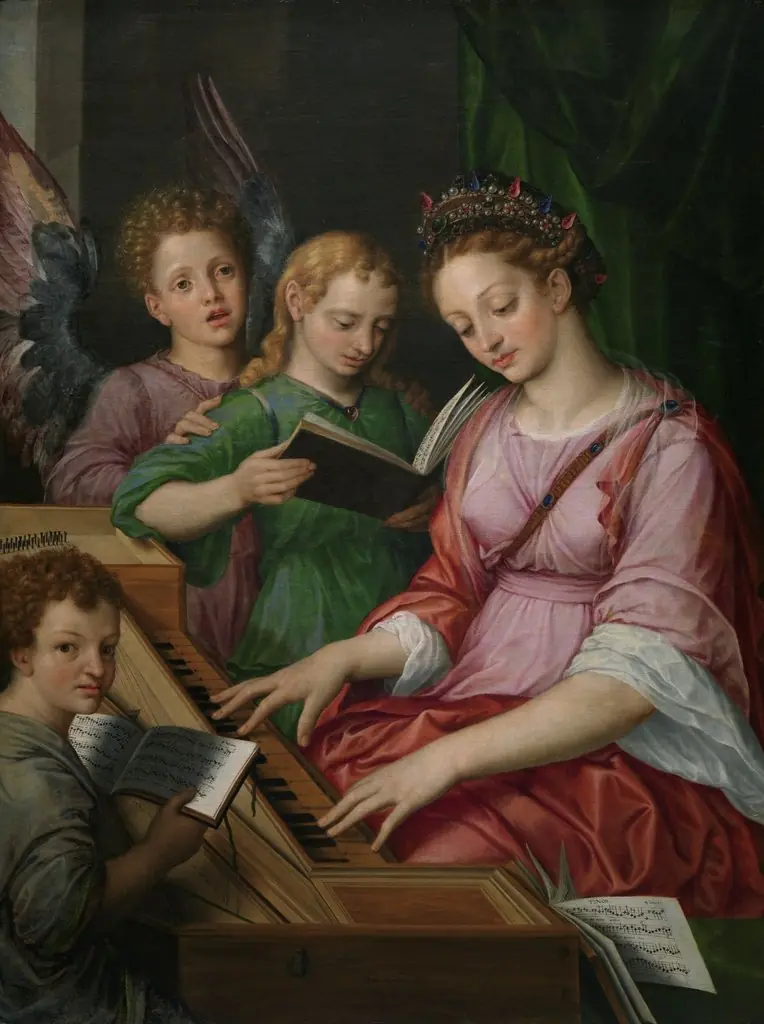
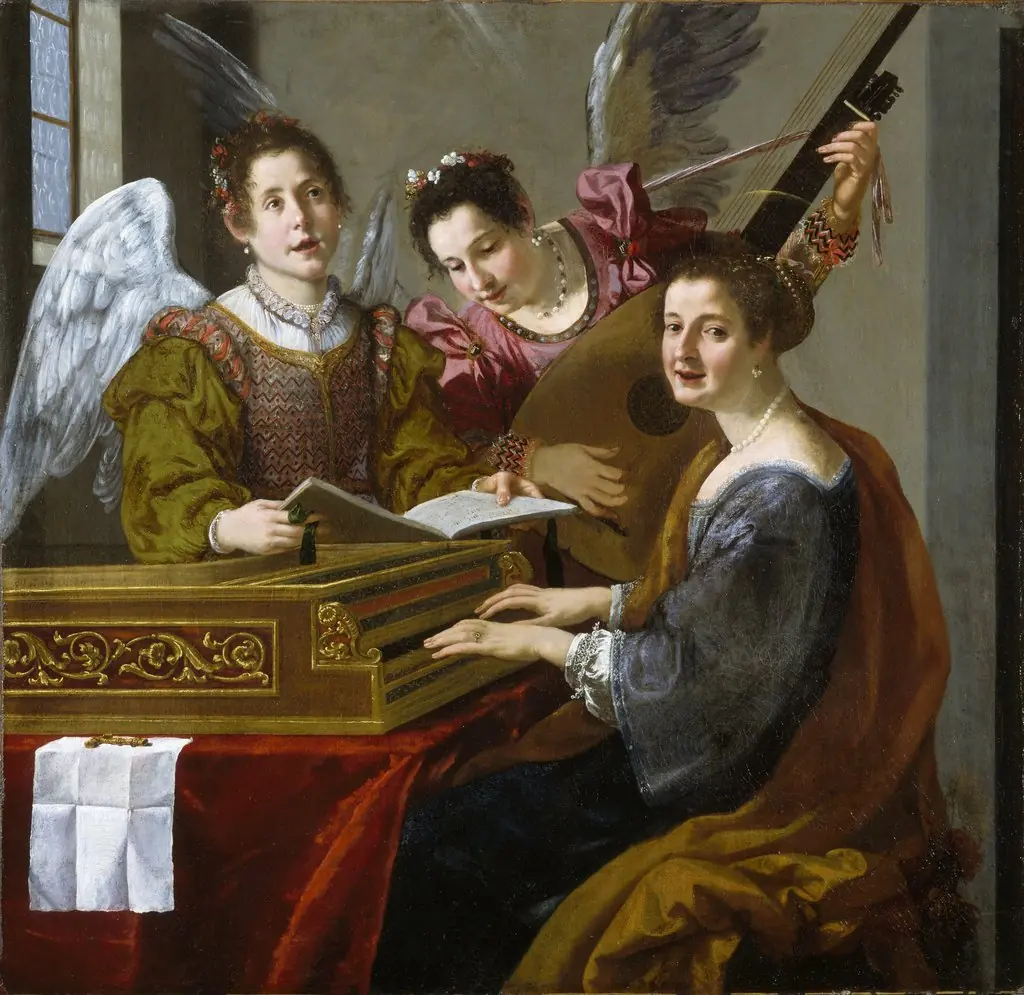
The painting depicts Saint Cecilia, the patron saint of music, accompanied by two angels. One angel plays a harp, while the other holds a lute. Musical instruments (violin, tambourine, sheet music) on the floor further emphasize Cecilia's association with music, highlighting her saintly role.
Technique & Style
Grammatica employs chiaroscuro, a strong contrast between light and dark, to create a sense of depth. The softly glowing faces of the figures against a dark background draw the viewer's attention to the subjects, exemplifying the proto-Baroque emphasis on emotional intensity through lighting.
History & Provenance
Created in 1620, the painting is now part of the collection at the Kunsthistorisches Museum. Grammatica, born in Rome in 1569, was trained by Giovanni Domenico Angelini, typically working on small copper panels, though the material of this specific work is not highlighted in available information.
Context
As a proto-Baroque piece, St Cecilia with Two Angels reflects the transitional period from the High Renaissance to the Baroque, characterized by increased dramatic lighting and emotional depth. The choice of Saint Cecilia as the subject aligns with the Catholic Church's continued promotion of saints during the Counter-Reformation.
Legacy
While specific influences of St Cecilia with Two Angels on later artists are not widely documented, the painting contributes to the broader legacy of proto-Baroque stylistic developments, particularly in its use of chiaroscuro to evoke religious devotion and emotional response.
Artist & collection
Artist
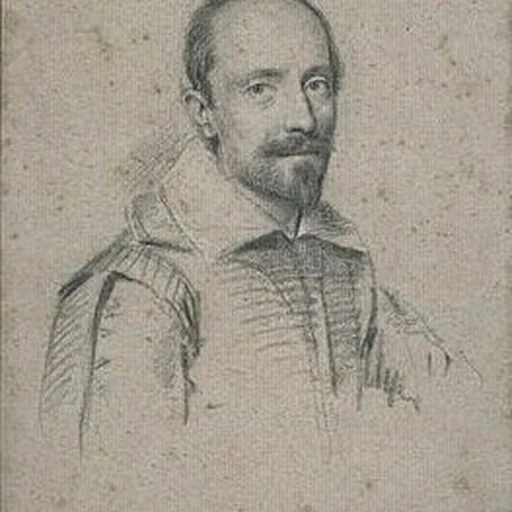
Antiveduto Grammatica (December 1569 – April 1626) was a proto-Baroque Italian painter, active near Rome.