Artwork
Mary Magdalene
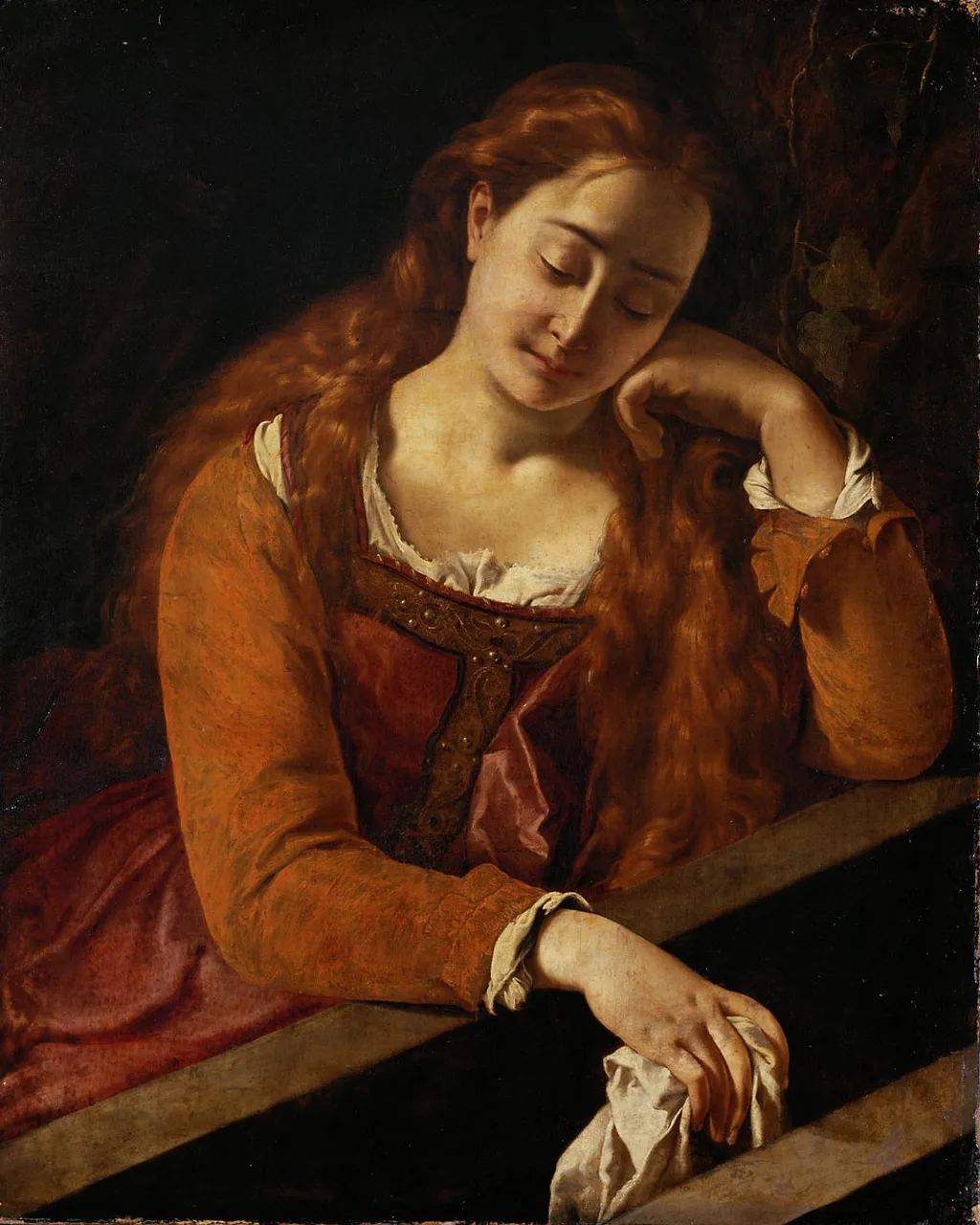
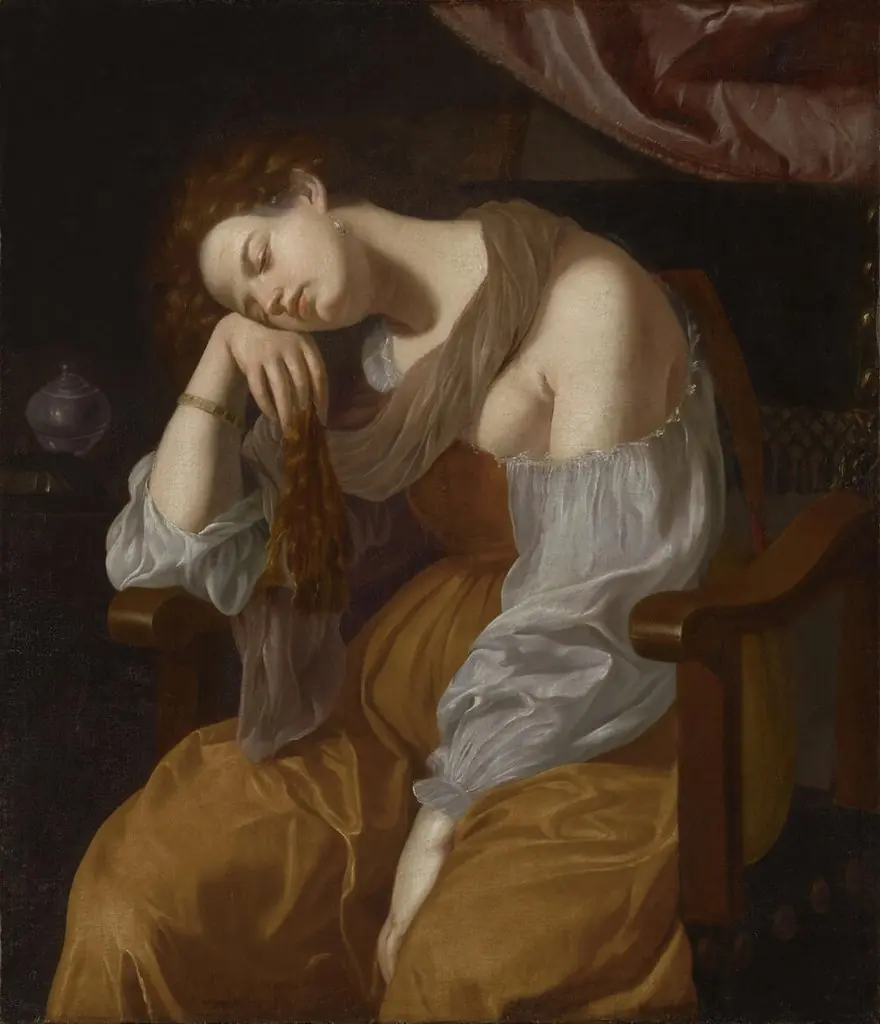
Mary Magdalene is an unspecified painting by the Early Baroque Italian artist Antiveduto Grammatica. It dates from 1615 and is held in the collection of the Kunsthistorisches Museum.
About this work
Overview
Antiveduto Grammatica’s *Mary Magdalene* (1615) is a small‑scale oil painting on copper that exemplifies the early Baroque sensibility emerging around Rome. The work portrays the biblical figure in a moment of quiet contemplation, rendered with a restrained palette and focused lighting that foregrounds her serene expression.
Subject & Meaning
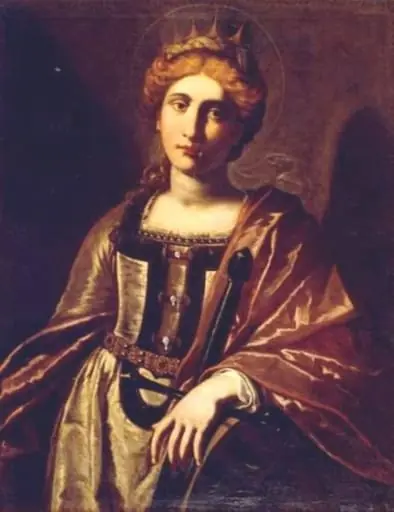
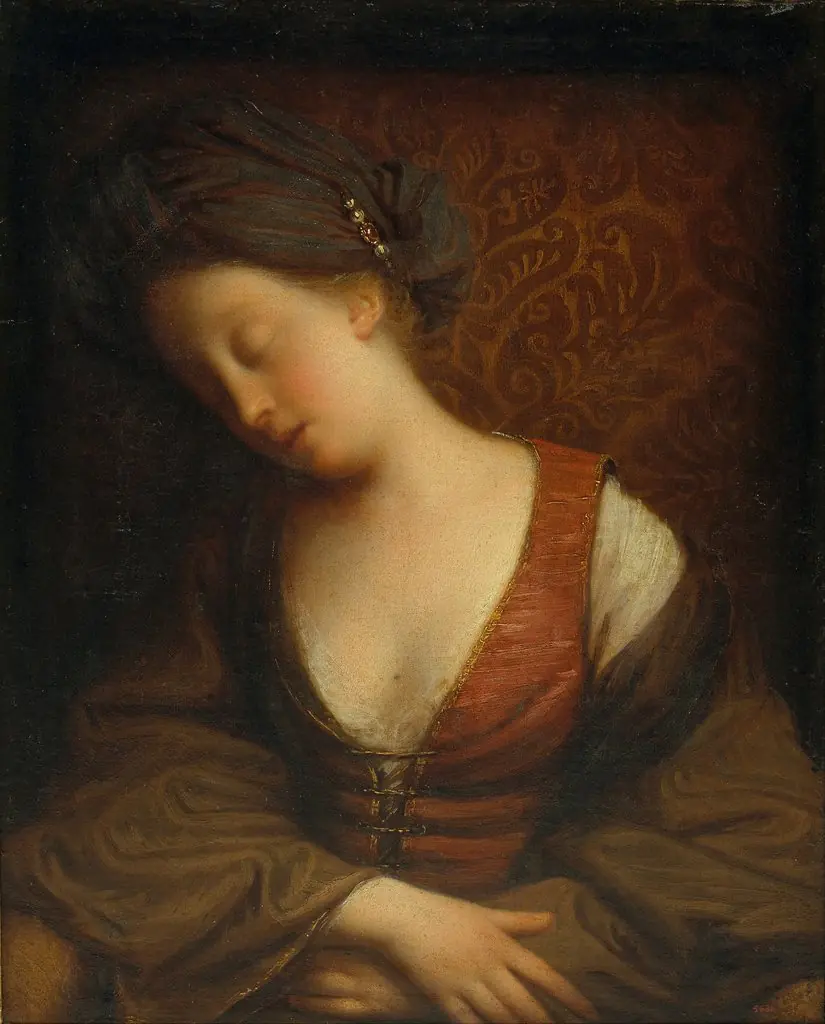
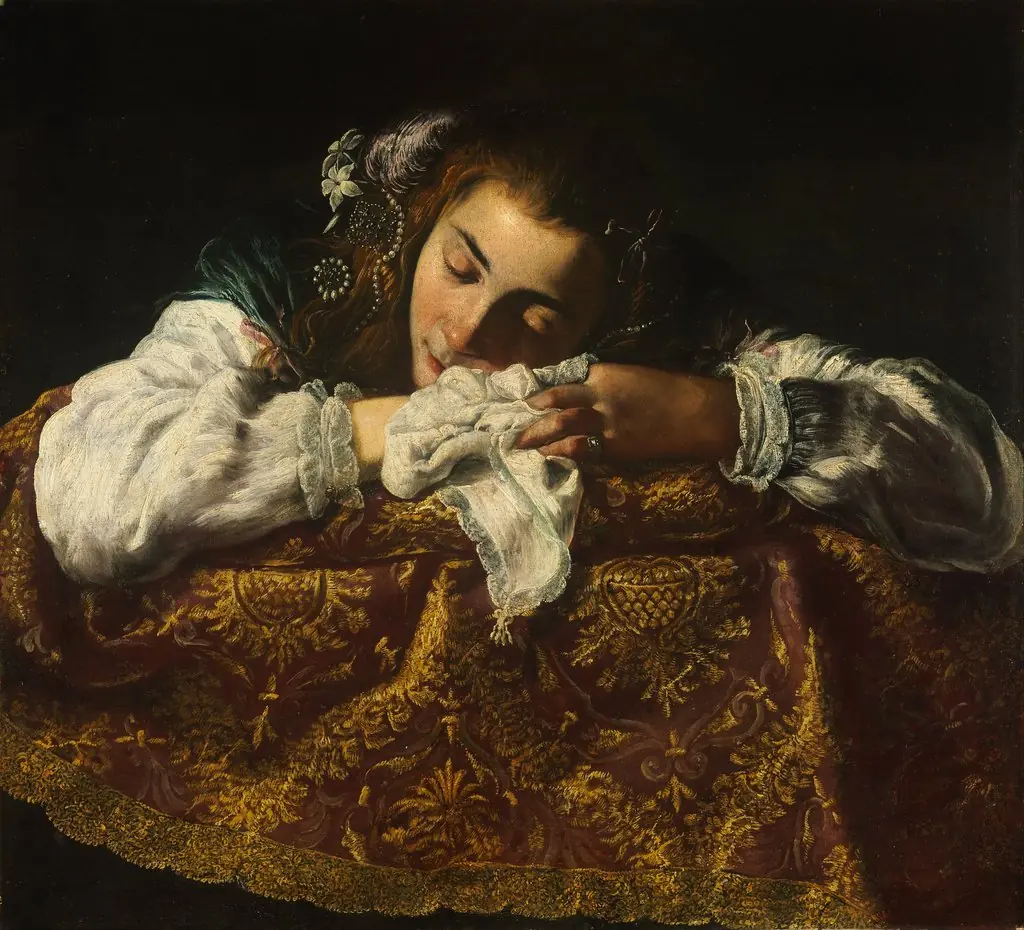
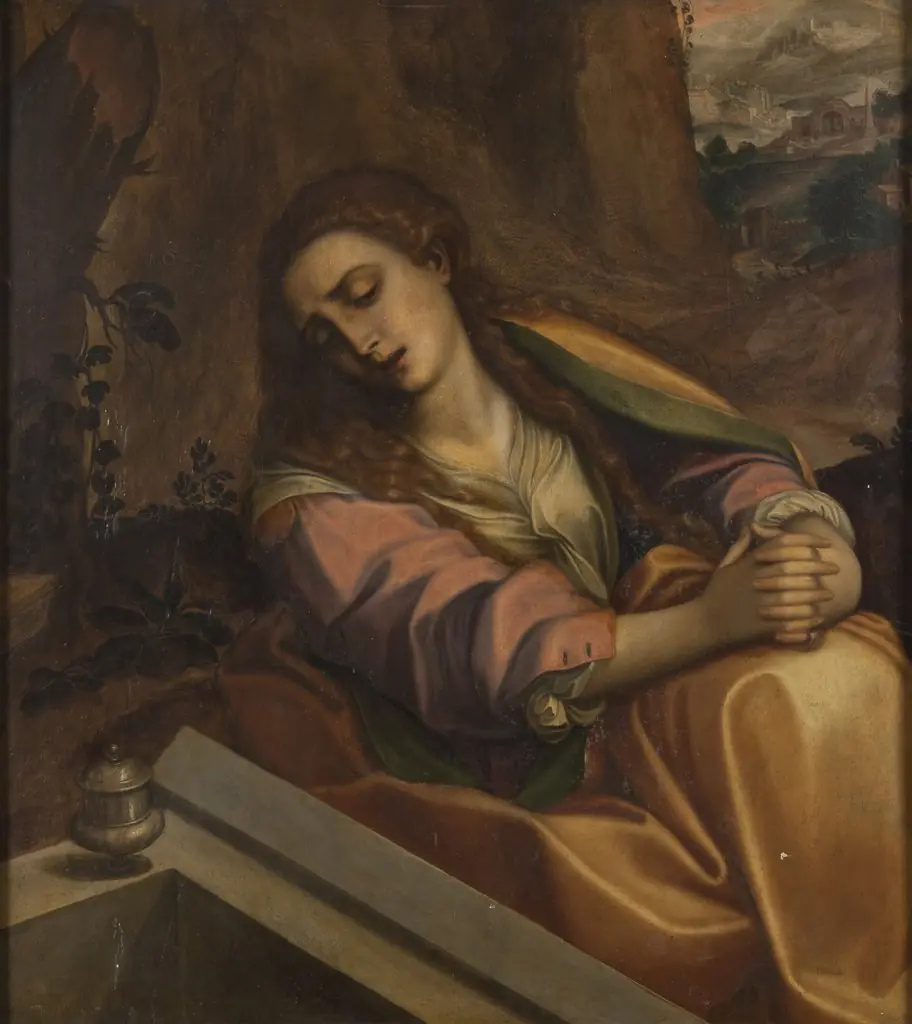
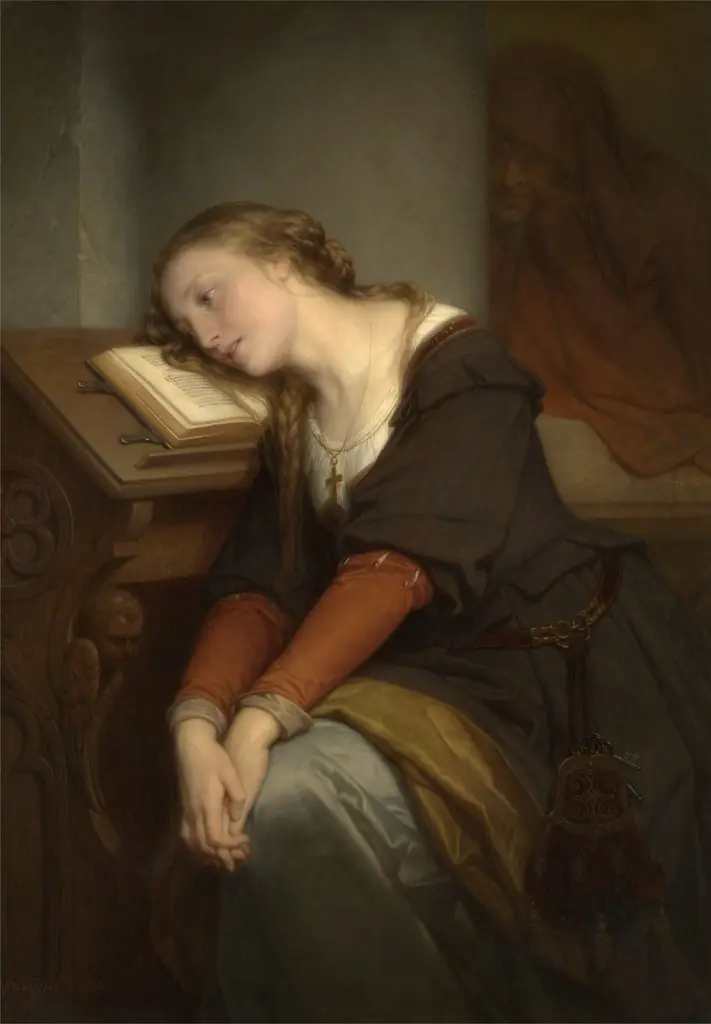
The composition presents Mary Magdalene with long, curled red hair, a modest red dress trimmed with a white collar, and a brown vest. She rests her head on her right hand, eyes closed, while her left hand gently holds a white cloth, suggesting penitence and inner devotion typical of her iconography.
Technique & Style
Grammatica employs chiaroscuro to model the figure, using a dark, subtly graded background that enhances the sense of volume. The smooth transitions of tone on the copper surface create a delicate sfumato effect, giving the skin and fabric a tactile quality and directing attention to the face and hands.
History & Provenance
Born in Rome in 1569, Grammatica trained under Giovanni Domenico Angelini and specialized in intimate works on copper. *Mary Magdalene* entered the collection of the Kunsthistorisches Museum in Vienna, where it remains part of the museum’s holdings of early Baroque religious paintings.
Context
Created during the proto‑Baroque period, the painting reflects a shift toward heightened emotional expression and dramatic lighting that would come to define the Baroque era. Grammatica’s focus on small, finely detailed works aligns with the period’s demand for devotional images suitable for private contemplation.
Artist & collection

Artist
Antiveduto Grammatica (December 1569 – April 1626) was a proto-Baroque Italian painter, active near Rome.