Artwork
Mary Magdalene at the Tomb of the Risen Christ
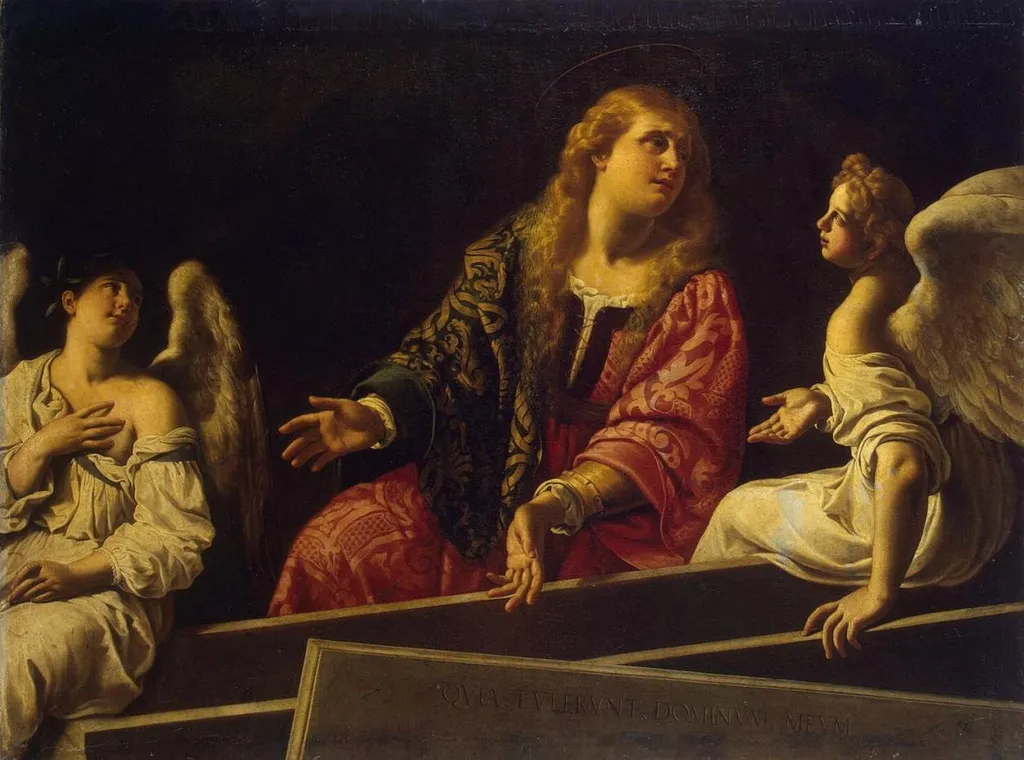
Mary Magdalene at the Tomb of the Risen Christ is an oil painting by the Early Baroque Italian artist Antiveduto Grammatica. It dates from 1620 and is held in the collection of the Hermitage Museum.
About this work
Overview
Mary Magdalene at the Tomb of the Risen Christ is a 1620 painting by Antiveduto Grammatica, an Italian artist associated with the early Baroque style. The work is executed on canvas and is now part of the State Hermitage Museum's collection.
Subject & Meaning
The painting depicts Mary Magdalene and two angels at Christ's tomb. Mary Magdalene, dressed in a red robe with gold patterns and a fur-lined cloak, gestures towards something outside the frame, suggesting a reaction to an unseen event or revelation.
Technique & Style
The artist employs chiaroscuro, a technique using strong contrasts between light and dark, to emphasize the figures. The dimly lit background makes the faces and hands of the figures stand out, creating a sense of drama and focus.
History & Provenance
Antiveduto Grammatica, born in Rome in 1569, trained under Giovanni Domenico Angelini and typically worked on small-scale compositions. Mary Magdalene at the Tomb of the Risen Christ is characteristic of his work, showcasing his skill in the early Baroque style.
Artist & collection

Artist
Antiveduto Grammatica (December 1569 – April 1626) was a proto-Baroque Italian painter, active near Rome.

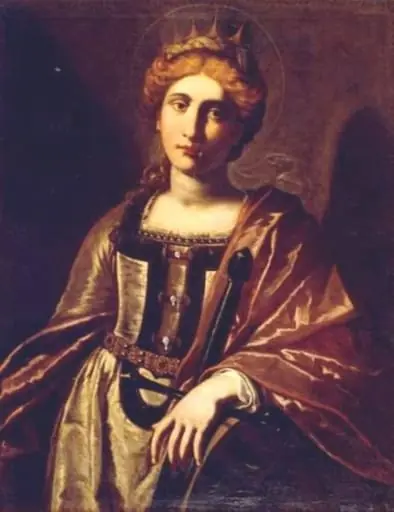
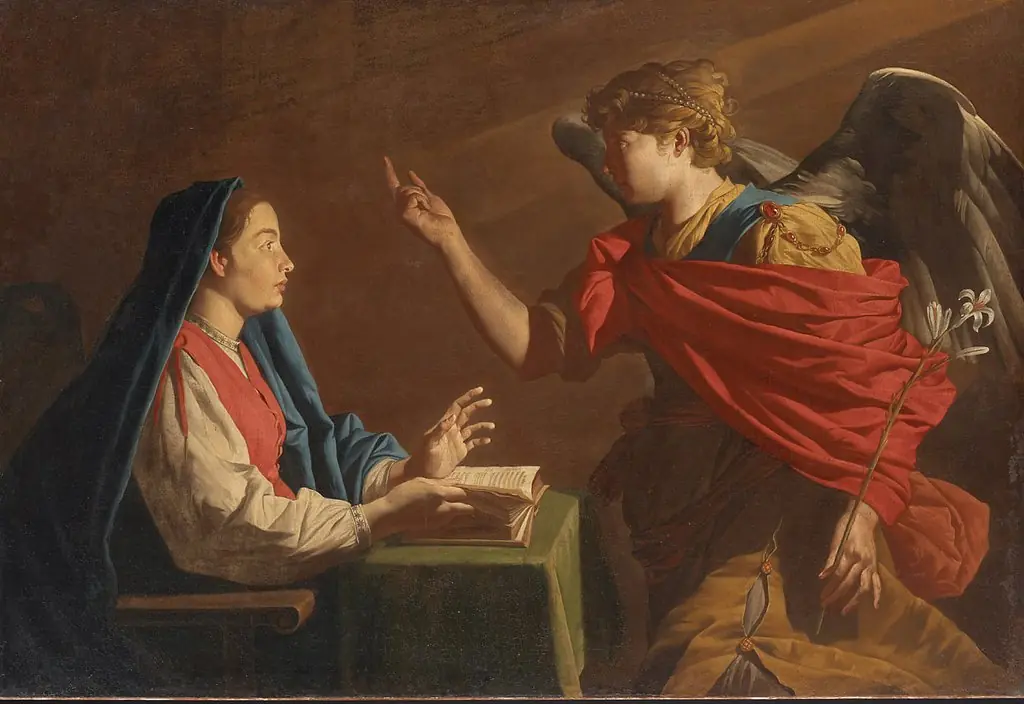 The Annunciation
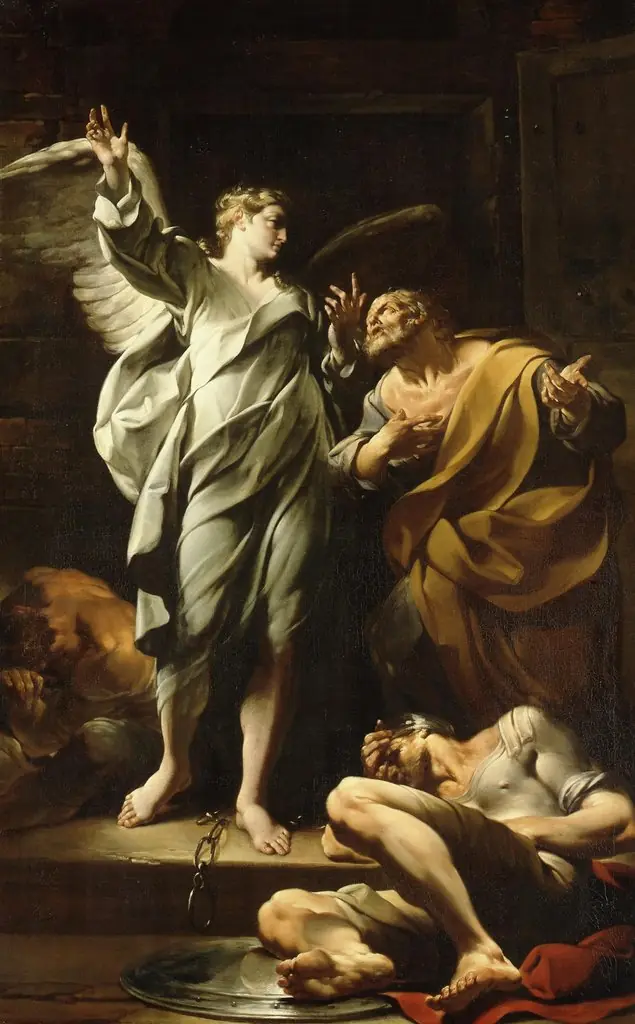 The liberation of saint Peter
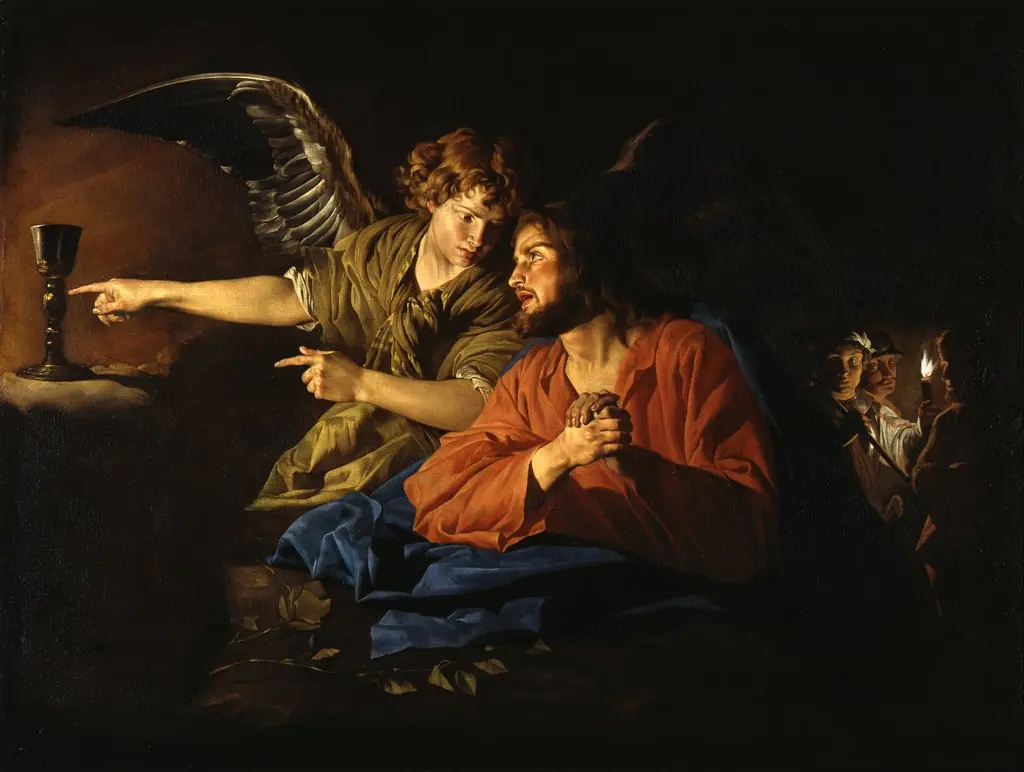 Christ in the garden of olives at Gethsemane
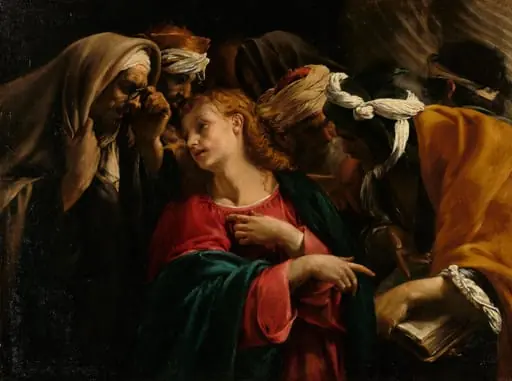 Christ among the Doctors
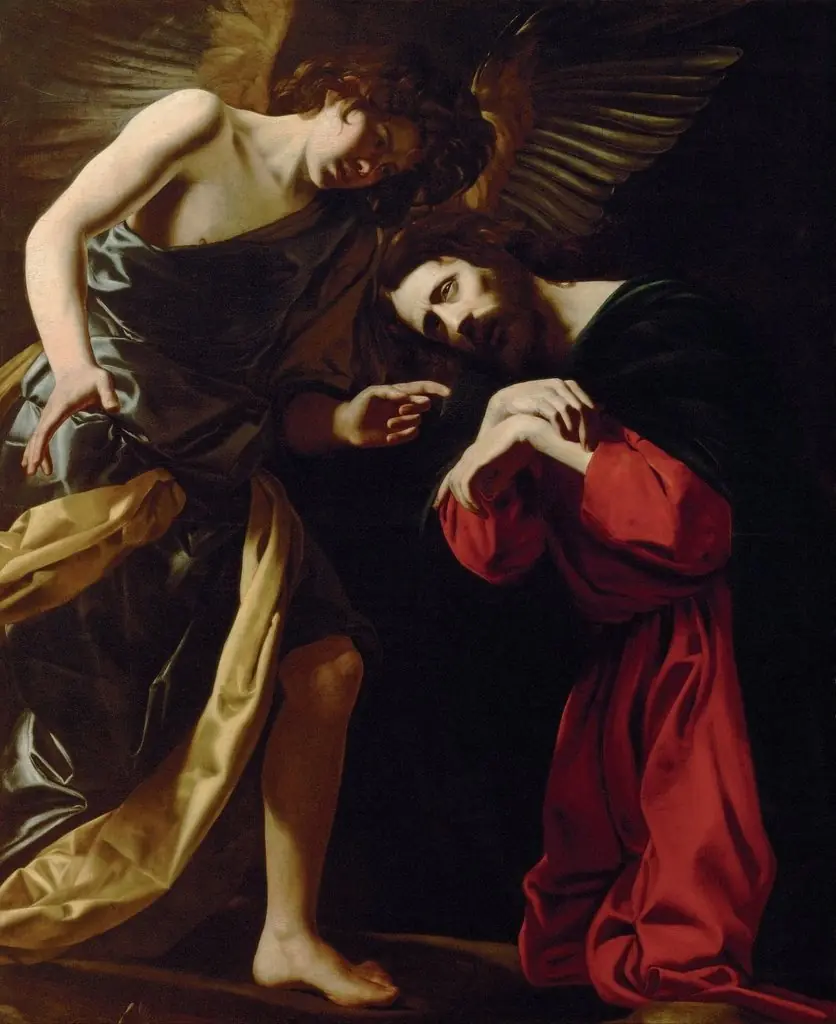 Christ on the Mount of Olives (Christ’s Fear of Death)
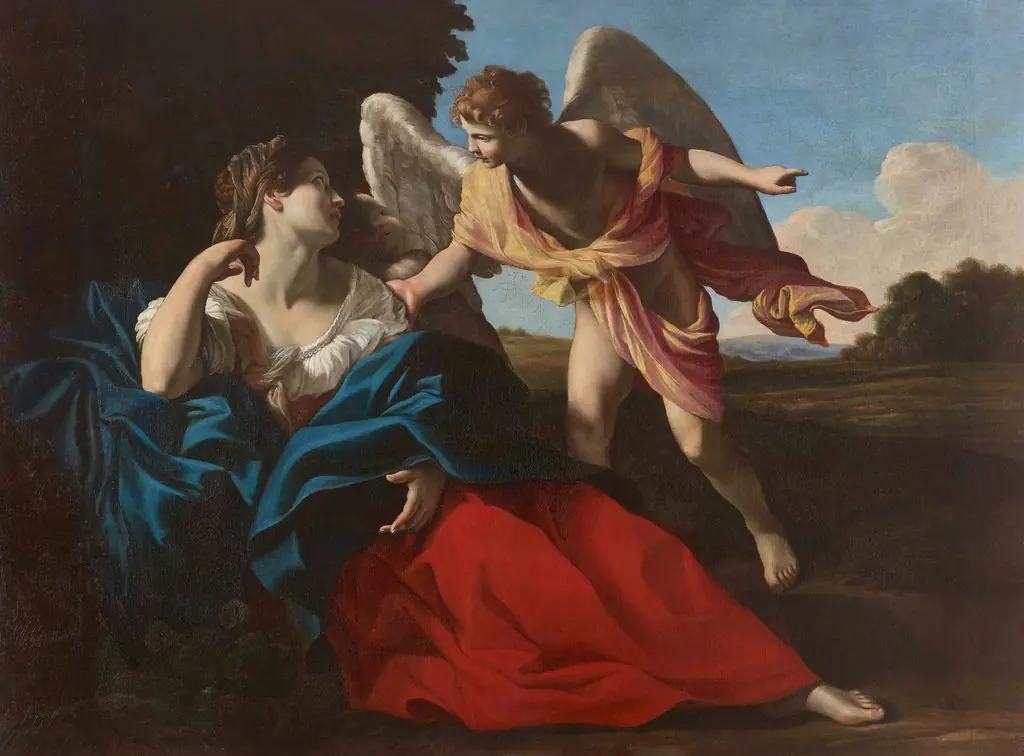 Hagar and the angel in the desert
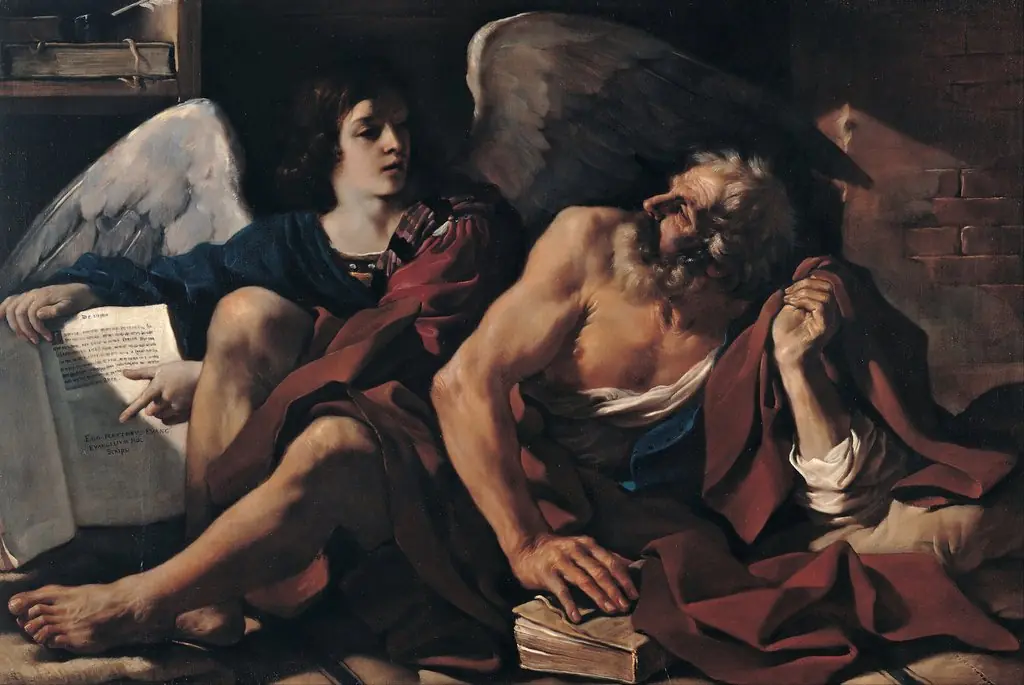 Saint Matthew and the Angel
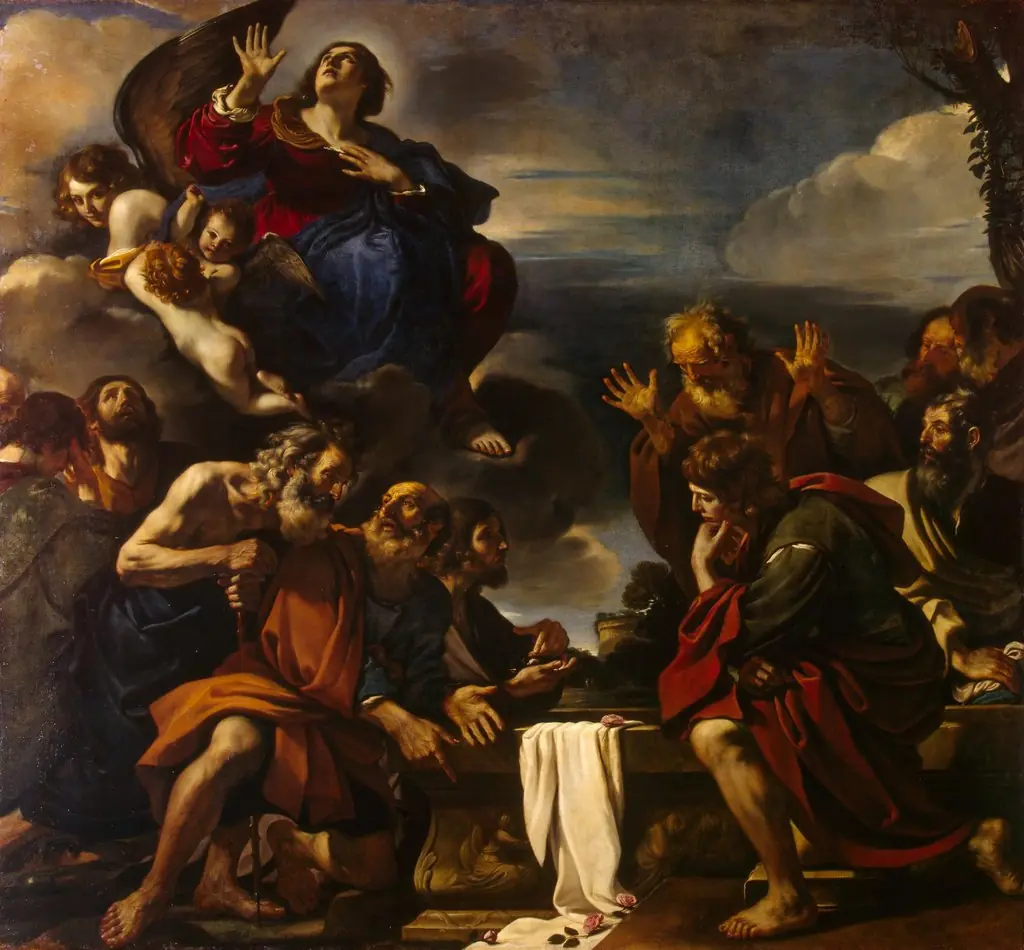 Assumption of the Virgin Mary
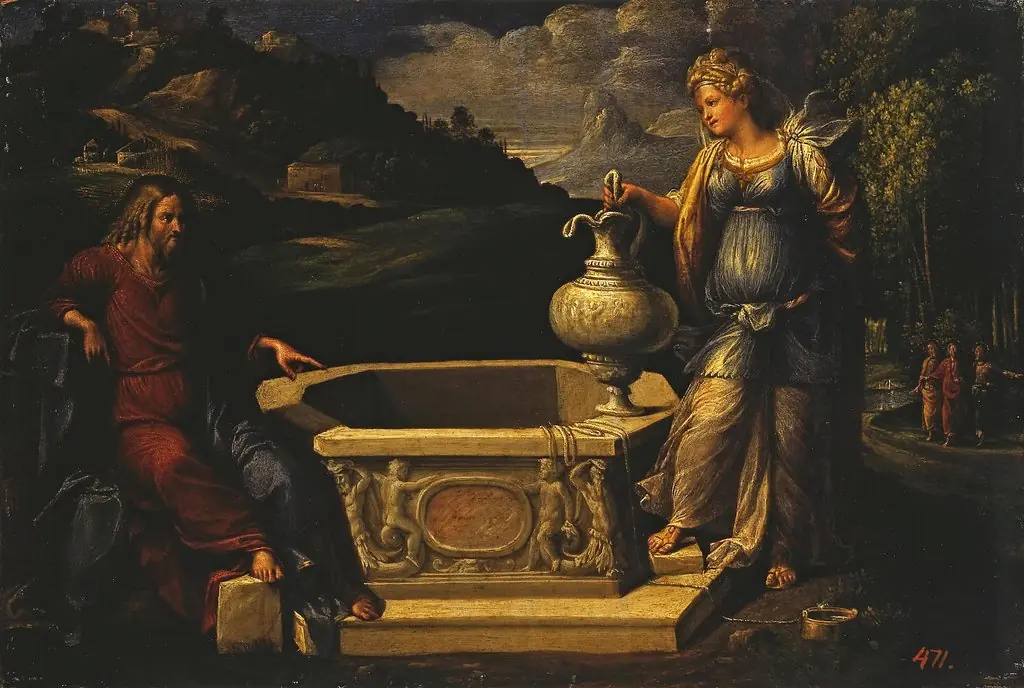 Christ and the Samaritan Woman
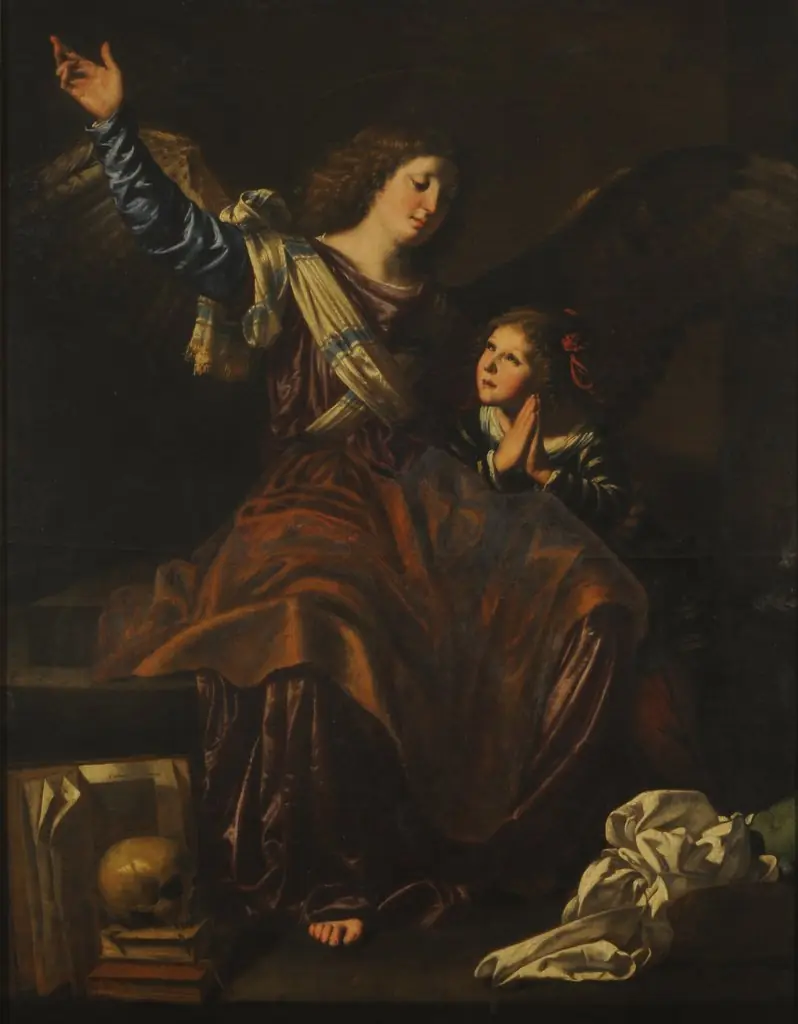 Angel guardian