Artwork
The Public Writer
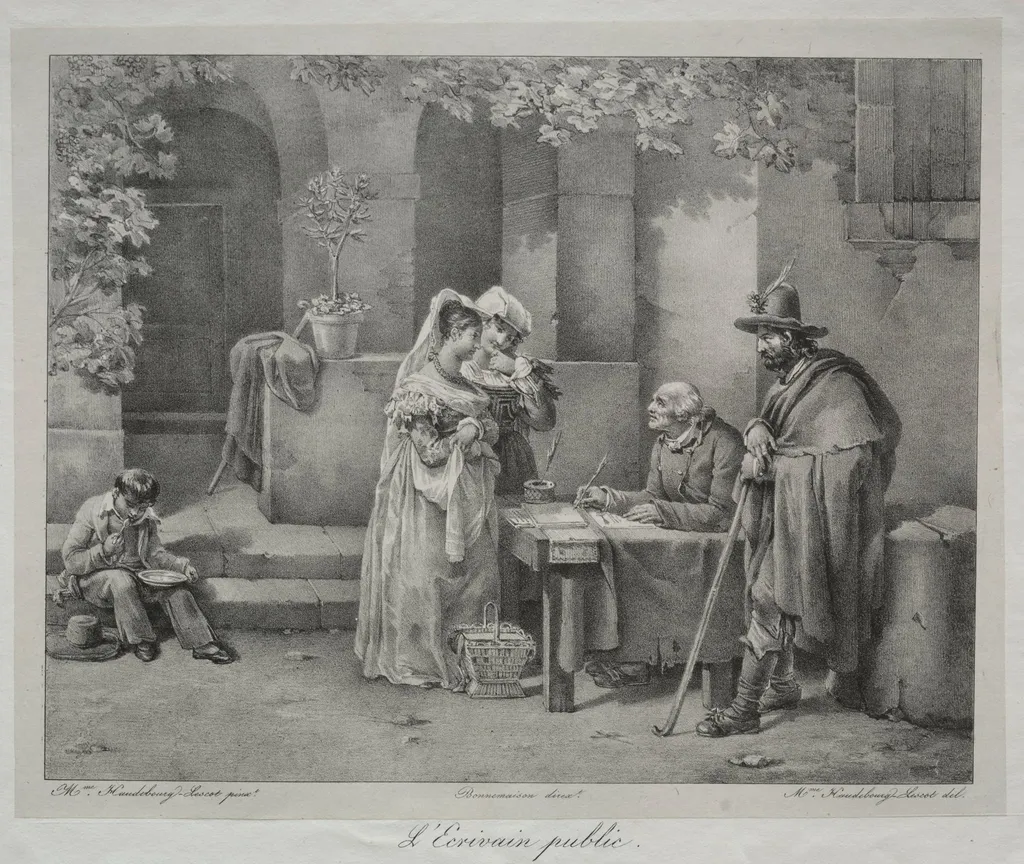
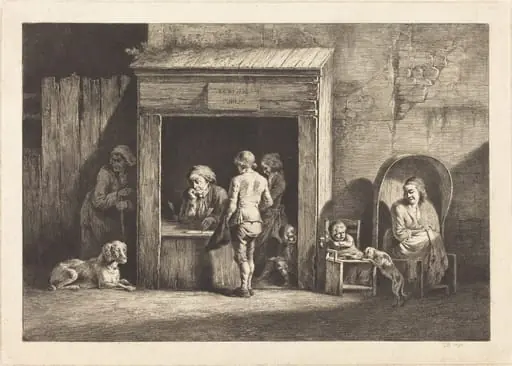
The Public Writer is a print by the Romanticist artist Hortense Haudebourt-Lescot. It dates from 1825 and is held in the collection of the Cleveland Museum of Art.
About this work
Overview
Created in 1825 by French artist Antoine Cécile Hortense Haudebourt-Lescot, *The Public Writer* is a genre print depicting a solitary figure engaged in writing.
Created in 1825 by French artist Antoine Cécile Hortense Haudebourt-Lescot, *The Public Writer* is a genre print depicting a solitary figure engaged in writing. The work belongs to the collection of The Cleveland Museum of Art and reflects the artist’s interest in everyday human activity. Rendered with restrained tones and careful detail, it captures a moment of focused labor rather than grand narrative.
Subject & Meaning
The subject is a man in early 19th-century dress, seated at a desk, writing with a quill amid scattered papers and books. His posture and expression convey deep concentration, suggesting the quiet dignity of intellectual labor. The scene avoids theatricality, instead emphasizing the routine yet meaningful act of writing—possibly as a clerk, scribe, or minor official—highlighting the dignity of ordinary work in post-revolutionary France.
Technique & Style
Haudebourt-Lescot employs muted, neutral tones to isolate the figure and his workspace, minimizing background distraction. The composition centers the man through careful lighting and spatial framing, with soft modeling of form suggesting volume without dramatic contrast. The rendering of fabric, paper, and inkwell is precise but unembellished, aligning with the genre tradition of observing daily life with quiet realism.
History & Provenance
The print was produced in 1825 during a period when French artists increasingly turned to domestic and civic scenes over mythological or aristocratic subjects. It entered the collection of The Cleveland Museum of Art at an unspecified date, likely through acquisition or donation in the 20th century. No record of earlier ownership or exhibition history is widely documented.
Context
In the 1820s, France saw a rise in depictions of middle-class labor and public service, influenced by post-revolutionary values. Writers, clerks, and librarians became subjects of artistic interest, symbolizing civic order and intellectual pursuit. Haudebourt-Lescot’s work fits within this trend, offering a non-idealized view of professional life that resonated with contemporary audiences seeking representation of their own roles.
Legacy
Though not widely reproduced or studied today, *The Public Writer* remains a representative example of early 19th-century French genre printmaking. It contributes to the broader understanding of how artists documented the quiet routines of urban life. Its preservation in a major public collection ensures continued access for scholars and viewers interested in the social history of art.
Artist & collection
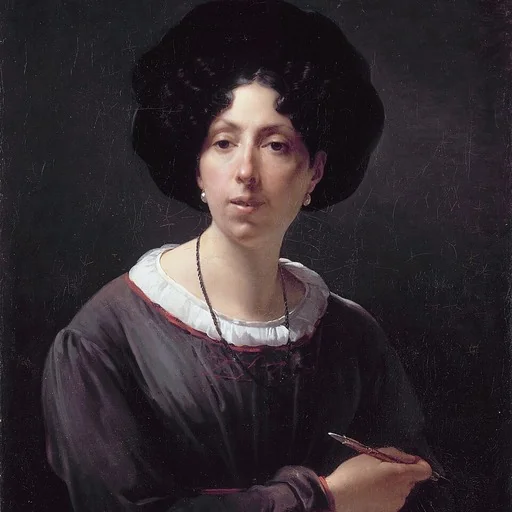
Artist
Hortense Haudebourt-Lescot, born Antoinette Cécile Hortense Viel (14 December 1784 – 2 January 1845), was a French painter, mainly of genre and historical scenes.

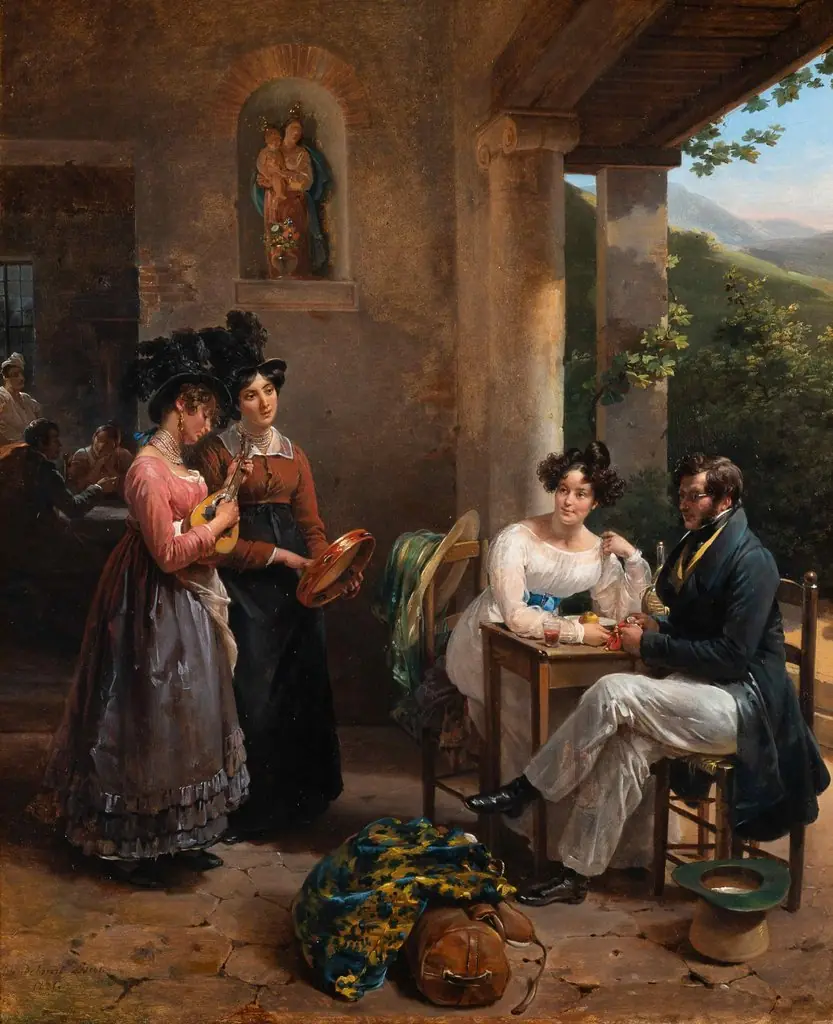
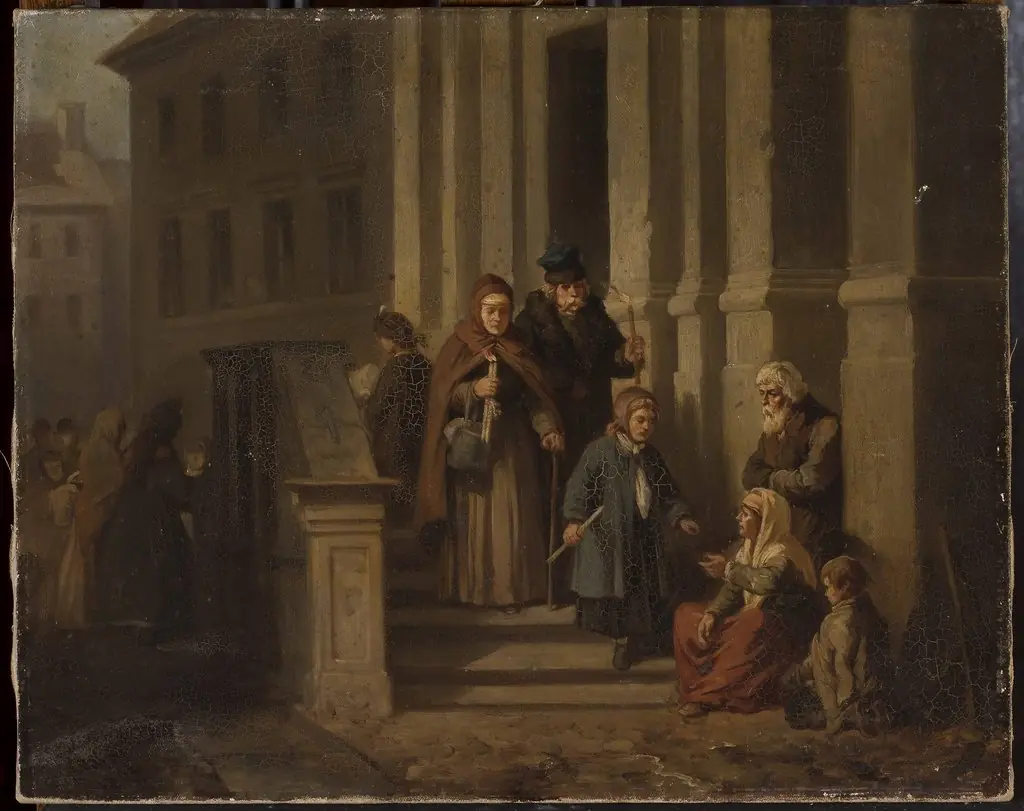 In front of the church
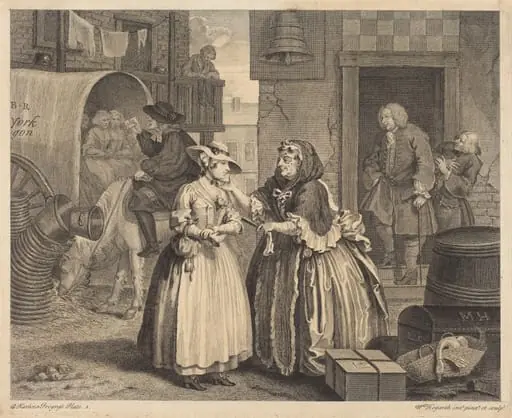 A Harlot's Progress: pl.1
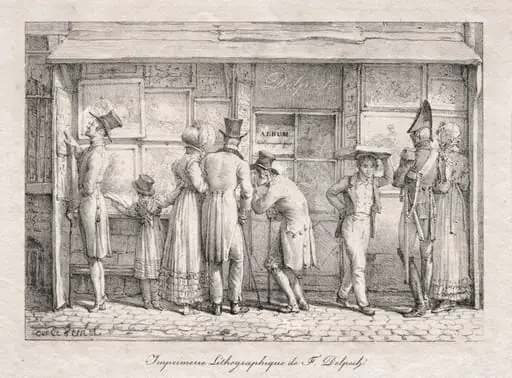 Delpech Lithographic Print Shop
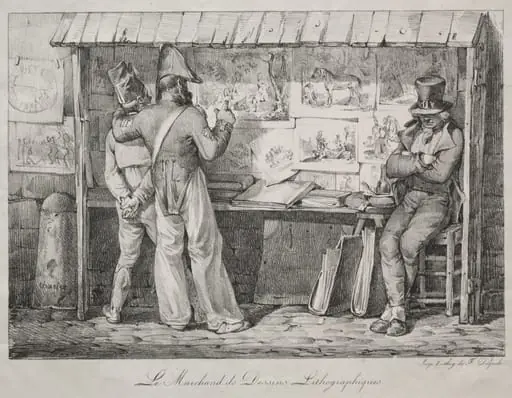 The Lithograph Dealer
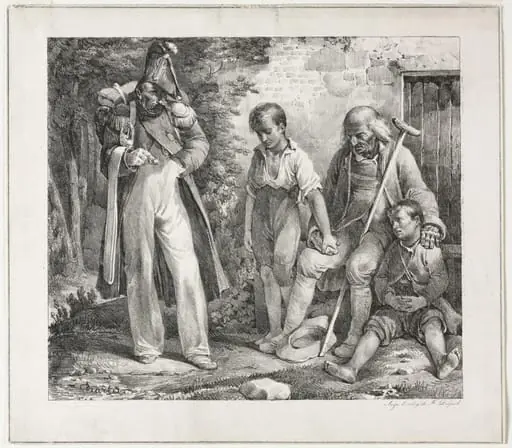 Begging for Alms
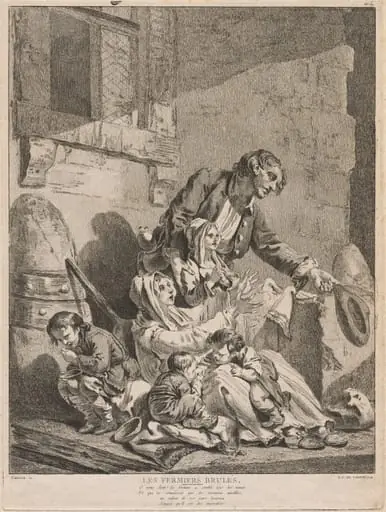 Les Fermiers brulés (A Burnt-Out Farmer, Begging with his Family)
![[Merchant in his stall with children playing], by Auguste Brouet](https://artifactworldgallery.com/img/auguste-brouet--merchant-in-his-stall-with-children-playing--87482c59251c2c9c-w320.webp) [Merchant in his stall with children playing]
[Merchant in his stall with children playing]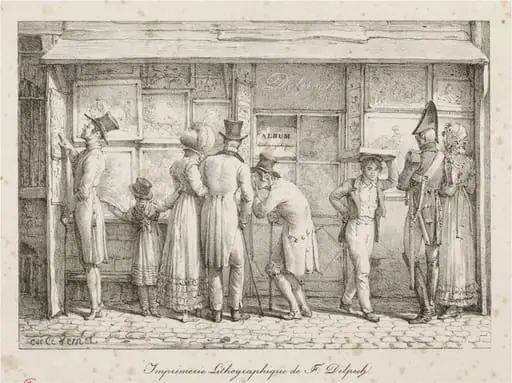 Imprimerie lithographique de F. Delpech (Lithographic Printing House of F. Delpech)
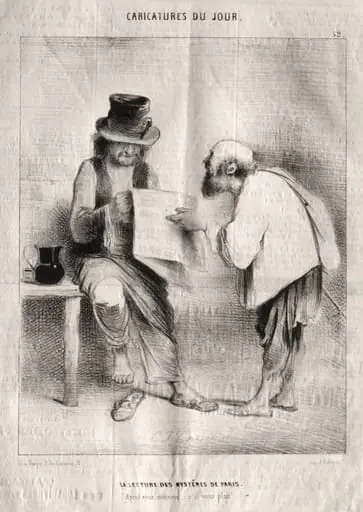 Caricatures du jour: La Lecture des mystères de Paris
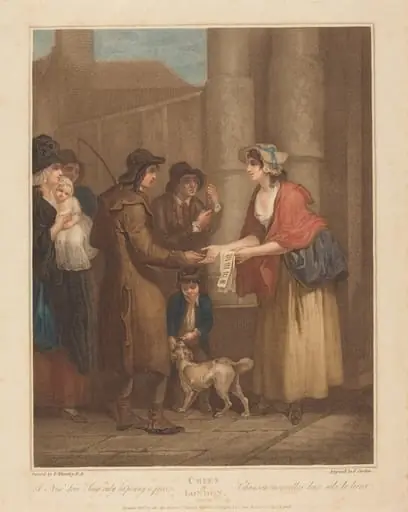 A New Love Song Only a Ha'Penny a Piece
 La retraite de Flore
 The Public Scribe