Artwork
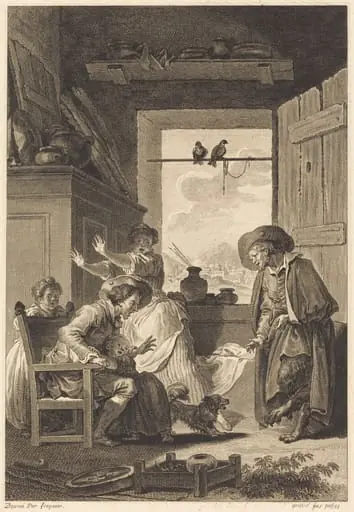
Les Fermiers brulés (A Burnt-Out Farmer, Begging with his Family)
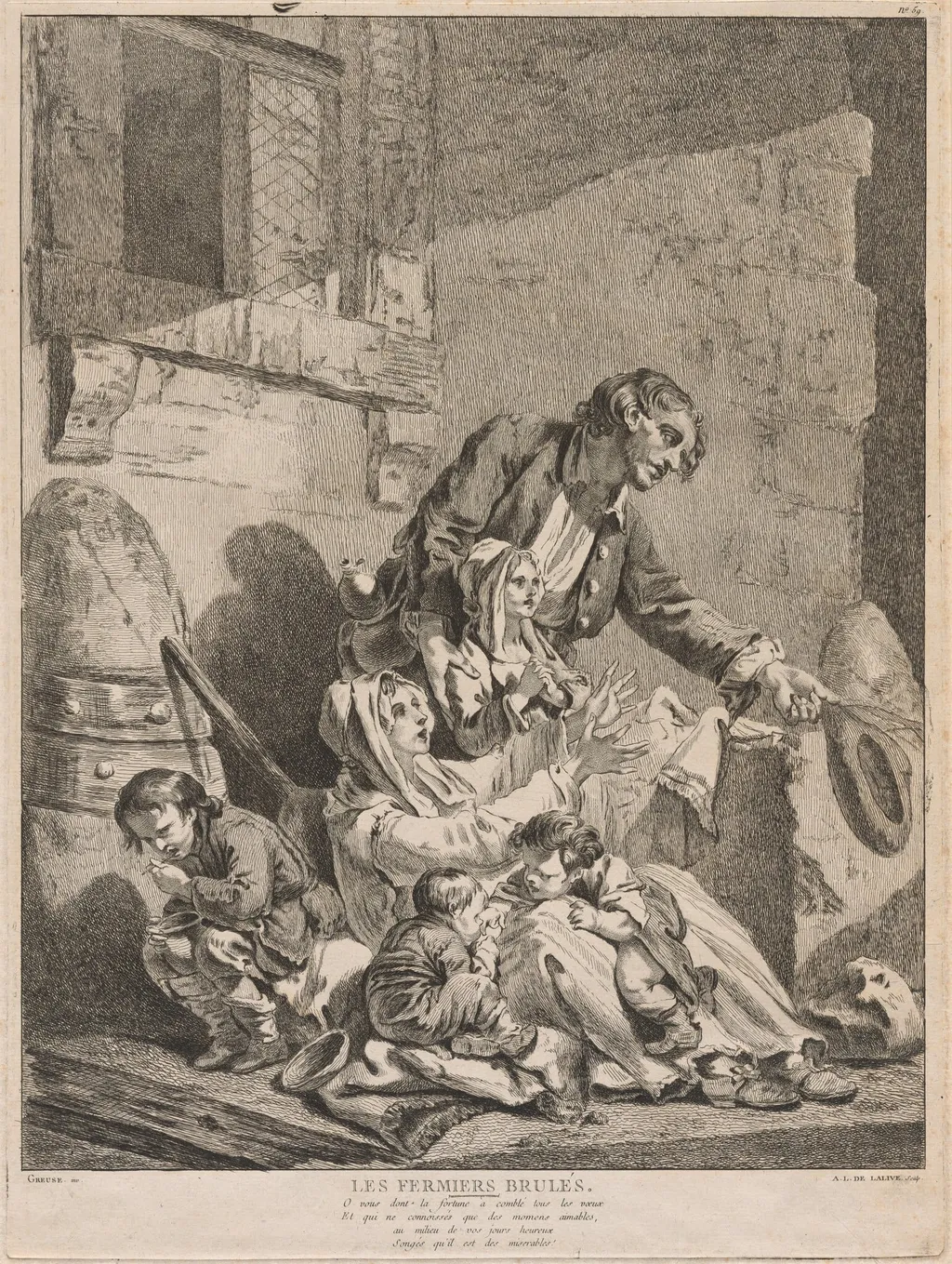
Les Fermiers brulés (A Burnt-Out Farmer, Begging with his Family) is an ink print by the Romanticist artist Ange-Laurent de Lalive de Jully. It dates from 1764 and is held in the collection of the National Gallery of Art. Created in 1764, this etching on laid paper portrays a destitute family in a moment of acute need.
About this work
Overview
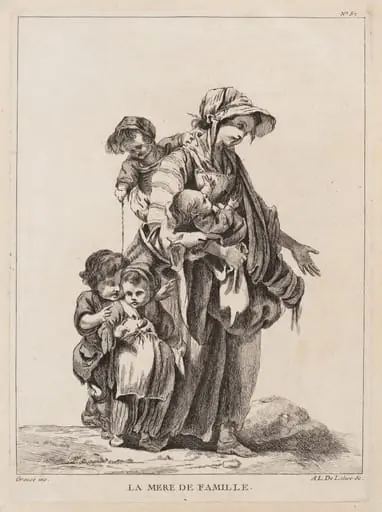
Created in 1764, this etching on laid paper portrays a destitute family in a moment of acute need. The central male figure, clad in ragged garments, extends an open hand while his partner sits nearby, head lowered. Their children surround them, some appearing to weep, conveying a stark tableau of poverty and pleading.
Subject & Meaning
The composition captures a scene of familial desperation, suggesting the hardships of agrarian life. The man's gesture and the woman's bowed posture emphasize a collective appeal for assistance, while the children's scattered presence reinforces the vulnerability of the household. The work invites reflection on social inequities and the human cost of economic hardship.
Technique & Style
Executed as an etching, the artist employed incised lines on laid paper to render delicate textures and atmospheric depth. The contrast between dark foreground figures and the lighter background architecture highlights the emotional focus on the family. The handling of line and shading reflects the mid‑18th‑century French printmaking tradition, balancing detail with expressive simplicity.
History & Provenance
The print was produced by Ange‑Laurent de Lalive de Jully, a French engraver active in the mid‑1700s. It entered the collection of the National Gallery of Art in Washington, where it remains part of the institution’s holdings of European prints, representing the social genre scenes that circulated in the period.
Artist & collection