Artwork
La retraite de Flore
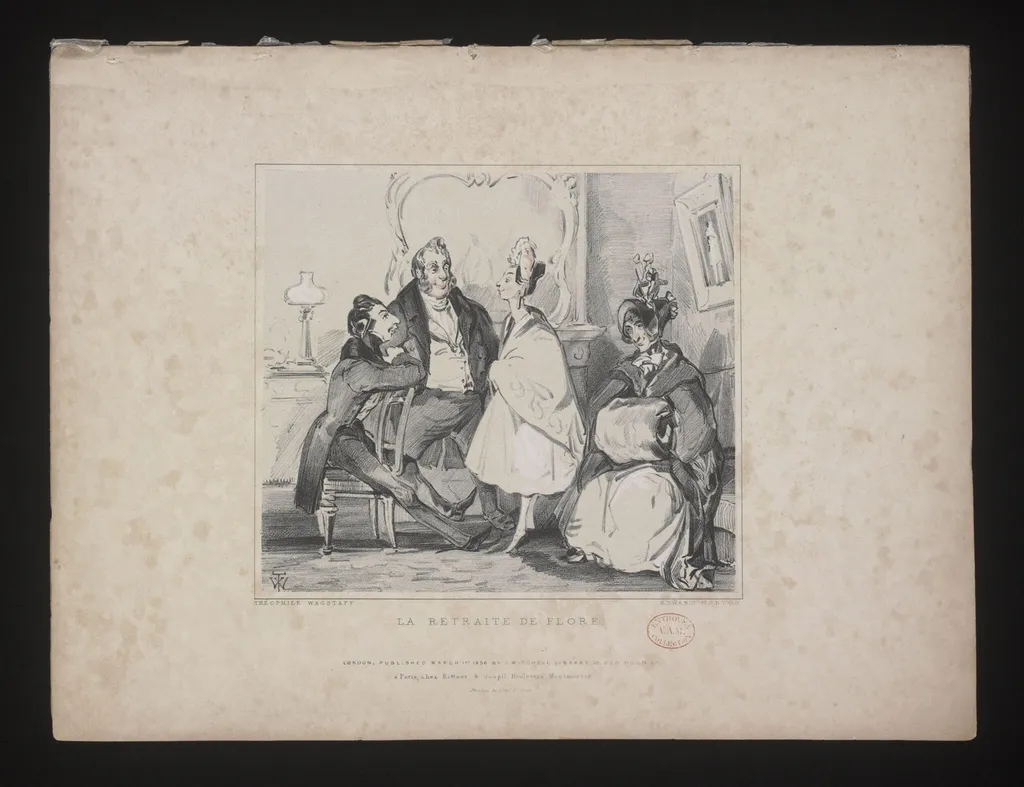
La retraite de Flore is a print by the Romanticist artist Edward Morton. It dates from 2 and is held in the collection of the Victoria and Albert Museum.
About this work
This is a print from 1836 called *La retraite de Flore*. It’s by Edward Morton, who worked in Romanticism. The print is hand-colored and was published in London.
It mocks a famous ballet by Charles-Louis Didelot. The original sketch was even signed by William Makepeare Thackeray under a fake name.
Want to see more like this? Look up the artist: Morton, Edward.
Overview
La retraite de Flore is a hand-coloured print produced in London on 1 March 1836, engraved by Edward Morton.
La retraite de Flore is a hand-coloured print produced in London on 1 March 1836, engraved by Edward Morton. It forms part of a series of eight satirical images derived from a sketch signed T.W., the pseudonym of William Makepeace Thackeray. The work was published as a humorous response to the popular ballet Flore et Zéphire, blending visual wit with literary irony in the tradition of English caricature.
Subject & Meaning
The print parodies the ballet Flore et Zéphire by Charles-Louis Didelot, which celebrated mythological pastoral themes. Thackeray’s version subverts its elegance, depicting the goddess Flora in a comically diminished retreat, mocking the ballet’s sentimentality and theatrical excess. The imagery reflects contemporary British skepticism toward French romantic ballet, using visual exaggeration to critique its perceived artificiality.
Technique & Style
Engraved by Edward Morton and hand-coloured, the print employs fine linear detail typical of early 19th-century British printmaking. The style leans toward caricature, with elongated figures and exaggerated gestures that heighten the satirical tone. The use of subtle colour enhances the theatricality while preserving the sharpness of the original sketch, reflecting a blend of journalistic illustration and artistic parody.
History & Provenance
Created under the pseudonym Théophile Wagstaff, the sketch was authored by William Makepeace Thackeray, then a young writer experimenting with visual satire. The print was published in London shortly after the ballet’s popularity peaked, indicating a timely cultural response. No known original sketch survives, but the published series circulated among London’s literate middle class as a form of social commentary.
Context
In the 1830s, British audiences were increasingly critical of imported French theatrical forms. Thackeray’s series tapped into this sentiment, aligning with a broader trend of English caricature that mocked continental cultural dominance. The use of a pseudonym allowed him to navigate the boundaries between literary and visual satire, a practice common among writers seeking to avoid direct association with risqué or frivolous material.
Legacy
Though not widely exhibited today, La retraite de Flore remains a rare example of Thackeray’s early visual work, predating his fame as a novelist. It illustrates the fluidity between literary and graphic satire in Victorian culture. The print offers insight into how popular entertainment was interrogated through print media, revealing the intellectual undercurrents beneath surface-level comedy.
Artist & collection
Artist
Edward Morton kept a tiny printing press under his bed in Paris and ran off hand-colored lithographs at 2 a.m.

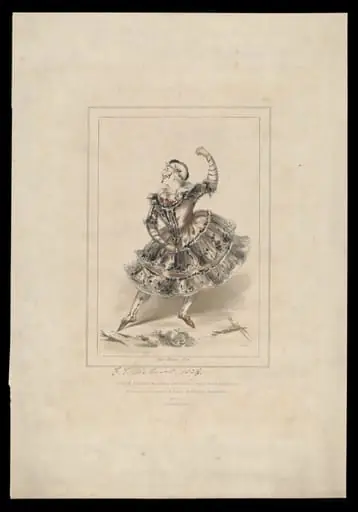
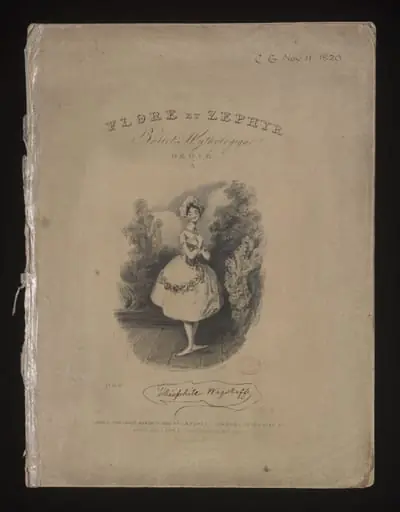
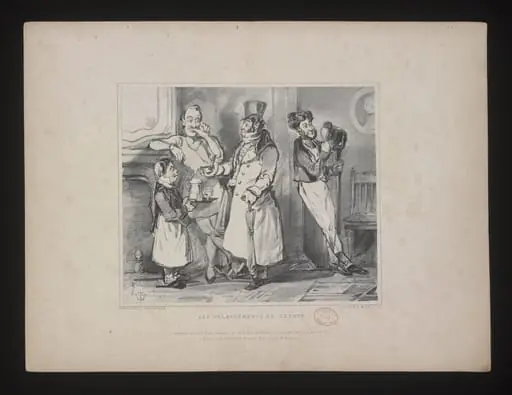
 H Beard Print Collection
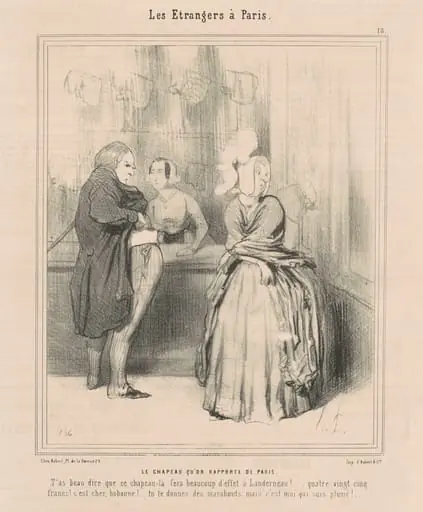 Le chapeau qu'on rapporte de Paris
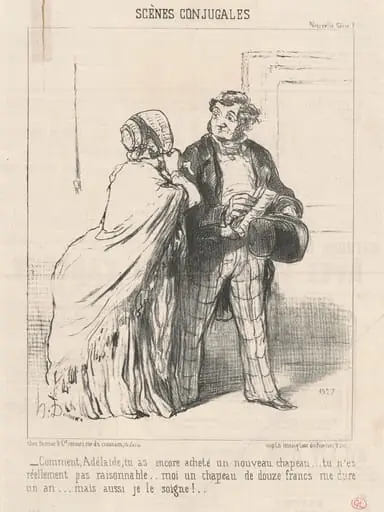 Comment ... tu as encore acheté un ... chapeau ...
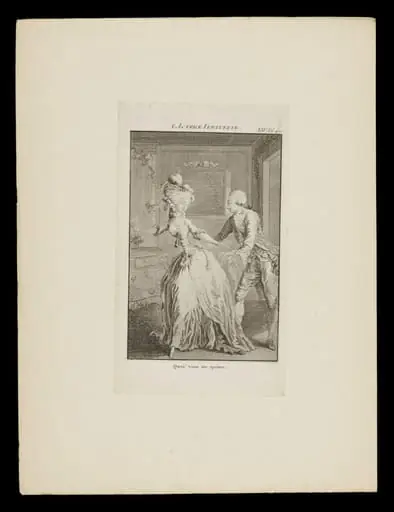 H Beard Print Collection
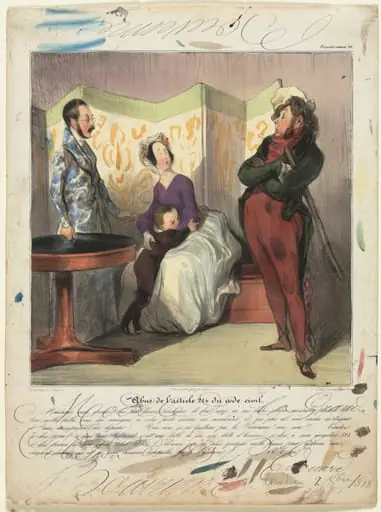 Breach of Article 24 of the Civil Code
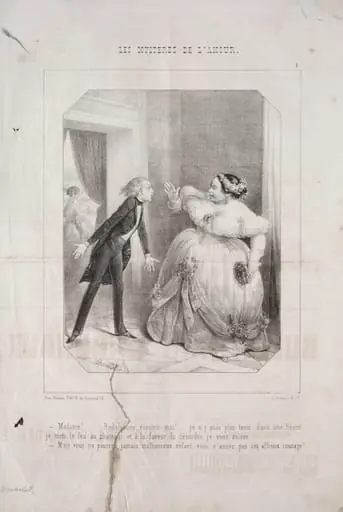 Les Mystères de l'amour: No. 1
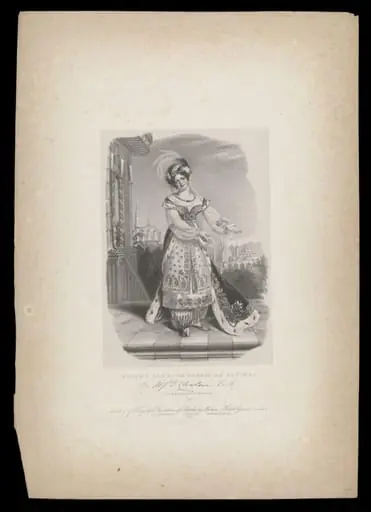 H Beard Print Collection
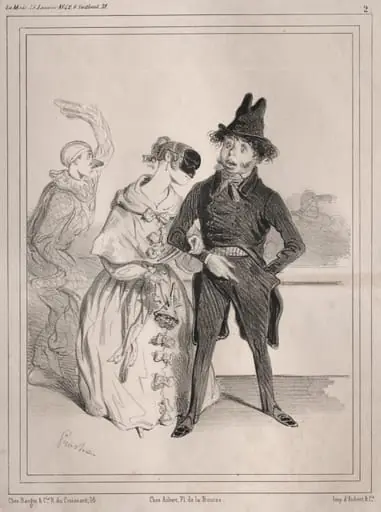 Pochades de carnaval: C'est singulier! elle me dit que je suis Philibert Désormeaux, et que je passe pour un imbecile!! ....où diable à-t-elle sù cela?
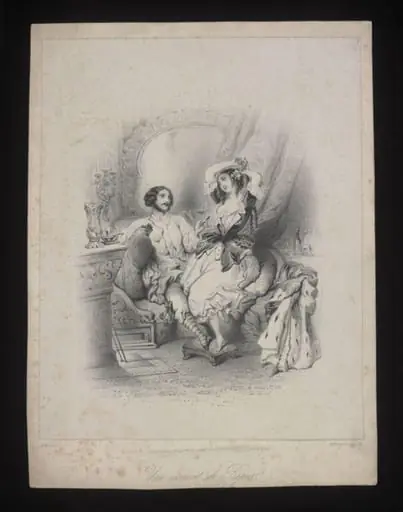 "Un moment de Repos. 5"