Artwork
Châteauvieux-sur-Suran
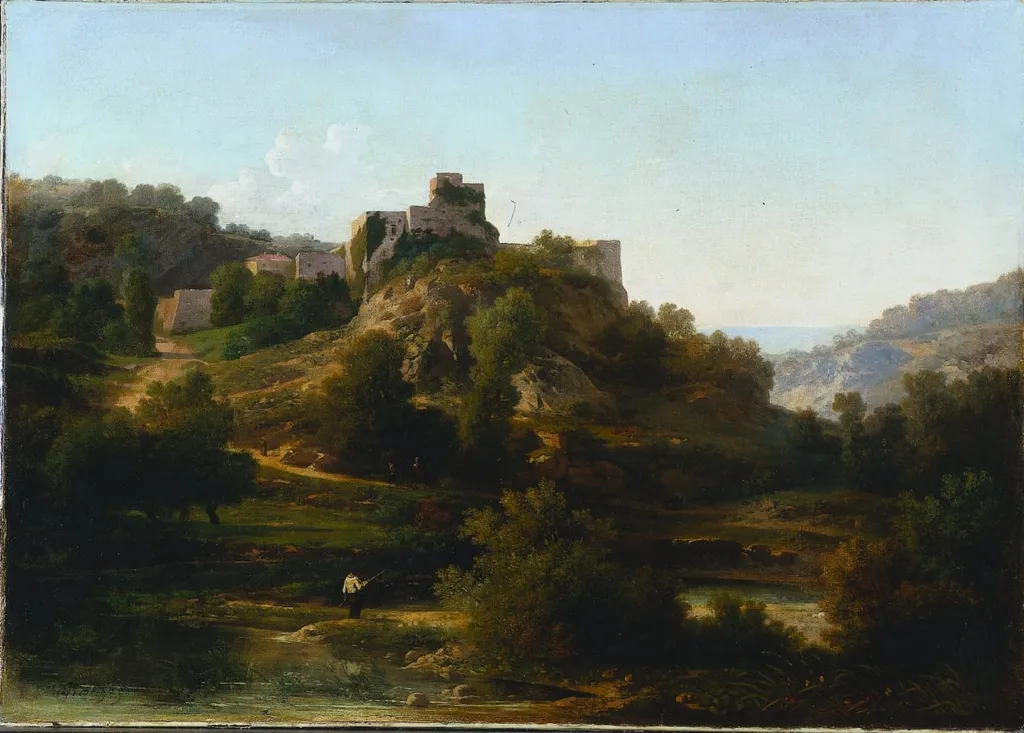
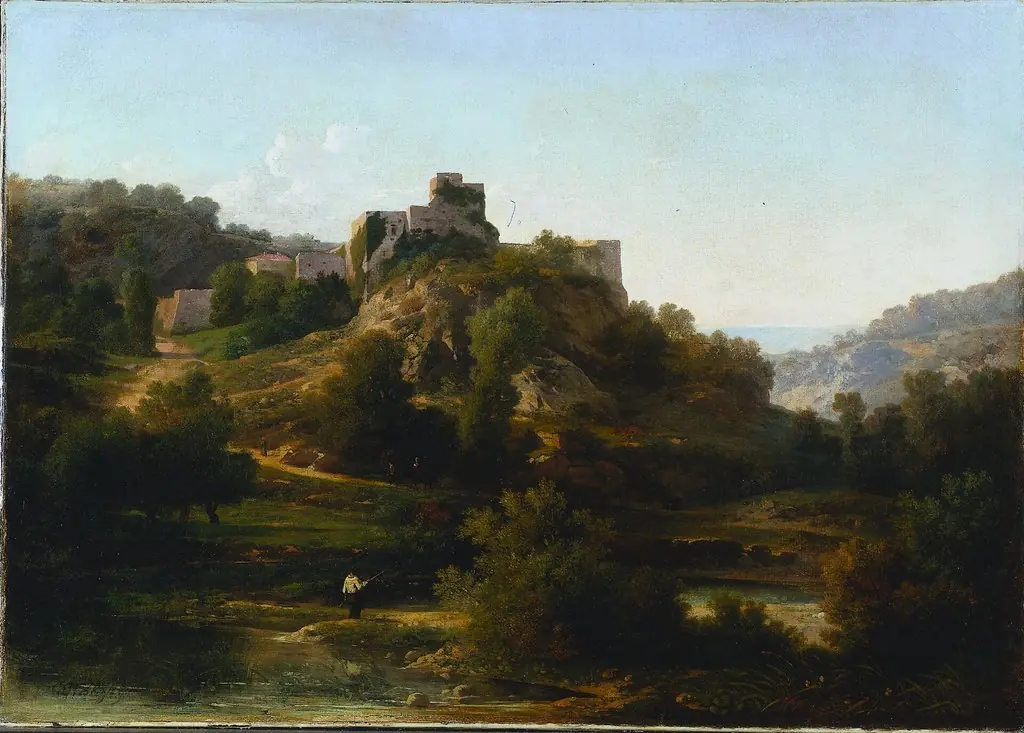
Châteauvieux-sur-Suran is an unspecified painting by the Realist artist Antoine Claude Ponthus-Cinier. It dates from 1848 and is held in the collection of the Cleveland Museum of Art. The canvas presents an imagined ruin perched on a craggy cliff above a river, framed by a winding path that descends toward the water.
About this work
Overview
The canvas presents an imagined ruin perched on a craggy cliff above a river, framed by a winding path that descends toward the water. Light suffuses the scene with a warm glow, while diminutive figures move along the path, suggesting everyday activity within a tranquil, timeless setting.
Subject & Meaning
The composition combines a decaying stone structure with a pastoral landscape, evoking a sense of serene abandonment. The inclusion of tiny laborers or travelers hints at continuity of human presence despite the ruin, reinforcing an idealized vision of rural harmony.
Technique & Style
The artist arranges the terrain in a classic, idealized manner, dividing the picture into foreground, middle ground, and background that recede in a measured, sinuous rhythm. Soft, luminous lighting and balanced tonal contrasts create a harmonious atmosphere reminiscent of classical landscape conventions.
Context
Although the location is named after a real Alpine village, the scene is a constructed tableau rather than a topographical record. The work reflects a tradition of staged, imagined landscapes that prioritize compositional balance and poetic mood over strict realism.
Legacy
The painting exemplifies the 19th‑century fascination with idealized nature, influencing later artists who explored staged scenery and the interplay of light and atmosphere to convey timeless rural idylls.
Artist & collection
Artist
Antoine Claude Ponthus-Cinier (1812–1885) was a French artist, born in Lyon.

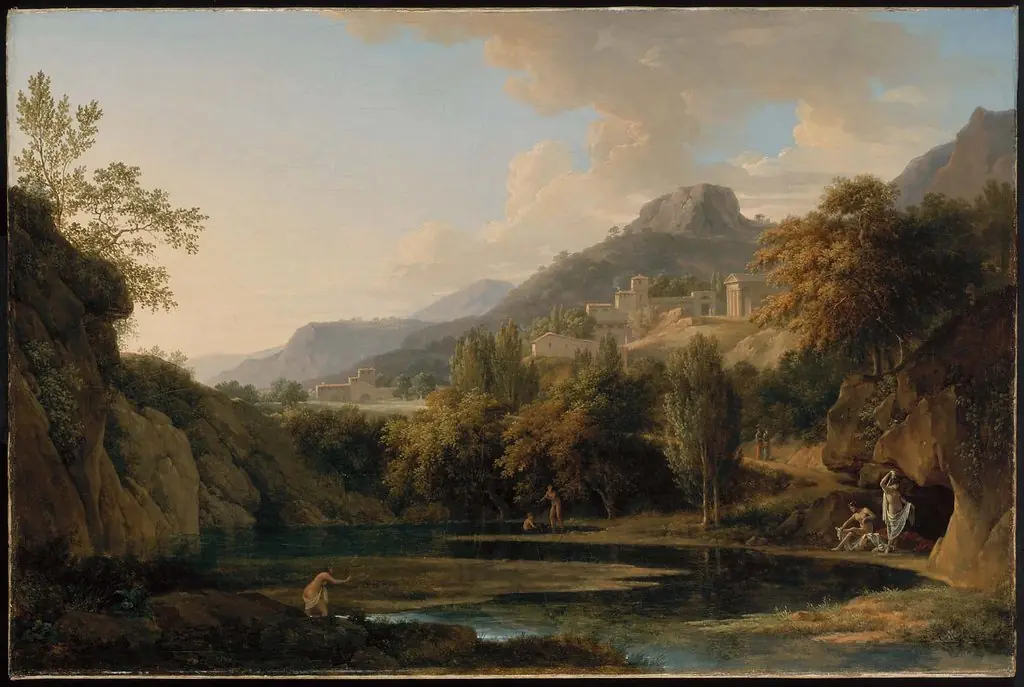 Italian Landscape with Bathers
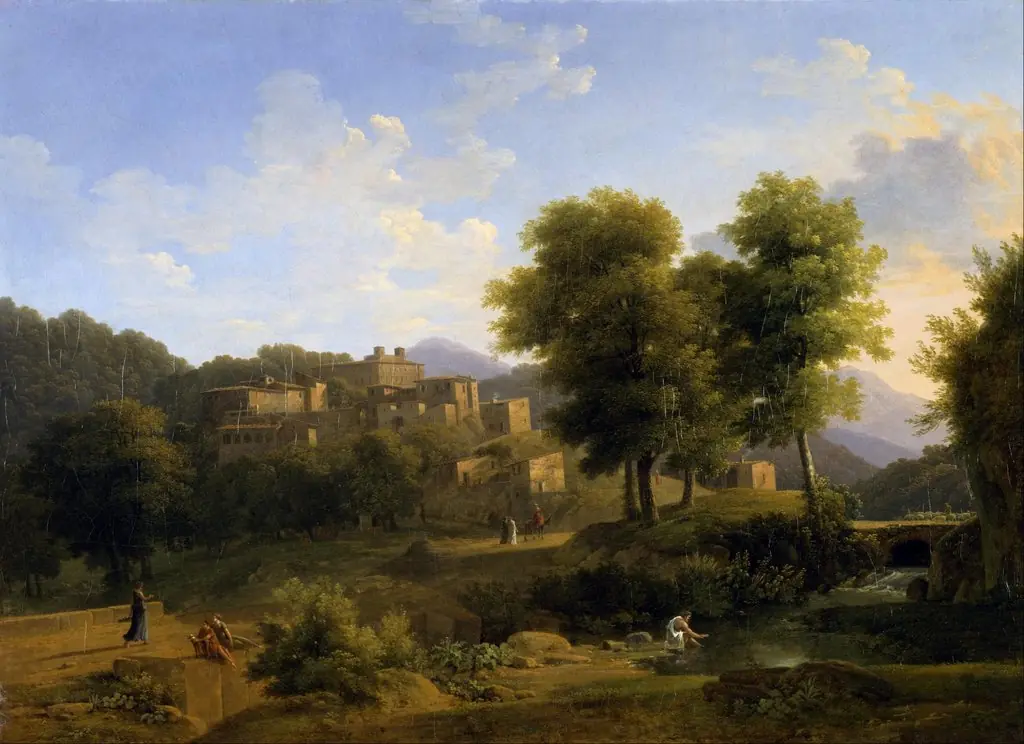 View of a Town in the Sabine Hills
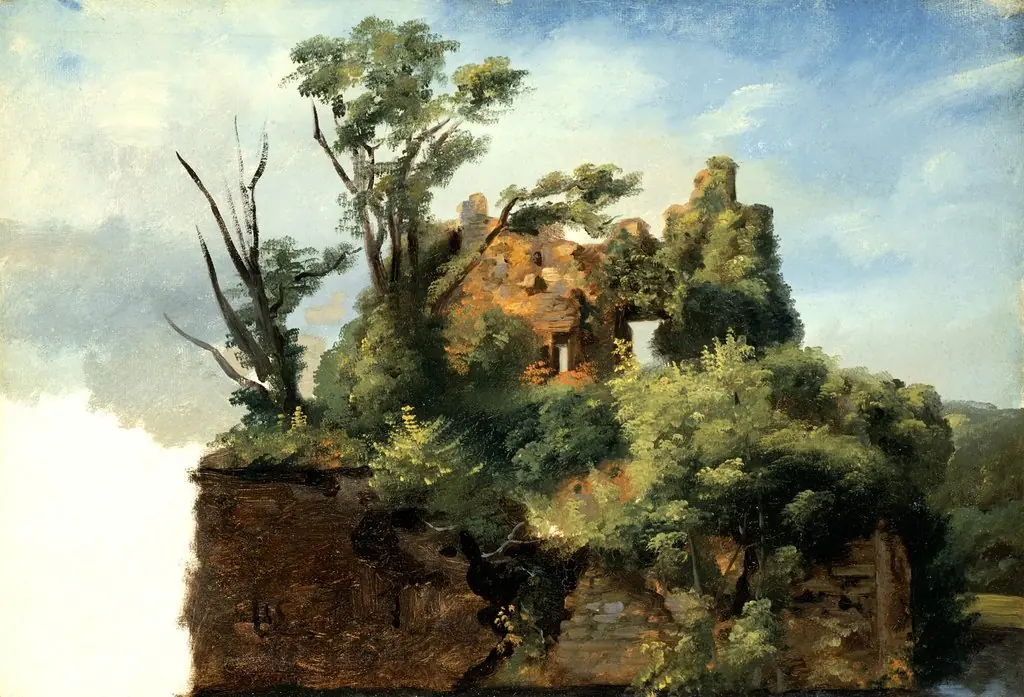 Landscape with Ruins
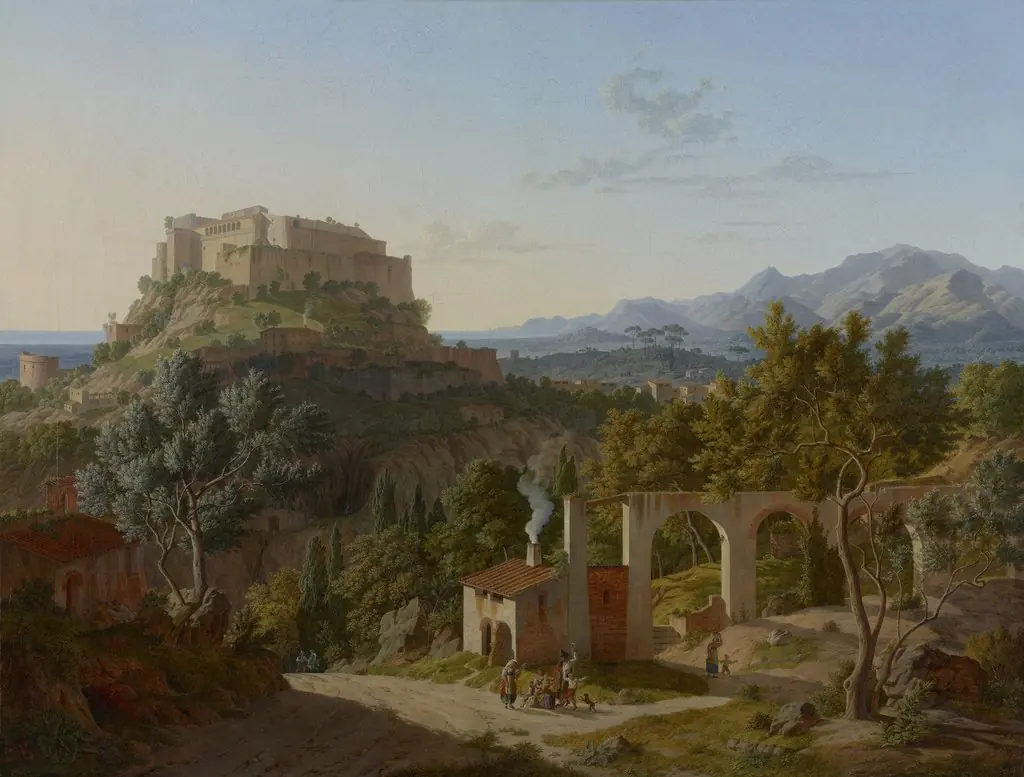 Landscape with the Castle of Massa di Carrara
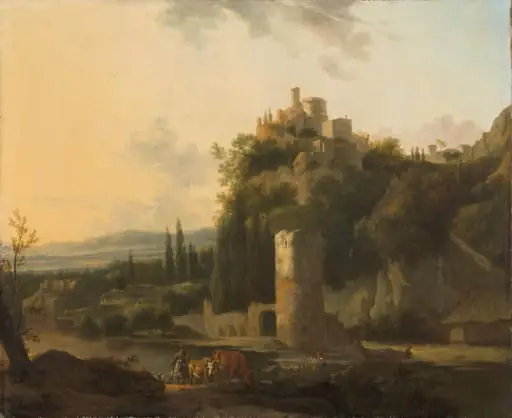 Italina landscape with round tower
 A Building near Tor di Quinto outside Rome
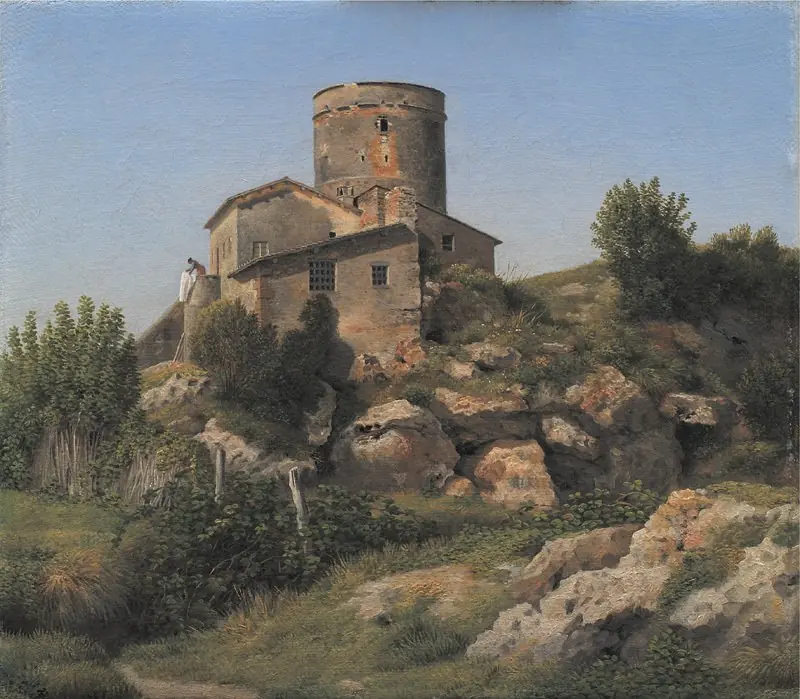 A Building near Tor di Quinto outside Rome
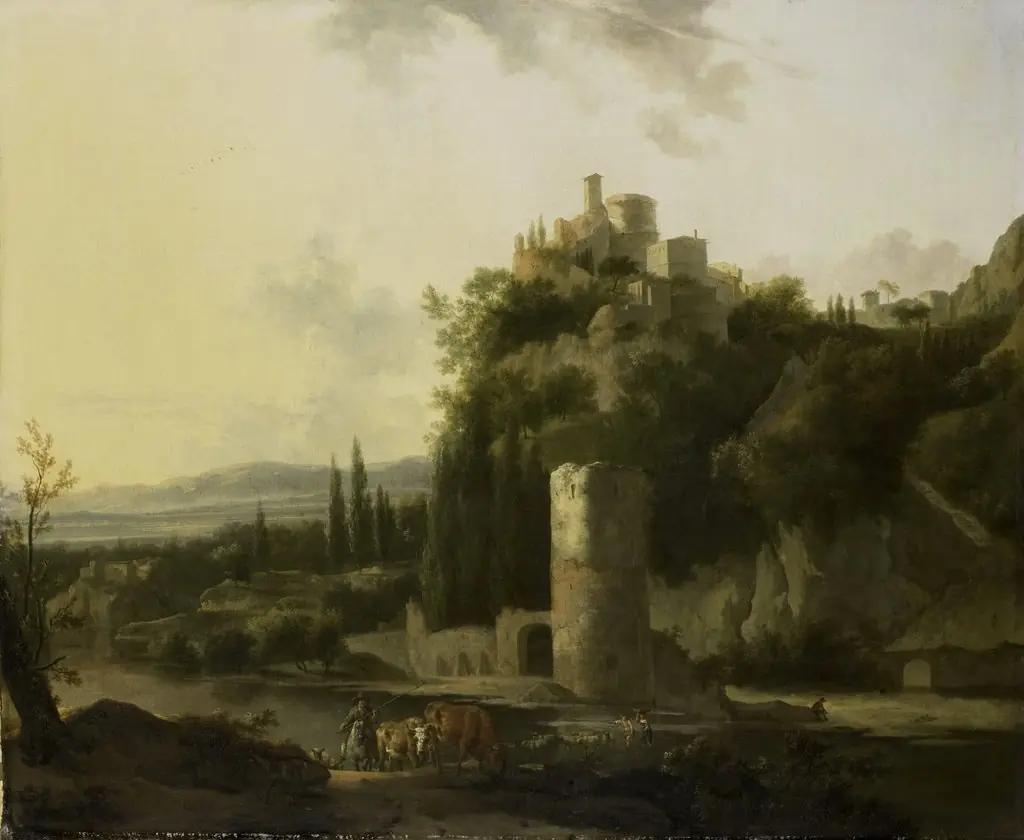 Italina landscape with round tower
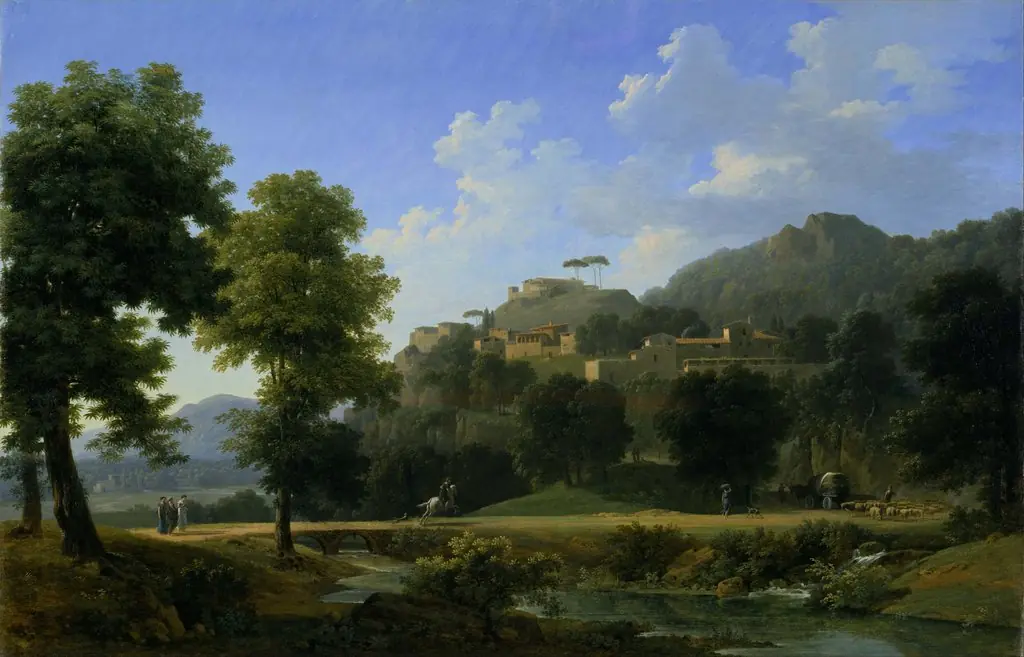 Italian Landscape (Le Paysage d'Italie)
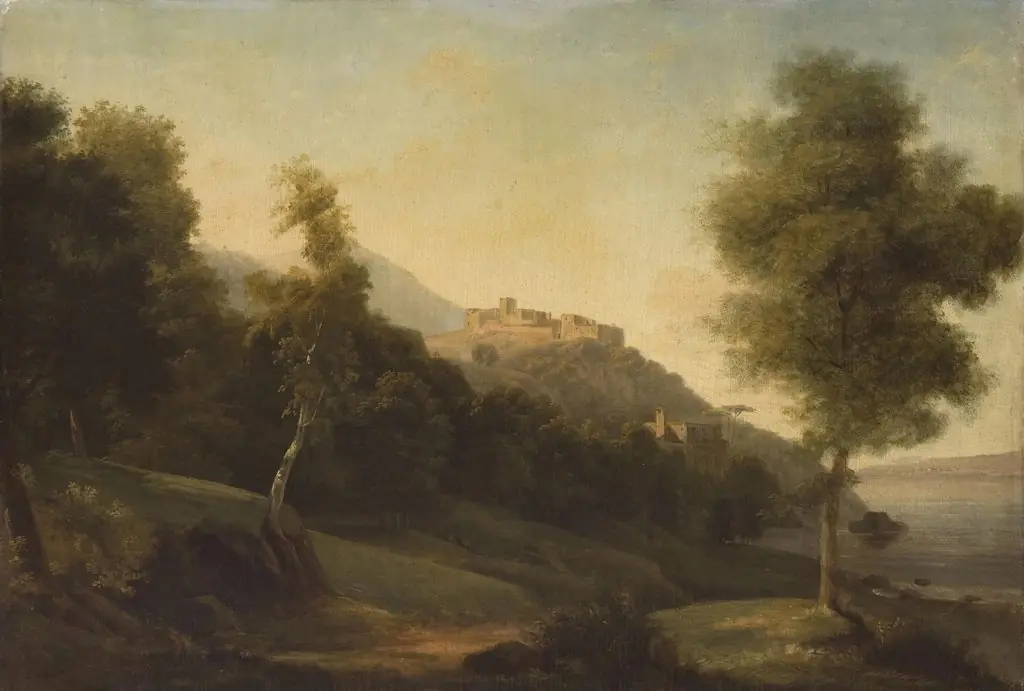 Roman Landscape
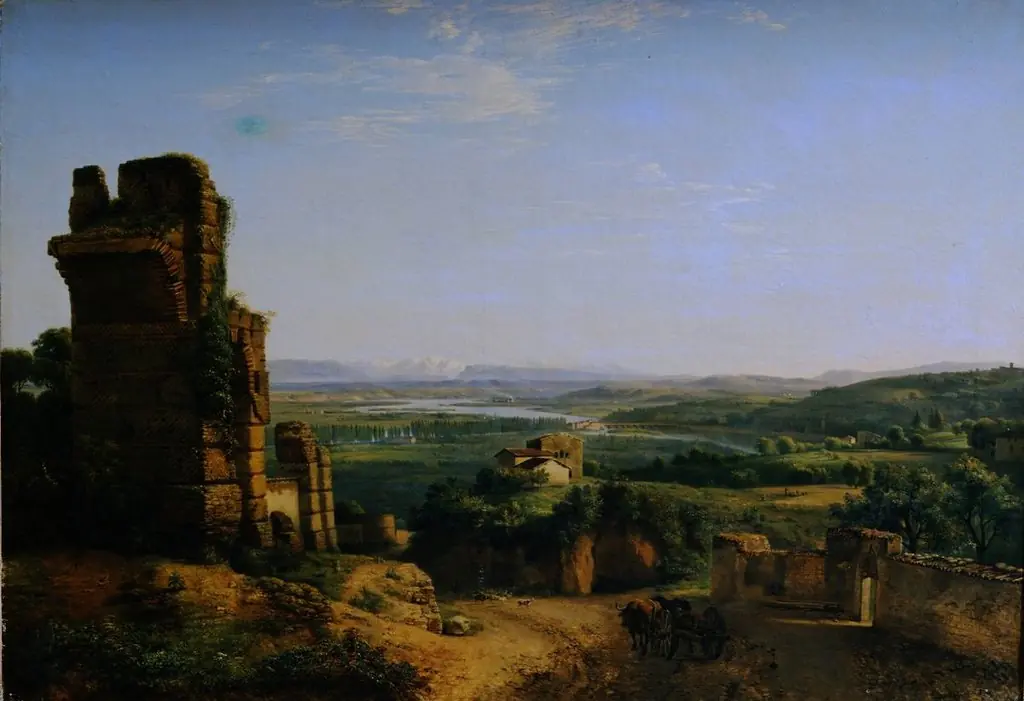 Vue des aqueducs romains sur les hauteurs de Saint-Just
 Châteauvieux-sur-Suran