Artwork
Roman Landscape
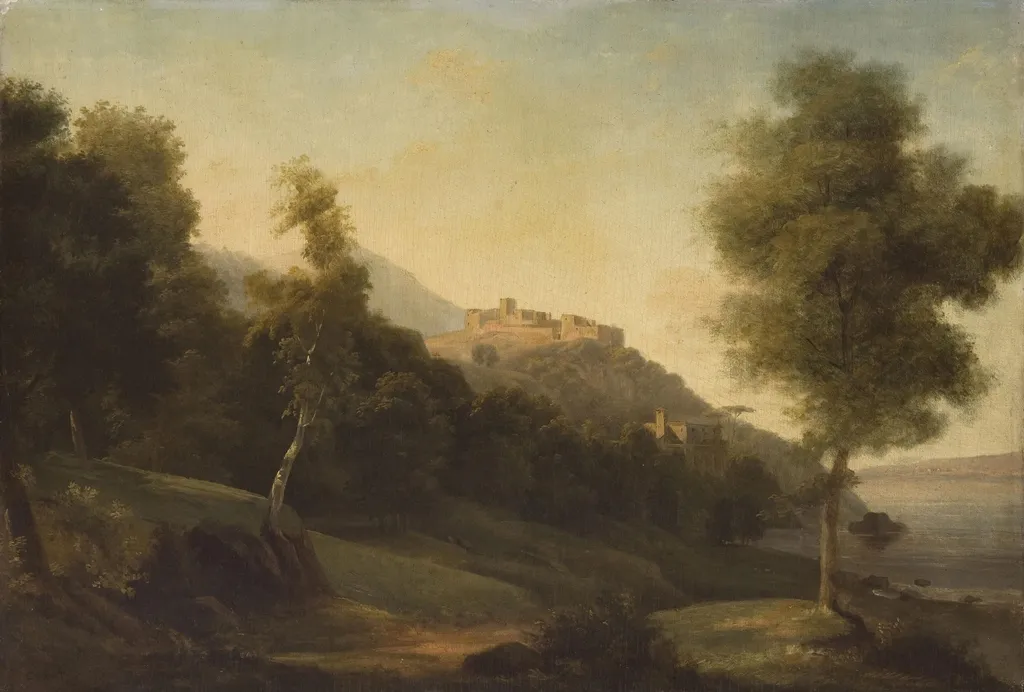
Roman Landscape is an oil painting by the Barbizon school artist Jean Baptiste Camille Corot. It dates from 1845 and is held in the collection of the Philadelphia Museum of Art.
About this work
Overview
Painted around 1845, *Roman Landscape* is an oil on canvas work by the French artist Jean-Baptiste-Camille Corot.
Painted around 1845, *Roman Landscape* is an oil on canvas work by the French artist Jean-Baptiste-Camille Corot. It captures a quiet stretch of the Roman countryside, emphasizing natural light and subtle atmospheric shifts. Corot, associated with the Barbizon School, approached landscape with a sensitivity to observed reality, bridging the formal traditions of Neo-Classicism and the emerging practice of painting outdoors.
Subject & Meaning
The painting presents a tranquil rural scene: a winding path threads through trees toward a distant village nestled among rolling hills. There is no narrative or human activity, only the quiet passage of time implied by the light. The composition invites contemplation, reflecting Corot’s interest in the emotional resonance of place rather than topographical accuracy or idealized grandeur.
Technique & Style
Corot employed soft brushwork and a restrained palette to convey the hazy quality of daylight. Light falls gently across the landscape, modeling forms with delicate tonal gradations rather than sharp contrasts. His method, informed by plein-air sketching, prioritizes the transient effects of atmosphere over detailed rendering, laying groundwork for later Impressionist approaches to light and color.
History & Provenance
Created during Corot’s second visit to Italy, the painting was likely completed in his Paris studio from on-site studies. It entered the Philadelphia Museum of Art’s collection in the early 20th century, where it remains part of their European painting holdings. Its provenance reflects the growing American interest in 19th-century French landscape art during that period.
Context
In the mid-1840s, French artists were redefining landscape painting beyond historical or mythological themes. Corot’s work stood apart by valuing direct observation and emotional tone over academic convention. His Italian scenes, though rooted in classical associations, rejected idealization in favor of quiet, personal responses to nature, aligning with broader shifts in European art toward realism.
Legacy
Corot’s treatment of light and mood in *Roman Landscape* influenced later generations, particularly the Impressionists, who adopted his open-air methods and emphasis on transient effects. While not overtly revolutionary, his quiet, poetic vision helped shift landscape painting from grand spectacle to intimate, observed experience, reshaping how nature was represented in modern art.
Own this work as a print
Artist & collection
Artist
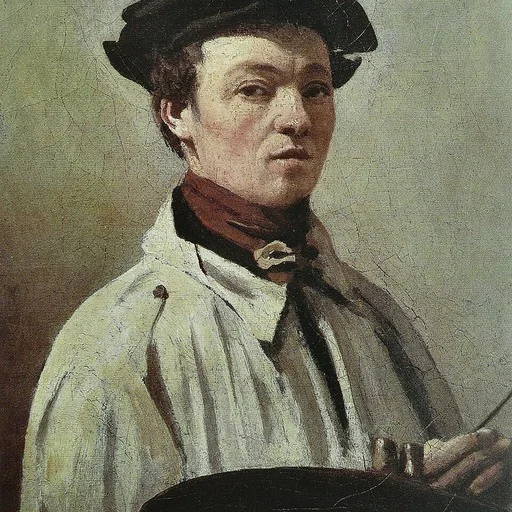
Jean-Baptiste-Camille Corot (UK: KORR-oh, US: kə-ROH, kor-OH; French: ; 16 July 1796 – 22 February 1875), or simply Camille Corot, was a French landscape and portrait painter as well as a printmaker in etching.

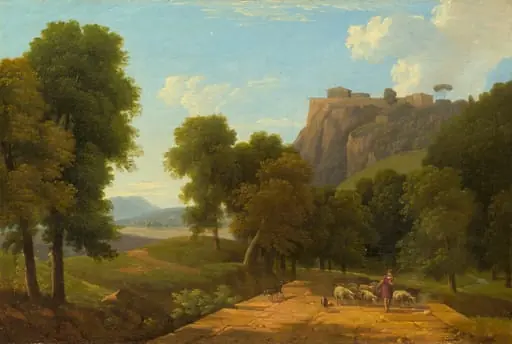 Shepherd with His Flock
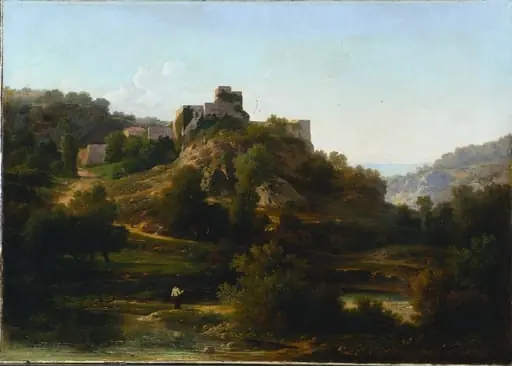 Châteauvieux-sur-Suran
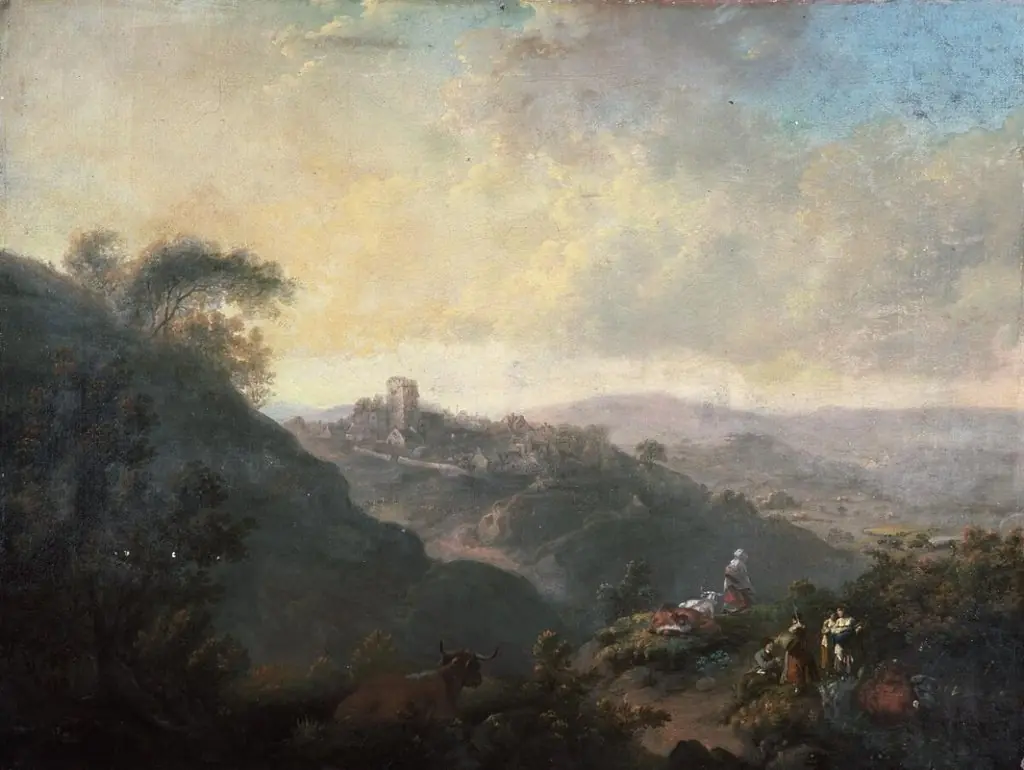 Llantrisant
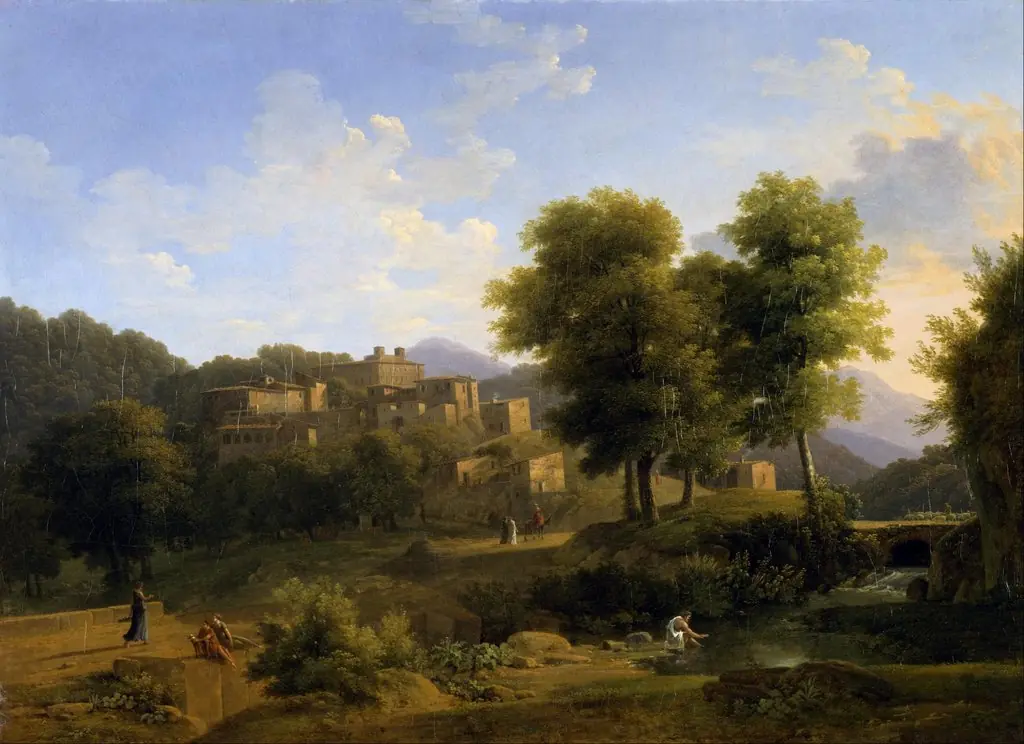 View of a Town in the Sabine Hills
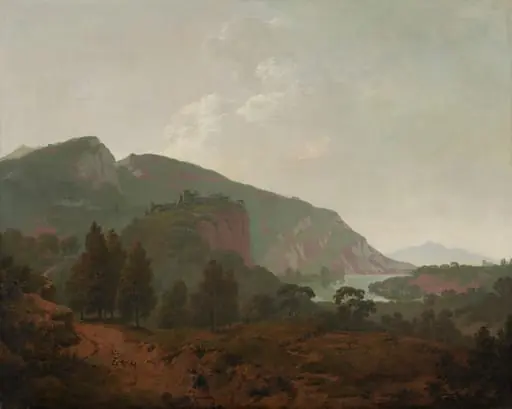 Italian Landscape
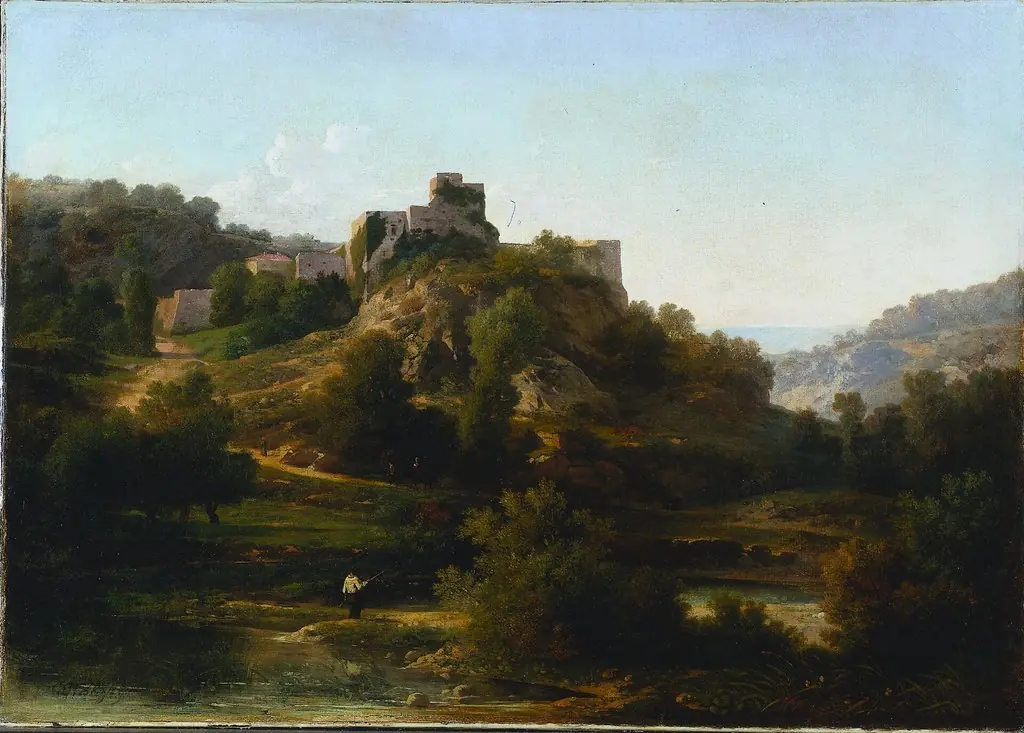 Châteauvieux-sur-Suran
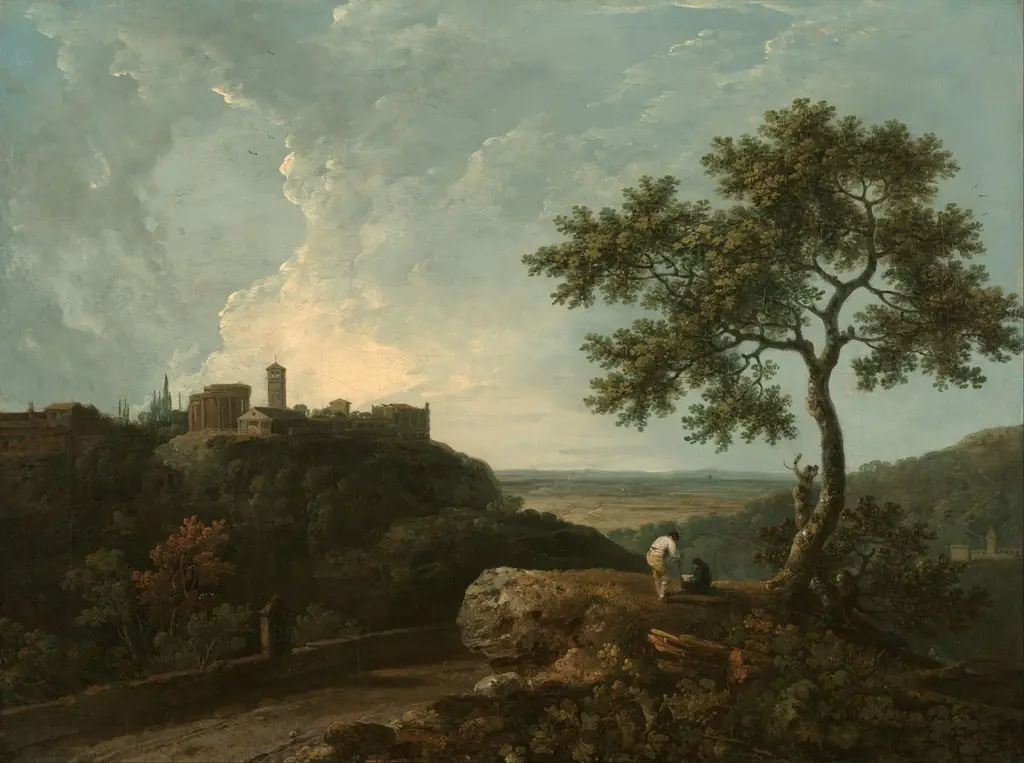 Tivoli: The Temple of the Sybil and the Campagna
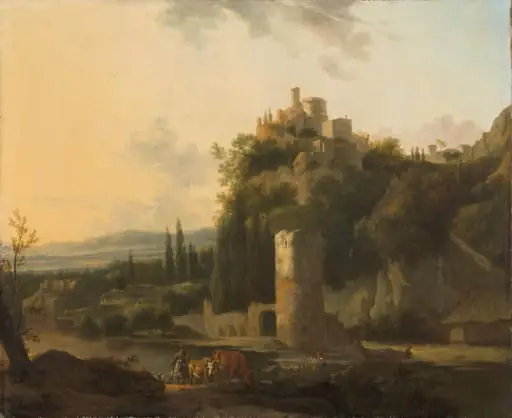 Italina landscape with round tower
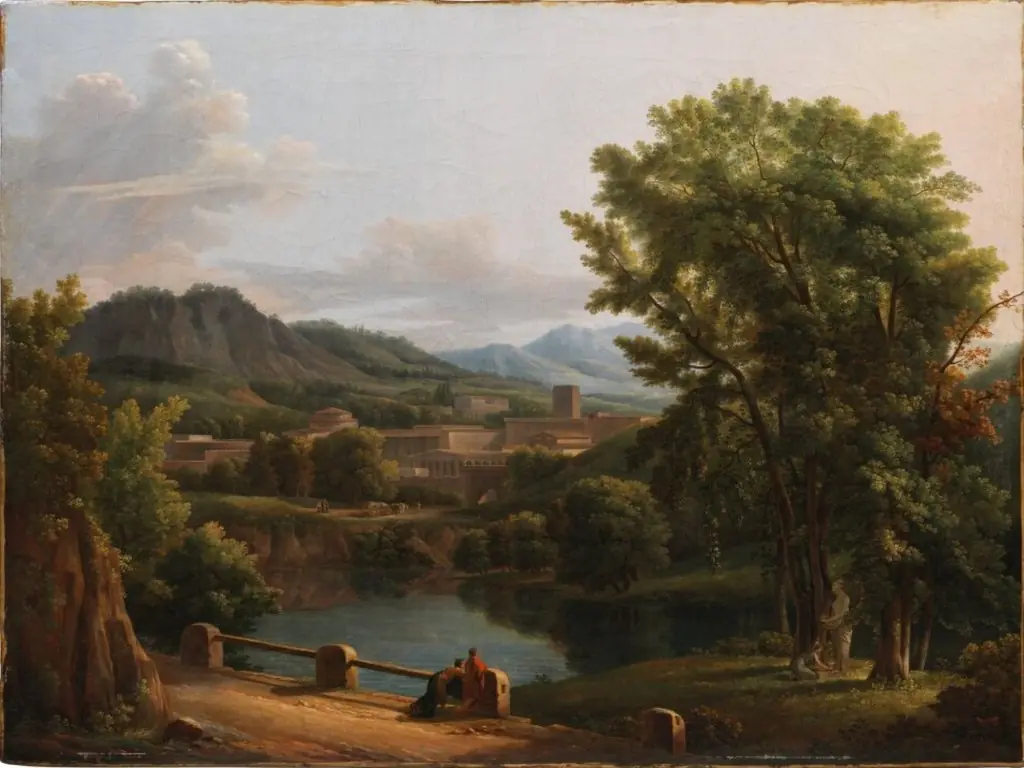 Ideal Landscape with a Sacrifice to the Goddess Flora
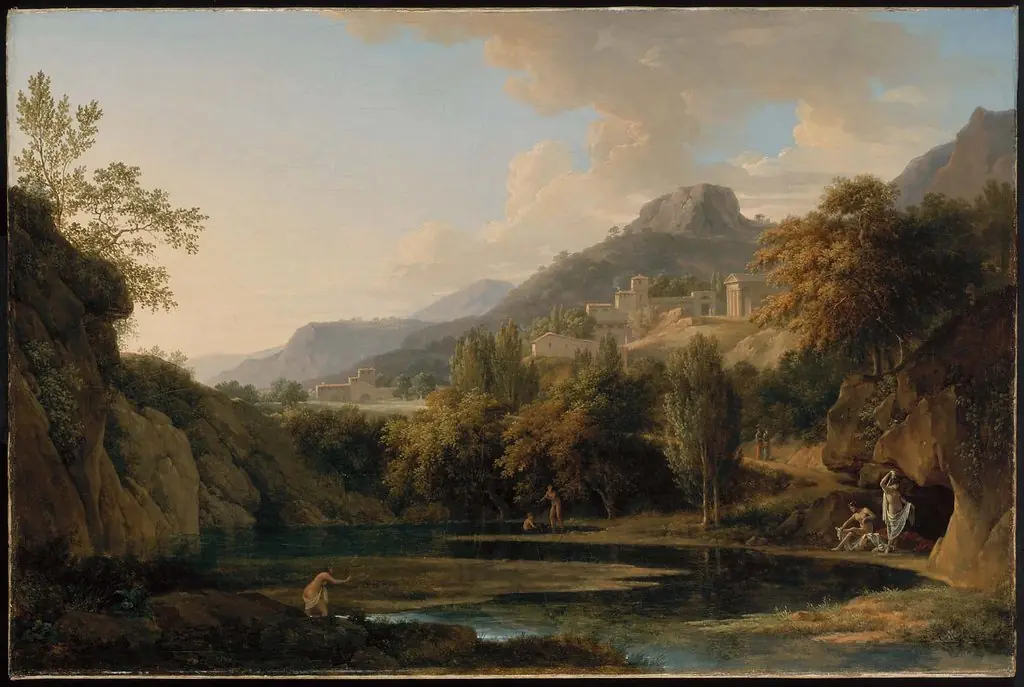 Italian Landscape with Bathers
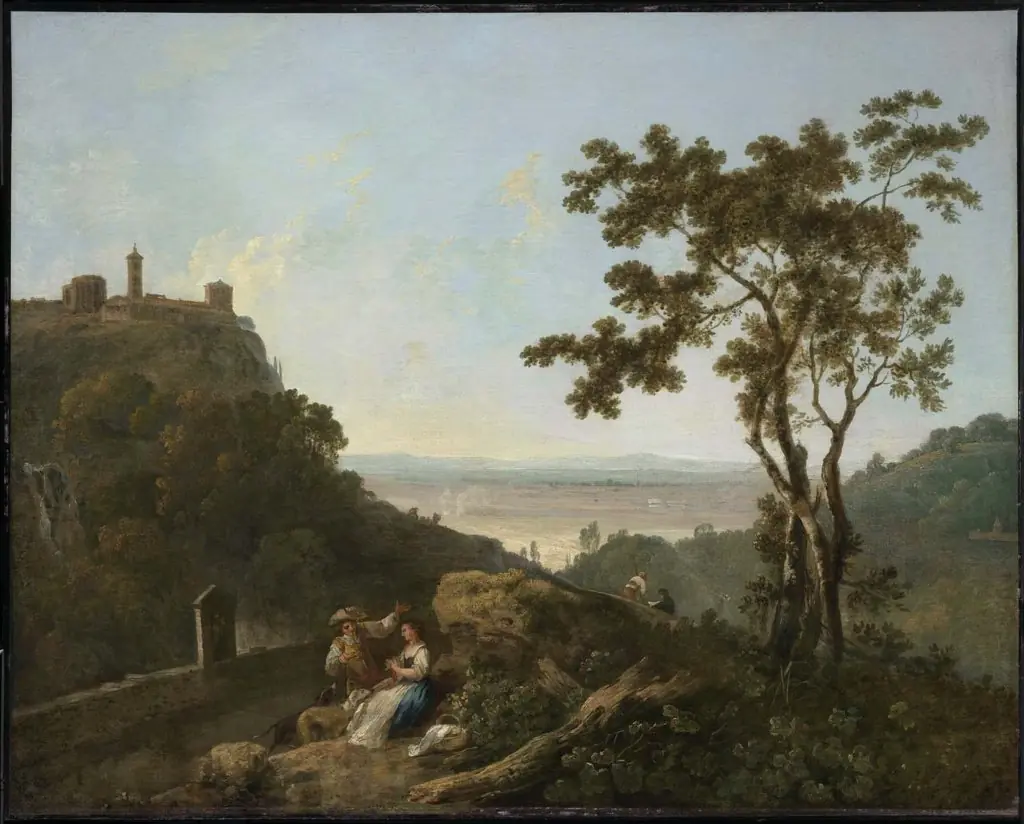 Tivoli and the Roman Campagna with a Man and Woman
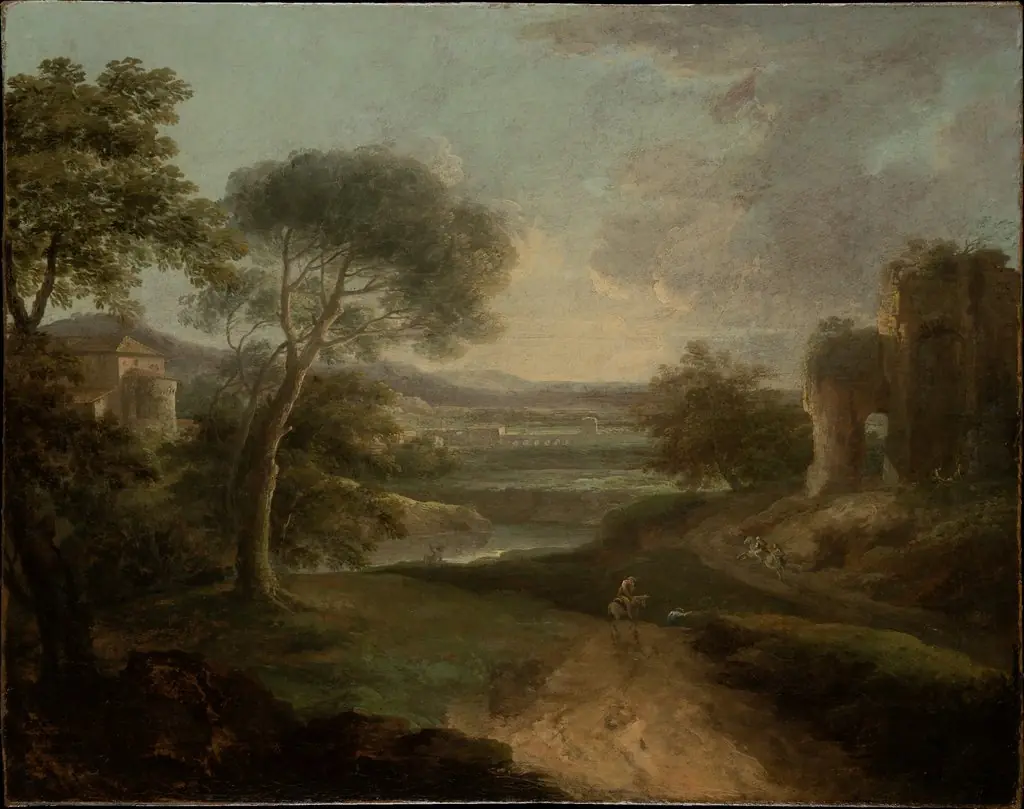 Landscape near Rome