Artwork
A Peasant Family
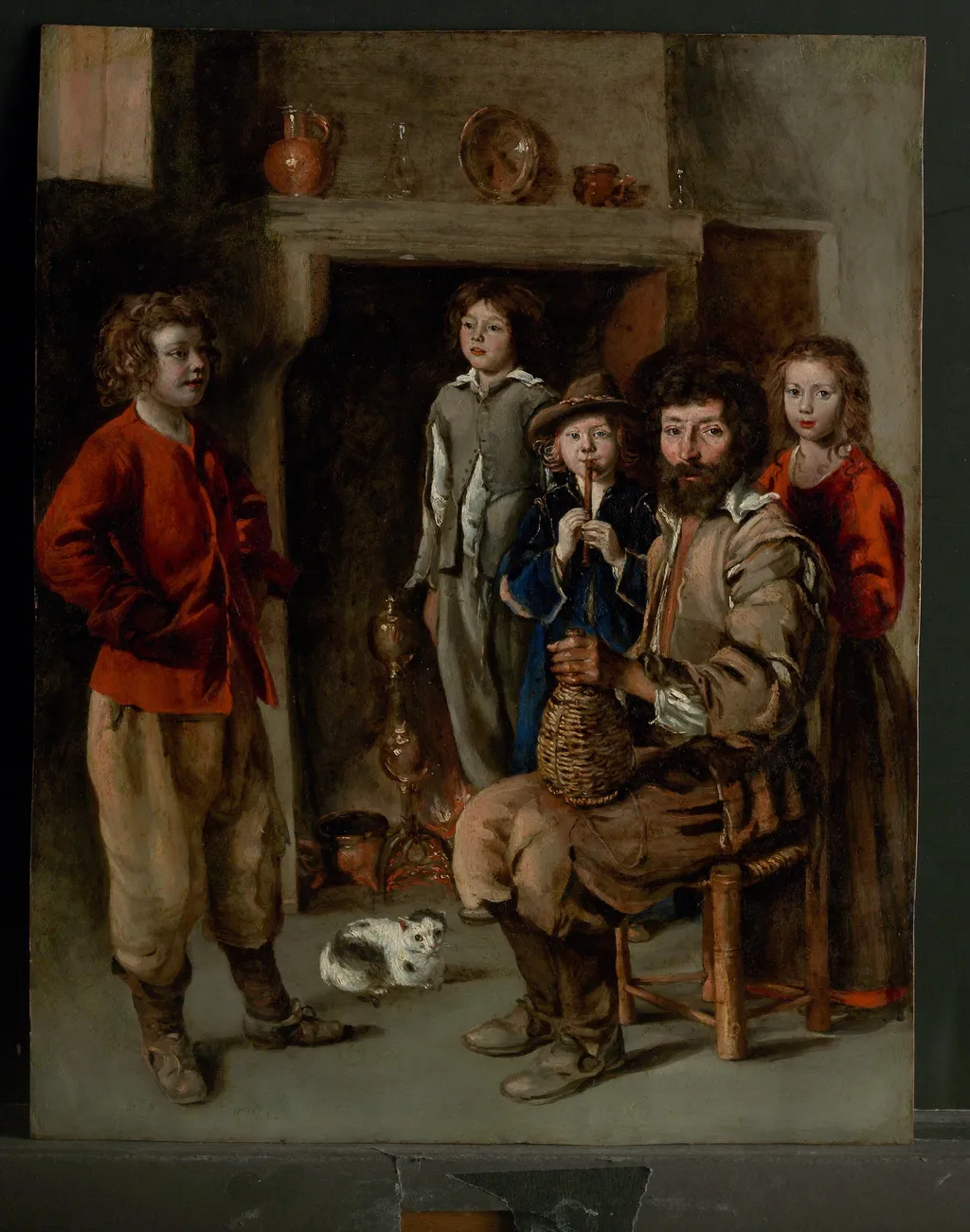
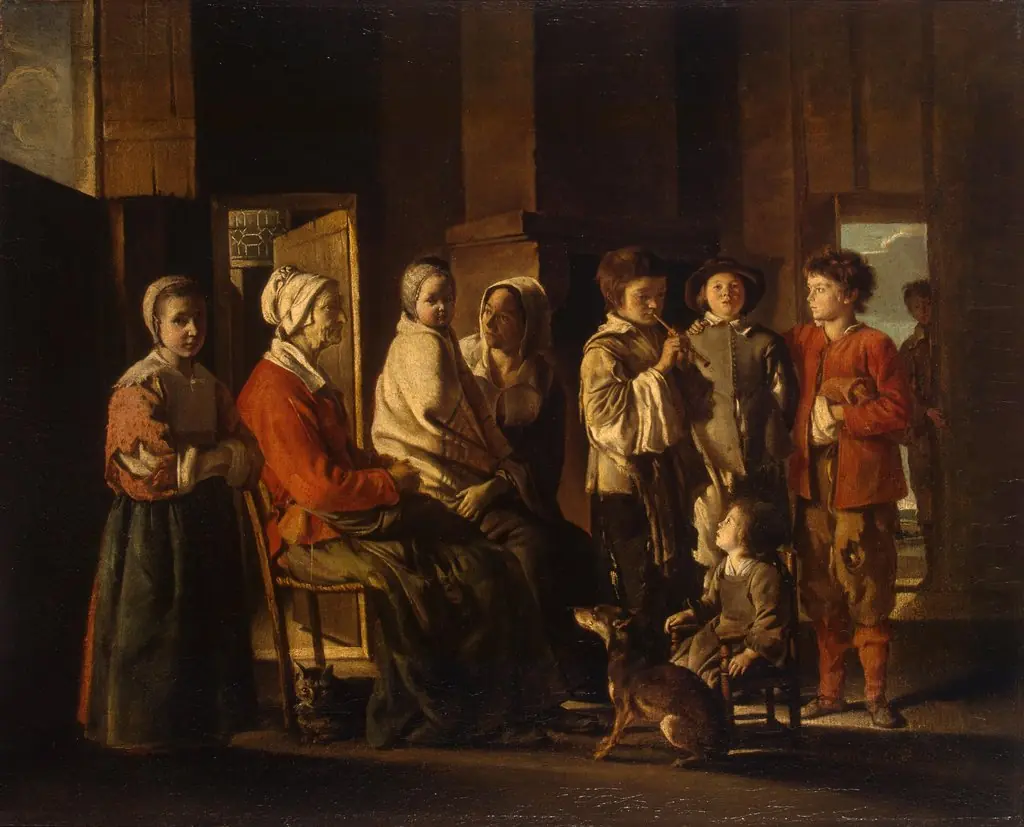
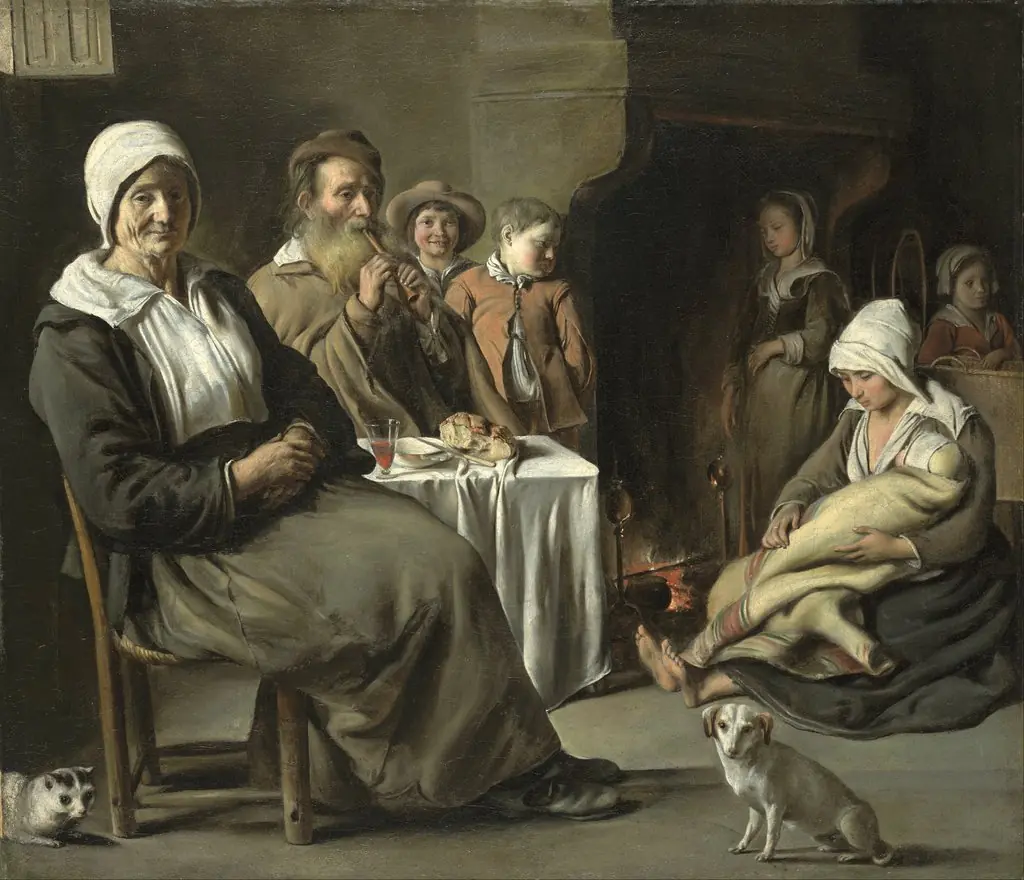
A Peasant Family is an oil painting by Antoine Le Nain. It dates from 1644 and is held in the collection of the Metropolitan Museum of Art.
About this work
Overview
Le Nain's technique on copper allows for fine detail and a smooth surface, enhancing the subtle play of light on the figures' faces and clothing.
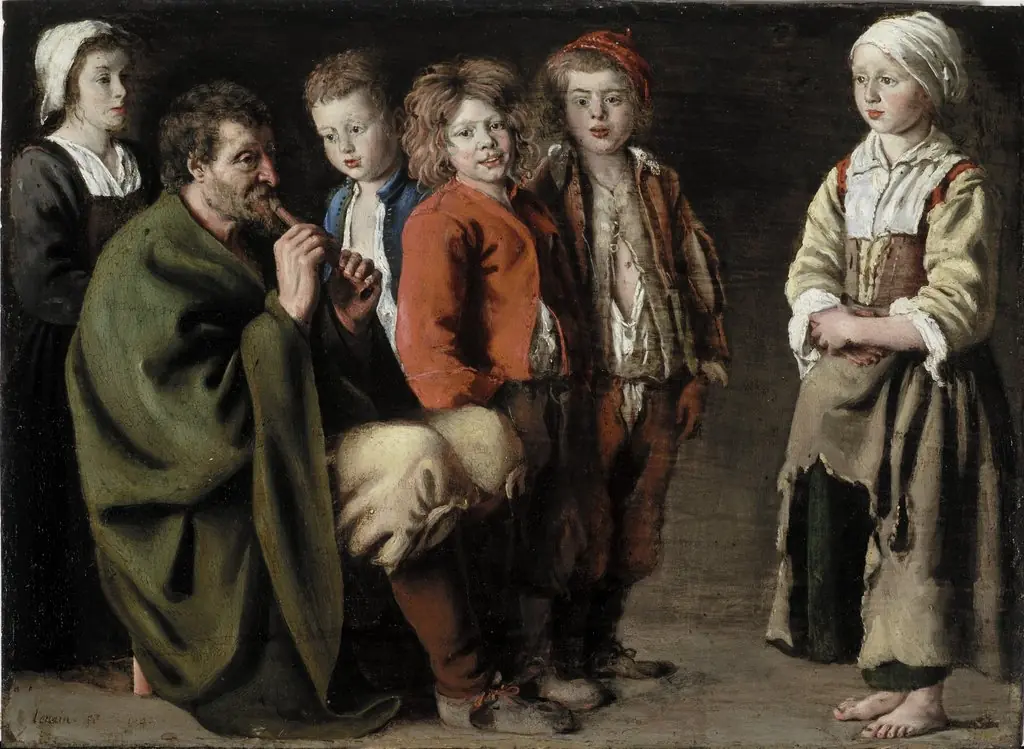
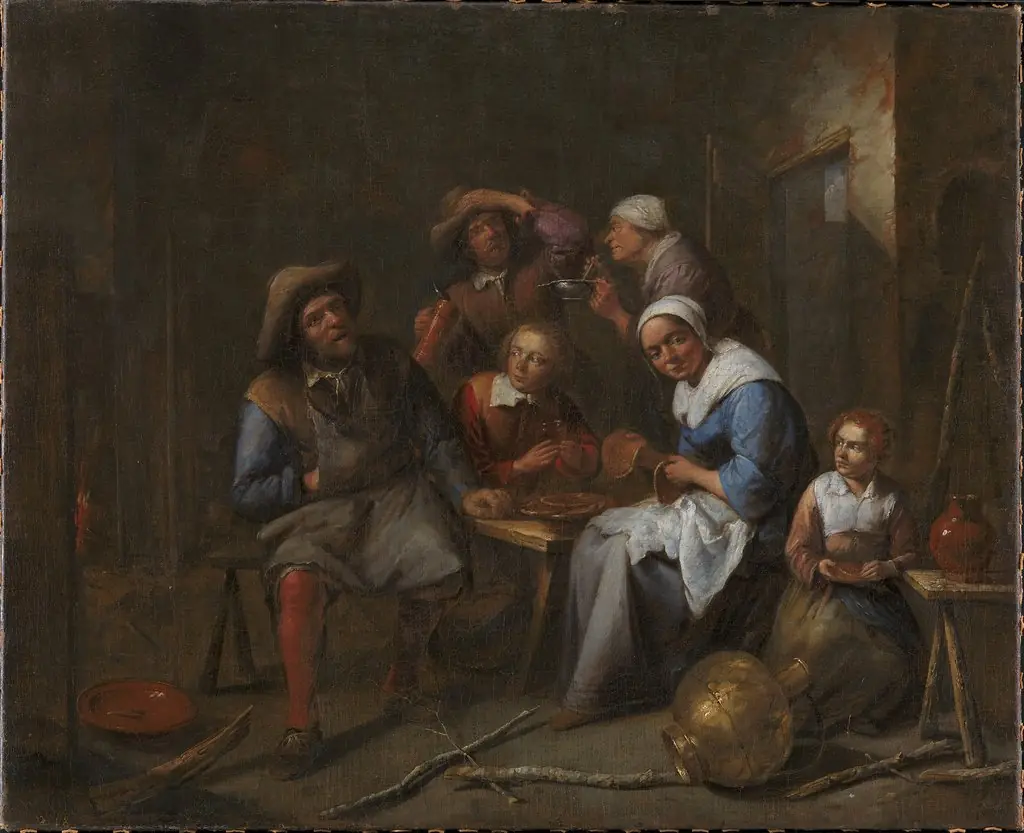
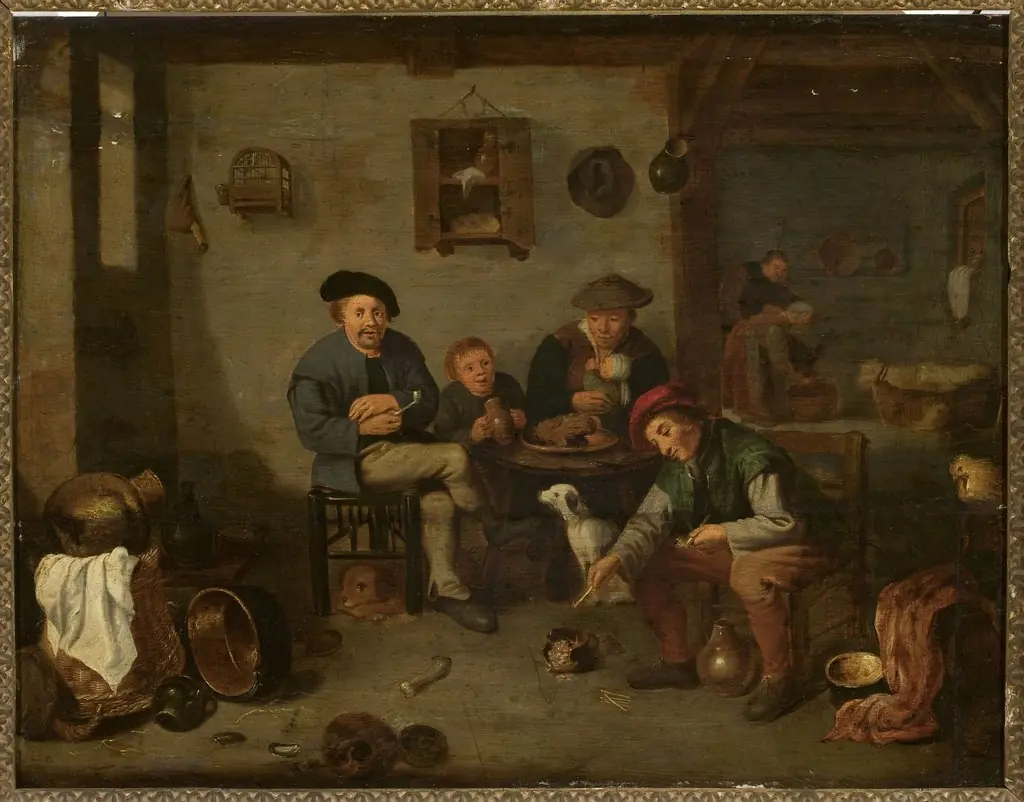
Painted in 1644 on a copper support, A Peasant Family is a genre scene by Antoine Le Nain, one of the three Le Nain brothers who defined French realism in the mid-17th century. The work depicts a family of five gathered in a sparsely furnished, dimly lit interior, emphasizing the quiet dignity of rural life. The composition centers on a seated patriarch with a beard, clad in a brown coat, who holds a basket. Surrounding him are three children: one in a red shirt, another in a gray tunic holding a pipe, and a third figure. To the right stands a girl in an orange garment, while a small white cat rests on the floor, adding a touch of domestic immediacy. Le Nain's technique on copper allows for fine detail and a smooth surface, enhancing the subtle play of light on the figures' faces and clothing. Created during the artist's mature period, this painting reflects the Le Nain brothers' distinctive approach to peasant subjects, avoiding caricature to present their sitters with a solemn, almost monumental presence. The work stands as a significant example of French Baroque genre painting, bridging the gap between everyday observation and psychological depth.
Subject & Meaning
The painting captures a rural family engaged in everyday life, emphasizing the intimacy and labor of peasant existence. The varied attire—a red shirt, gray tunic, orange dress—suggests individual roles within the household, while the basket hints at sustenance. The inclusion of a cat and domestic objects reinforces the lived reality of the domestic sphere in 17th‑century France.
Technique & Style
Le Nain employs the copper support to achieve a smooth surface that enhances fine detail and subtle tonal shifts. Warm, muted hues dominate, while soft shadows model the figures and furnishings, lending depth without overt dramatization. The restrained use of light, likely entering through a small window, creates a modest chiaroscuro that highlights textures such as fabric folds and wooden grain.
History & Provenance
Created in 1644, the work entered the collection of the Metropolitan Museum of Art, where it remains on display. Its acquisition reflects the museum’s interest in French genre painting and the Le Nain brothers’ contribution to the depiction of rural life during the Baroque period.
Artist & collection