Artwork
Flowers and Vegetables
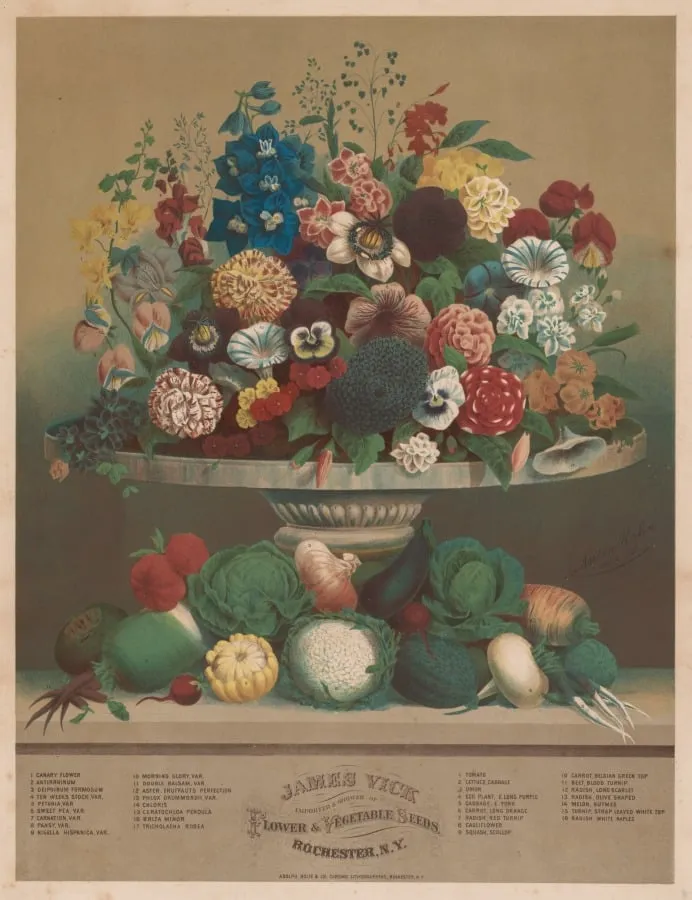
Flowers and Vegetables is a print by the Romanticist artist Anton Carl Rahn. It dates from 1804 and is held in the collection of the Cleveland Museum of Art. This lithograph was produced as a commercial handbill for James Vick’s nursery in Rochester, New York, during the late 1800s.
About this work
This lithograph shows bright flowers and fresh vegetables in a neat row. The colors pop against a plain white background. It’s a simple, clear image with no fancy tricks.
This wasn’t just art—it was an ad. Made in the 1800s, it sold seeds for James Vick’s nursery in Rochester. The company printed these in color after 1871 to attract buyers.
See this at The Cleveland Museum of Art.
Overview
This lithograph was produced as a commercial handbill for James Vick’s nursery in Rochester, New York, during the late 1800s.
This lithograph was produced as a commercial handbill for James Vick’s nursery in Rochester, New York, during the late 1800s. Designed to promote seed sales, it depicted orderly arrangements of flowers and vegetables against a plain white ground. Its straightforward visual language prioritized clarity over ornamentation, serving as a practical tool for catalog distribution and sales outreach rather than fine art.
Subject & Meaning
The image presents a catalog-like display of cultivated plants—vibrant blooms and ripe vegetables—in precise, uncluttered rows. Each specimen is rendered with botanical accuracy, signaling quality and reliability to prospective buyers. The absence of landscape or context emphasizes the products themselves, reinforcing the nursery’s promise of healthy, viable seeds for home gardeners seeking abundance.
Technique & Style
Executed in lithography, the print relies on the chemical repulsion of grease and water: the design was drawn on stone with a greasy medium, then inked and pressed onto paper. After 1871, color printing became feasible through local partnerships, replacing earlier hand-coloring methods. The style is deliberately unadorned—flat tones, sharp outlines, and minimal shading—to ensure legibility and cost-effective mass reproduction.
History & Provenance
James Vick’s nursery, a major seed supplier in 19th-century America, commissioned these prints to aid traveling salesmen in promoting their catalog. Early versions were hand-tinted, but the adoption of machine-printed color after 1871 increased production capacity and visual appeal. The print now held by The Cleveland Museum of Art is one of many distributed nationwide, reflecting the commercialization of horticulture during this period.
Context
In the post-Civil War era, urbanization and rising interest in domestic gardening fueled demand for reliable seed sources. Nurseries like Vick’s used printed materials to reach rural customers without direct access to markets. These lithographs were part of a broader trend where botanical illustration merged with advertising, turning horticultural knowledge into marketable imagery for the American middle class.
Legacy
Though created for commercial purposes, such prints now offer insight into 19th-century agricultural commerce and visual culture. Their simplicity and precision make them valuable records of plant varieties popular at the time. Preserved in museum collections, they bridge the gap between utility and historical documentation, revealing how commerce shaped public engagement with nature.
Artist & collection

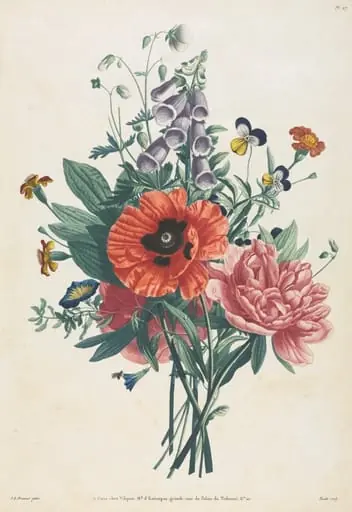 Collection of Flowers and Fruits Painted after Nature: Bouquet of Foxglove, Clematis, Pansy, Peony, Poppy, and Yellow Day Lily
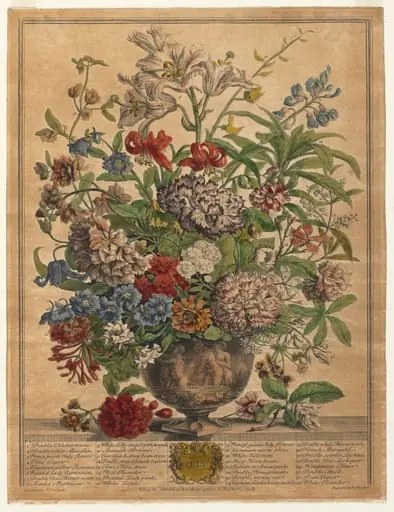 Twelve Months of Flowers: July
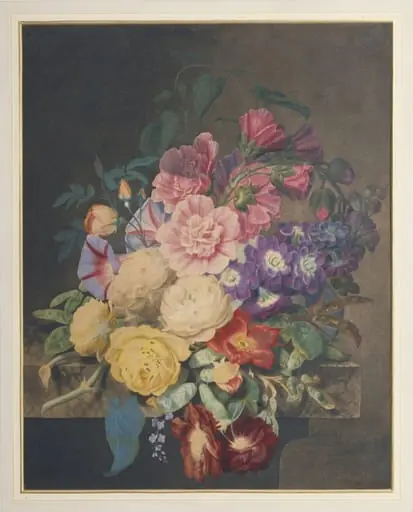 Hollyhocks, Roses, Etc
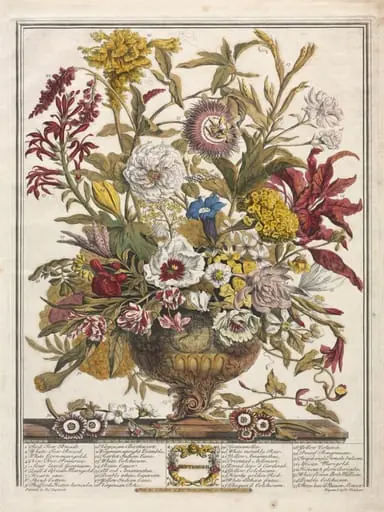 Twelve Months of Flowers: September
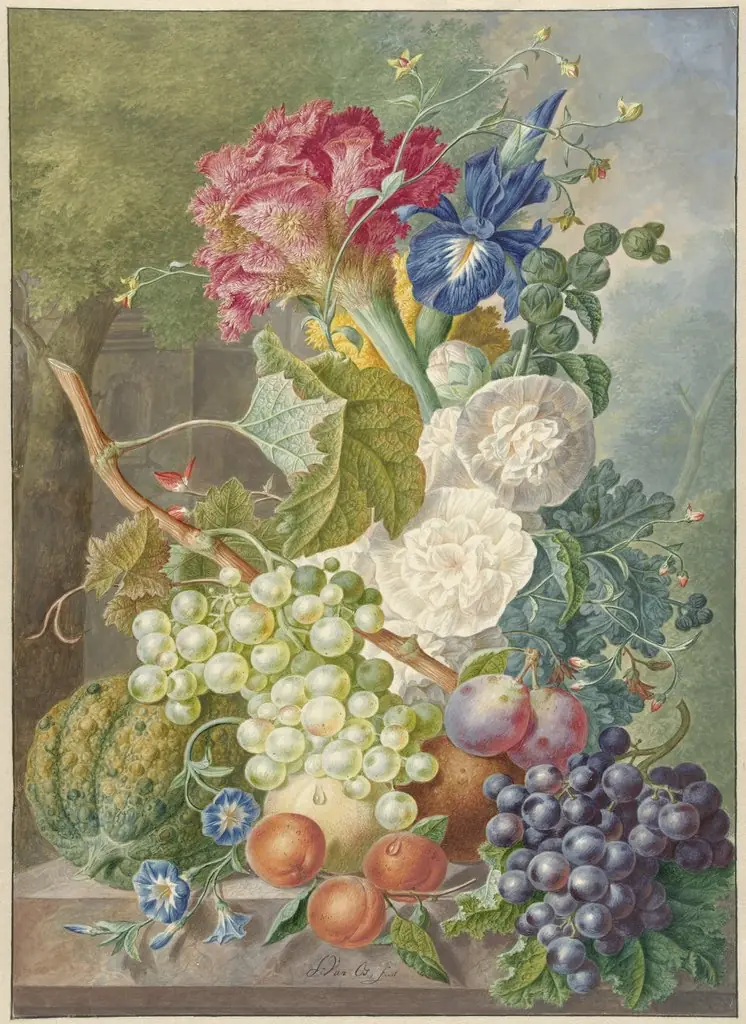 Still life of Plants, Flowers and Fruit
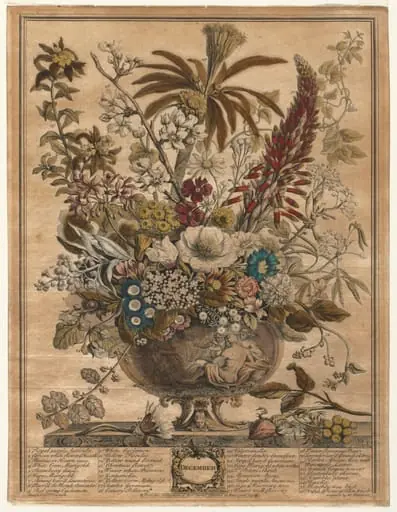 Twelve Months of Flowers: December
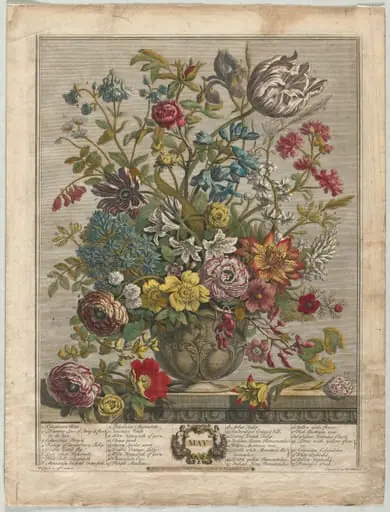 Twelve Months of Flowers: May
 Untitled
 Blomster i en trefodet vase og en skål med jordbær
 Twelve Months of Flowers: March
 Flore Pittoresque ou Recueil de Fruits et de Fleurs
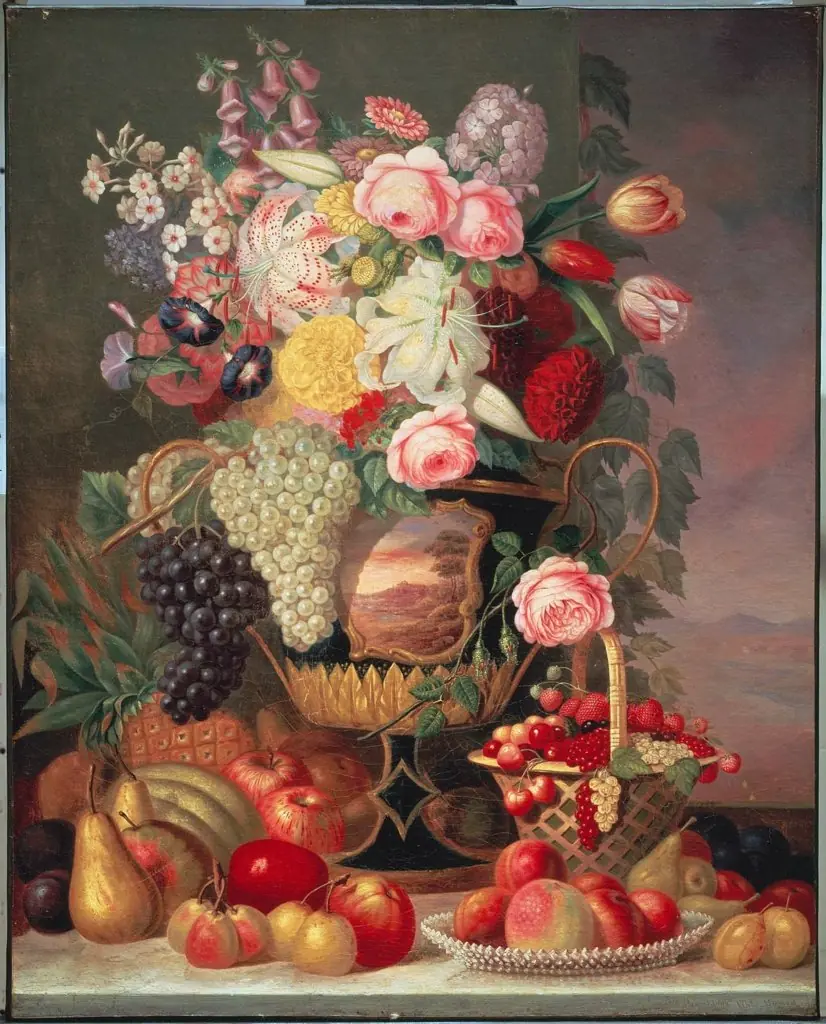 Fruit and Flower Piece