Artwork
Småpiger som leger i klitterne på vej hjem fra skole
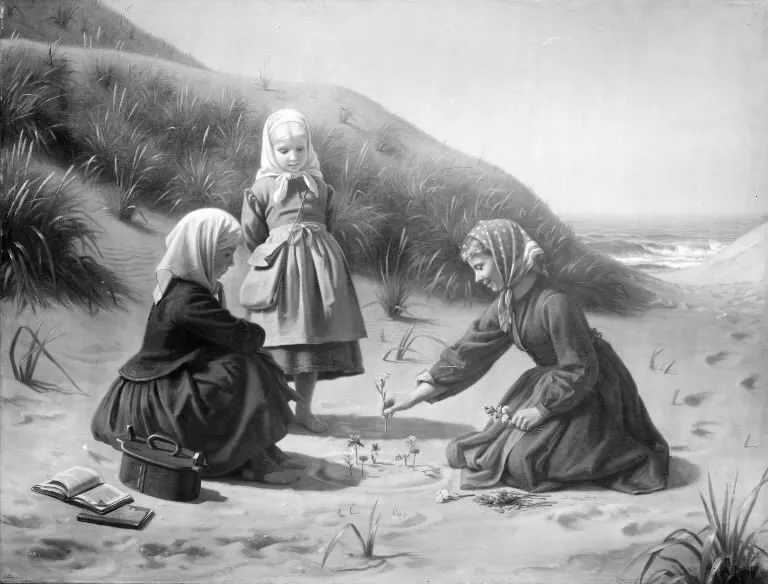
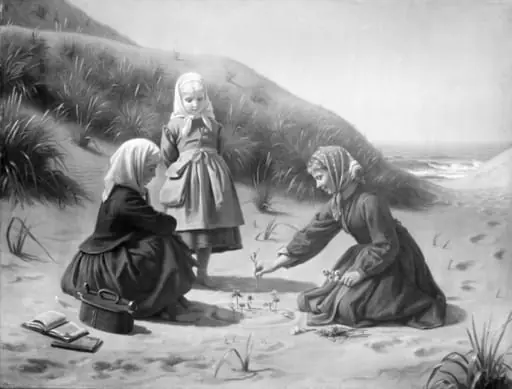
Småpiger som leger i klitterne på vej hjem fra skole is an oil painting by the Realist artist Anton Dorph. It dates from 1863 and is held in the collection of the Statens Museum for Kunst.
About this work
Overview
Dorph, primarily known for religious and maritime subjects, here turns to a domestic moment, reflecting a broader 19th-century interest in ordinary life.
Anton Dorph’s 1863 oil painting depicts three young Danish girls engaged in quiet play among coastal dunes after school. The scene is rendered with restrained detail, focusing on their postures and the natural landscape rather than dramatic action. Dorph, primarily known for religious and maritime subjects, here turns to a domestic moment, reflecting a broader 19th-century interest in ordinary life. The work resides in the collection of Statens Museum for Kunst in Copenhagen.
Subject & Meaning
The painting captures a fleeting, unguarded moment of childhood: three girls in modest attire kneel in the sand, one holding a small bouquet, the others observing. Their attire and setting suggest rural or coastal modesty, while the act of gathering wildflowers implies a gentle, self-directed play. The absence of adults and the quiet interaction convey innocence and autonomy, framing childhood as a private, natural experience rather than an idealized one.
Technique & Style
Dorph employs a muted palette and soft transitions between light and shadow to evoke the hazy coastal atmosphere. The brushwork is deliberate but unobtrusive, emphasizing texture in the grasses and sand without overt detail. The composition directs attention to the girls’ grouped forms, framed by rising dunes and a distant sea. While not overtly dramatic, the handling of light suggests an awareness of chiaroscuro, grounding the scene in tangible reality.
History & Provenance
Painted in 1863, the work entered the collection of Statens Museum for Kunst in Denmark, where it remains today. It was created during a period when Danish artists increasingly turned to genre scenes as part of a national cultural movement. Dorph, though more recognized for ecclesiastical works, produced several such domestic studies, reflecting both personal interest and contemporary artistic trends in depicting everyday life.
Context
In mid-19th-century Denmark, artists like Dorph contributed to a growing interest in realism and national identity through depictions of rural and coastal life. This painting aligns with broader trends in Scandinavian art that valued quiet observation over theatricality. The focus on children in natural settings resonated with emerging ideas about childhood as a distinct, valuable phase of life, separate from adult labor or social roles.
Legacy
While not widely reproduced, the painting exemplifies Dorph’s versatility beyond religious themes and reflects the quiet dignity assigned to ordinary moments in Danish realism. It contributes to a visual record of 19th-century childhood and coastal life, offering insight into social norms, dress, and the natural environment of the time. Its preservation in a national museum underscores its role as a document of cultural history.
Artist & collection
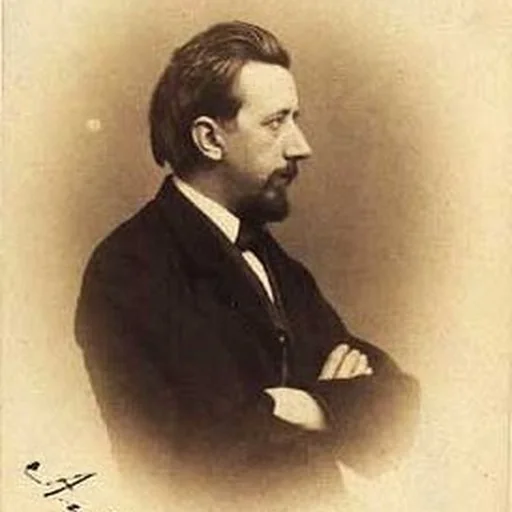
Artist
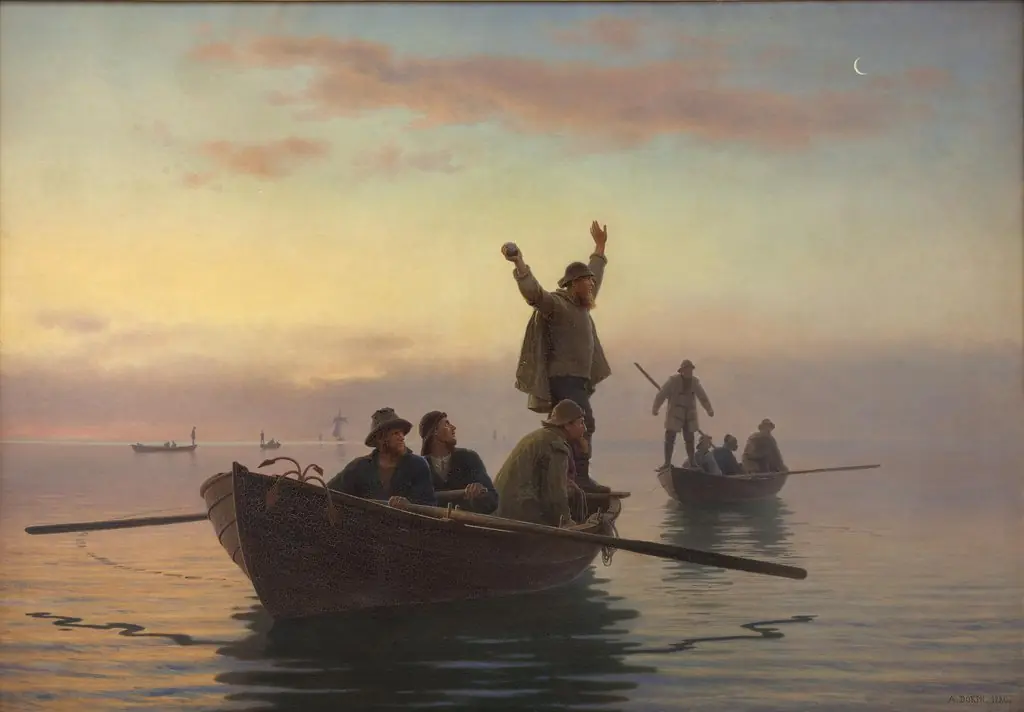
Anton Laurids Johannes Dorph (15 February 1831, in Horsens – 12 January 1914, in Copenhagen) was a Danish painter who is remembered for his altarpieces and his paintings of fishermen.

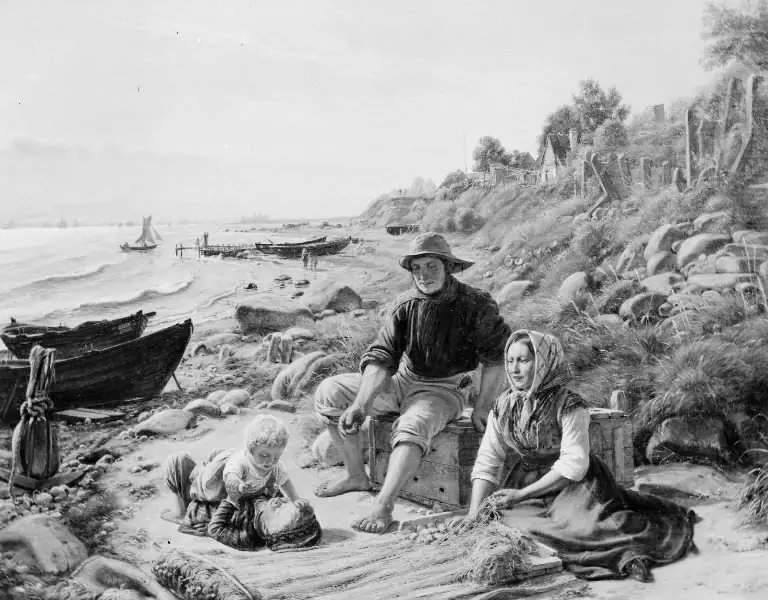 Familieliv i et lille fiskerleje nord for Helsingør
 Familieliv i et lille fiskerleje nord for Helsingør
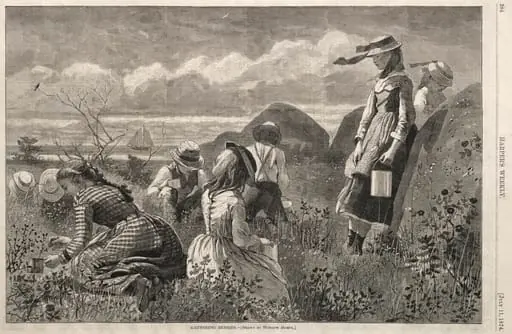 Gathering Berries
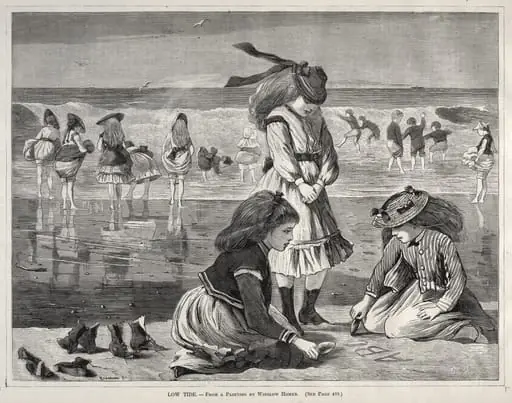 Low Tide
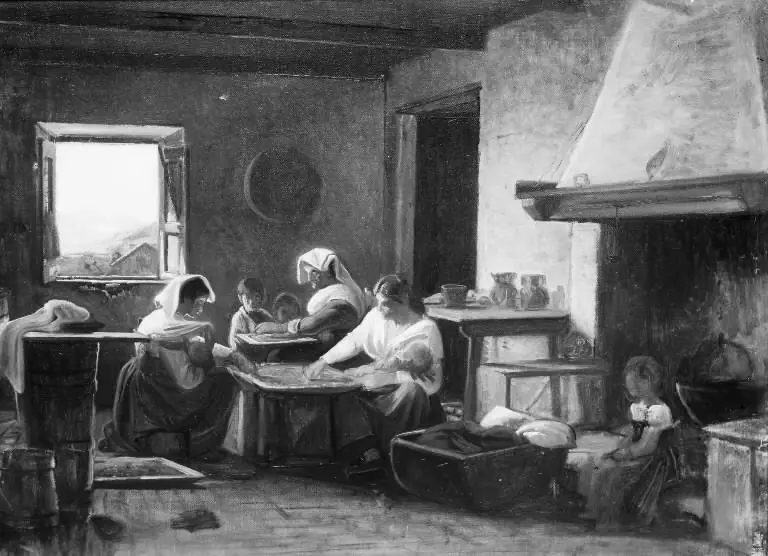 Women Working in the Kitchen of a Farmhouse near Olevano, Italy
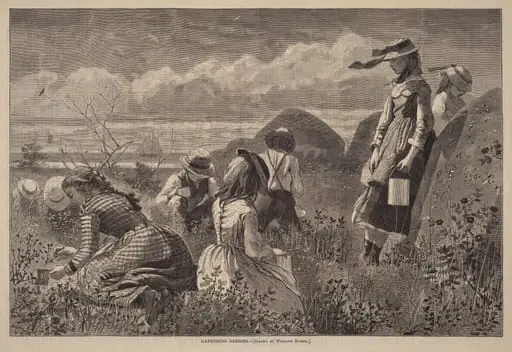 Gathering Berries
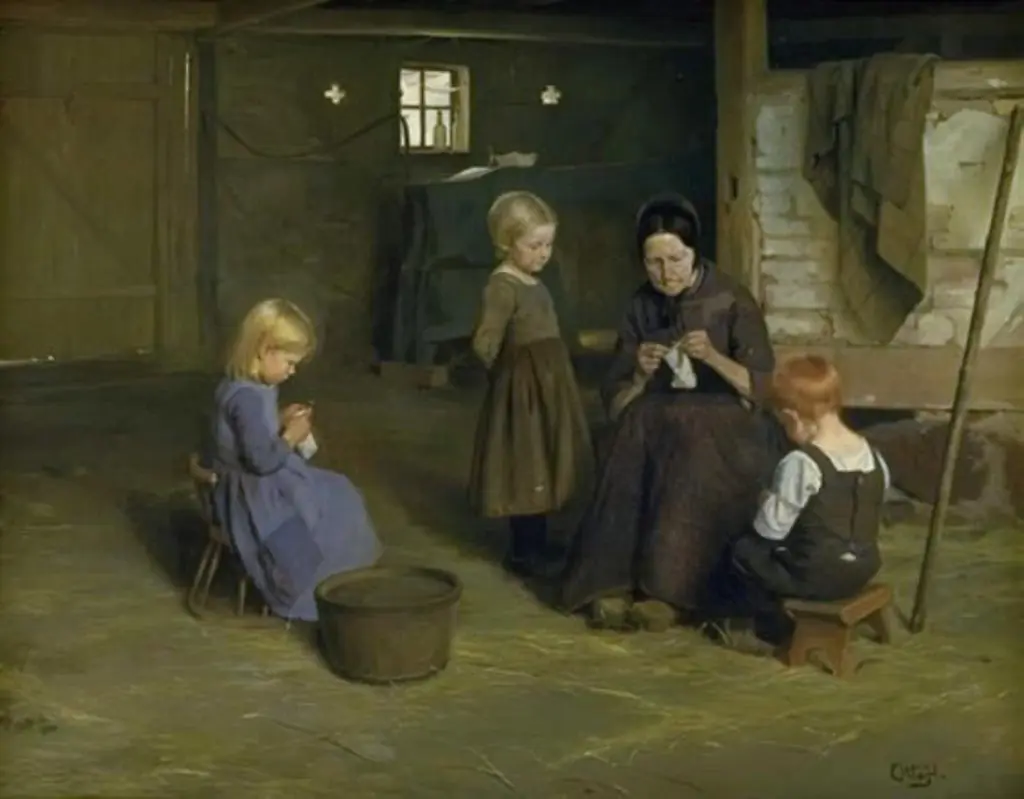 A Knitting Lesson
 A Knitting Lesson
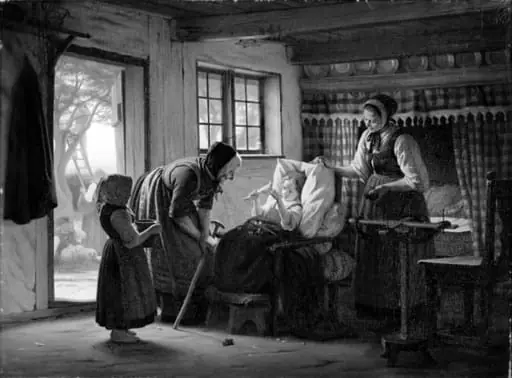 Granmother's visit to the little Convalescent
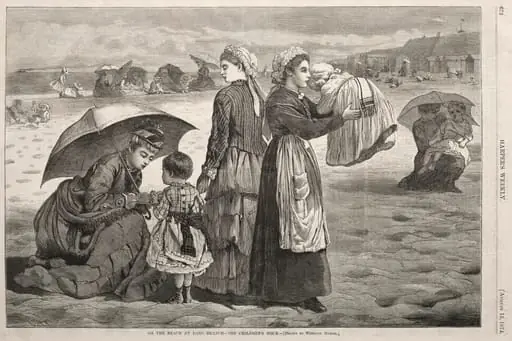 On the Beach at Long Branch - The Children's Hour
 Bathing at Long Branch, - "Oh, Ain't it Cold!"
 Småpiger som leger i klitterne på vej hjem fra skole