Artwork
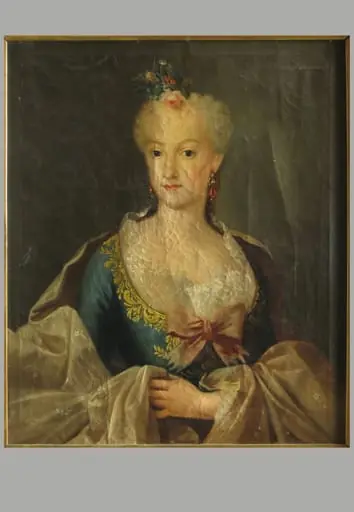
Friederike Luise (1751-1805) als Kronprinzessin von Preußen
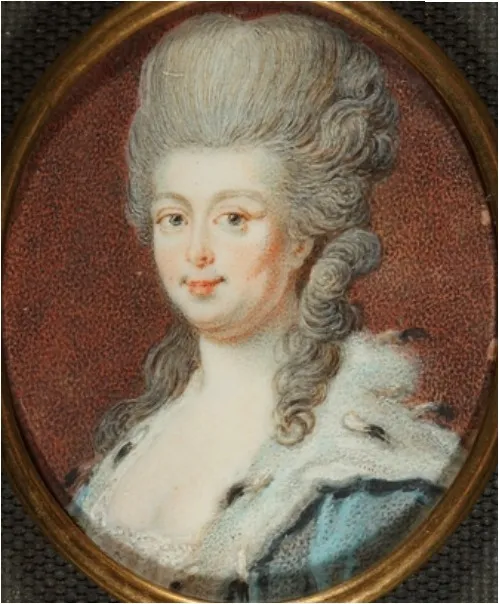
Friederike Luise (1751-1805) als Kronprinzessin von Preußen is a watercolor painting by the Rococo painting artist Anton Friedrich König. It is held in the collection of the Gemäldegalerie Berlin.
About this work
The level of detail in the woman's hair and clothing indicates a high level of skill on the part of the artist.
This portrait painting depicts a woman with a fair complexion, her hair styled in an updo. She wears a blue dress with a white shawl draped over her shoulders. The background is a warm brown color. The woman's attire and hairstyle suggest a formal setting, possibly from the 18th century. The artist's use of ivory as the medium adds a sense of delicacy to the portrait. The level of detail in the woman's hair and clothing indicates a high level of skill on the part of the artist. To learn more about the techniques used in this portrait, look up the term "chiaroscuro".
Overview
This portrait, painted in 1790 by Anton Friedrich König, depicts Friederike Luise of Prussia as crown princess. Executed on ivory, a rare and demanding support, the work reflects the precision valued in late 18th-century court portraiture. It resides in the Gemäldegalerie Berlin, where its small scale and refined execution invite close observation. The medium’s luminous quality enhances the subtle rendering of skin and fabric.
Subject & Meaning
Friederike Luise, wife of the future King Frederick William III, is portrayed in formal court attire, signaling her status within the Prussian royal family. Her composed expression and restrained gestures convey dignity rather than individuality, aligning with the expectations of royal representation. The blue dress and white shawl suggest both elegance and modesty, reinforcing her role as a symbol of dynastic continuity rather than personal identity.
Technique & Style
König employed fine brushwork to capture the texture of lace, silk, and hair on the smooth surface of ivory, a technique requiring exceptional control. The warm brown background isolates the figure, drawing attention to the delicate modeling of her face and shoulders. Subtle gradations of light and shadow, though not overtly dramatic, enhance the three-dimensionality of the form, reflecting a quiet mastery of tonal transition.
History & Provenance
Commissioned during Friederike Luise’s tenure as crown princess, the portrait likely served as a private or diplomatic gift within royal circles. It entered the Gemäldegalerie Berlin’s collection in the 19th century, following the absorption of royal holdings into state museums. Its survival in good condition reflects careful preservation, typical of works associated with the Prussian court.
Context
In the late 1700s, ivory miniatures were favored among European aristocracy for their portability and refined finish. While large-scale oil portraits dominated public display, smaller works like this one circulated in intimate settings, reinforcing personal and political alliances. König’s practice aligned with a tradition of court artists who balanced realism with ceremonial formality.
Legacy
This portrait stands as a representative example of German court portraiture in the late Enlightenment era. Though not widely exhibited, it contributes to the understanding of how royal women were visually constructed through material and style. Its preservation in a major public collection ensures continued scholarly access to the aesthetics and conventions of Prussian elite representation.
Artist & collection

 Sofia Charlotta Karolina, Princess of Hessen-Cassel
 Sofia Charlotta Karolina (1678-1749), prinsessa av Hessen-Kassel, gift hertiginna av Mecklenburg-Schwerin
 Vapaaherratar Maria Sofia Juliana von Blixen
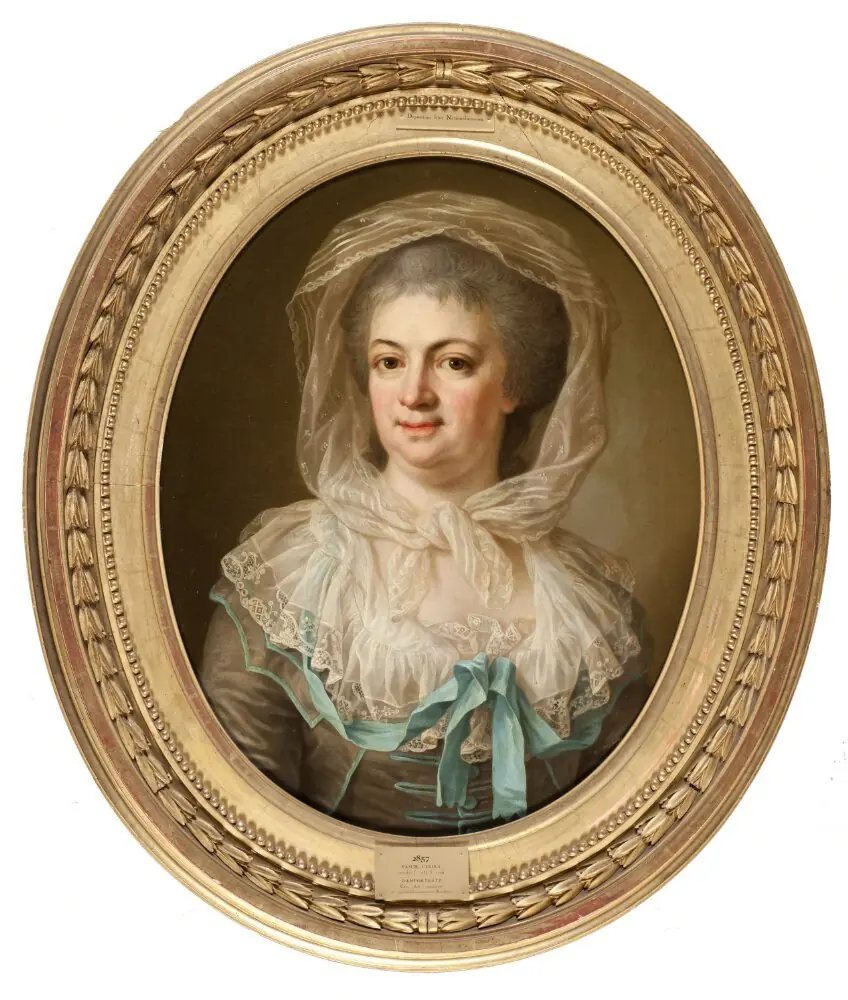 Portrait of a Lady
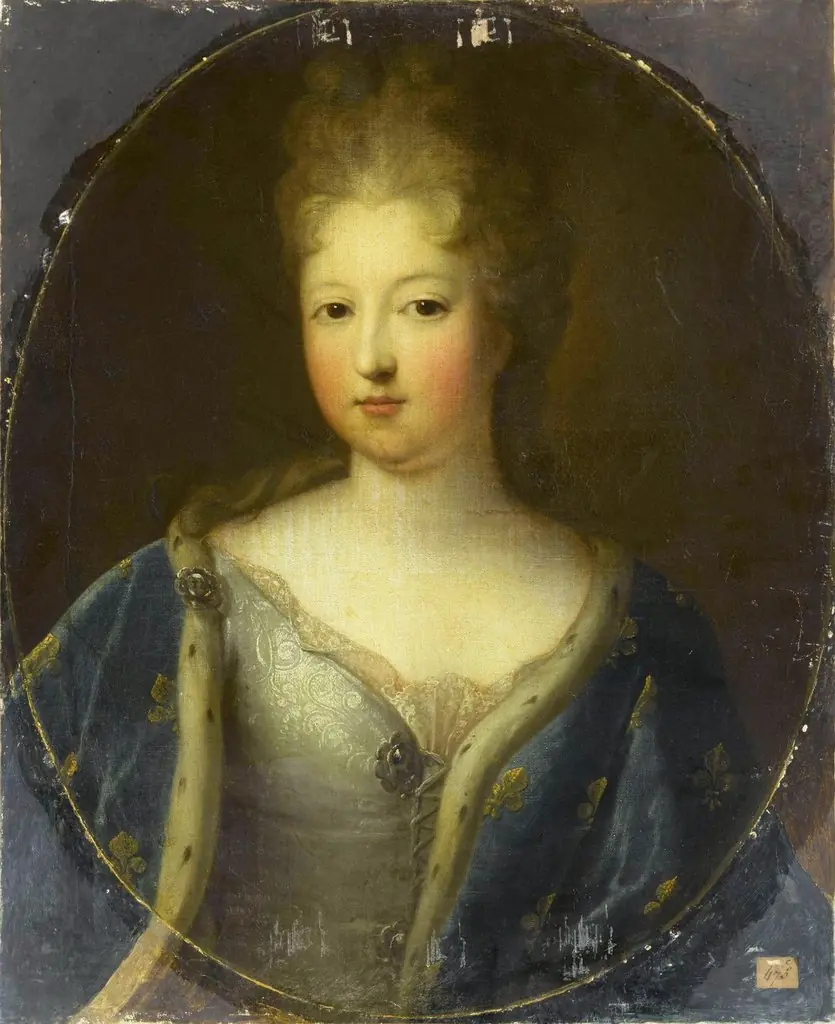 Portrait of Françoise-Marie de Bourbon
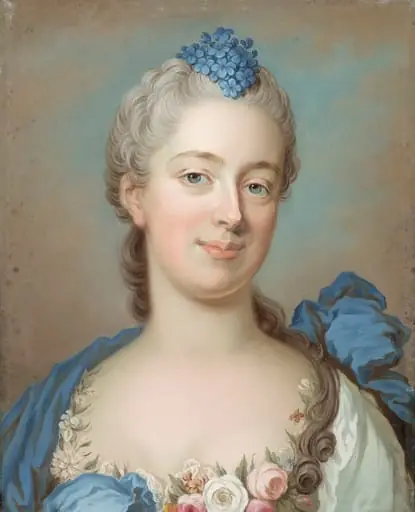 Kreivitär Poaton (?)
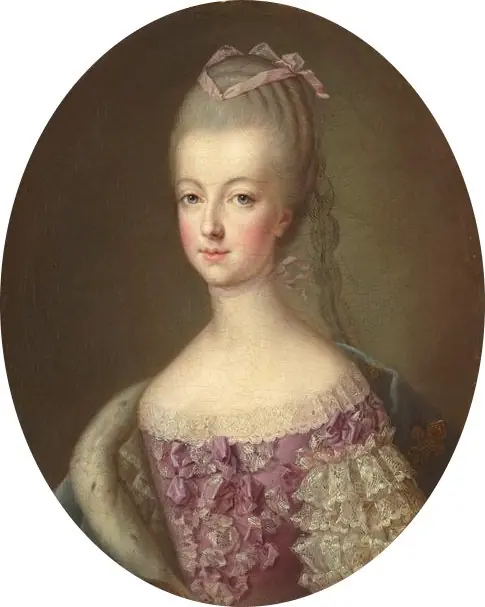 Marie Antoinette of Austria, Dauphine of France, ca. 1770
 Portert de femeie
 Portrait of Anna S. Tulinova
 Portrait of Countess Darya Petrovna Saltykova
 Portret de femeie
 Doamnă în haină rococo