Artwork
Untitled
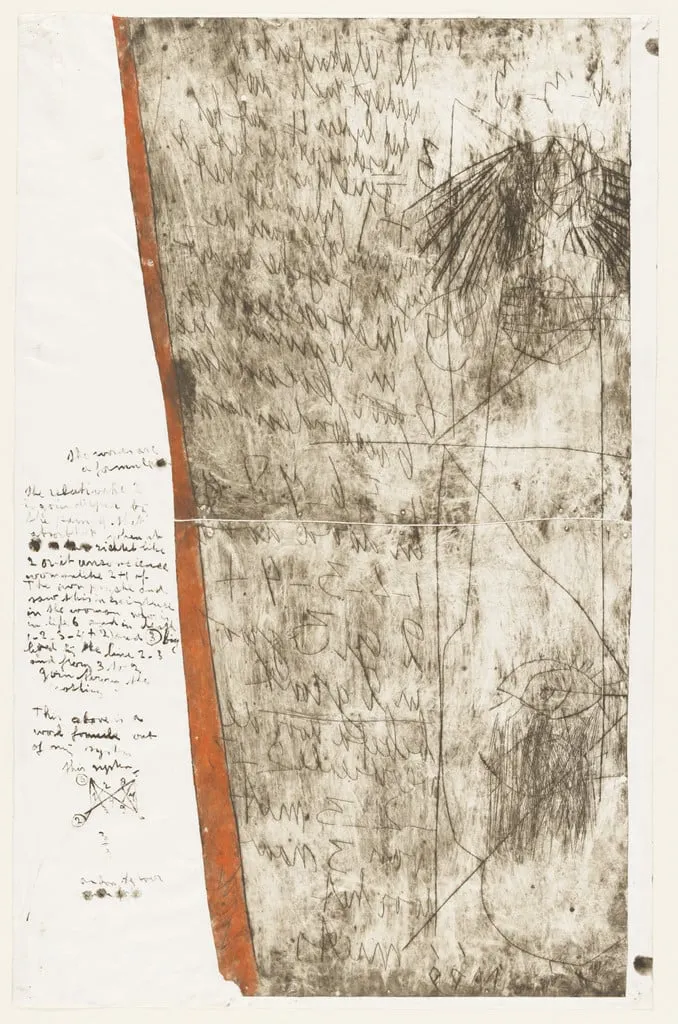
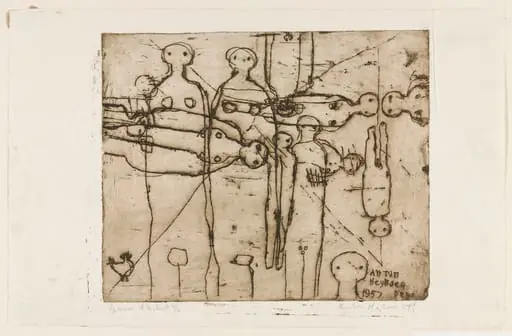
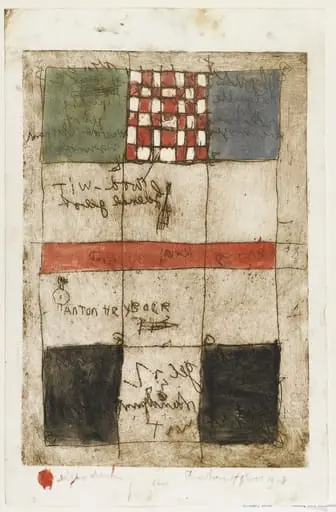
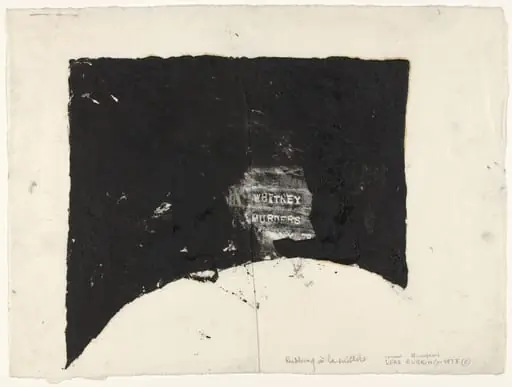
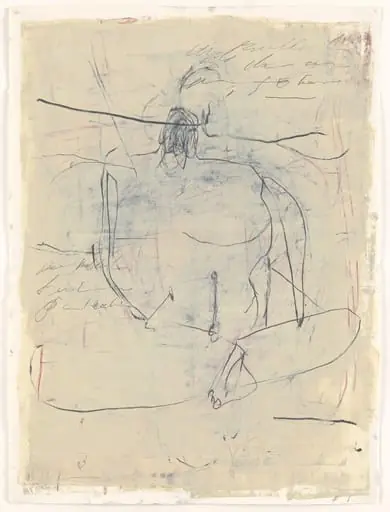
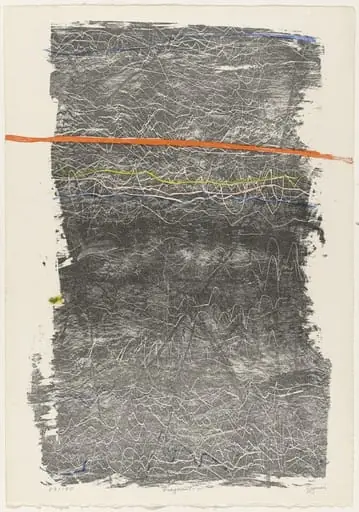
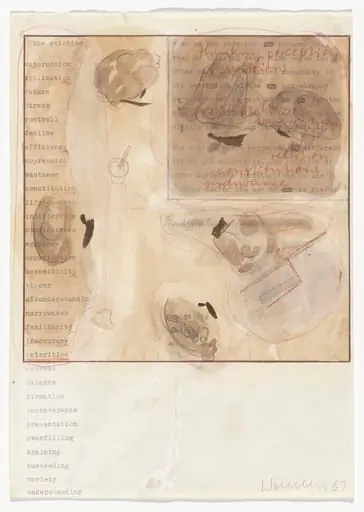
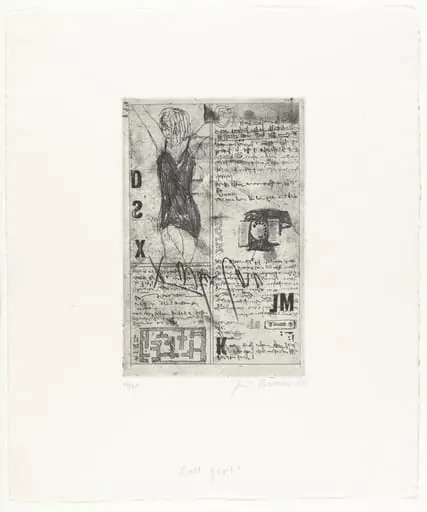
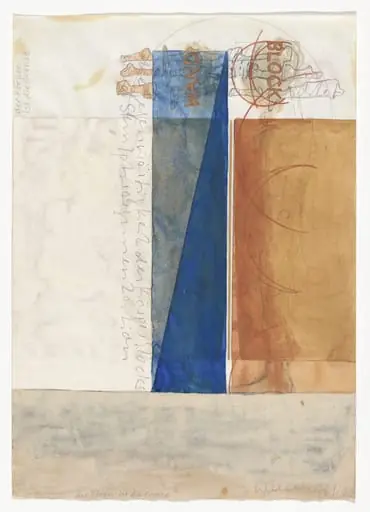
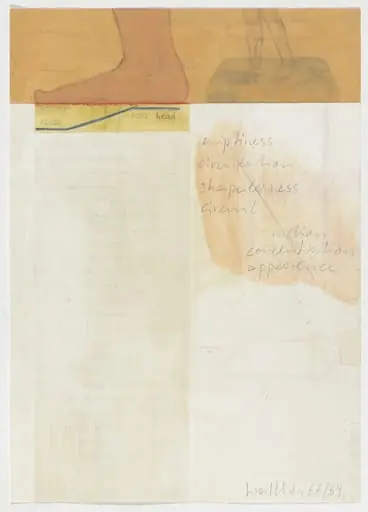
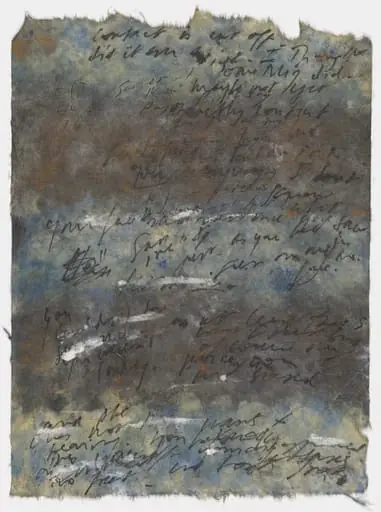
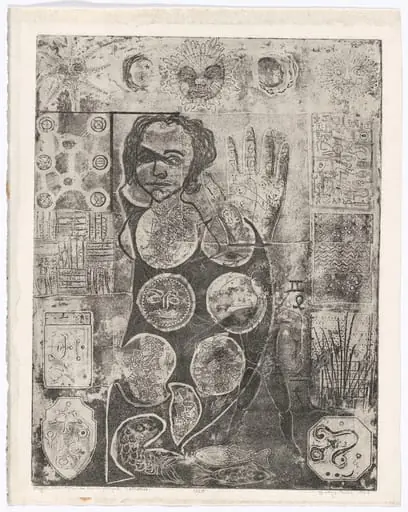
Untitled is an ink print by Anton Heyboer. It dates from 1961 and is held in the collection of the Museum of Modern Art.
About this work
If you like how this feels, look up etching—it’s how artists scratch metal to make prints like this.
You see two tall, jagged shapes side by side on a big sheet of paper. They look like broken teeth or torn metal, scratched in black ink.
Heyboer made this in 1961, right after he left a mental hospital. The title—*The Blinding of Reality*—hints that the shapes might be about seeing, or not seeing. The lines are raw, like he scratched them fast, without planning.
If you like how this feels, look up etching—it’s how artists scratch metal to make prints like this.
Overview
Created in 1961, this etching by Anton Heyboer is part of The Museum of Modern Art’s print collection. Executed shortly after his release from a psychiatric facility, the work bears the marks of a personal turning point. Its stark, vertical forms dominate the page, rendered with urgent, unrefined lines. The absence of a conventional title invites open interpretation, emphasizing the rawness of its execution over narrative clarity.
Subject & Meaning
Two tall, irregular vertical shapes dominate the composition, resembling fractured edges or splintered structures. Their jagged contours suggest rupture or distortion, possibly reflecting internal states rather than external objects. The implied theme of perception—linked to the working title 'The Blinding of Reality'—points to a disruption in visual or psychological clarity, though the artist never formally adopted that name for the piece.
Technique & Style
Heyboer employed direct etching, scratching lines into a metal plate with minimal preparation. The resulting print retains the immediacy of his hand—lines are uneven, forceful, and uncorrected. The ink sits heavily in the grooves, creating deep blacks that contrast sharply with the paper’s white. This method prioritizes expressive gesture over precision, aligning with postwar tendencies toward visceral, unmediated mark-making.
History & Provenance
The work was produced in 1961, following Heyboer’s departure from a mental health institution in the Netherlands. It entered MoMA’s collection in the decades after its creation, recognized for its emotional intensity and technical authenticity. No earlier exhibition history is widely documented, suggesting its significance emerged gradually through institutional recognition rather than public display at the time.
Context
Emerging from a period of personal crisis, Heyboer’s etching aligns with broader European postwar art movements that valued psychological authenticity over formal harmony. His work resonates with contemporaries like Jean Dubuffet and the Art Brut tradition, which celebrated raw expression from marginalized or non-academic creators. The medium of etching, traditionally associated with precision, was here subverted to convey instability and urgency.
Legacy
Though not widely exhibited during his lifetime, this etching contributes to the reassessment of Heyboer’s role in postwar printmaking. Its inclusion in MoMA’s collection signals its importance within narratives of art emerging from psychological experience. The work remains a quiet but potent example of how personal turmoil can translate into formal innovation, influencing later artists exploring trauma and perception through print.
Artist & collection