Artwork
Self-portrait
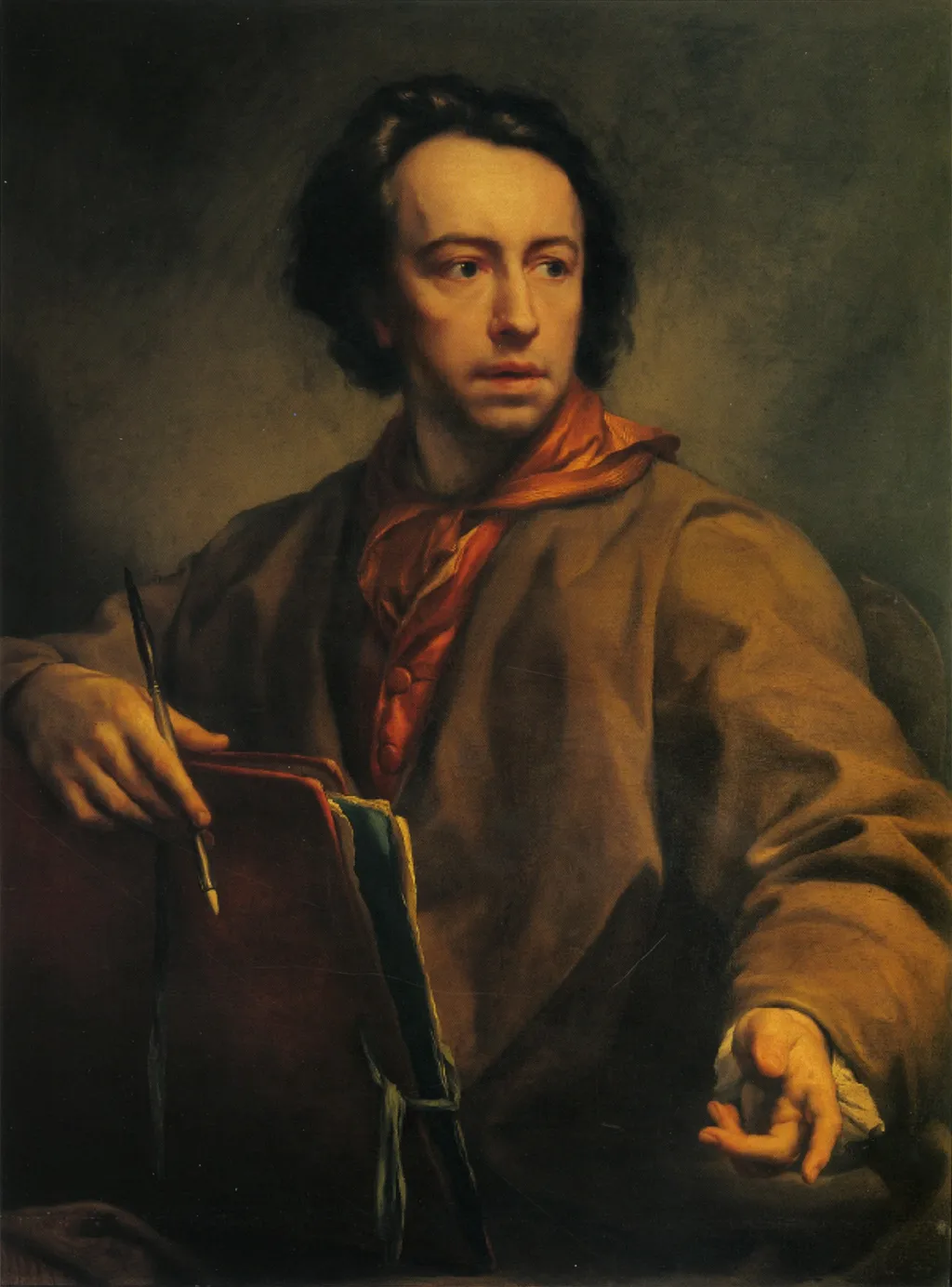
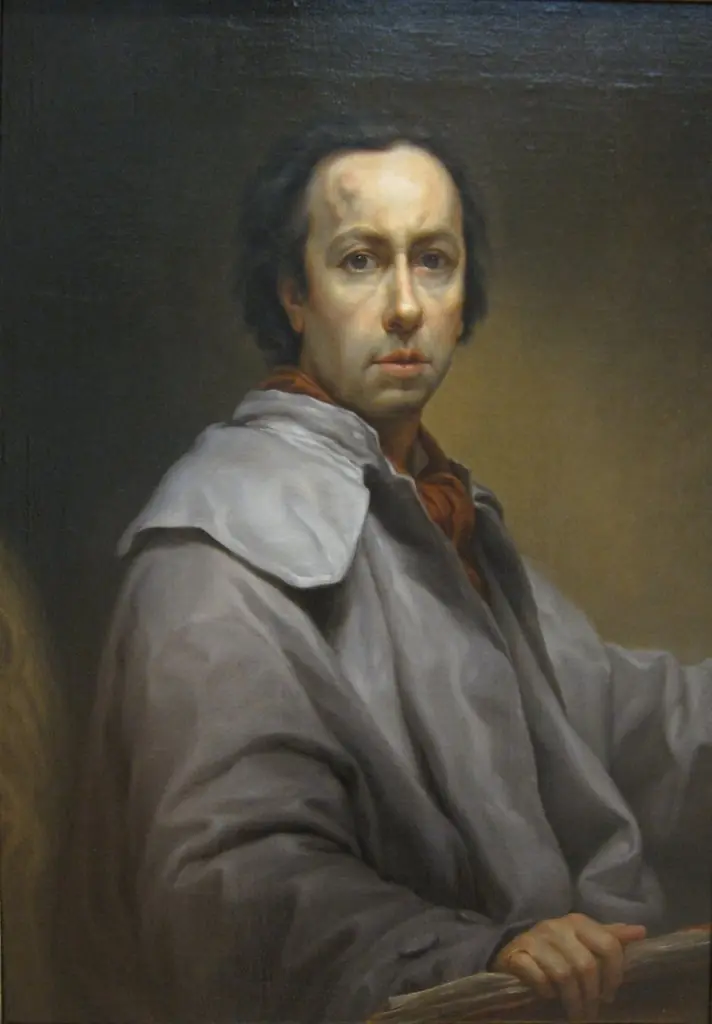
Self-portrait is an oil painting by the Rococo painting artist Anton Raphael Mengs. It dates from 1773 and is held in the collection of the Uffizi Gallery.
About this work
Overview
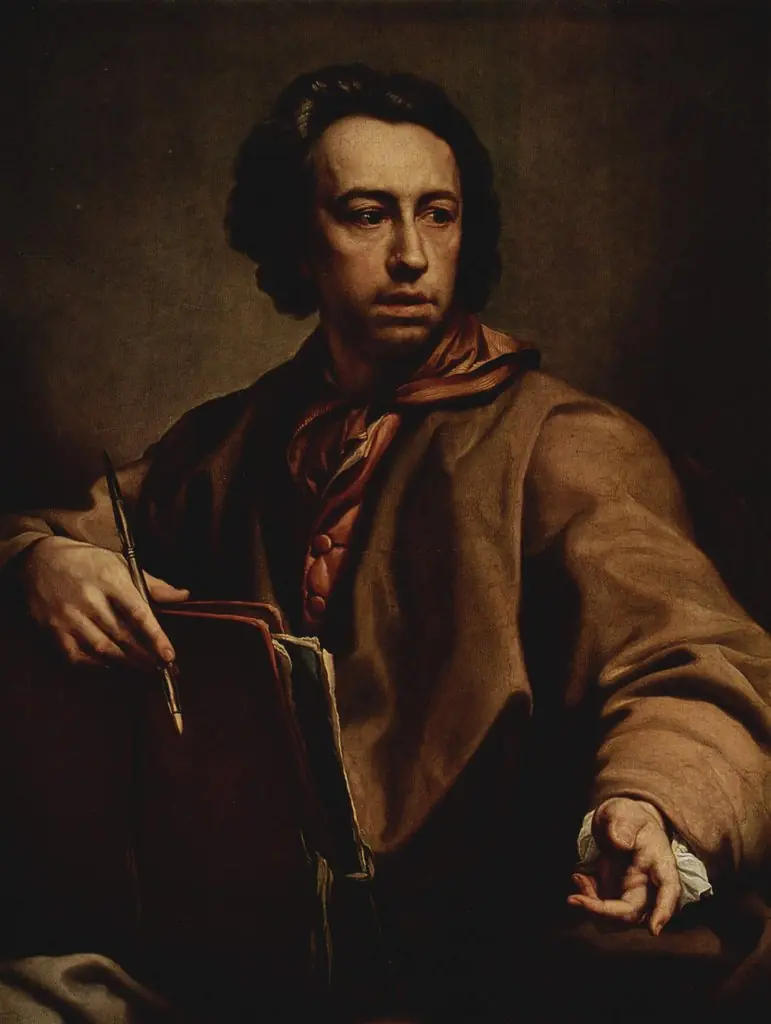
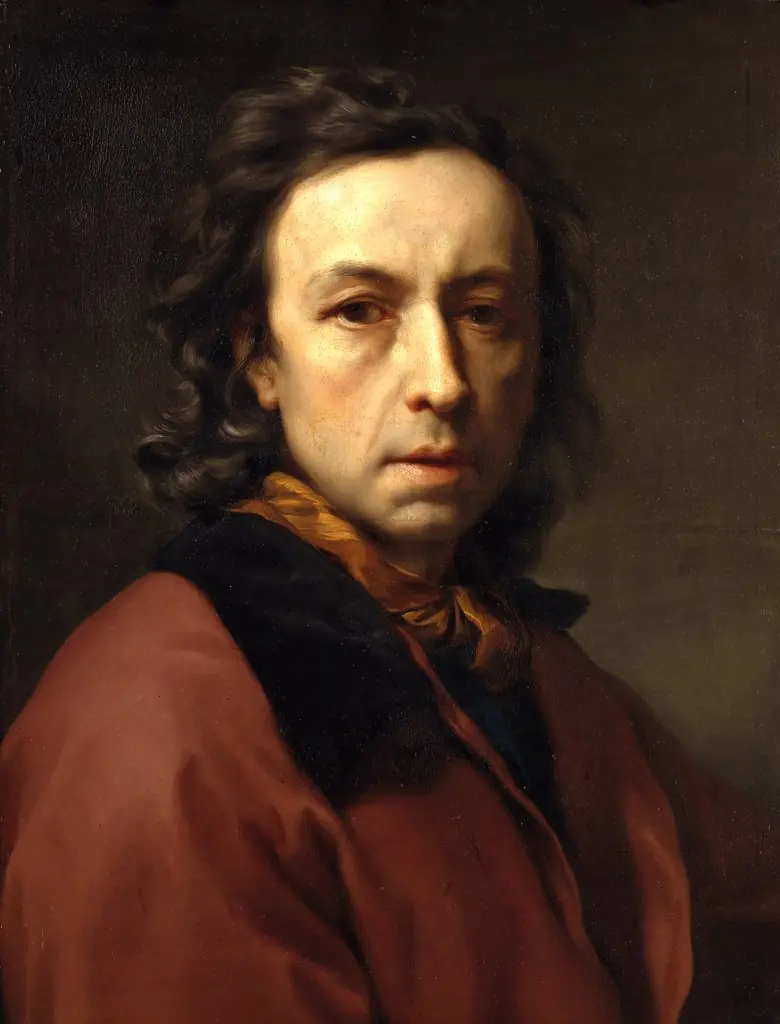
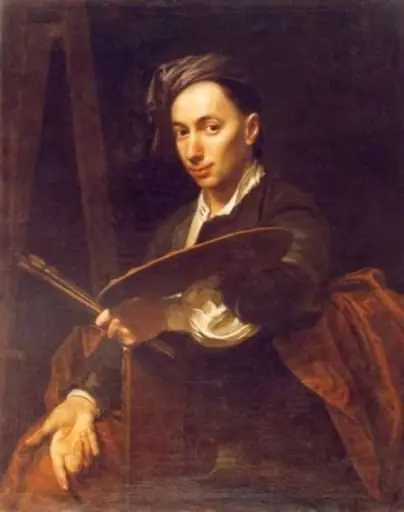
Painted in 1773, this oil on canvas work is a self-portrait by Anton Raphael Mengs, a prominent Neoclassical artist of the 18th century. The painting is part of the Uffizi Gallery’s collection in Florence, where it has been held since its creation. It presents the artist in a composed, introspective pose, capturing him at work with tools of his trade visible in his hands.
Subject & Meaning
Mengs portrays himself with a solemn gaze, dressed in a brown jacket over a red shirt, holding a paintbrush and palette in his right hand.
Mengs portrays himself with a solemn gaze, dressed in a brown jacket over a red shirt, holding a paintbrush and palette in his right hand. His left hand is raised, palm open, as if inviting the viewer into his creative space or gesturing toward an unseen composition. The gesture suggests reflection on artistic purpose rather than mere self-display, aligning with Enlightenment ideals of the artist as a thoughtful intellectual.
Technique & Style
The painting employs a restrained palette dominated by muted grays and browns, with subtle contrasts in lighting to model the face and hands. The background is deliberately neutral, drawing focus to the figure. Mengs avoids dramatic chiaroscuro, favoring even illumination that emphasizes clarity and form—hallmarks of his Neoclassical approach, which prioritized line and structure over emotional intensity.
History & Provenance
Completed in 1773, the portrait was likely painted during Mengs’s time in Italy, where he was active in artistic circles and advising on classical aesthetics. It entered the Uffizi’s collection shortly after its creation, possibly through direct acquisition or donation. Its continuous presence in the gallery since the 18th century underscores its recognition as a significant record of the artist’s identity and professional stance.
Context
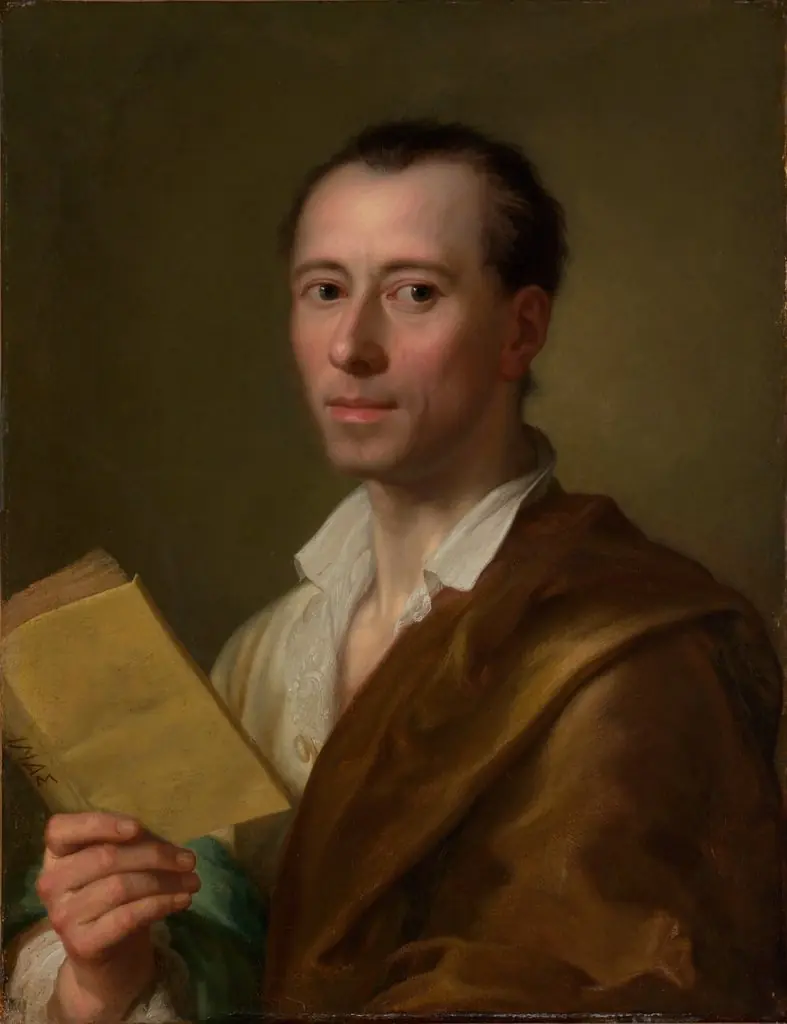
In the 1770s, Mengs was a leading figure in the shift away from Rococo ornamentation toward classical restraint. This self-portrait reflects his role as both practitioner and theorist of Neoclassicism, aligning with contemporaries like Winckelmann who championed ancient ideals. The quiet dignity of the image mirrors broader cultural values that elevated the artist as a rational, disciplined creator rather than a flamboyant showman.
Legacy
The portrait remains a key example of how 18th-century artists represented themselves with intellectual gravitas. While Mengs’s broader influence waned after his death, this work endures as a quiet testament to his commitment to classical principles. It continues to inform studies of artistic identity in the Neoclassical era, offering insight into how painters positioned themselves within evolving cultural discourses.
Own this work as a print
Artist & collection