Artwork
Portrait of Carolina Wilhelmina of Orange (1743-1787) and her Children
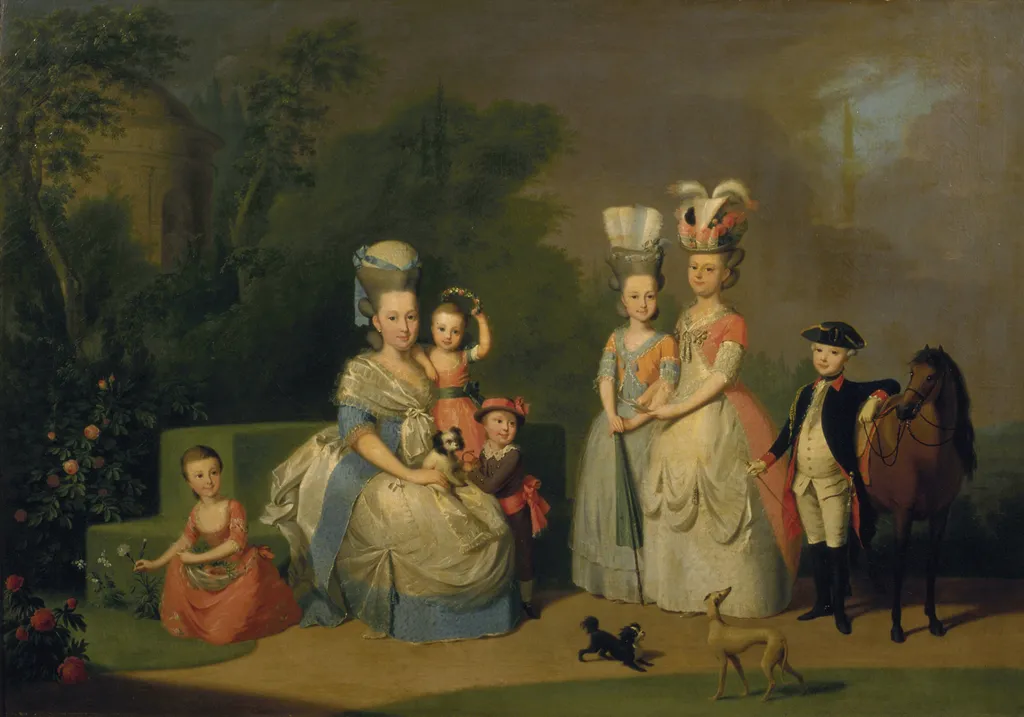
Portrait of Carolina Wilhelmina of Orange (1743-1787) and her Children is an oil painting by the Rococo painting artist Anton Tischbein. It dates from 1770 and is held in the collection of the Mauritshuis. Painted in 1770 by Anton Wilhelm Tischbein, this oil portrait captures Carolina Wilhelmina of Orange with her children in a garden setting.
About this work
Overview
The work is held in the Mauritshuis collection, where it exemplifies 18th-century portraiture that blends aristocratic presence with domestic warmth.
Painted in 1770 by Anton Wilhelm Tischbein, this oil portrait captures Carolina Wilhelmina of Orange with her children in a garden setting. A member of the German Tischbein artistic lineage, Tischbein rendered the scene with attention to familial intimacy and natural surroundings. The work is held in the Mauritshuis collection, where it exemplifies 18th-century portraiture that blends aristocratic presence with domestic warmth.
Subject & Meaning
The painting portrays Carolina Wilhelmina, a princess of Orange, alongside her offspring, emphasizing lineage and maternal role within noble circles. The children, dressed more simply than their mother, suggest a contrast between public status and private life. The garden setting, with its cultivated flora and distant architecture, frames the family as both elevated and grounded, reflecting ideals of enlightened nobility in the late Enlightenment era.
Technique & Style
Tischbein employed visible brushwork to convey texture in fabric, foliage, and skin, avoiding the polished smoothness typical of some contemporaries. A nuanced interplay of warm tones in the figures’ attire and cooler hues in the landscape creates visual harmony. Light falls naturally across the group, suggesting outdoor illumination without overt dramatization, aligning with Rococo’s softer aesthetic while retaining psychological presence.
History & Provenance
Commissioned during Carolina Wilhelmina’s time in the Netherlands, the painting remained within family circles before entering the Mauritshuis collection. Its preservation reflects the continued interest in Orange family imagery during the 18th and 19th centuries. No major alterations or reworkings are documented, and the work has retained its original frame and composition since its creation.
Context
Created in the decade before the French Revolution, the portrait reflects aristocratic values still dominant in European courts. While Rococo’s ornamental tendencies are present, the composition avoids excessive decoration, favoring naturalism and quiet dignity. The inclusion of children in noble portraiture was becoming more common, signaling a shift toward familial sentiment as a marker of moral character among the elite.
Legacy
Tischbein’s portrait contributes to a broader trend of domestic portraiture among European nobility, where personal identity and kinship were visually affirmed. Though not widely exhibited outside the Netherlands, it remains a key example of how German-trained artists adapted to Dutch aristocratic tastes. The work continues to inform studies of gender, family, and visual culture in the late Enlightenment.
Own this work as a print
Artist & collection
Artist
Anton Wilhelm Tischbein, known as the Hanauer Tischbein (1 March 1730, Haina - 1 November 1804, Hanau) was a German painter from the Tischbein family of artists.

 Portrait of David George van Lennep, Chief Merchant of the Dutch Factory at Smyrna (Izmir) and his Wife and Children
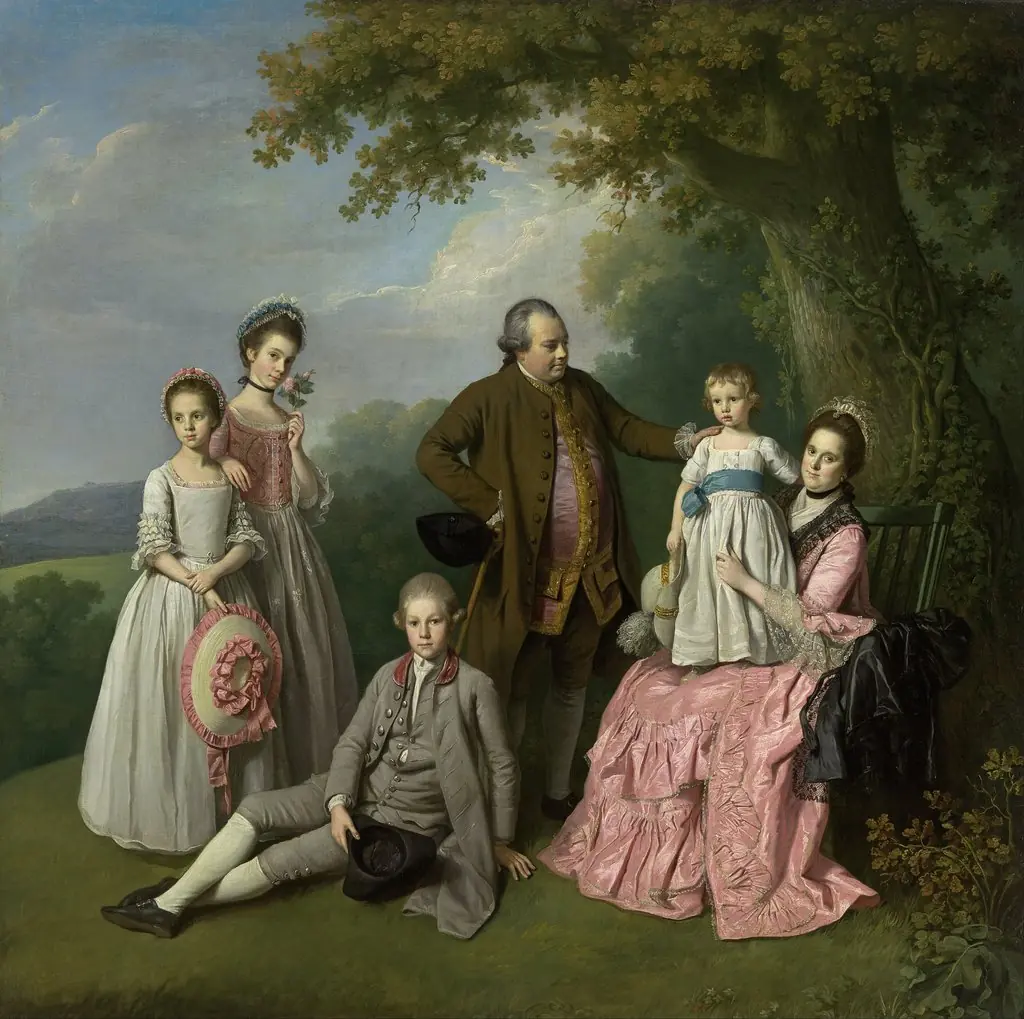 The Pybus family
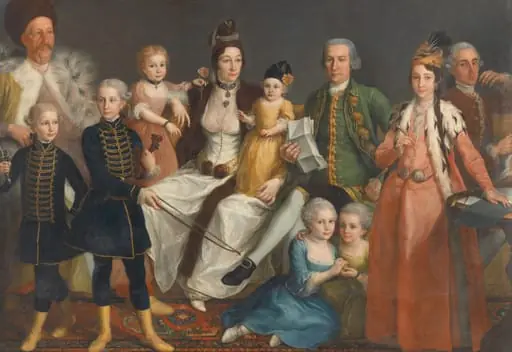 Portrait of the Van Lennep Family, a Merchant Family in Izmir
 A Family Group on a Terrace in the Grounds of a Villa. Possibly the English Businessman George Jackson and his Family
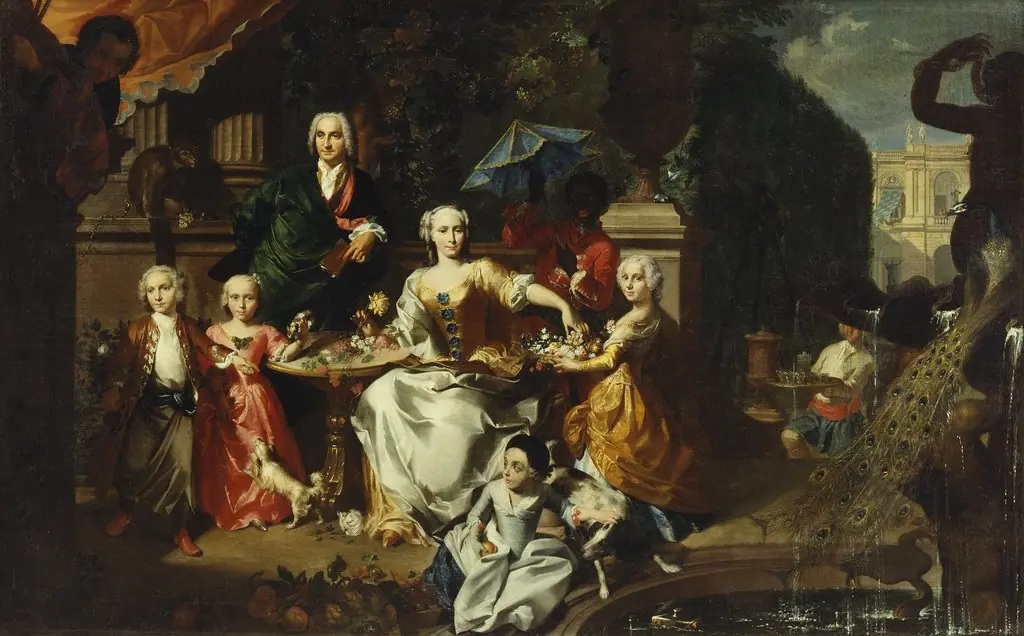 A Family Group on a Terrace in the Grounds of a Villa. Possibly the English Businessman George Jackson and his Family
 Portrait of Theodorus Bisdom van Vliet and his Family
 The Wilkinson Family
 The Souchay Family
 A large family piece