Artwork
Saint Francis of Assisi in the Portiuncula
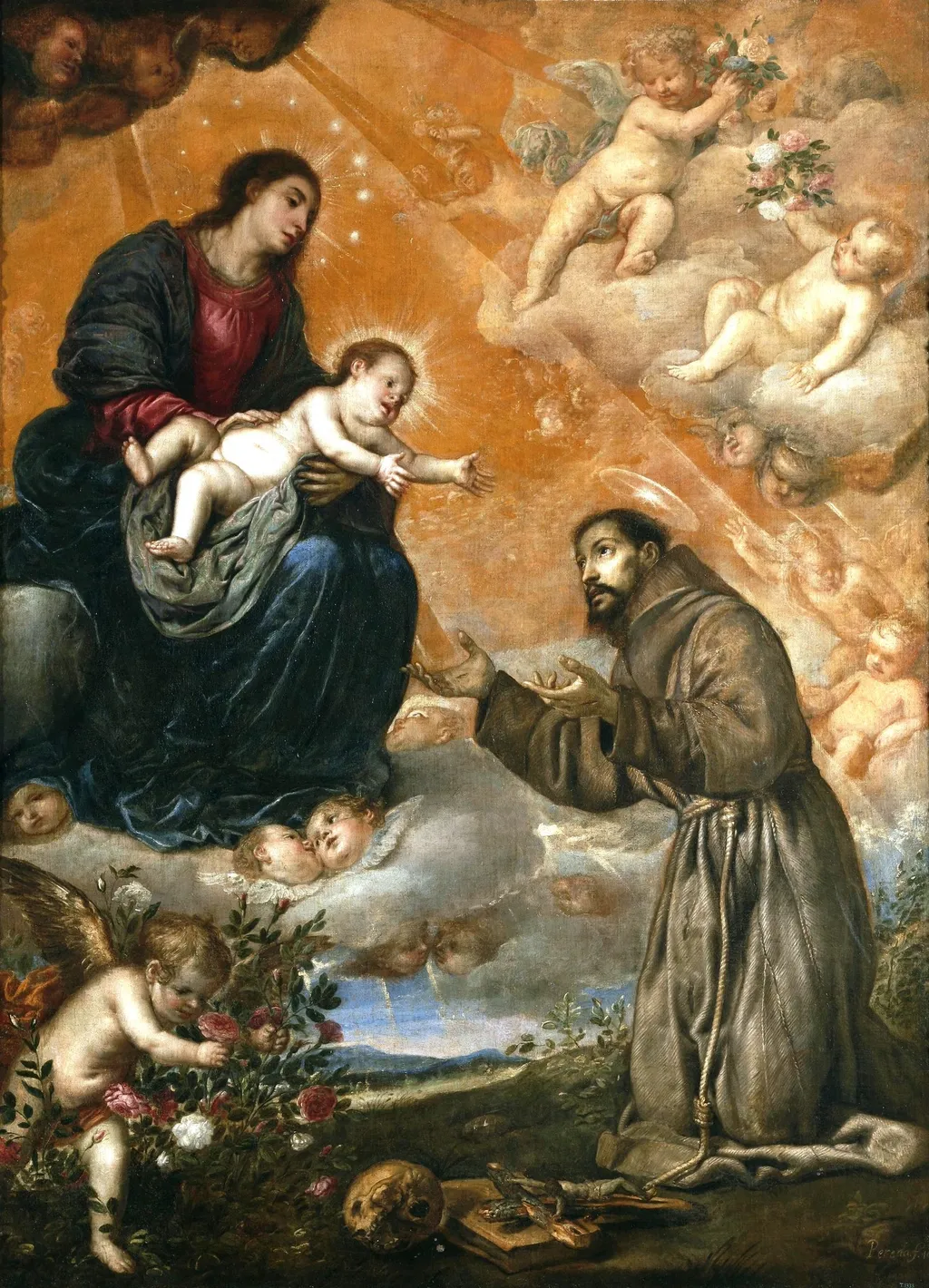
Saint Francis of Assisi in the Portiuncula is an oil painting by the Early Baroque Italian artist Antonio de Pereda. It dates from 1664 and is held in the collection of the Museo del Prado.
About this work
Overview
Antonio de Pereda, a Spanish painter active in the mid‑17th century, completed an oil painting titled *Saint Francis of Assisi in the Portiuncula* in 1664. The work belongs to the religious genre and is part of the Prado Museum’s collection.
Subject & Meaning
The composition centers on Saint Francis, shown with a book, a crucifix and a skull—symbols of learning, devotion and mortality that reference his renunciation of worldly concerns and his contemplation of death.
Technique & Style
Executed in the early Baroque idiom, the painting employs a strong chiaroscuro contrast, with illuminated figures emerging from a darker background. The handling of oil paint gives a tactile sense to the textures of cloth and the smoothness of the objects.
History & Provenance
Created in 1664, the canvas entered the Spanish royal collection and later was transferred to the Museo del Prado, where it remains on public display.
Context
Pereda’s work reflects the influence of Italian Baroque models, particularly the dramatic lighting and devotional intensity favored by artists such as Caravaggio, while retaining a distinctly Spanish sensibility in its sober palette and emphasis on piety.
Own this work as a print
Artist & collection
Artist
Antonio de Pereda y Salgado (c. 1611 – January 30, 1678) was a Spanish Baroque-era painter, best known for his still lifes.