Artwork
Saint Anthony of Padua
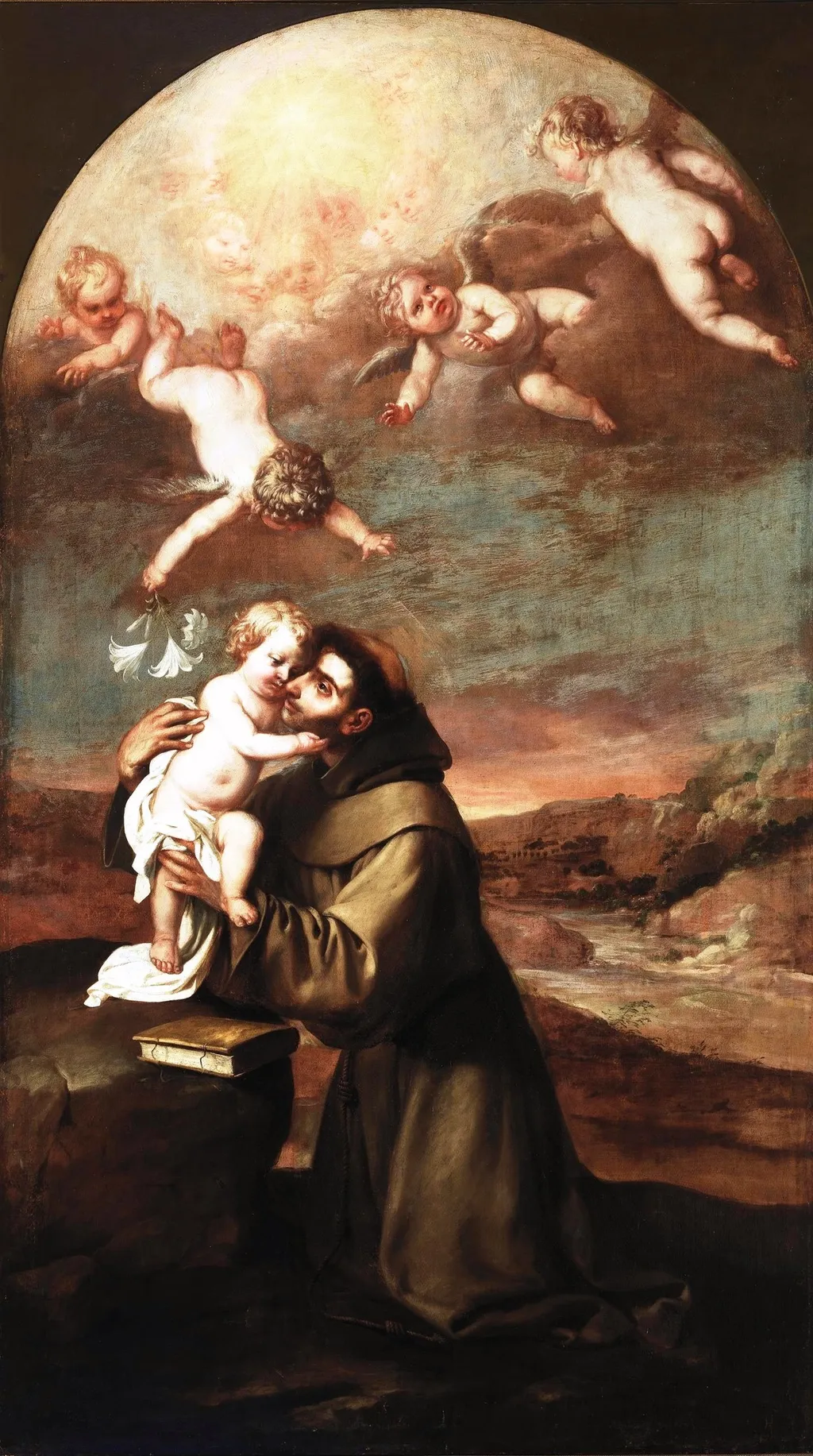
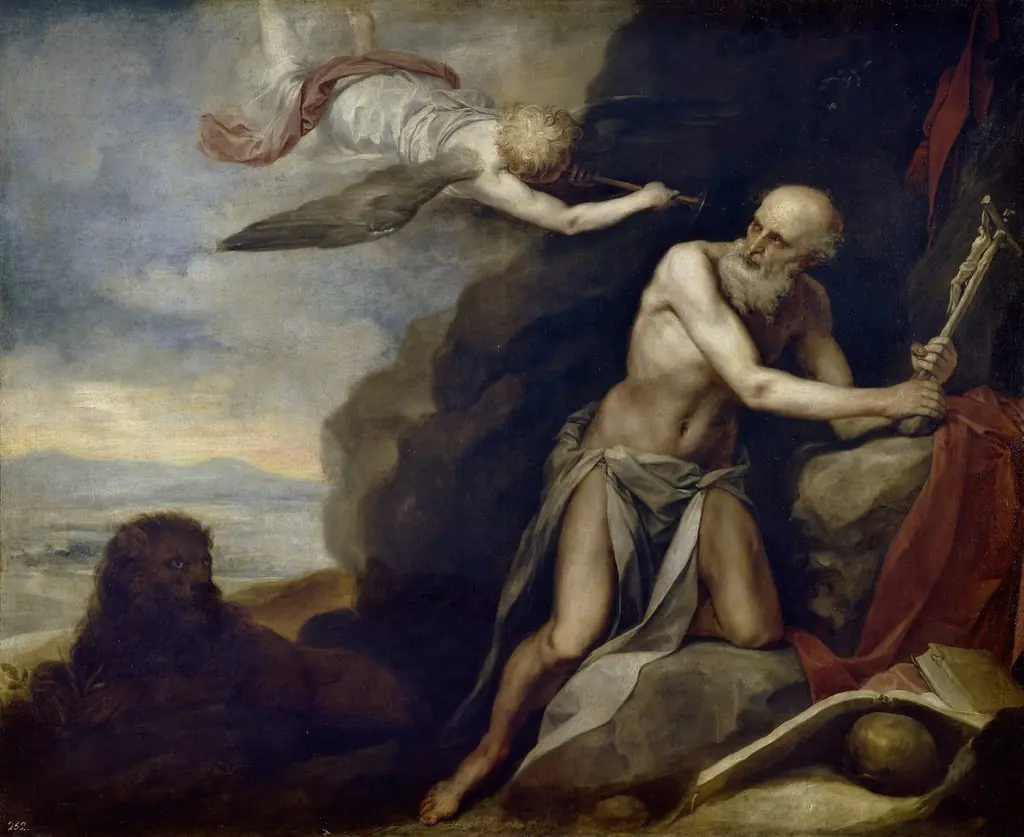
Saint Anthony of Padua is an oil painting by the Early Baroque Italian artist Alonso Cano. It dates from 1601 and is held in the collection of the Museo del Prado.
About this work
Overview
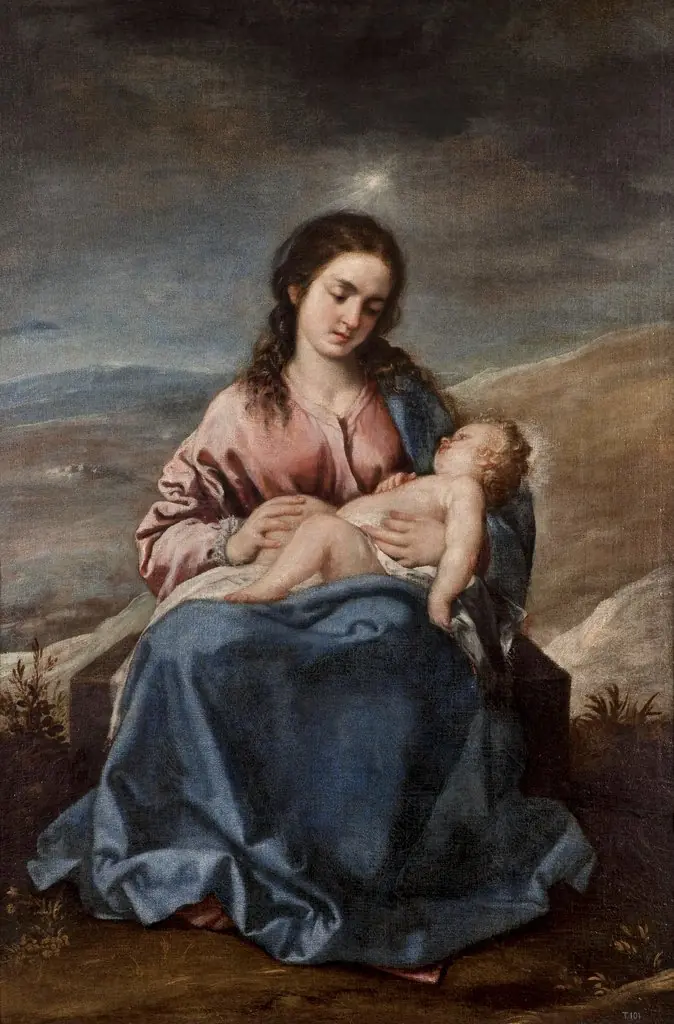
Alonso Cano’s 1601 oil painting, Saint Anthony of Padua, is part of the Museo del Prado collection. The work presents the Franciscan saint in a contemplative pose, surrounded by a modest landscape that frames his figure and the symbolic objects he holds.
Subject & Meaning
The saint is shown kneeling on a rocky ledge, clutching a newborn infant swaddled only in a white cloth, while a book rests nearby. The infant represents the Christ child, a common motif in depictions of Anthony, underscoring his role as a mediator between the divine and the faithful.
Technique & Style
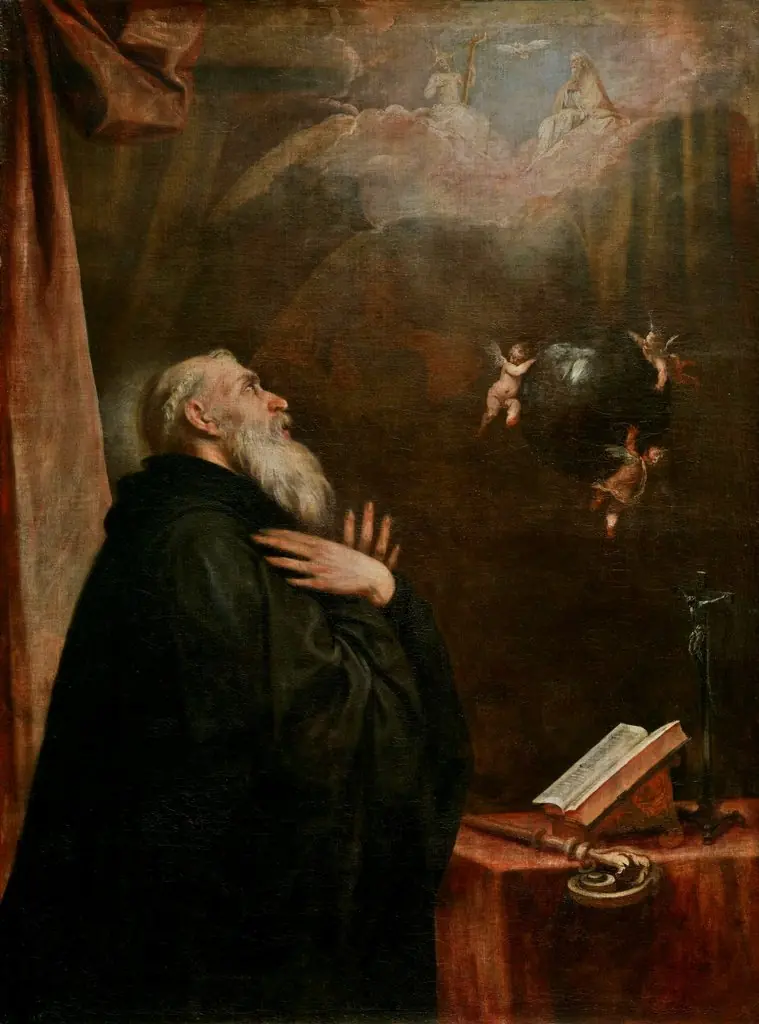
Cano employs a pronounced chiaroscuro, using strong contrasts of light and shadow to model the figures and give them a three‑dimensional presence. The luminous orb above the scene casts a warm glow that unifies the sky, the landscape, and the figures, creating a tranquil, devotional atmosphere.
History & Provenance
Created in the early seventeenth century, the painting entered the Spanish royal collection before being transferred to the Museo del Prado, where it remains on display. Its provenance reflects the typical path of Spanish religious works from court patronage to public museum.
Context
The work belongs to the Baroque period in Spain, a time when artists like Cano blended dramatic lighting with serene religious narratives. The inclusion of cherubic figures and a radiant celestial sphere aligns the composition with contemporary Counter‑Reformation iconography, emphasizing divine presence and spiritual contemplation.
Artist & collection