Artwork
In the Sea
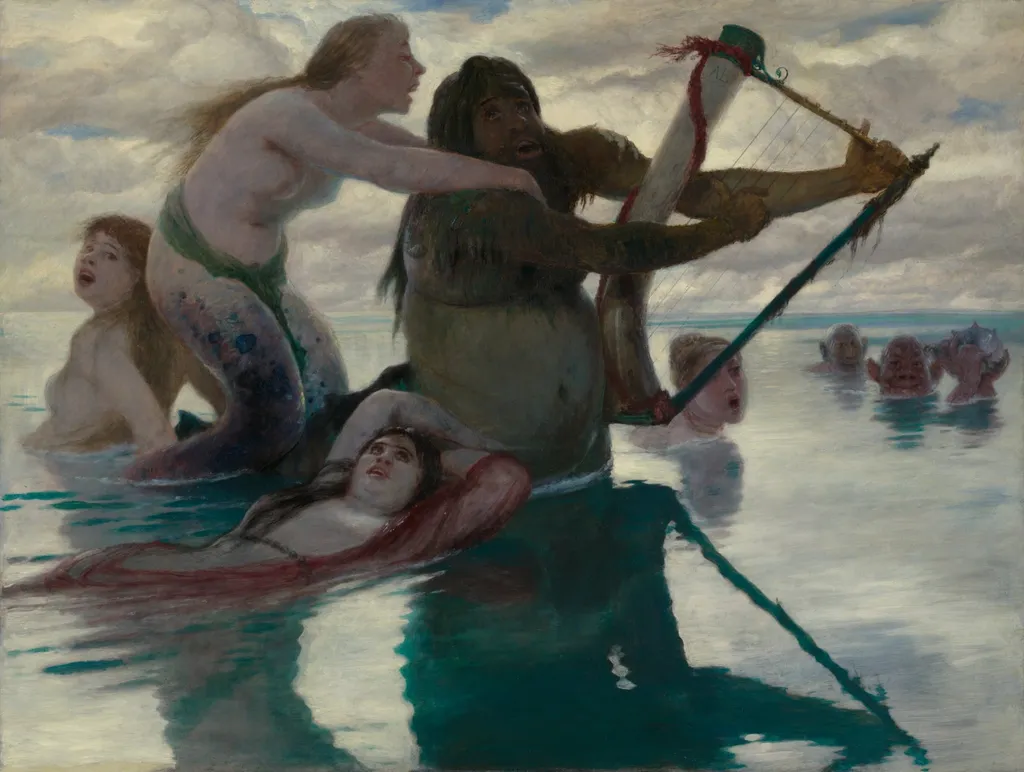
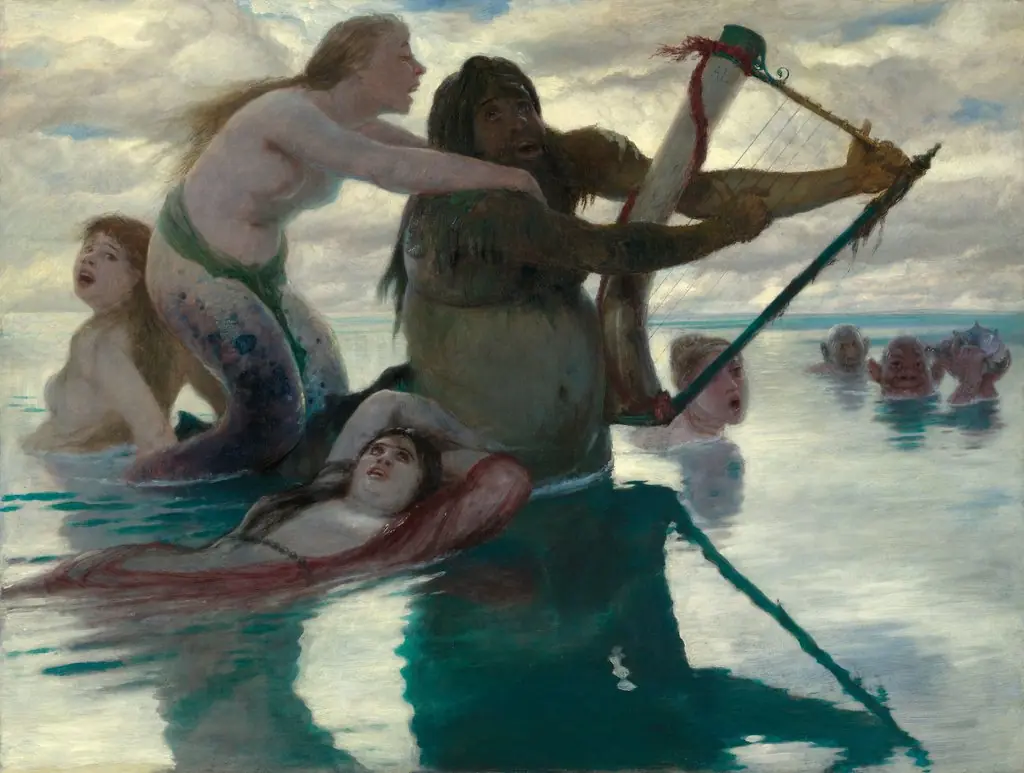
In the Sea is an oil painting by the Impressionist artist Arnold Böcklin. It dates from 1883 and is held in the collection of the Art Institute of Chicago.
About this work
Overview
Arnold Böcklin’s In the Sea is an oil-on-panel painting from a series of mythological works that diverge from both academic tradition and Impressionist trends.
Arnold Böcklin’s In the Sea is an oil-on-panel painting from a series of mythological works that diverge from both academic tradition and Impressionist trends. Rather than idealized deities, Böcklin presents mythic figures as visceral, earthbound beings. The scene unfolds in a dense, tactile sea where mermaids and a triton interact with physical immediacy, evoking neither divine grace nor romantic fantasy, but a raw, almost primal vitality.
Subject & Meaning
The painting centers on a harp-playing triton surrounded by three mermaids clinging to his body, their postures suggesting both intimacy and intrusion. Their gestures—laughter, stillness, thrusting contact—convey unrefined sensuality. Unsettling elements, such as the distorted underwater reflections and the looming, large-eared heads emerging from the depths, introduce an undercurrent of unease. These details transform the scene from a simple mythic tableau into a psychological landscape of desire and ambiguity.
Technique & Style
Böcklin employs thick impasto to render the sea as a heavy, viscous medium, more like wet earth than water. The figures are modeled with textured brushwork, emphasizing their organic, almost monstrous flesh. Color is muted and earth-toned, avoiding luminosity in favor of somber saturation. This tactile handling of paint reinforces the physicality of the mythic subjects, grounding their supernatural forms in a tangible, tangible world.
History & Provenance
In the Sea is one of thirty-five works in the Winterbotham Collection, assembled in the late 19th and early 20th centuries. The painting reflects Böcklin’s sustained interest in classical mythology reimagined through personal symbolism. Its inclusion in this collection underscores its significance to collectors drawn to his unconventional mythologies, which stood apart from prevailing artistic norms of the period.
Context
Böcklin’s work emerged during a time when academic art favored polished narratives and Impressionism pursued light and atmosphere. He instead cultivated a personal mythology, blending classical motifs with psychological depth and bodily realism. His paintings, though rooted in antiquity, resonated with emerging Symbolist concerns—mystery, inner states, and the uncanny—making him a bridge between Romanticism and modernist introspection.
Legacy
Böcklin’s distinctive vision influenced later movements, particularly Symbolism and Surrealism. Giorgio de Chirico cited him as a key inspiration, drawn to the eerie stillness and unresolved tension in his scenes. In the Sea, with its unsettling realism and ambiguous emotions, exemplifies how Böcklin transformed myth into a vehicle for psychological unease, leaving a quiet but enduring mark on 20th-century visual language.
Own this work as a print
Artist & collection
Artist
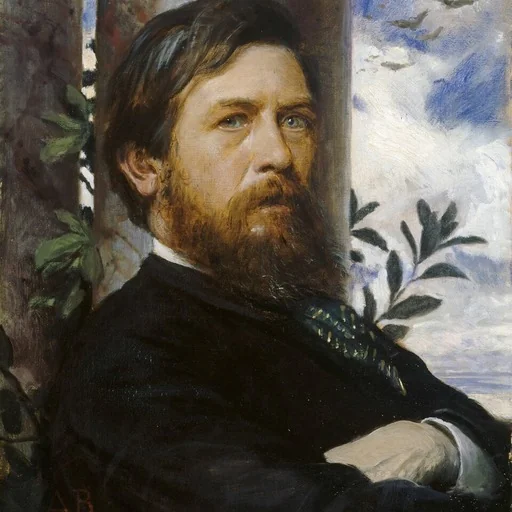
Arnold Böcklin was a Swiss Symbolist painter. His five versions of the Isle of the Dead inspired works by several late Romantic composers.

 Tritons
 The Sirens
 Et fruentimmer bortføres over søen af fire tritoner
 Et fruentimmer bortføres over søen af fire tritoner
 By the River of Tuonela, study for the Jusélius Mausoleum frescos
 Undertow
 The Deliverance of Arsinoe
 Diana
Diana Manhood. From the series: The Four Ages of Man
 Triumph of the Marine Venus
 In the Waves (Dans les Vagues)