Artwork
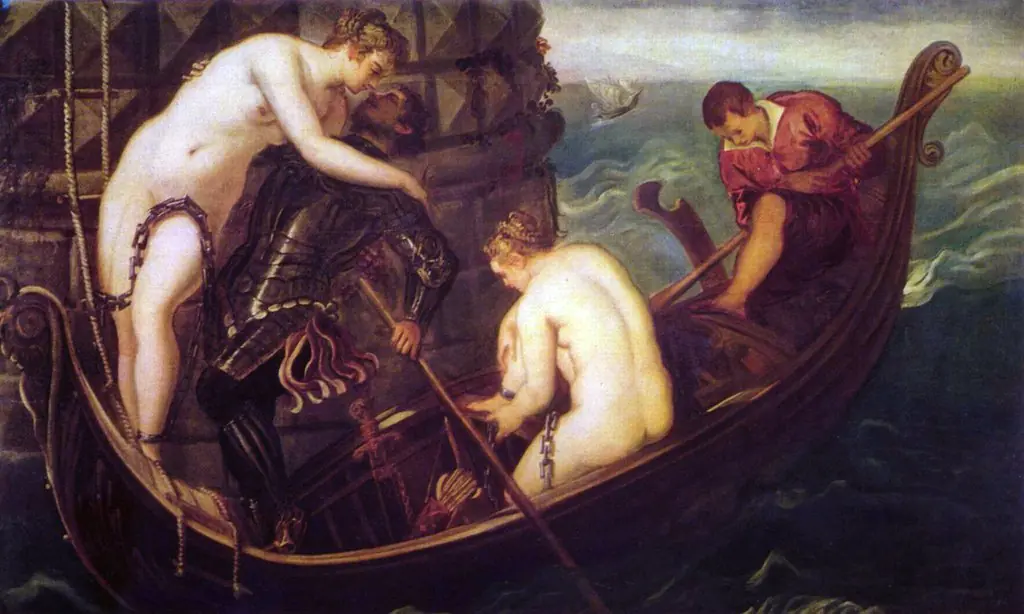
Et fruentimmer bortføres over søen af fire tritoner
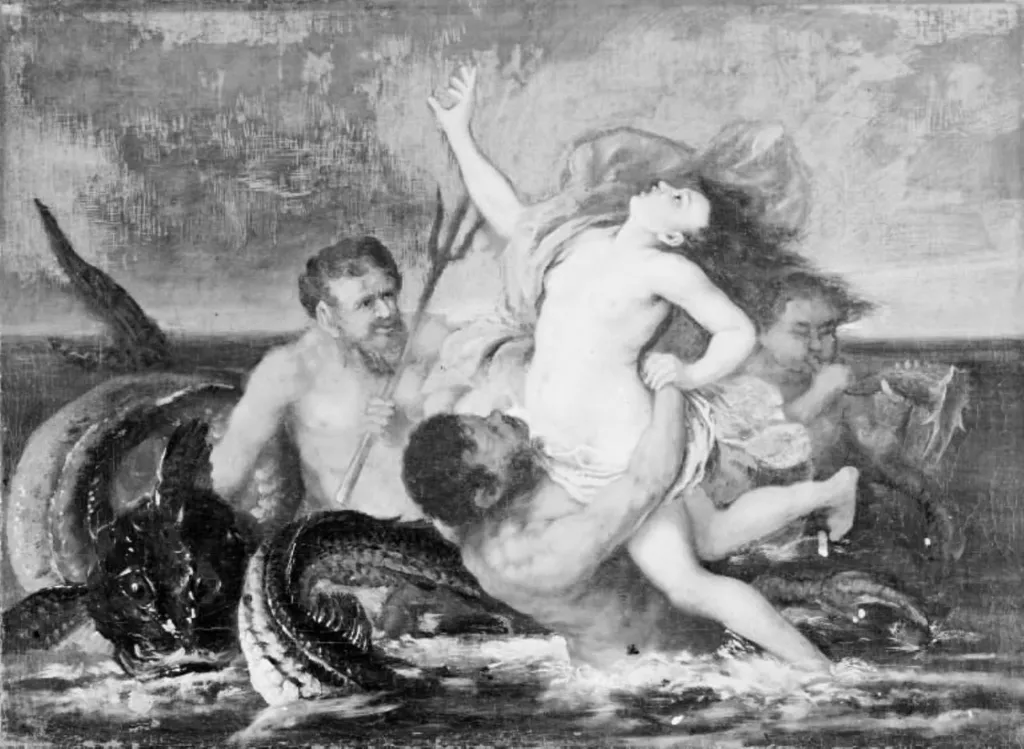
Et fruentimmer bortføres over søen af fire tritoner is a photography by Unknown. It dates from 1750 and is held in the collection of the Statens Museum for Kunst. This mid-18th-century work by an unidentified artist presents a dramatic scene of abduction rendered in oil on canvas.
About this work
Overview
This mid-18th-century work by an unidentified artist presents a dramatic scene of abduction rendered in oil on canvas.
This mid-18th-century work by an unidentified artist presents a dramatic scene of abduction rendered in oil on canvas. Part of the collections of the Museum of Ethnography, the painting captures a moment of violent struggle, where mythological figures intersect with human vulnerability. Its composition relies on stark contrasts of light and shadow to heighten the emotional intensity of the narrative.
Subject & Meaning
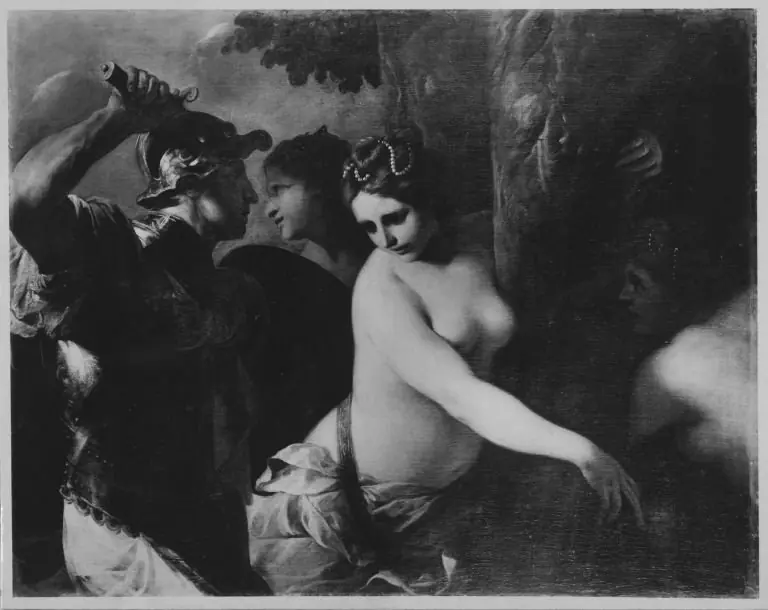
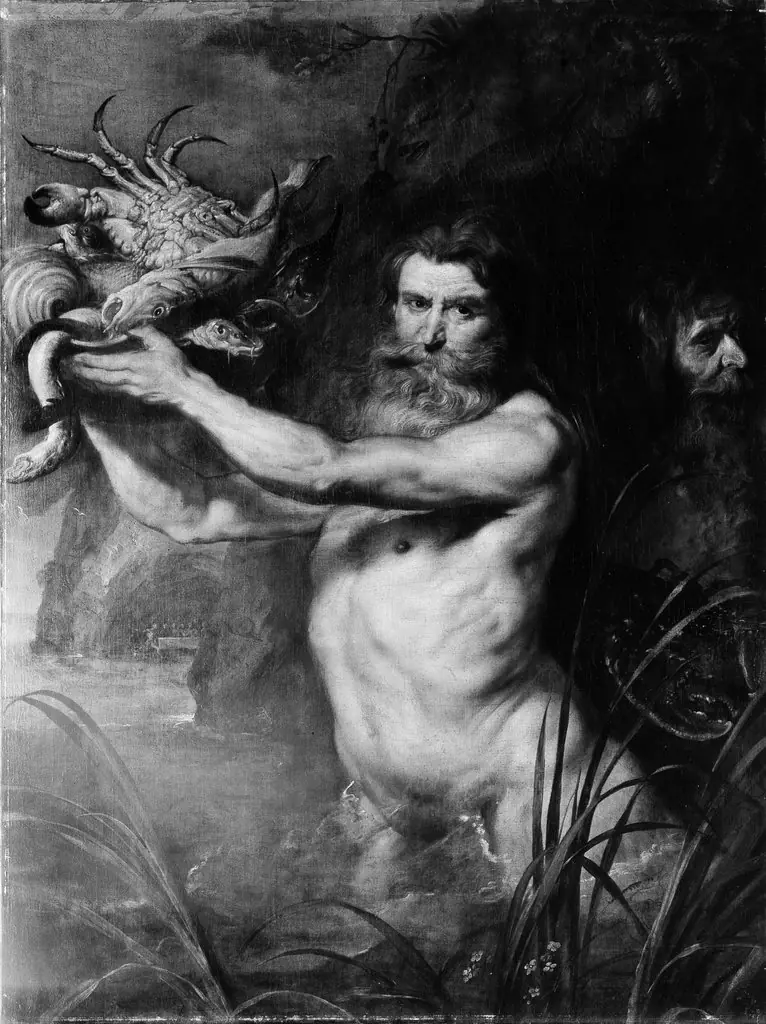
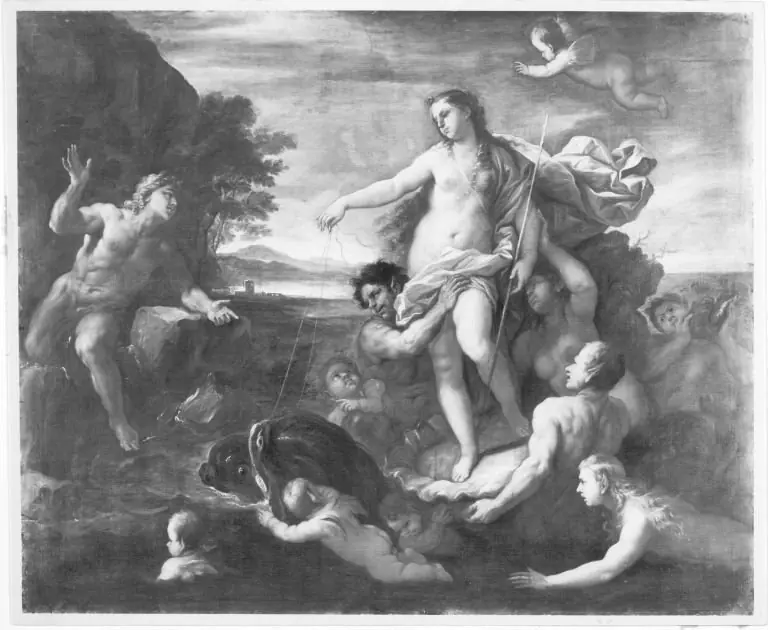
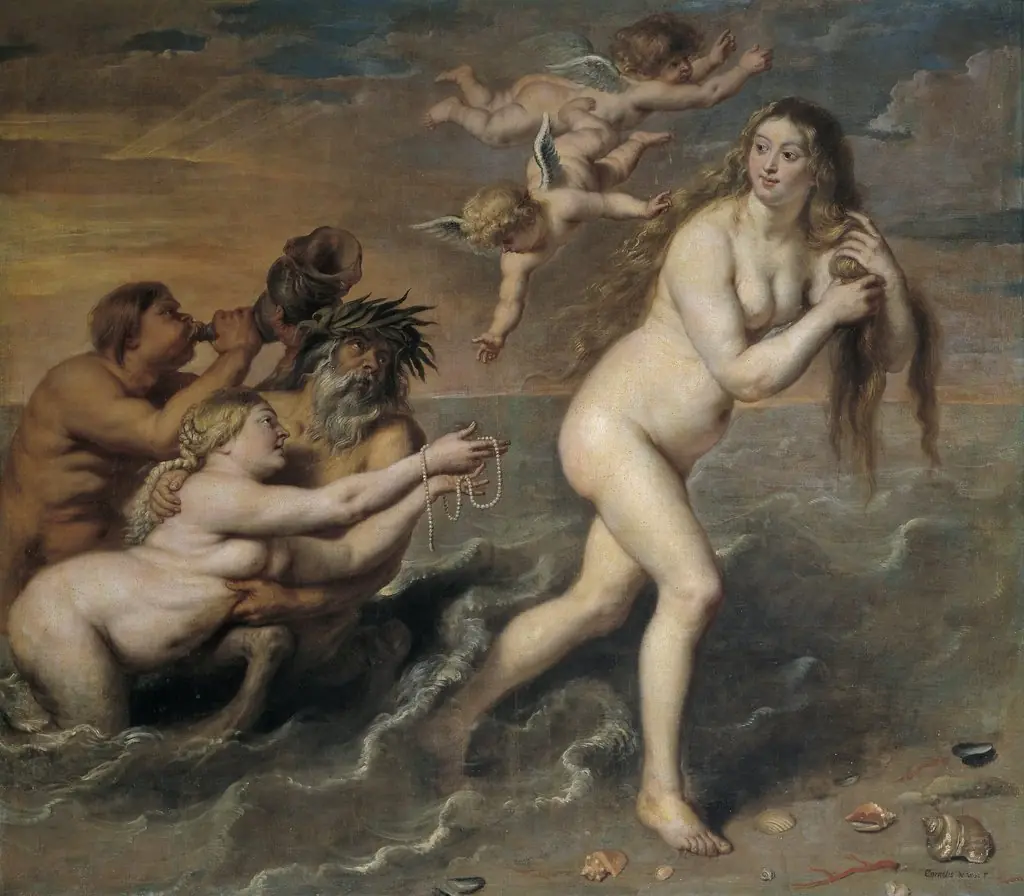
The image portrays a woman forcibly carried across a body of water by four tritons—hybrid beings combining human torsos with piscine lower bodies. Her outstretched limbs and contorted posture suggest resistance, while the tritons’ varied grips convey both determination and coordination. The swirling, darkened sky reinforces a sense of impending danger, framing the scene as a confrontation between human fragility and supernatural force.
Technique & Style
Executed in a manner characteristic of mid-18th-century European painting, the work employs chiaroscuro to model figures with pronounced three-dimensionality. The artist contrasts the smooth, luminous flesh of the woman with the scaled, muscular forms of the tritons, emphasizing their distinct natures. Dynamic brushwork in the background clouds and water enhances the scene’s turbulent atmosphere, while careful anatomical detail lends credibility to the fantastical subject.
History & Provenance
Created around 1750, the painting has been part of the Museum of Ethnography’s holdings since its acquisition, though its earlier ownership remains unrecorded. The absence of a documented artist suggests it may have been produced within a workshop or regional school rather than by a prominent master. Its inclusion in the museum’s collection reflects broader institutional interests in narrative and mythological themes during the period.
Context
The painting emerges from a tradition of depicting mythological abductions, a theme recurrent in Baroque and Rococo art. Tritons, drawn from classical mythology, often symbolized untamed natural forces, while scenes of struggle could serve as allegories for human helplessness against destiny. The work’s dramatic tone aligns with contemporary tastes for emotionally charged, morally ambiguous narratives in visual art.
Artist & collection

 Domestic Scene
 Giacomo and Cardinal Marco, investing Andrea, Abbot of San Zeno, with his Benefice
 The Nymph of Fontainebleau
 Portrait of a Woman
 Madonna and Child with Saints in the Enclosed Garden
 Venus and Minerva
 Family Group of Four on Sofa
 Wall painting from Room H of the Villa of P. Fannius Synistor at Boscoreale