Artwork
Et fruentimmer bortføres over søen af fire tritoner
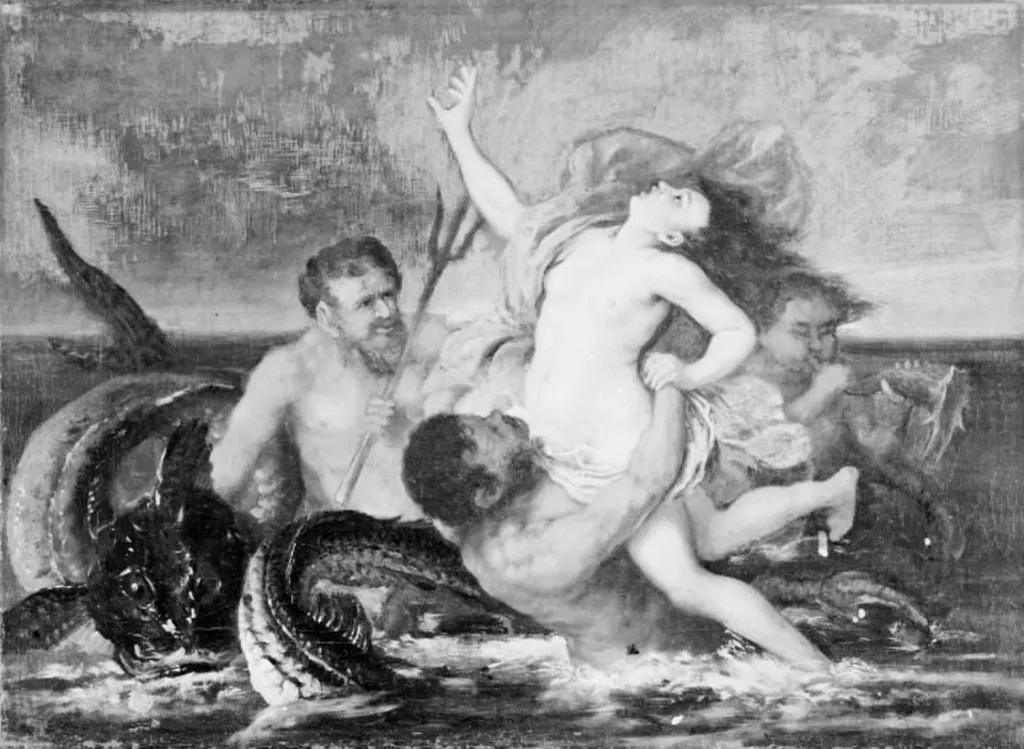
Et fruentimmer bortføres over søen af fire tritoner is an oil painting by Unknown. It is held in the collection of the Statens Museum for Kunst.
About this work
Overview
The composition centers on the woman’s elevated posture and flowing white garment, contrasting with the dark, churning waters behind her.
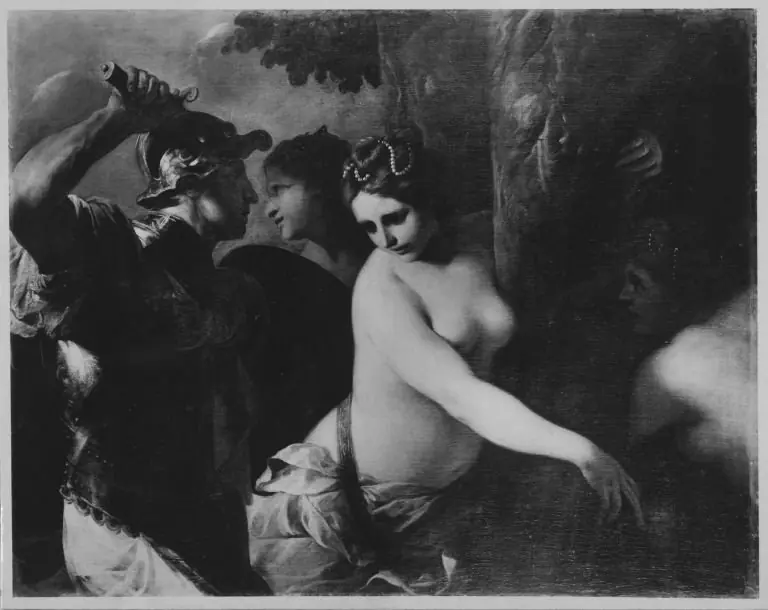
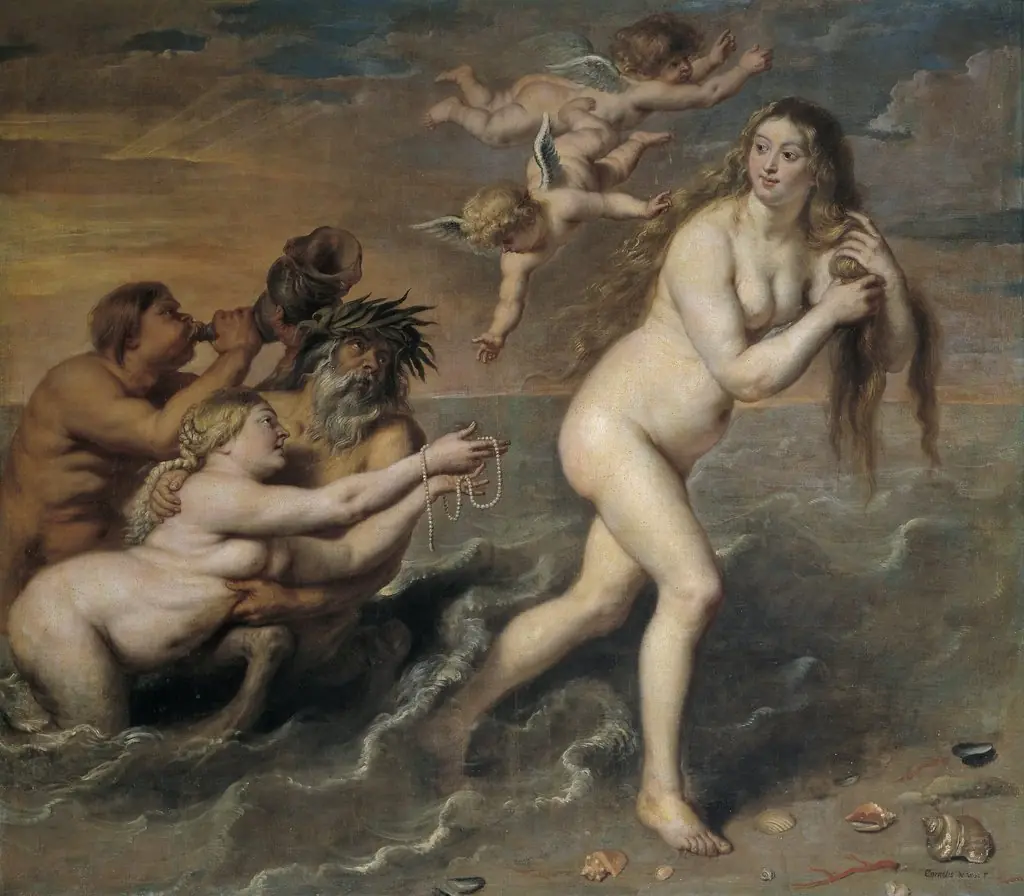
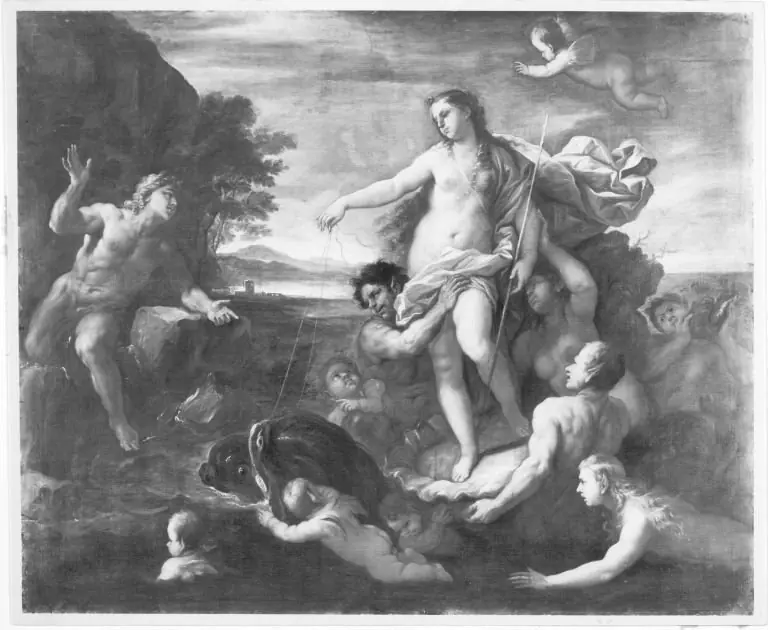
This oil painting depicts a mythological scene in which a woman is being carried across a turbulent sea by four tritons—hybrid beings with human torsos and fish tails. The composition centers on the woman’s elevated posture and flowing white garment, contrasting with the dark, churning waters behind her. Realistic rendering and dramatic lighting emphasize movement and emotional tension, anchoring the viewer’s focus on the central figure amid the chaotic marine environment.
Subject & Meaning
The scene draws from classical mythology, likely referencing a moment of abduction or divine transport, common in Renaissance and Baroque narratives. The woman’s raised arms suggest resistance or surrender, while the tritons’ varied glances imply a collective purpose. The stormy sea may symbolize fate or the uncontrollable forces of the divine, reinforcing themes of vulnerability and transition often found in mythological allegories of the period.
Technique & Style
The artist employs a highly detailed, realistic approach with careful attention to texture in skin, fabric, and water. Chiaroscuro is used to model forms and heighten emotional intensity, casting deep shadows that define the tritons’ muscular contours and the woman’s draped robe. Brushwork remains precise, avoiding abstraction; the sea’s foam and wave structure are rendered with observational accuracy, enhancing the scene’s visceral impact.
History & Provenance
The painting’s origin and early ownership remain undocumented in public records. It has not been attributed to a widely recognized master, nor has it appeared in major exhibition catalogs prior to recent archival inquiries. Its survival suggests it was privately commissioned or collected, possibly in a northern European court or merchant household with interest in mythological themes during the 17th century.
Context
Created during a period when mythological subjects were favored in elite collections, the work aligns with broader trends in Northern European painting that blended classical narratives with naturalistic detail. While Italian artists often idealized such scenes, this version leans into atmospheric drama and physical realism, reflecting regional preferences for emotional immediacy and environmental intensity over classical harmony.
Legacy
Though not widely reproduced or studied in mainstream art history, the painting contributes to a lesser-known corpus of mythological works that prioritized narrative tension and technical precision over symbolic abstraction. Its preservation offers insight into how mythological themes were interpreted outside major artistic centers, revealing the reach of classical motifs in regional studios and private collections of the early modern era.
Artist & collection

 Domestic Scene
 Giacomo and Cardinal Marco, investing Andrea, Abbot of San Zeno, with his Benefice
 The Nymph of Fontainebleau
 Portrait of a Woman
 Madonna and Child with Saints in the Enclosed Garden
 Venus and Minerva
 Family Group of Four on Sofa
 Wall painting from Room H of the Villa of P. Fannius Synistor at Boscoreale