Artwork
Kentaur, den Fischen zuschauend
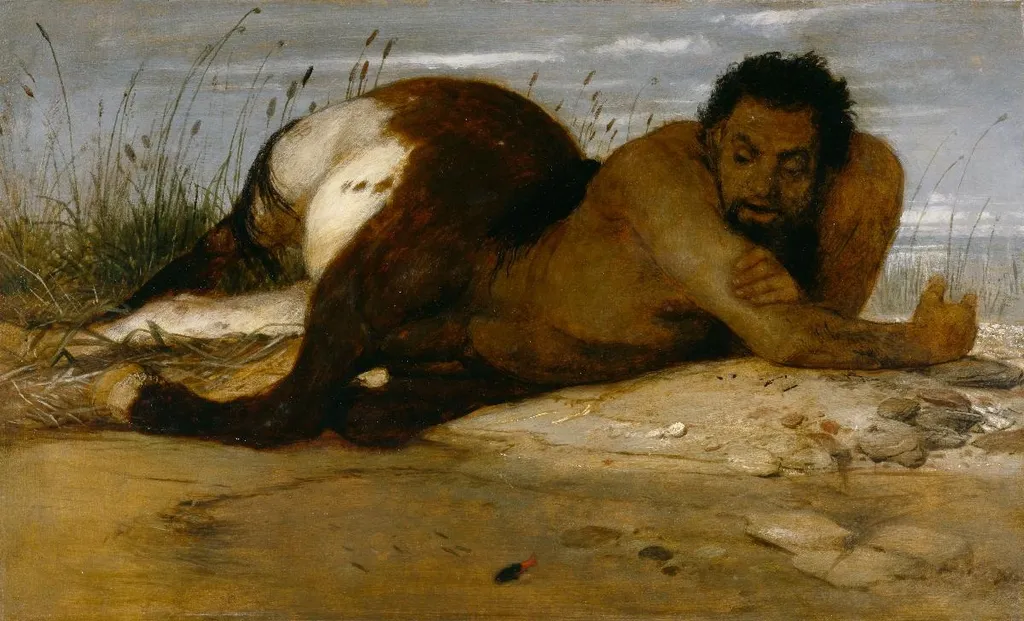
Kentaur, den Fischen zuschauend is an unspecified painting by the Symbolist artist Arnold Böcklin. It dates from 1890 and is held in the collection of the Kunsthaus Zürich.
About this work
Overview
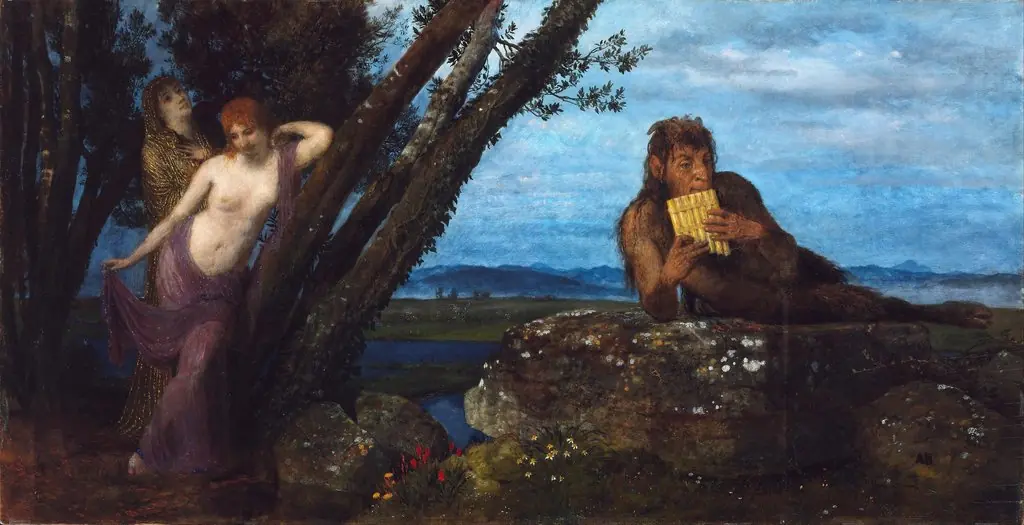
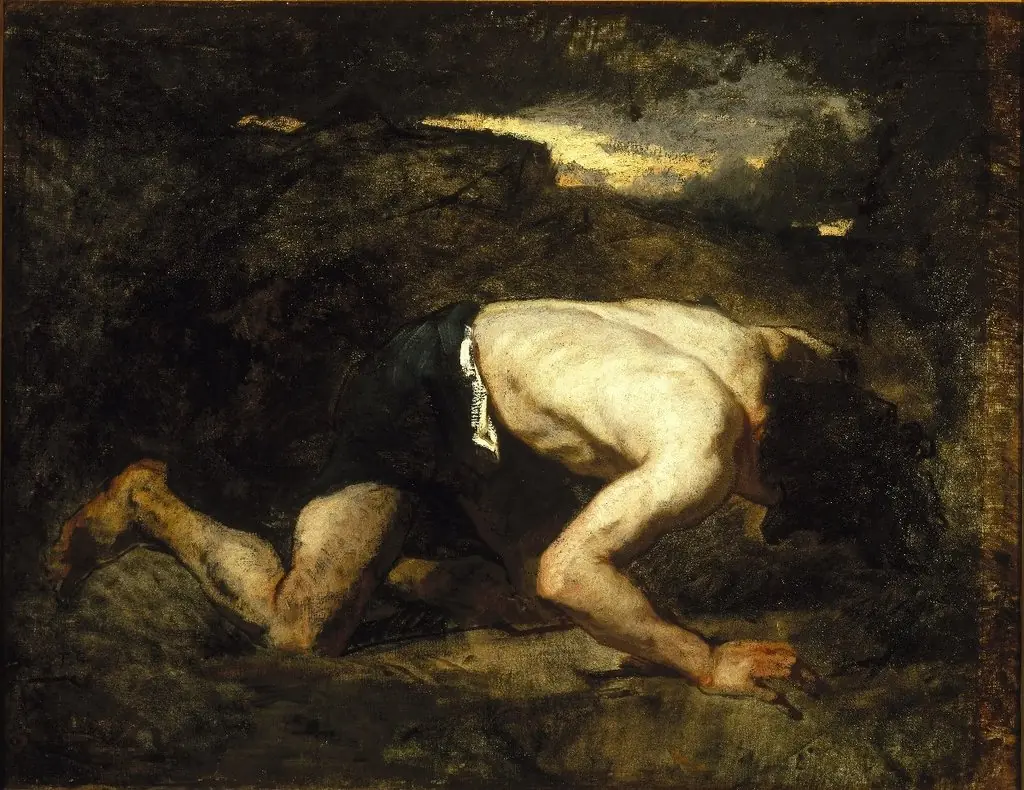
Arnold Böcklin completed this oil painting in 1890; it is part of the permanent collection of the Kunsthaus Zürich. The work presents a solitary mythological figure reclining on a shoreline, framed by sparse vegetation and an overcast sky. Böcklin’s composition invites the viewer to linger on the quiet, almost contemplative atmosphere of the scene.
Subject & Meaning
The central figure is a satyr, a creature from classical mythology that combines a human torso with the hindquarters of a goat. Here the satyr lies on his side, his head supported by his left arm, his right hand resting near his chest, suggesting a moment of repose and introspection rather than the usual wildness associated with such beings.
Technique & Style
Böcklin employs a muted palette of earthy browns and grays, allowing the dark fur of the satyr and the soft tones of the sand to blend harmoniously. The brushwork is loose enough to convey texture in the grass and clouds, while the overall composition creates depth through subtle gradations of light, emphasizing the tranquil mood.
History & Provenance
Created toward the end of Böcklin’s career, the painting entered the holdings of the Kunsthaus Zürich, where it remains on display. Its acquisition reflects the museum’s commitment to representing late‑19th‑century Symbolist works and highlights Böcklin’s continued relevance within Swiss art collections.
Context
Böcklin, known for his mythological subjects, often placed fantastical figures in natural settings to explore the relationship between humanity and the landscape. This work aligns with his broader interest in the juxtaposition of the supernatural and the everyday, echoing contemporary Symbolist concerns about inner states and the unconscious.
Artist & collection
Artist
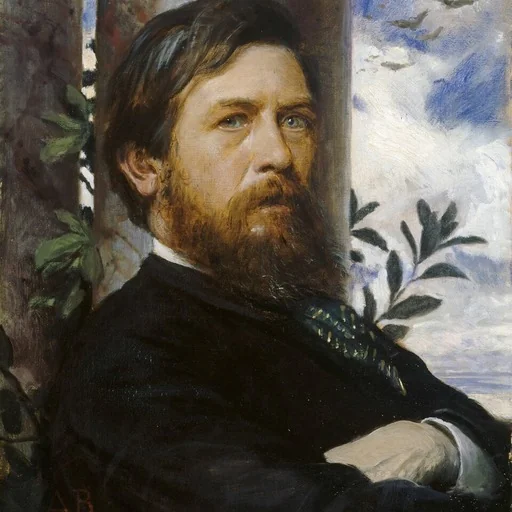
Arnold Böcklin was a Swiss Symbolist painter. His five versions of the Isle of the Dead inspired works by several late Romantic composers.