Artwork
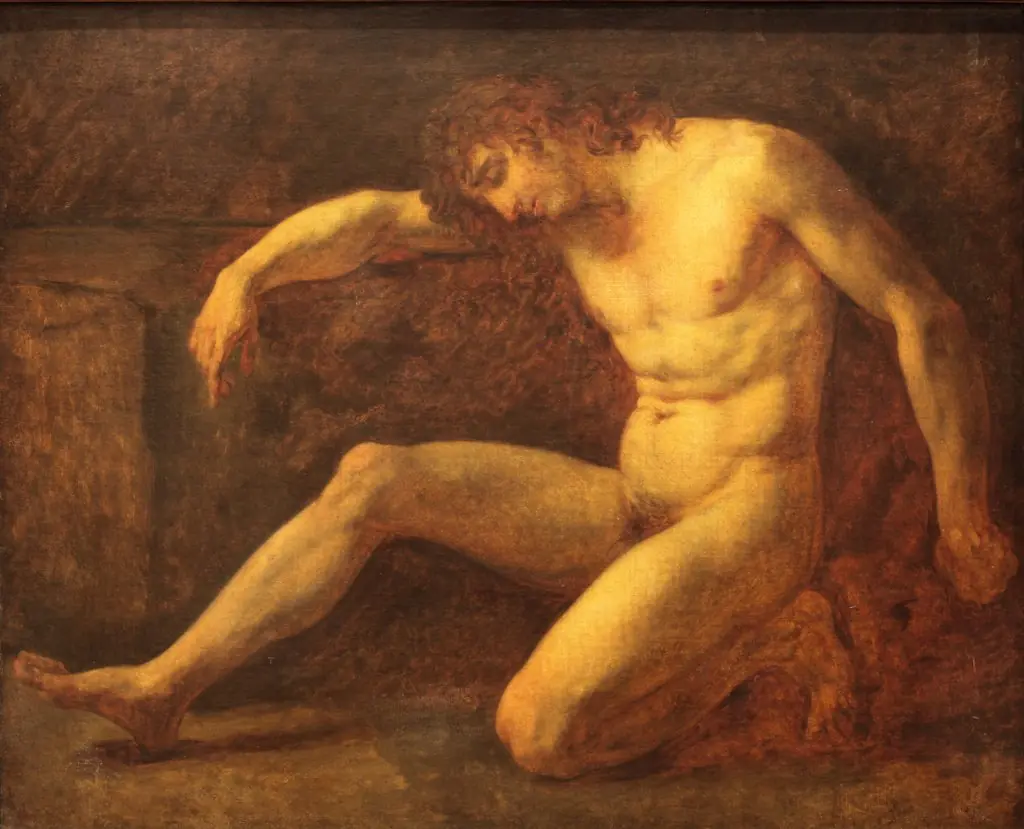
The Fugitive, Study for Timon of Athens
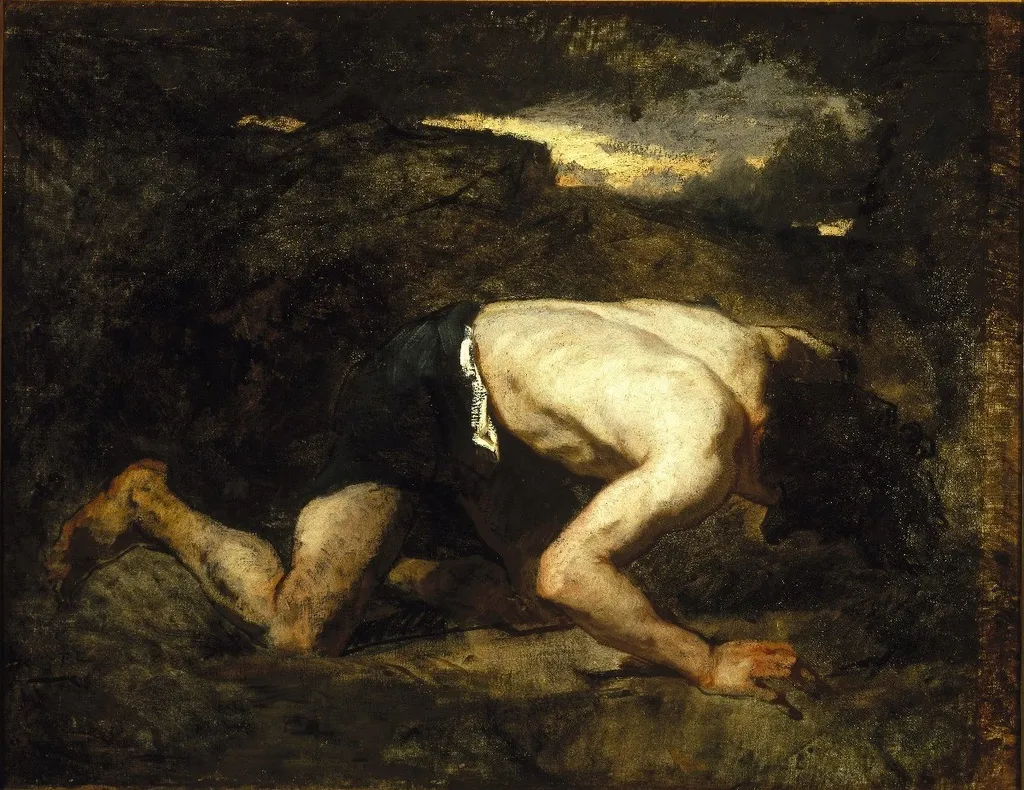
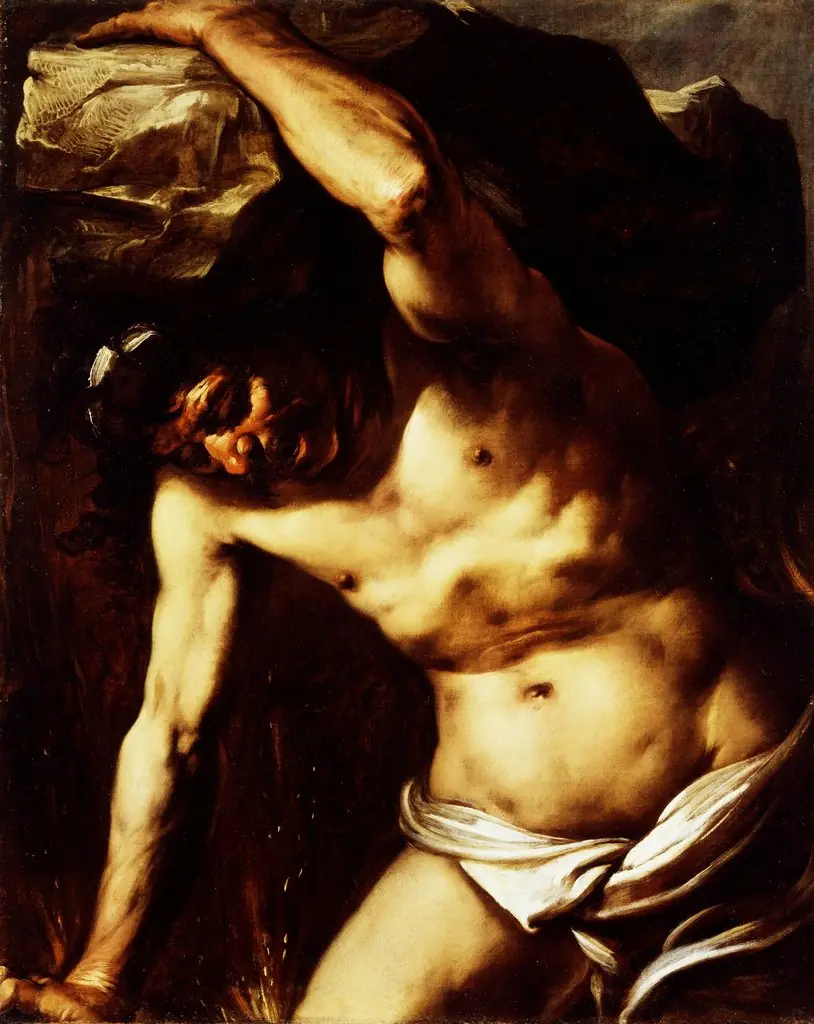
The Fugitive, Study for Timon of Athens is an oil painting by the Realist artist Thomas Couture. It dates from 1857 and is held in the collection of the Brooklyn Museum.
About this work
Overview
Couture, known for his academic training and focus on historical narratives, used this piece to explore emotional intensity through a single, isolated figure.
Painted in 1857 by French artist Thomas Couture, this oil study was prepared as part of his preparation for a larger work inspired by Shakespeare’s Timon of Athens. Couture, known for his academic training and focus on historical narratives, used this piece to explore emotional intensity through a single, isolated figure. The composition avoids narrative clarity, instead emphasizing physical and psychological tension as the central subject.
Subject & Meaning
The figure likely represents Timon in exile, having been betrayed and cast out from Athenian society. His posture—on all fours, twisted and obscured—suggests degradation, desperation, or a primal retreat from civilization. The absence of facial detail intensifies the universality of suffering, shifting focus from identity to bodily expression. The scene evokes themes of alienation and moral collapse, central to Shakespeare’s tragedy.
Technique & Style
Couture employed chiaroscuro to heighten emotional impact, contrasting deep shadows with sharp highlights on the figure’s musculature. The brushwork is precise yet expressive, rendering tension in the limbs and spine through subtle modeling. The dark, indistinct background isolates the figure, eliminating context to amplify psychological weight. This approach reflects Realist priorities—truthful depiction of human condition—while retaining dramatic intensity.
History & Provenance
Created during Couture’s tenure as a respected teacher at the École des Beaux-Arts, this study was part of his broader engagement with literary subjects. It remained in his possession until his death in 1879, later entering a private collection before being acquired by a public institution. Its status as a preparatory work underscores its function as a laboratory for emotional expression rather than a finished exhibition piece.
Context
In mid-19th century France, history painting still held institutional prestige, though Realism was challenging its idealized conventions. Couture navigated this shift by grounding mythic and literary themes in palpable physicality. His interest in Shakespeare reflected a broader European fascination with dramatic literature as a vehicle for psychological exploration, distinct from classical or biblical subjects favored by earlier academies.
Legacy
Though the final painting of Timon was never completed, this study endures as a compelling example of Couture’s ability to distill complex emotion into a single, visceral form. It influenced younger artists seeking to merge literary depth with physical realism, contributing to the evolution of narrative painting beyond academic formalism. Its raw expressiveness remains a reference point for studies of human vulnerability in art.
Artist & collection

Artist
Thomas Couture (French pronunciation: ; 21 December 1815 – 30 March 1879) was a French history painter and teacher.