Artwork
Cavalry Battle
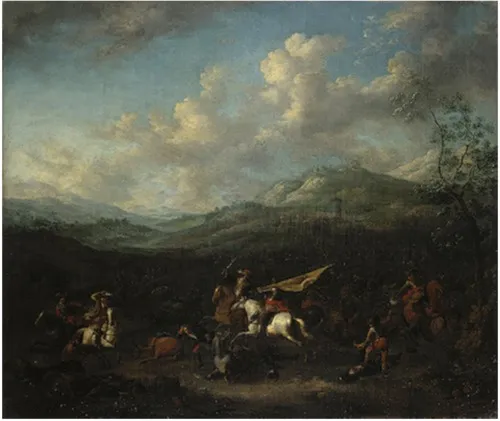
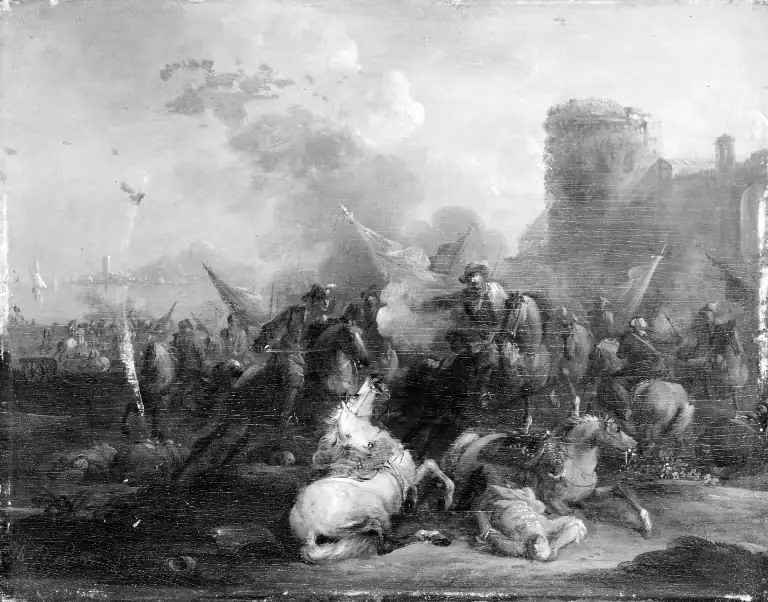
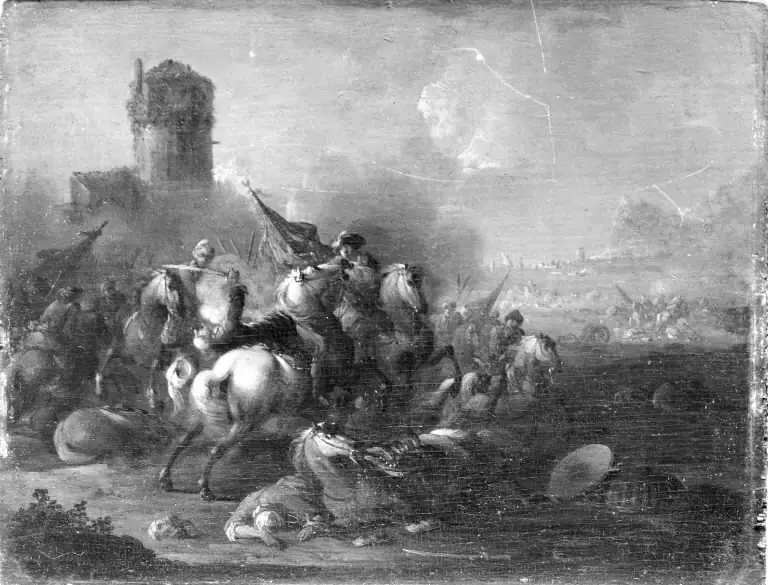
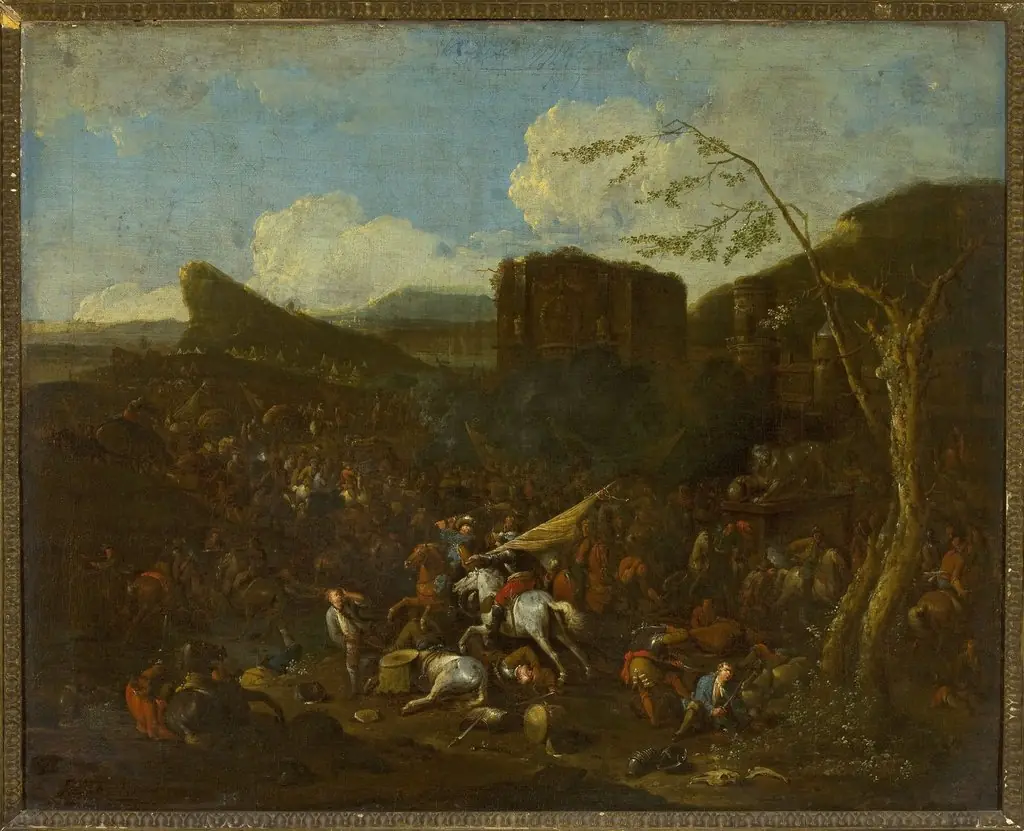
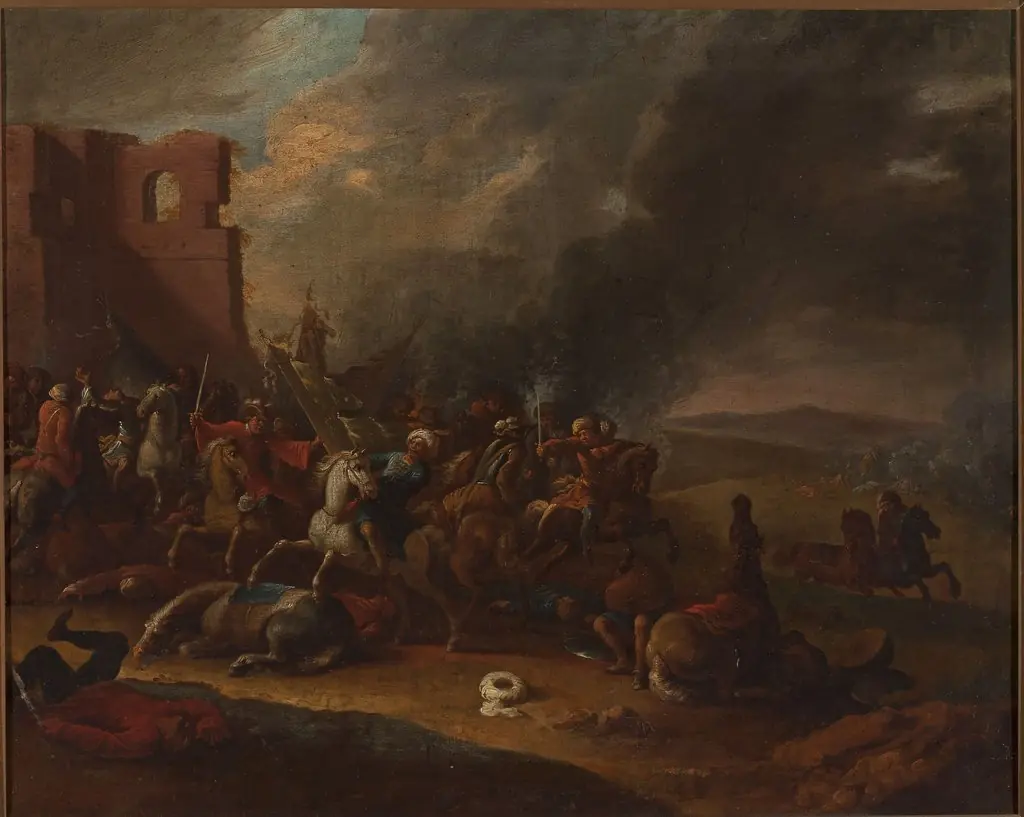
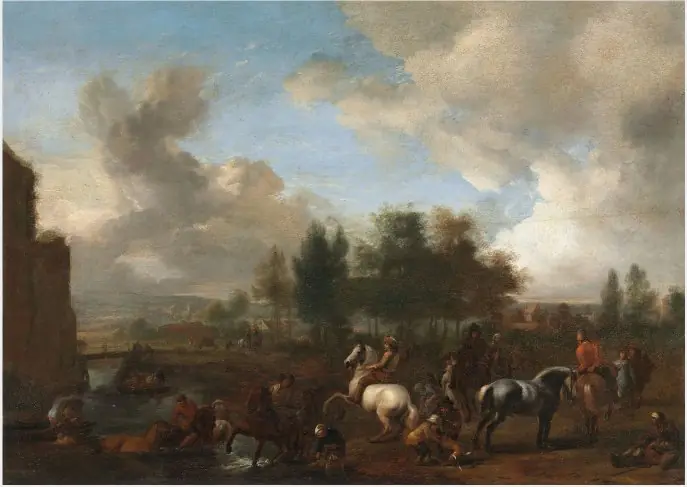
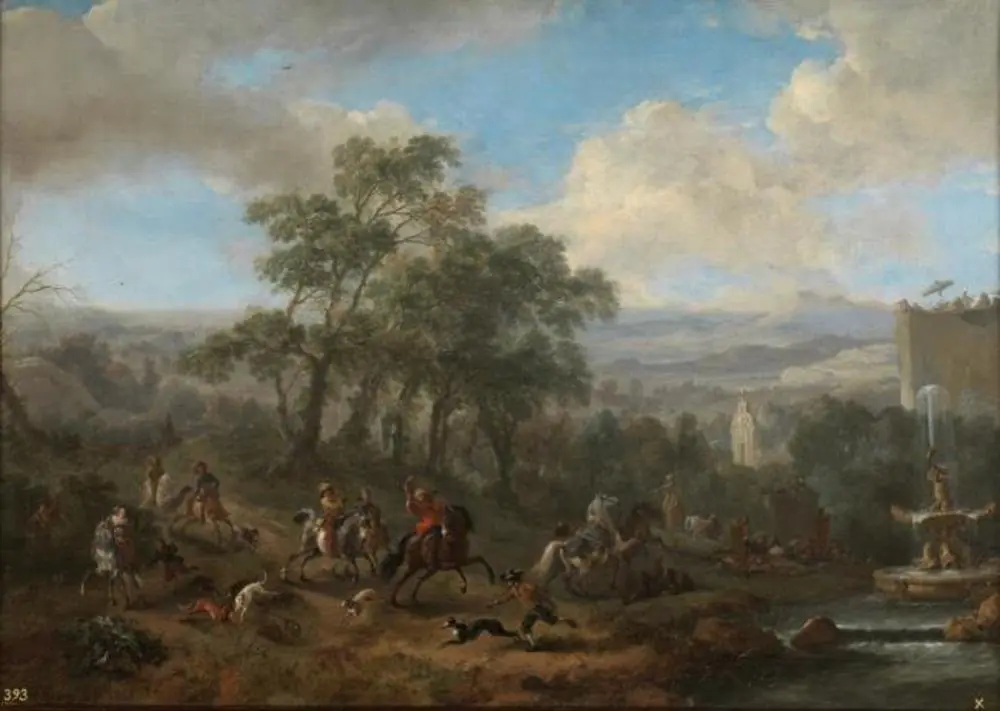
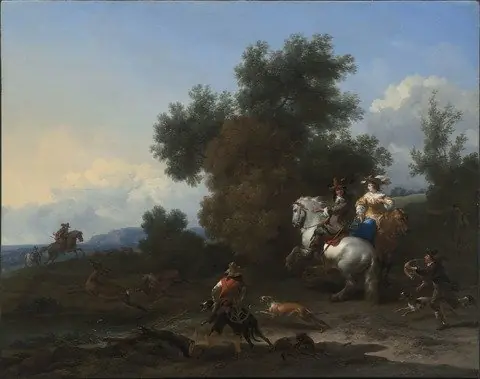
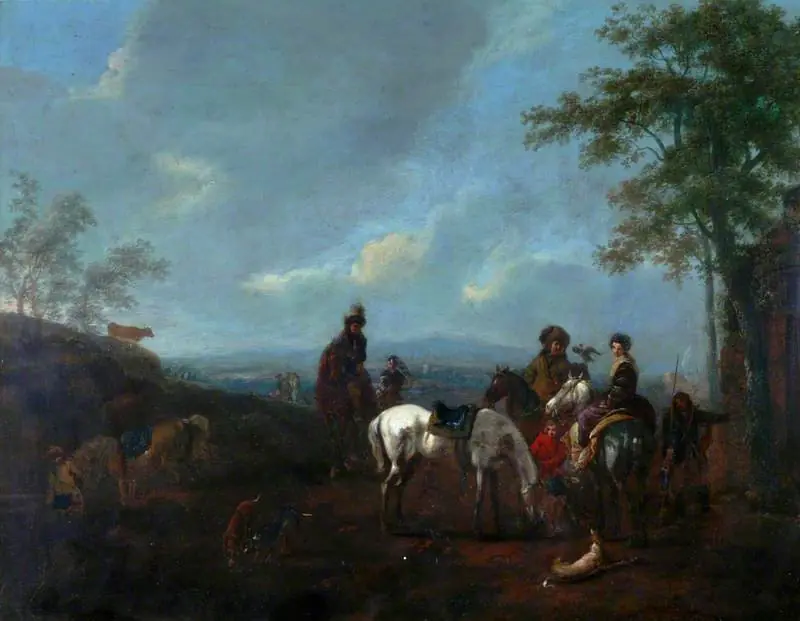
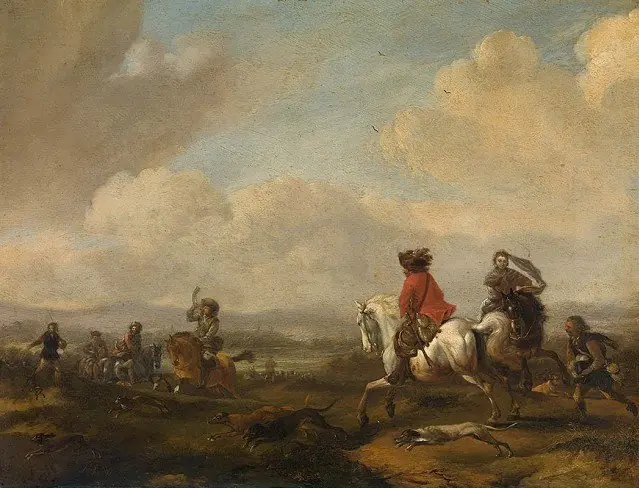
Cavalry Battle is an oil painting by the Flemish Baroque painting artist Arnold Frans Rubens. It dates from 1714 and is held in the collection of the Hermitage Museum.
About this work
Overview
Rubens, known for small-scale historical and landscape works, focused here on the turbulence of mounted combat.
Created in 1714 by Arnold Frans Rubens, this oil painting portrays a dynamic cavalry engagement. Rubens, known for small-scale historical and landscape works, focused here on the turbulence of mounted combat. The piece belongs to the history painting tradition and is part of the State Hermitage Museum’s collection, where it remains a representative example of early 18th-century Flemish military imagery.
Subject & Meaning
The scene captures a moment of violent chaos among cavalry units, with riders and horses entangled in motion. A fallen soldier on the ground introduces a note of human cost amid the fray. No clear side or historical event is identified, suggesting the work emphasizes the universal turbulence of battle rather than a specific campaign. The composition conveys disorder and urgency without overt political or narrative messaging.
Technique & Style
Rubens employs loose brushwork to suggest movement, with horses rendered in earthy browns and whites, and riders in muted reds and browns. The background features a distant mountain range beneath a pale sky, providing spatial depth without distraction. Subtle contrasts of light and shadow guide the eye through the melee, enhancing the sense of motion without relying on extreme chiaroscuro. The handling is brisk, prioritizing energy over fine detail.
History & Provenance
The painting was completed in 1714, during the later phase of Rubens’s career, when he specialized in intimate battle scenes for private collectors. It entered the Hermitage collection in the 18th or 19th century, likely through imperial acquisitions of Flemish works. Its presence in the museum reflects broader European interest in Northern European military art during the Enlightenment era.
Context
In the early 1700s, Flemish artists continued to produce battle scenes for aristocratic patrons, drawing on the legacy of Peter Paul Rubens but often with smaller formats and less grandiosity. Arnold Frans Rubens’s work fits within this trend, reflecting a shift from monumental historical narratives to compact, visceral depictions of conflict. Such paintings catered to collectors seeking dramatic, portable subjects for private display.
Legacy
Though not widely exhibited outside the Hermitage, the painting contributes to the understanding of how Flemish artists adapted battle imagery after the Baroque peak. Its restrained scale and focus on kinetic chaos distinguish it from larger, more theatrical war paintings. It remains a quiet testament to the persistence of military themes in 18th-century Northern European art.
Artist & collection
Artist
Arnold Frans (or Francesco) Rubens or Rubbens (1687–1719) was a Flemish Baroque painter who specialized in cabinet pictures of landscapes and battle scenes. He also painted some biblical subjects and genre scenes.