Artwork
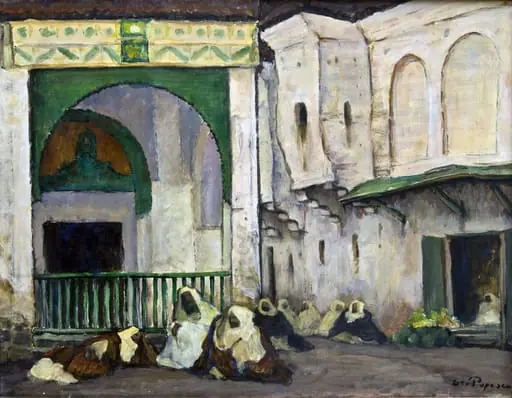
Stradă orientală
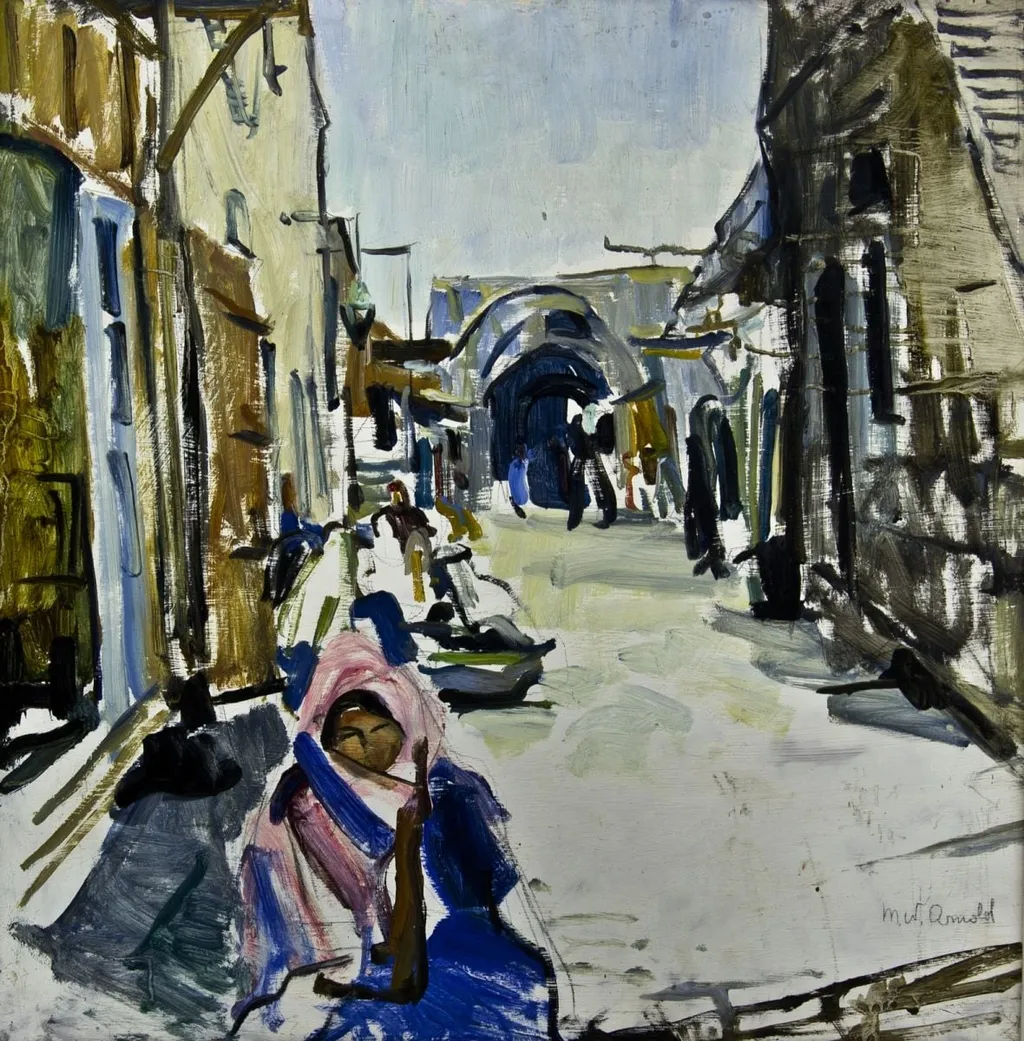
Stradă orientală is an unspecified painting by Mendel Wechsler Arnold. It dates from 1926 and is held in the collection of the National Museum of Art of Romania.
About this work
Overview
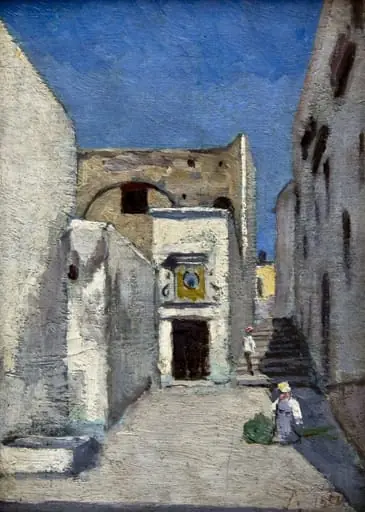
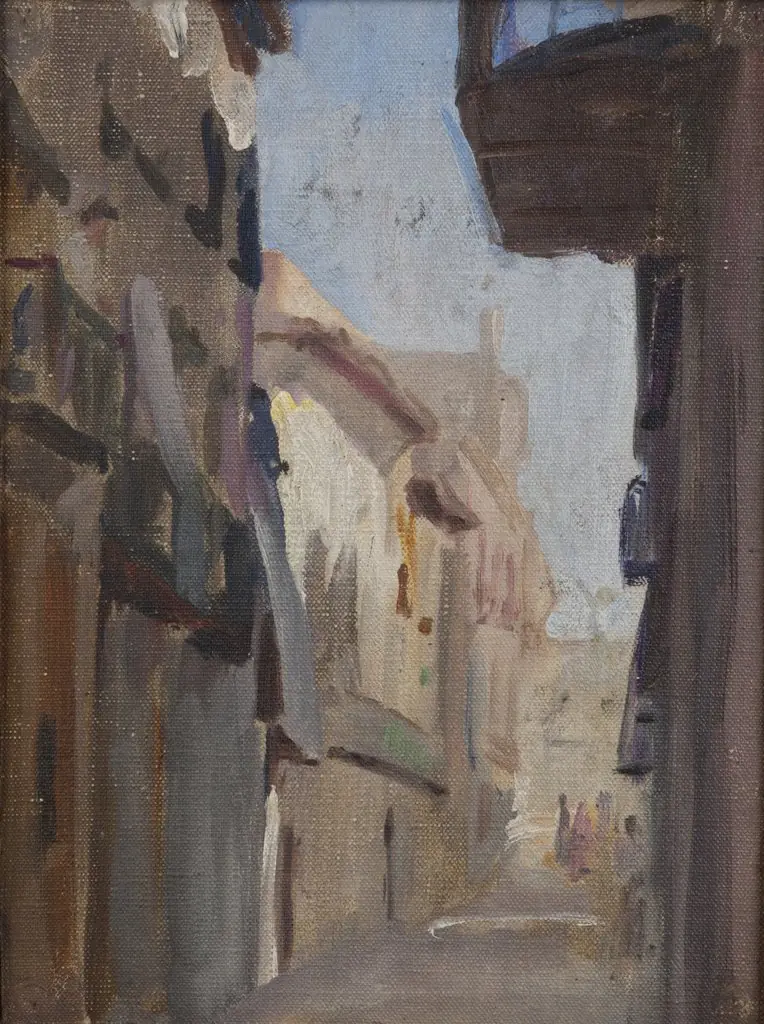
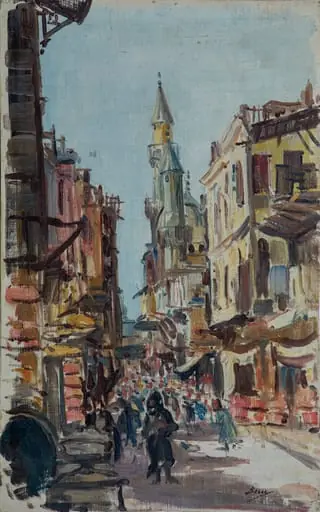
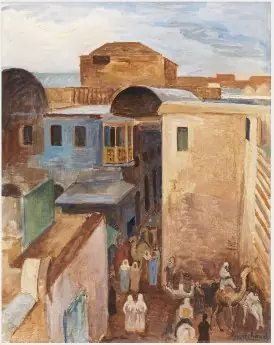
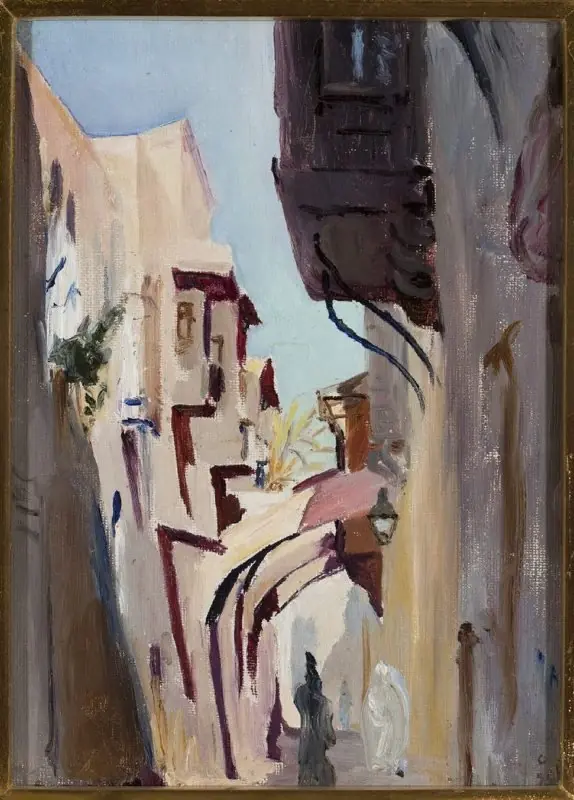
Stradă orientală, painted in 1926 by Arnold Mendel Wechsler, depicts a quiet urban alleyway in Eastern Europe. The scene is spare and unidealized, focusing on everyday life with minimal figures and subdued architecture. The composition draws attention to stillness amid motion, as pedestrians recede into the distance while a solitary figure remains seated in the foreground.
Subject & Meaning
The painting captures a moment of quiet solitude within a routine urban environment. The seated figure, distinguished by a pink headscarf and blue coat, appears isolated despite the presence of others. Their stillness contrasts with the walking figures, suggesting introspection or pause. The absence of narrative detail invites contemplation rather than storytelling, emphasizing mood over event.
Technique & Style
Wechsler employed thick, expressive brushwork characteristic of impasto, creating a tactile surface that emphasizes texture over polish. The paint is applied with visible, deliberate strokes, enhancing the roughness of weathered walls and worn surfaces. Muted grays and browns dominate the palette, with the pink scarf serving as a subtle but deliberate focal point against the drab surroundings.
History & Provenance
Created in 1926, the work emerged during a period when Eastern European artists were redefining realism through emotional and material immediacy. Though little is documented about its early ownership, the painting reflects Wechsler’s engagement with local scenes and his interest in ordinary life, aligning with broader interwar trends in regional modernism.
Context
In the 1920s, many artists in Eastern Europe turned away from academic idealism toward raw, unembellished depictions of daily existence. Wechsler’s focus on modest architecture and unremarkable figures reflects this shift. The painting’s subdued tones and textured surface echo contemporary expressions of urban alienation and the lingering effects of postwar hardship.
Legacy
Stradă orientală remains a quiet example of interwar regional modernism, valued for its emotional restraint and material honesty. While not widely exhibited, it contributes to understanding how artists in Eastern Europe used paint’s physicality to convey psychological depth without overt symbolism or dramatic narrative.
Artist & collection
Artist
Mendel Wechsler Arnold painted scenes of still life and city life, often signed on the back.