Artwork
Untitled
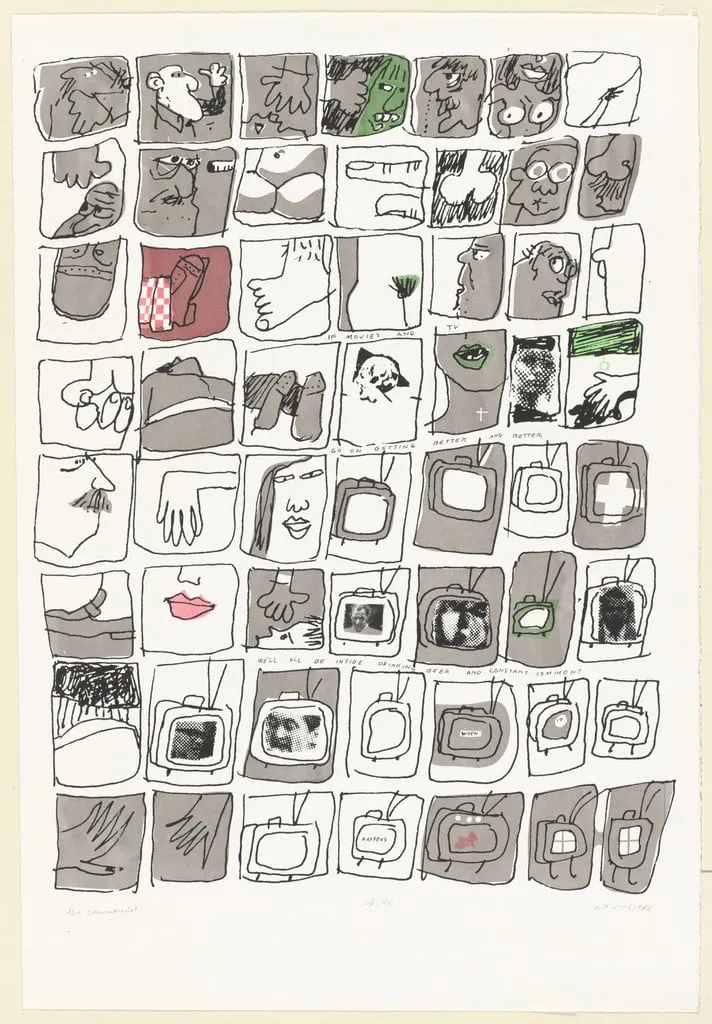
Untitled is an ink print by Art Wood. It dates from 1968 and is held in the collection of the Museum of Modern Art.
About this work
If you're interested in learning more about Art Wood's work, you might want to check out some of his other screenprints at The Museum of Modern Art.
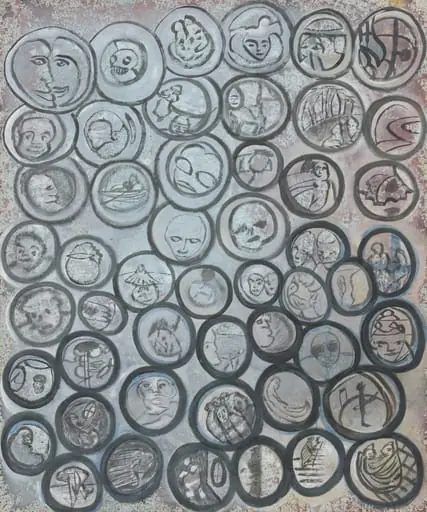
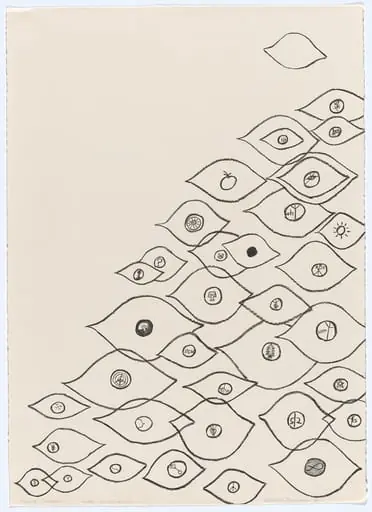
This image is a screenprint by Art Wood, created in 1968. It features a grid of 56 small squares, each containing a simple drawing of a face or an object. The drawings are done in black and white, with some squares featuring a splash of color.
The faces in the drawings are cartoonish and exaggerated, with large eyes and mouths. Some of the faces appear to be laughing or smiling, while others look more serious or even angry. The objects in the drawings include televisions, radios, and other household items.
The overall effect of the image is one of playfulness and experimentation. The use of simple shapes and bold lines gives the image a sense of energy and movement. If you're interested in learning more about Art Wood's work, you might want to check out some of his other screenprints at The Museum of Modern Art.
Overview
Created in 1968, Untitled is a screenprint by artist Art Wood, currently held in the collection of The Museum of Modern Art. The work consists of a tightly arranged grid of 56 small, uniform squares, each containing a distinct black-and-white illustration. Occasional areas of color interrupt the monochrome field, introducing subtle variation. The composition reflects a deliberate, systematic approach to image-making, blending repetition with individual expression.
Subject & Meaning
Each square presents a minimal depiction—either a stylized human face or a domestic object like a television or radio. Faces are rendered with exaggerated features: wide eyes, open mouths, contorted expressions suggesting laughter, confusion, or irritation. The objects, rendered with similar simplicity, evoke mid-century consumer culture. Together, they form a fragmented commentary on mass media and emotional repetition, without offering a single narrative.
Technique & Style
Wood employed screenprinting to achieve sharp, flat fields of ink and consistent line quality across all 56 units. The use of bold outlines and simplified forms aligns with graphic design traditions of the era. Color is applied sparingly, drawing attention to select squares without disrupting the grid’s rhythm. The style favors immediacy over detail, emphasizing visual rhythm and serial variation over individual refinement.
History & Provenance
The work was produced in 1968 during a period of experimental printmaking in the United States. It entered The Museum of Modern Art’s collection shortly after its creation, reflecting the institution’s interest in contemporary graphic work that challenged traditional notions of fine art. No record of prior ownership or exhibition history beyond MoMA’s acquisition is widely documented.
Context
Emerging in the late 1960s, Untitled responds to a cultural moment saturated with television imagery and mass-produced iconography. Its grid structure echoes the layout of television screens and advertising layouts, while its playful, almost chaotic faces mirror the emotional volatility of media-saturated life. The work aligns with broader artistic inquiries into repetition, consumerism, and the banality of everyday visual stimuli.
Legacy
Though not widely exhibited outside MoMA, Untitled remains a quiet example of how printmaking was used to explore systemic visual language in the late 20th century. Its influence is seen in later artists who employed serial imagery to question meaning in repetition. The work endures as a modest but thoughtful exploration of how simple forms can accumulate cultural resonance.
Artist & collection