Artwork
Nude (The Girl with the Coral String)
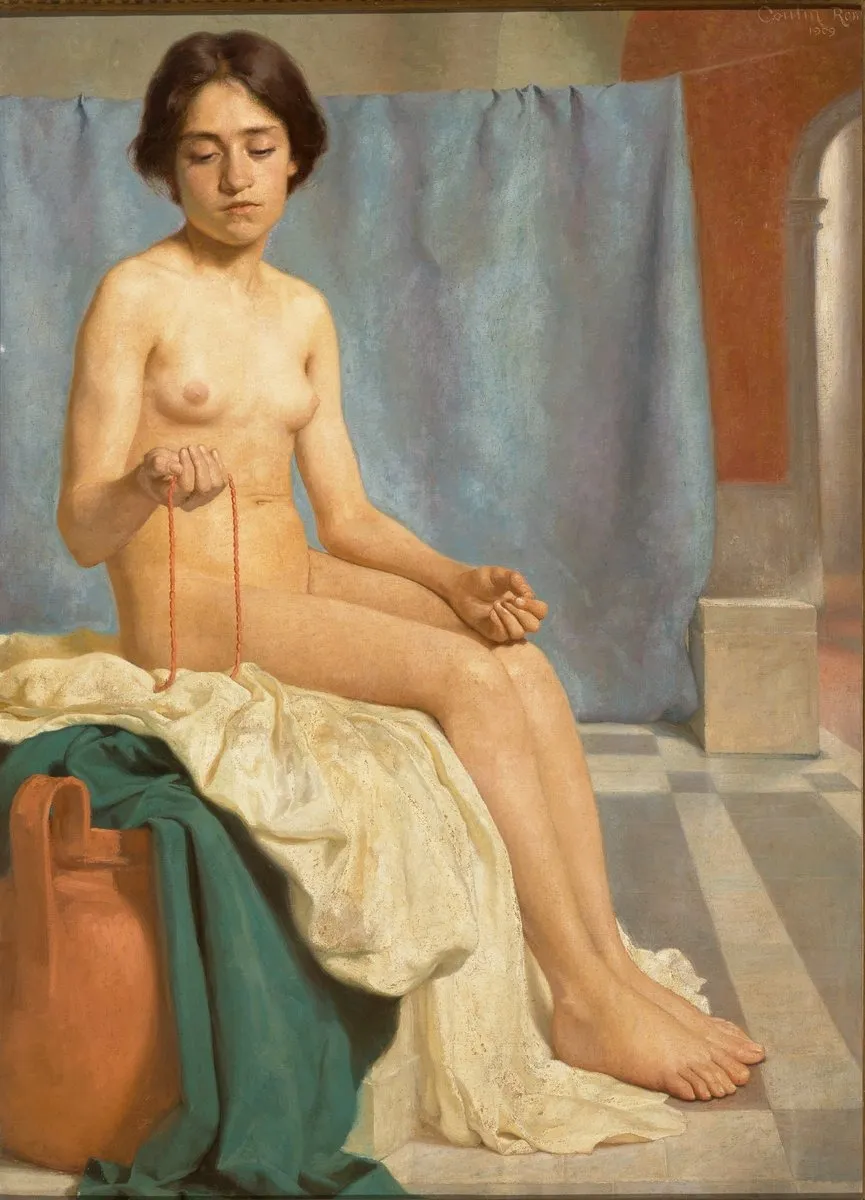
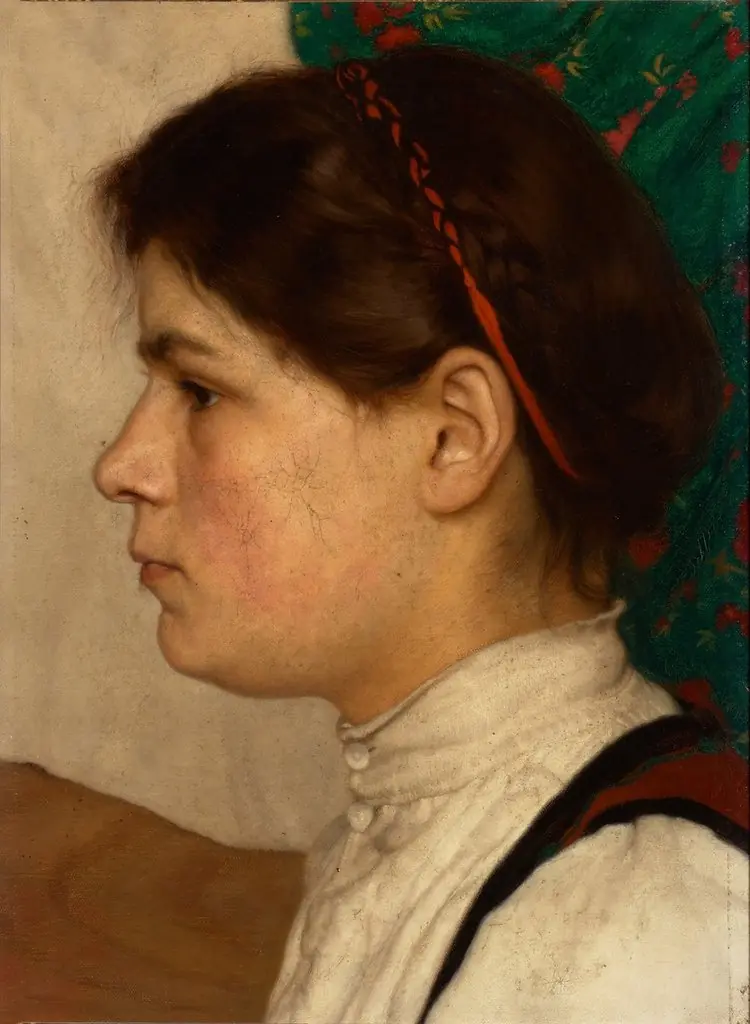
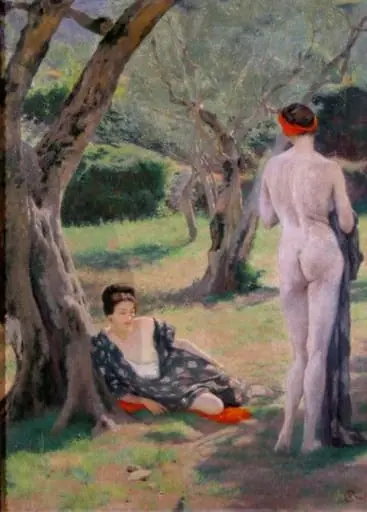
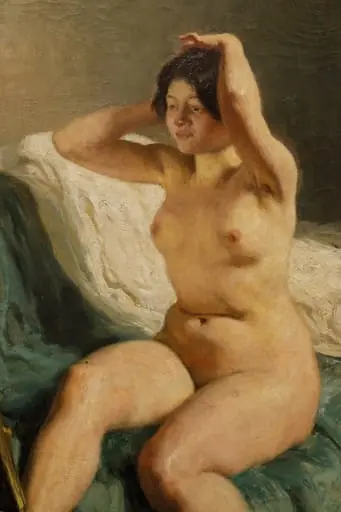
Nude (The Girl with the Coral String) is an oil painting by the Post-Impressionist artist Arthur Coulin. It dates from 1909 and is held in the collection of the Hungarian National Gallery.
About this work
Overview
Painted in 1909 by Arthur Coulin, this oil on canvas work portrays a solitary young woman in a restrained interior setting. The painting is part of the Hungarian National Gallery’s collection and reflects early 20th-century tendencies toward intimate, psychologically nuanced figure studies. Its quiet composition and subdued palette distinguish it from more theatrical nudes of the period.
Subject & Meaning
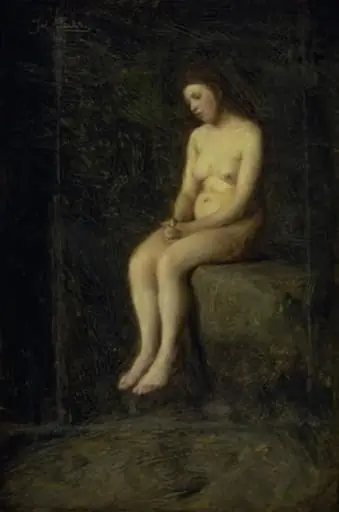
The figure, seated on a bench, holds a strand of coral in her right hand while her gaze falls inward, suggesting introspection.
The figure, seated on a bench, holds a strand of coral in her right hand while her gaze falls inward, suggesting introspection. The coral, a natural object with symbolic associations of protection and vitality, contrasts with her stillness. The draped cloth and bare feet ground the scene in domestic realism, avoiding idealization. The work invites contemplation rather than narrative, emphasizing presence over action.
Technique & Style
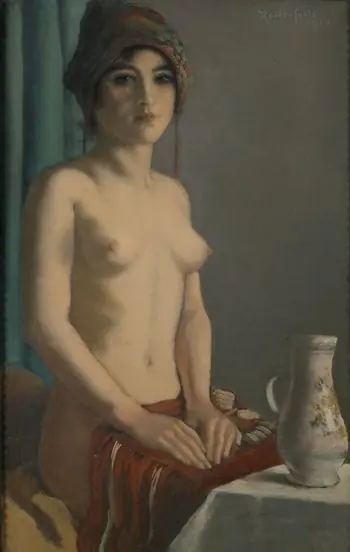
Coulin employs subtle chiaroscuro to model the figure’s form, using soft transitions between light and shadow to suggest volume without harsh contrast. The background’s blue curtain and red wall create a muted chromatic harmony, while the green cloth and clay jug add tactile detail. Brushwork is controlled and deliberate, favoring clarity over expressiveness, aligning with a quiet realism rooted in academic tradition.
History & Provenance
The painting entered the Hungarian National Gallery’s collection shortly after its completion, likely through direct acquisition or donation. Coulin, an Austrian painter active in the Austro-Hungarian Empire, maintained ties to Budapest’s artistic circles. The work’s early inclusion in the national collection suggests it was recognized within regional artistic discourse, though it never achieved widespread international attention.
Context
Created during a period when European art was shifting between academic conventions and emerging modernisms, this painting occupies a middle ground. It avoids the bold experimentation of contemporaries like Matisse or Klimt, instead embracing a restrained, almost melancholic realism. Its focus on a solitary female figure reflects broader cultural interests in private, interior states during the early 1900s.
Legacy
Though not widely reproduced or studied today, the painting remains a quiet example of early 20th-century Central European figurative painting. It preserves a moment when artists balanced traditional techniques with psychological depth, offering a counterpoint to the era’s more radical movements. Its continued presence in the Hungarian National Gallery underscores its role as a regional cultural artifact.
Artist & collection