Artwork
A Tight Fix—Bear Hunting, Early Winter
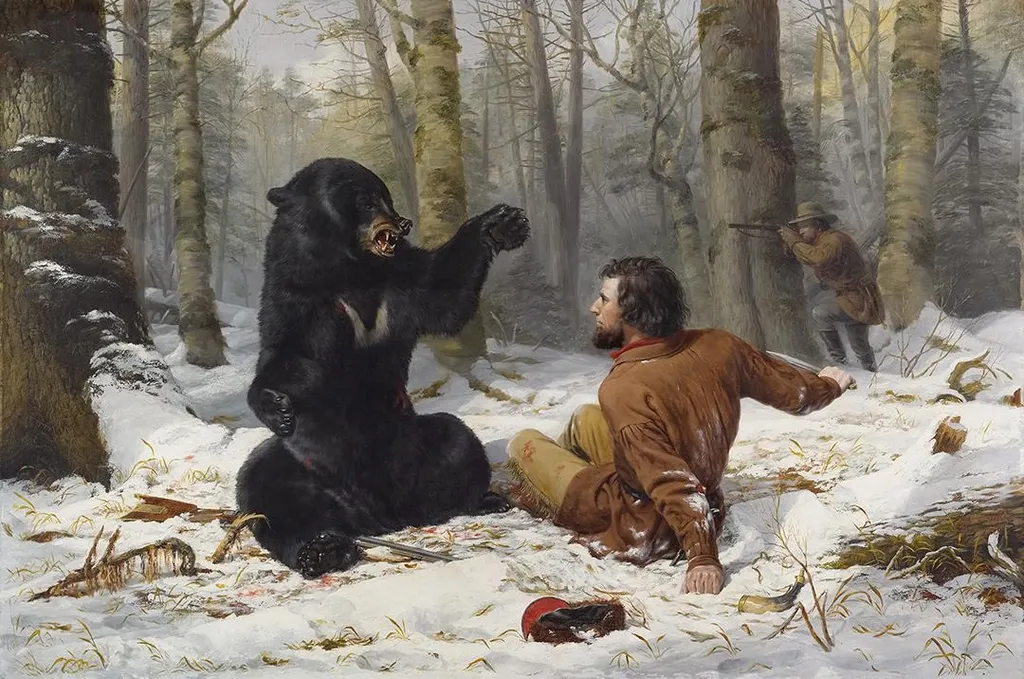
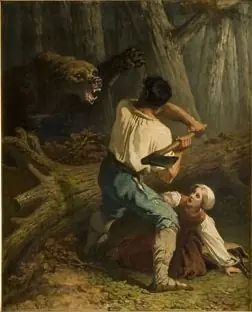
A Tight Fix—Bear Hunting, Early Winter is an oil painting by Arthur Fitzwilliam Tait. It dates from 1856 and is held in the collection of the Crystal Bridges Museum of American Art.
About this work
Overview
Painted in 1856 by Arthur Fitzwilliam Tait, this oil work captures a moment of peril during a winter bear hunt in the American frontier.
Painted in 1856 by Arthur Fitzwilliam Tait, this oil work captures a moment of peril during a winter bear hunt in the American frontier. Tait, a British-born artist based in New York, specialized in naturalistic depictions of wildlife and rural life. The scene conveys urgency through its composition and lighting, reflecting mid-19th-century fascination with the raw encounters between humans and nature in untamed landscapes.
Subject & Meaning
The painting portrays a hunter immobilized on the snow-covered ground, facing a reared black bear with bared teeth. A second figure, partially concealed behind a tree, holds a rifle, suggesting a coordinated but precarious effort. The moment freezes between threat and action, emphasizing vulnerability and survival. No triumph or resolution is shown—only the raw tension of an uncontrolled encounter in the wild.
Technique & Style
Tait employs chiaroscuro to heighten drama, contrasting the bear’s dark form against the pale snow and the hunter’s muted clothing. Detailed brushwork renders fur, fabric, and frost-laden branches with precision. The composition directs the viewer’s eye along the diagonal of the bear’s raised forelimbs toward the man’s knife, reinforcing the immediacy of the confrontation. The muted palette and overcast sky enhance the scene’s somber, tense atmosphere.
History & Provenance
Created during Tait’s most active period in New York, the painting aligns with his frequent exhibitions at the National Academy of Design. It was likely acquired soon after completion by a collector interested in American frontier themes. The work remained in private hands through the 20th century before entering a public collection, where it continues to represent the genre of wildlife narrative painting popular in antebellum America.
Context
In the 1850s, American art increasingly turned to wilderness subjects as symbols of national identity and rugged individualism. Hunting scenes like this one resonated with audiences familiar with frontier expansion and the decline of large game. Tait’s work contributed to a visual culture that romanticized survival in nature, even as industrialization reshaped the American landscape.
Legacy
Tait’s attention to anatomical accuracy and environmental detail influenced later wildlife illustrators and naturalist painters. While not widely known today, this painting remains a representative example of how 19th-century artists translated real encounters into staged narratives of danger and resilience. It preserves a visual record of human-animal dynamics before widespread conservation efforts emerged.
Artist & collection

Artist
Arthur Fitzwilliam Tait (February 5, 1819 – April 28, 1905) was a British-American artist who is known mostly for his paintings of wildlife. During most of his career, he was associated with the New York City art scene.

Museum
Crystal Bridges Museum of American Art
Continue through works from the same source collection.