Artwork
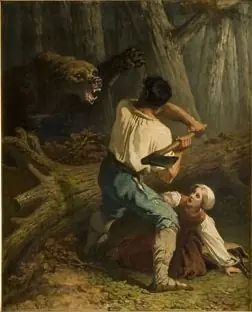
Vânătoare de urși
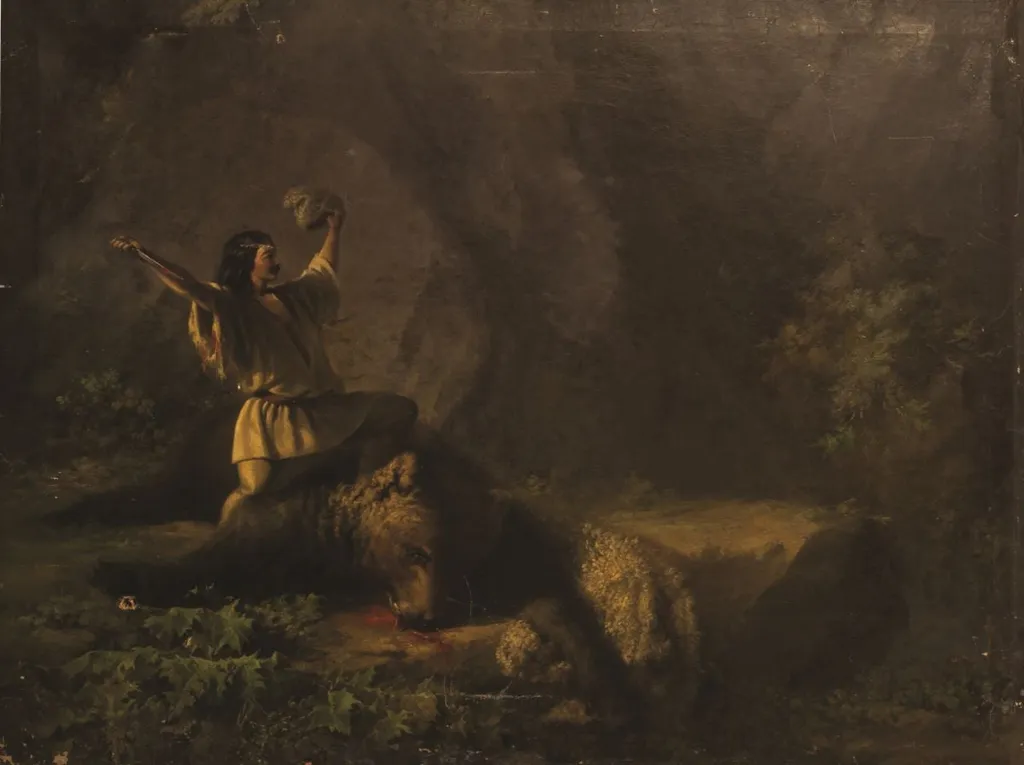
Vânătoare de urși is an unspecified painting by the Impressionist artist Henric Trenk. It dates from 1857 and is held in the collection of the Bucharest Municipality Museum.
About this work
Overview
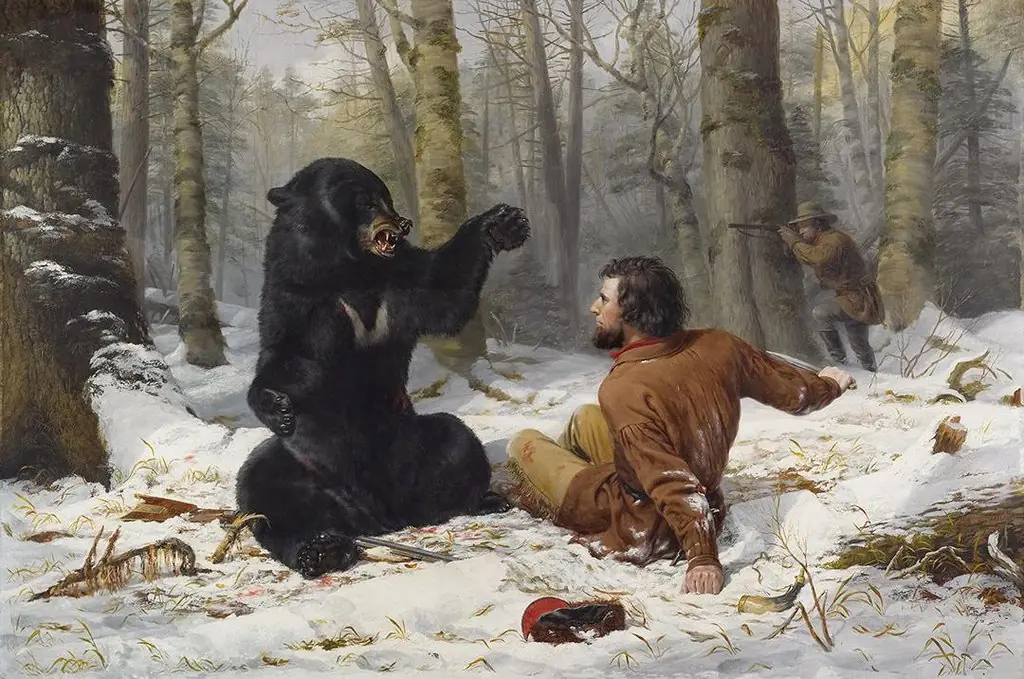
Created in 1857 by the Swiss‑born painter Henric Trenk, *Vânătoare de urși* (Bear Hunt) is an oil image in the collection of the Museum of Ethnography. The composition captures a moment of violent confrontation in a forested landscape, centering on a solitary figure who has just felled a bear.
Subject & Meaning
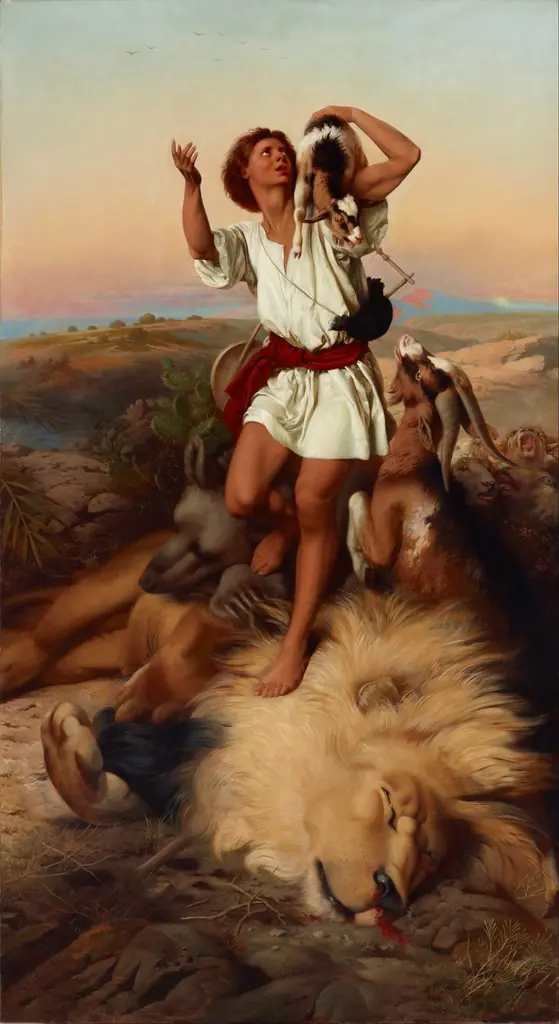
The central figure, clad in a plain white tunic, stands atop a rocky ledge holding a massive stone aloft, his posture suggesting triumph and exertion. Below him lies a large bear, its body twisted on its side with blood streaming from its mouth. The work can be read as a narrative of human dominance over nature, a theme common in mid‑19th‑century rural genre scenes.
Technique & Style
Trenk employs a pronounced chiaroscuro, juxtaposing bright illumination on the man and the bear against deep shadows that recede into the surrounding trees. The brushwork is notably loose and expressive, imparting a sense of immediacy and kinetic energy to the violent act. This handling of paint reinforces the dramatic tension between light and darkness.
History & Provenance
After its completion, the painting entered the holdings of the Museum of Ethnography, where it remains on display. Its provenance traces back to the artist’s own acquisition of the work, reflecting the 19th‑century interest of ethnographic institutions in visual records of rural life and traditional hunting practices.
Artist & collection
Artist
A 19th-century painter from Romania, Henric Trenk captured local life and mountain landscapes in oil.