Artwork
Untitled
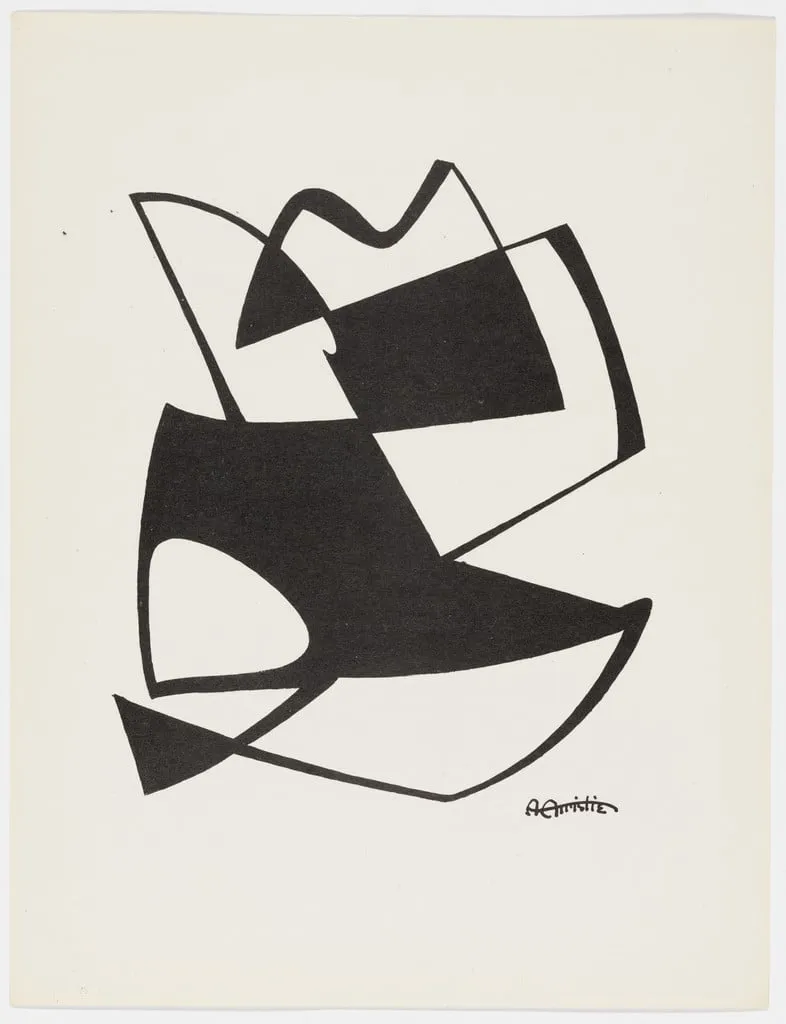
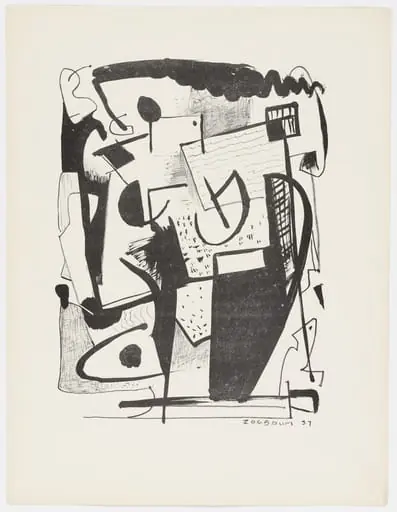
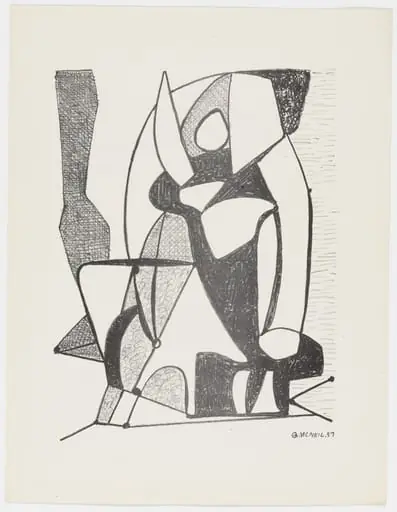
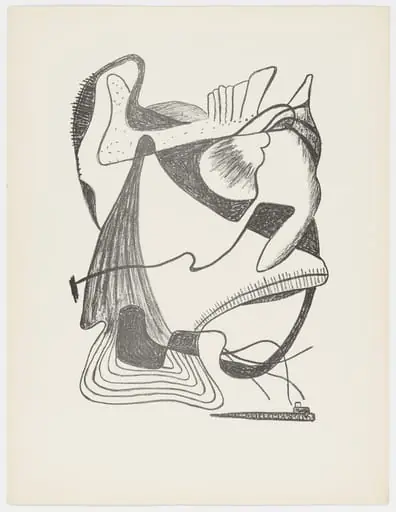
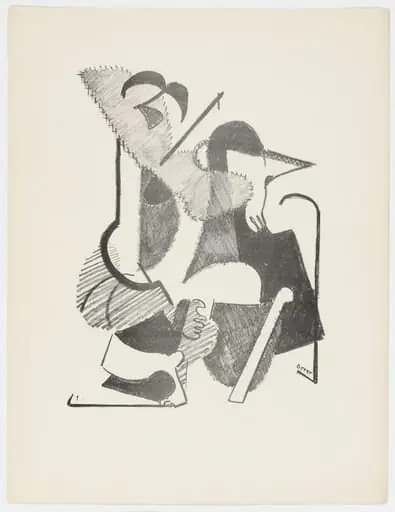
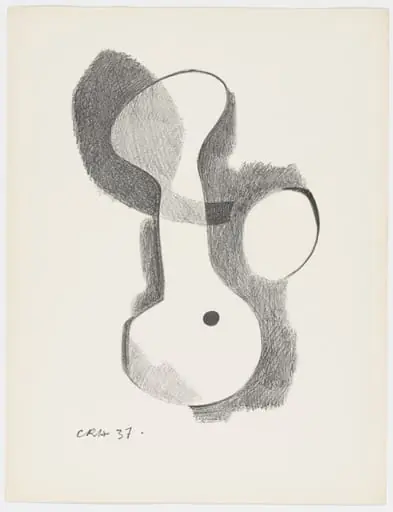
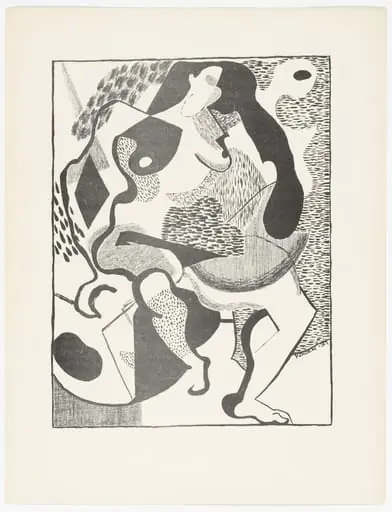
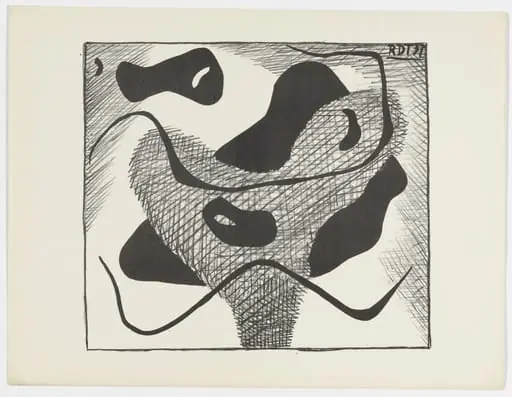
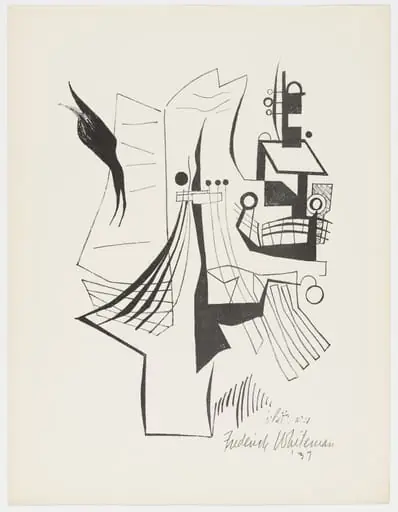
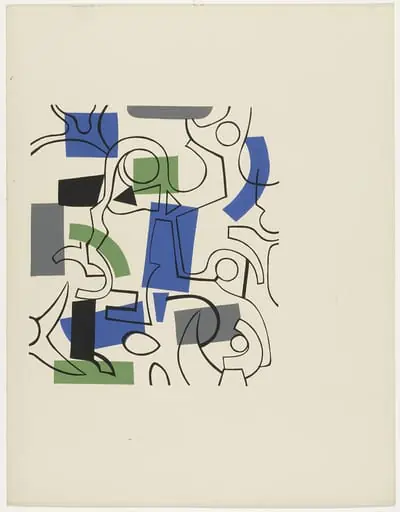
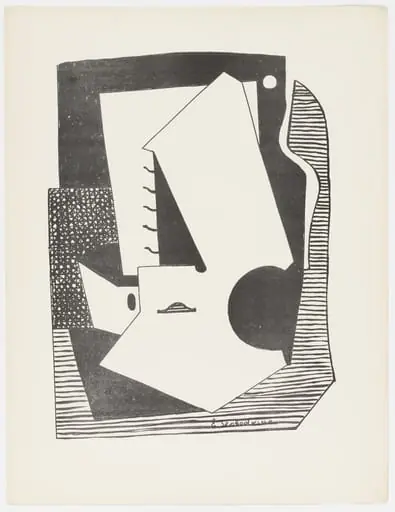
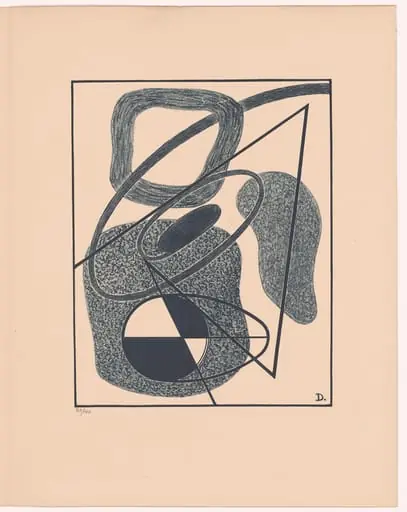
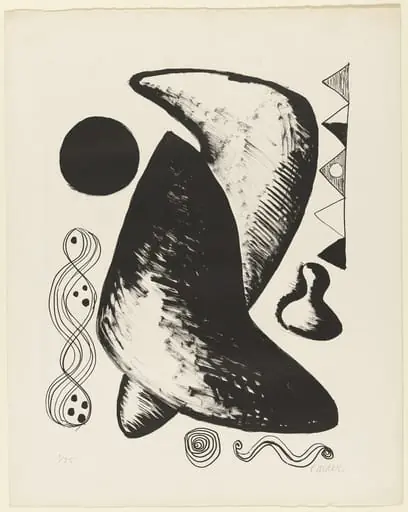
Untitled is an ink print by Arthur N. Christie. It dates from 1937 and is held in the collection of the Museum of Modern Art. Created in 1937, this lithograph is one of thirty-one works in a portfolio by Arthur N.
About this work
Overview
Its minimal composition and lack of figuration reflect a deliberate departure from traditional subject matter.
Created in 1937, this lithograph is one of thirty-one works in a portfolio by Arthur N. Christie, an American painter and co-founder of the American Abstract Artists. The piece belongs to a series that sought to advance non-representational art in the United States during a time when abstraction remained marginal in mainstream American art circles. Its minimal composition and lack of figuration reflect a deliberate departure from traditional subject matter.
Subject & Meaning
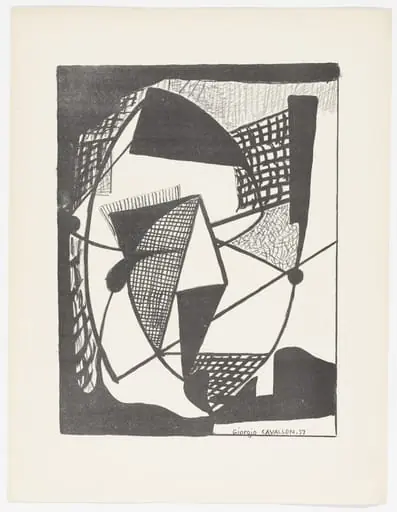
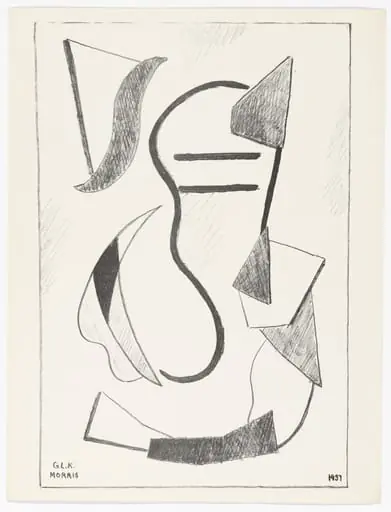
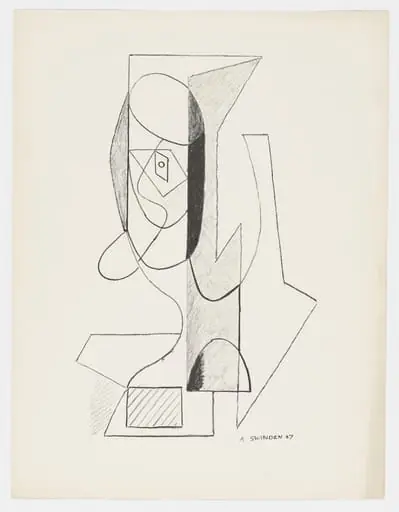
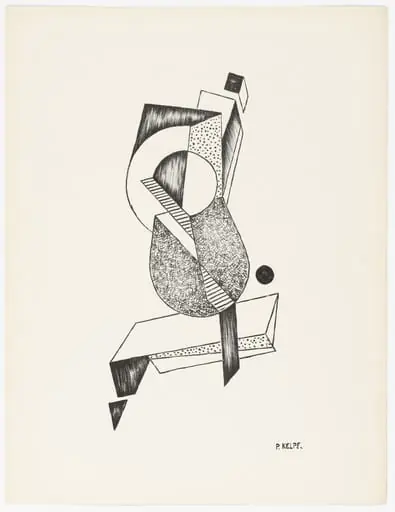
The composition consists of irregular, flat black forms on a pale ground, avoiding any reference to recognizable objects. The shapes suggest architectural fragments or draped textiles, but their ambiguity resists fixed interpretation. Christie’s intent appears to be formal exploration rather than narrative expression, emphasizing spatial relationships and structural balance over symbolic content.
Technique & Style
Executed in lithography, the work employs bold, unmodulated lines and solid areas of ink with no shading, texture, or color. The printer’s process allowed for crisp, clean edges, enhancing the geometric clarity of the forms. The absence of detail and reliance on silhouette align with the principles of early American abstraction, prioritizing purity of form over illusionistic depth.
History & Provenance
The portfolio was produced during Christie’s active involvement with the American Abstract Artists, a collective founded in 1936 to advocate for abstract art in a predominantly figurative art scene. While individual prints from the series were distributed to members and institutions, the full portfolio remains a rare and documented artifact of early American abstract printmaking, though specific ownership history is not widely recorded.
Context
In the late 1930s, American artists were navigating the tension between European modernism and domestic artistic traditions. Christie’s lithographs emerged amid growing interest in abstraction, yet faced resistance from conservative institutions. His work, alongside peers like Burgoyne Diller and Ilya Bolotowsky, helped establish a visual language for abstraction rooted in American sensibilities rather than imported European models.
Legacy
Though Christie is less known today than some contemporaries, this portfolio contributed to the institutional legitimacy of abstract printmaking in the U.S. The work’s restrained aesthetic influenced later generations of printmakers who valued simplicity and formal rigor. Its presence in museum collections underscores its role in documenting the quiet but persistent rise of abstraction in American art during the Depression era.
Artist & collection
Artist
Arthur N. Christie also known as A. N. Christie (1891-1980) was an American painter and founding member of the American Abstract Artists.