Artwork
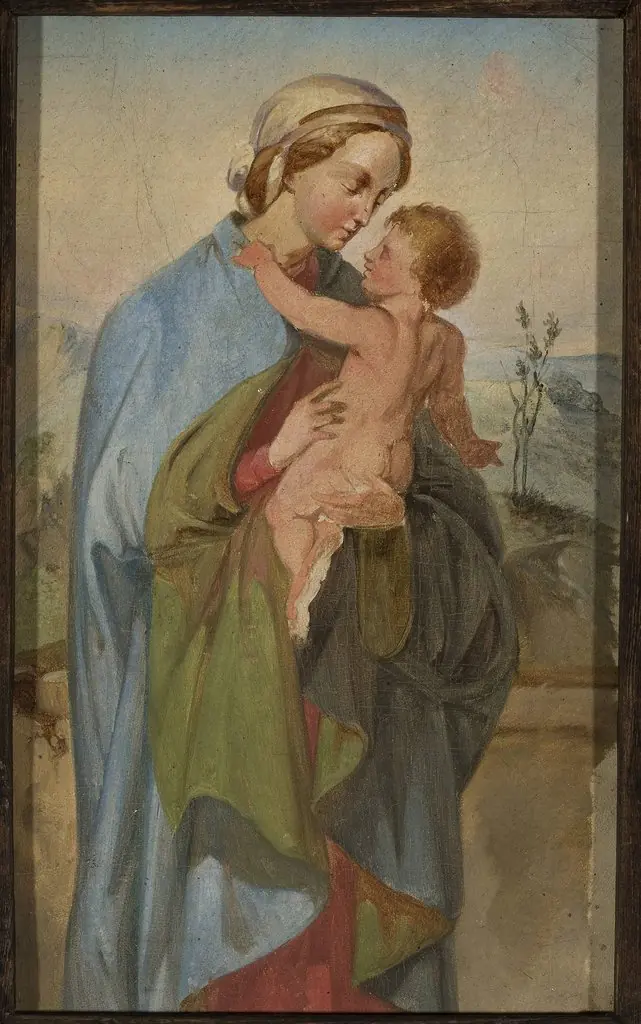
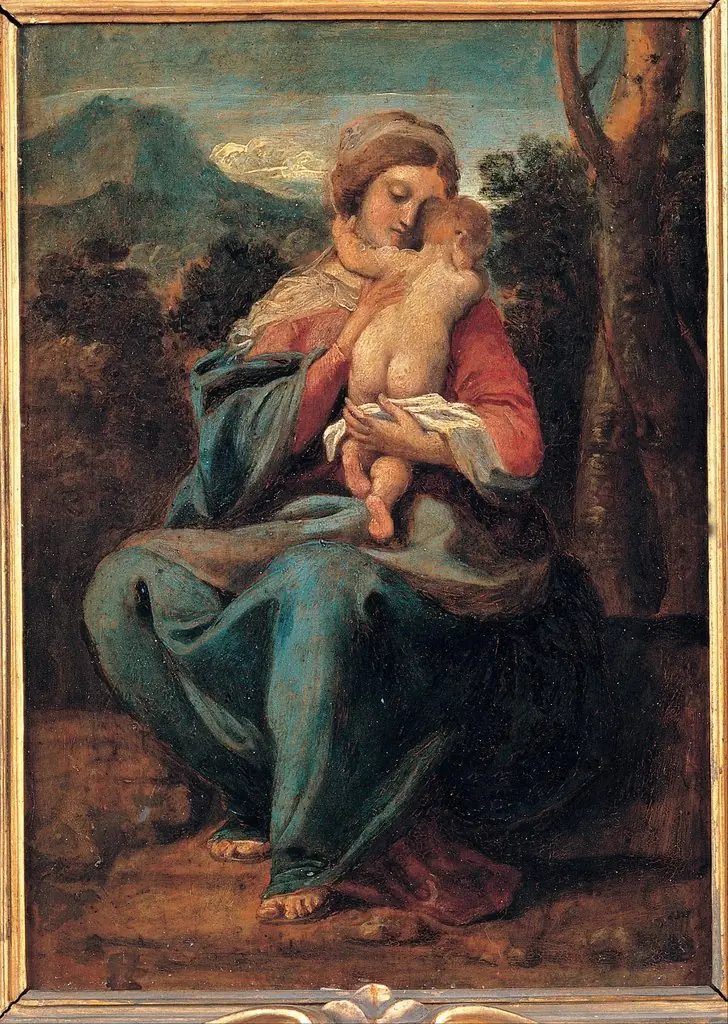
Madonna with Child – Copy of the fragment of the painting "Madonna with Child and Saints" by Bonifacio Veronese
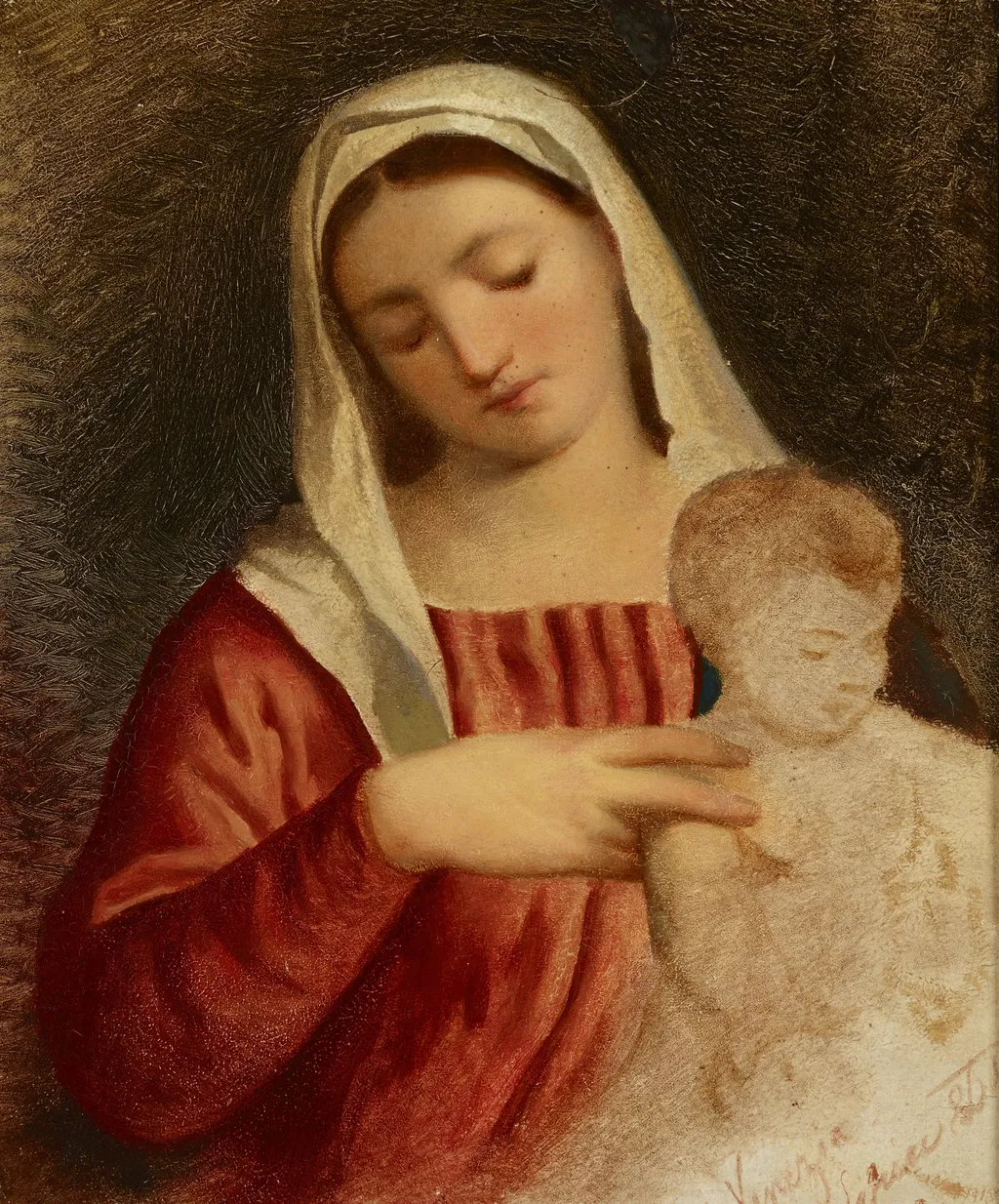
Madonna with Child – Copy of the fragment of the painting "Madonna with Child and Saints" by Bonifacio Veronese is an unspecified painting by Artur Grottger. It dates from 1864 and is held in the collection of the National Museum in Kraków.
About this work
Overview
Painted in 1864 by Polish artist Artur Grottger, this work is a faithful reproduction of a fragment from Bonifacio Veronese’s larger altarpiece.
Painted in 1864 by Polish artist Artur Grottger, this work is a faithful reproduction of a fragment from Bonifacio Veronese’s larger altarpiece. Though Grottger is best known for his nationalist themes, this piece reveals his engagement with Renaissance devotional imagery during a period of declining health. The painting is now part of the National Museum in Kraków’s collection, preserved as a study in quiet reverence and technical restraint.
Subject & Meaning
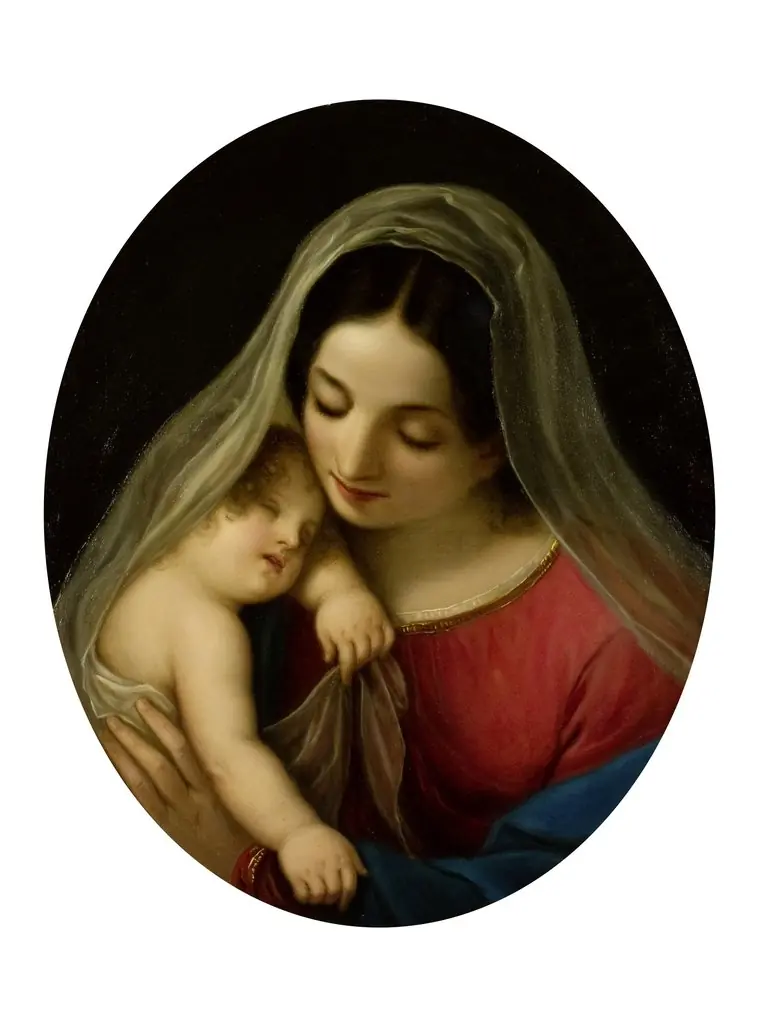
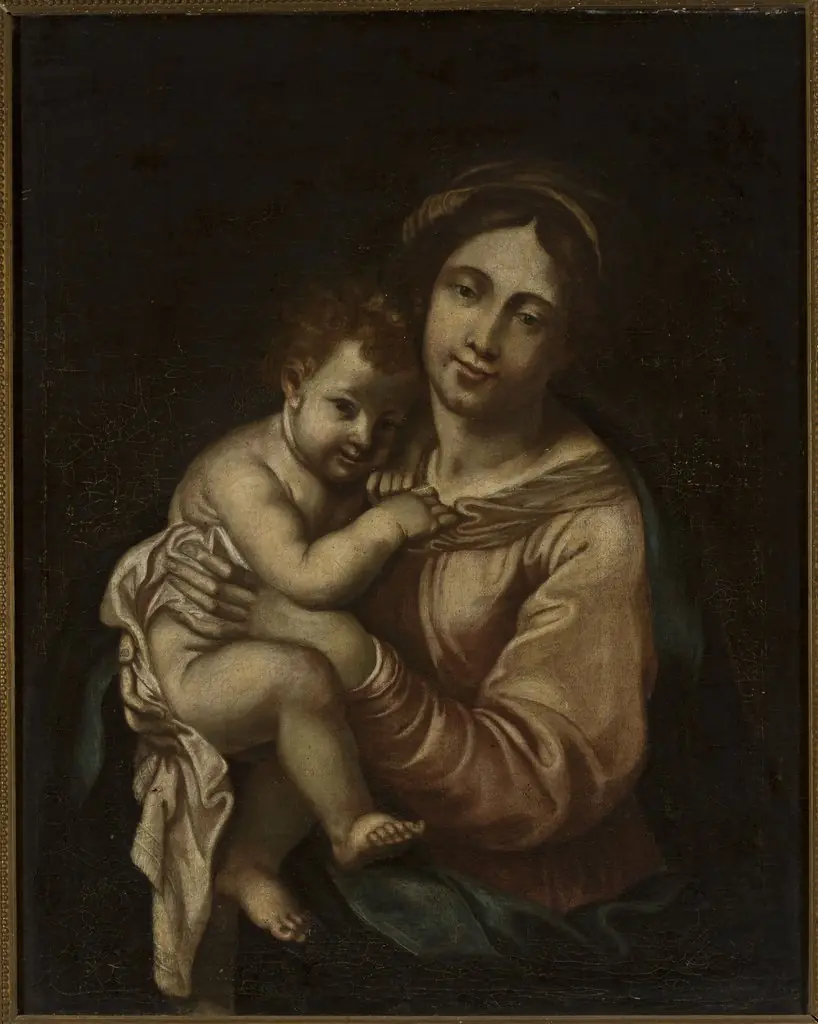
The composition centers on the Virgin Mary holding the Christ Child, their intimate posture evoking tenderness rather than grandeur. Mary’s serene expression and modest attire suggest humility, while the child’s indistinct features soften the divine into the human. The absence of saints or narrative context isolates the pair, emphasizing personal devotion over doctrinal spectacle, aligning with Grottger’s interest in spiritual quietude.
Technique & Style
Grottger employs chiaroscuro to define the figures against a deep, unmodulated background, enhancing their three-dimensionality. The red and green drapery is rendered with muted tones and subtle texture, suggesting age and wear rather than luxury. Brushwork is restrained, avoiding dramatic flourish; the child’s face is deliberately blurred, shifting focus to the mother’s composed gaze and the tactile quality of fabric.
History & Provenance
Created during the final years of Grottger’s life, the painting reflects his retreat from political subjects toward intimate religious studies. It was likely made as a personal exercise or devotional aid, not for public display. Acquired by the National Museum in Kraków shortly after his death, it remains one of few surviving religious works from his later period, offering insight into his artistic evolution under physical constraint.
Context
In mid-19th-century Poland, religious imagery was often reinterpreted through nationalist and romantic lenses. Grottger, immersed in themes of sacrifice and memory, turned to Renaissance models not for revivalism but for emotional resonance. His choice to copy Veronese—a Venetian painter known for color and atmosphere—signals an interest in quiet, universal human moments over overt religious spectacle.
Legacy
Though not widely exhibited, the painting endures as a quiet testament to Grottger’s capacity for introspection. It stands apart from his more famous historical scenes, revealing a sensitivity to light, texture, and emotional restraint. Scholars note its significance as a bridge between his public activism and private spiritual contemplation, offering a nuanced view of his artistic range.
Artist & collection
Artist
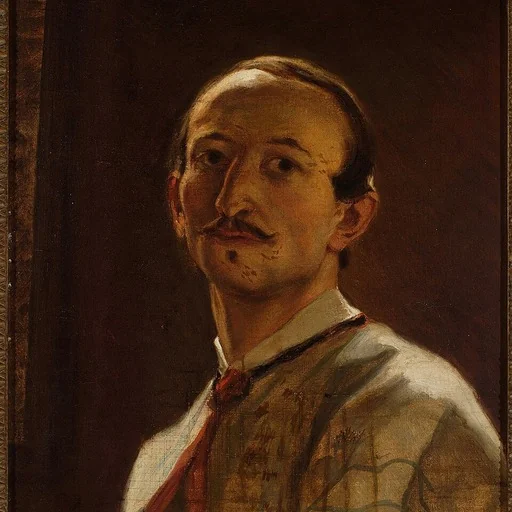
Artur Grottger (11 November 1837 – 13 December 1867) was a Polish Romantic painter and graphic artist, one of the most prominent artists of the mid 19th century under the partitions of Poland, despite a life cut short by incurable illness.