Artwork
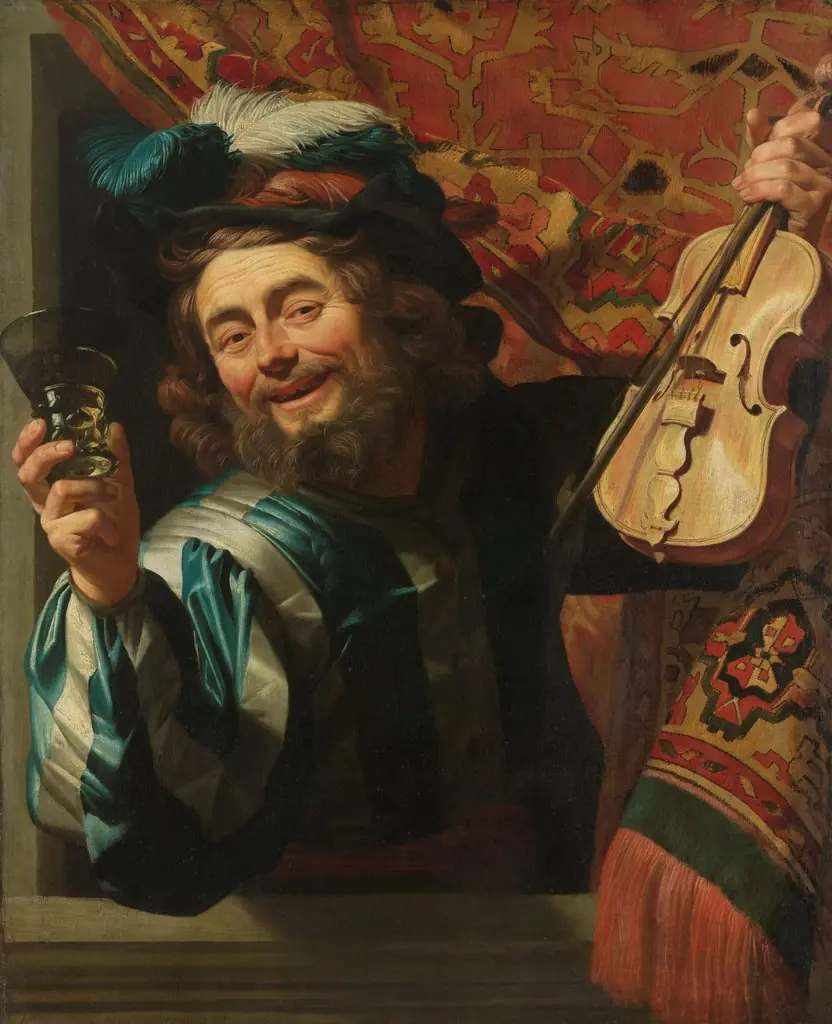
De vrolijke speelman
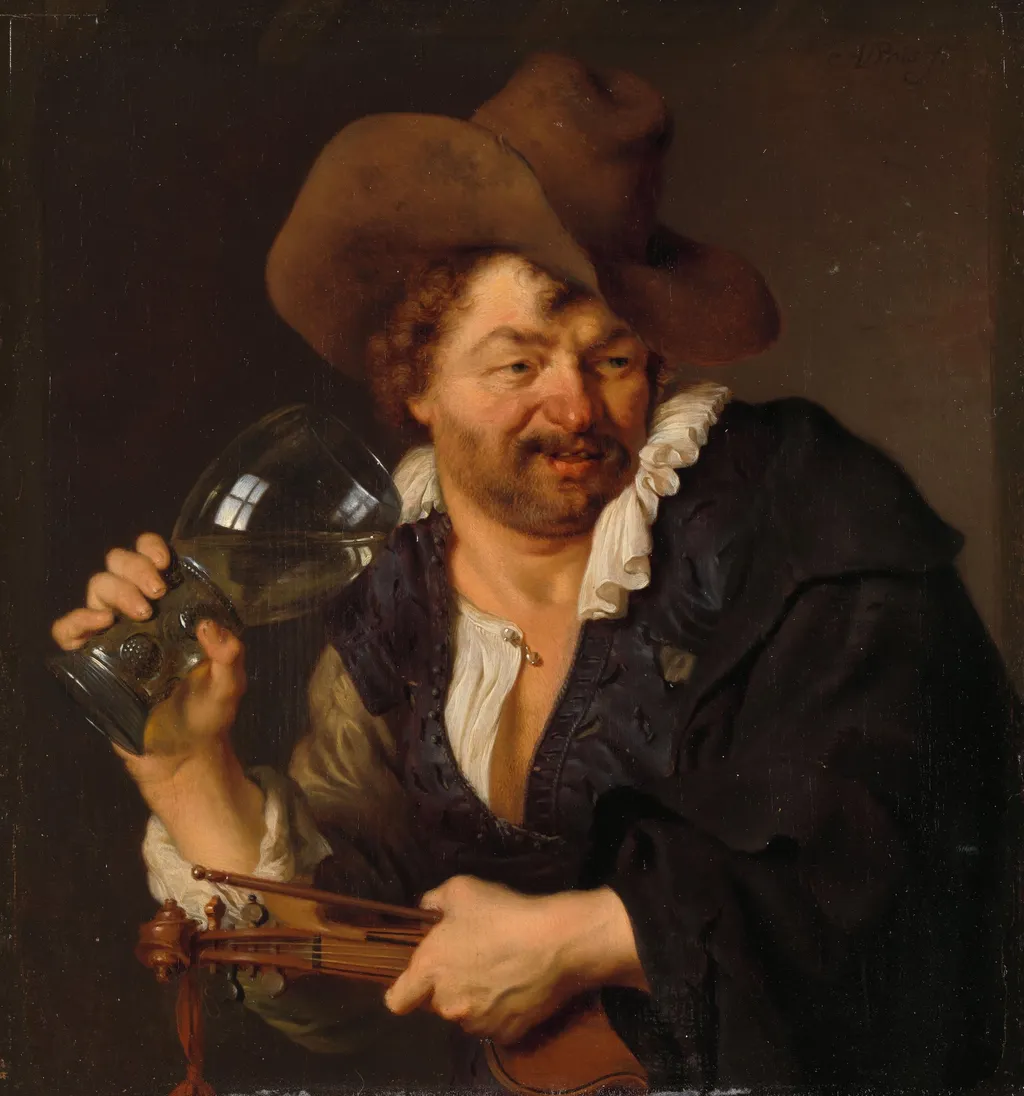
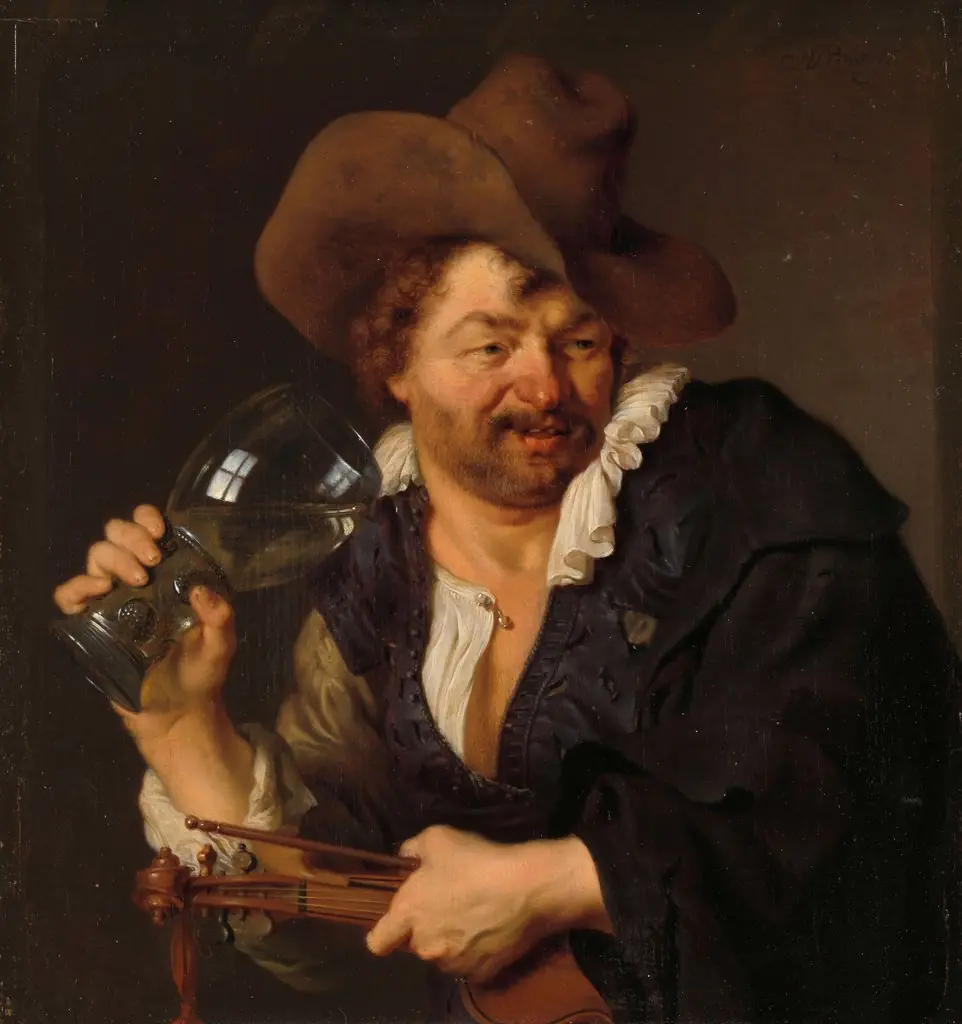
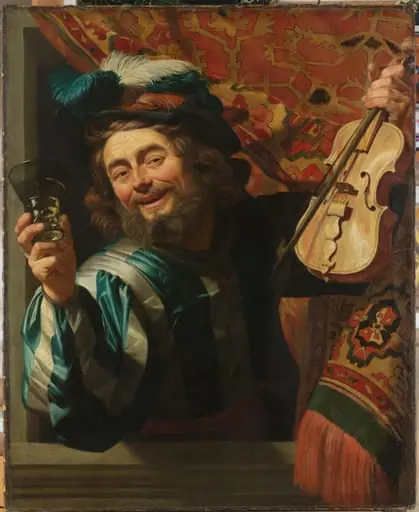
De vrolijke speelman is an unspecified painting by the Dutch Golden Age artist Ary de Vois. It dates from 1670 and is held in the collection of the Rijksmuseum.
About this work
Overview
De vrolijke speelman is a painting depicting a musician in a state of jovial inebriation, characterized by a glass of white wine, disheveled attire, and physical signs of intoxication.
Subject & Meaning
The subject, a tipsy musician, conveys a lighthearted, humorous scene. His glazed eyes, rosy cheeks, and open, disheveled shirt imply a state of drunkenness rather than mere happiness, inviting the viewer to acknowledge and perhaps amusedly relate to his condition.
Technique & Style
Executed in the style of Leiden's fijnschilders (fine painters), the work features meticulous attention to detail and possibly impasto techniques, evident in textured elements like the musician's nose and the wine glass, which add depth and visual appeal.
History & Provenance
Attributed to the Leiden fijnschilders, specifically potentially Ary de Vois, the painting was created for an audience seeking finely crafted, entertaining art. Provenance details are not provided in the available information.
Context
Part of a tradition of humorous, precisely painted scenes from 17th-century Leiden, De vrolijke speelman reflects the demand for lighthearted, detailed artworks among the period's art patrons.
Legacy
While specific legacy details of De vrolijke speelman are not provided, works of this style and era continue to be appreciated for their technical mastery and ability to evoke amusement through subtle, suggestive portrayals of everyday, relatable moments.
Own this work as a print
Artist & collection

 The Merry Fiddler
 Man with a Cup
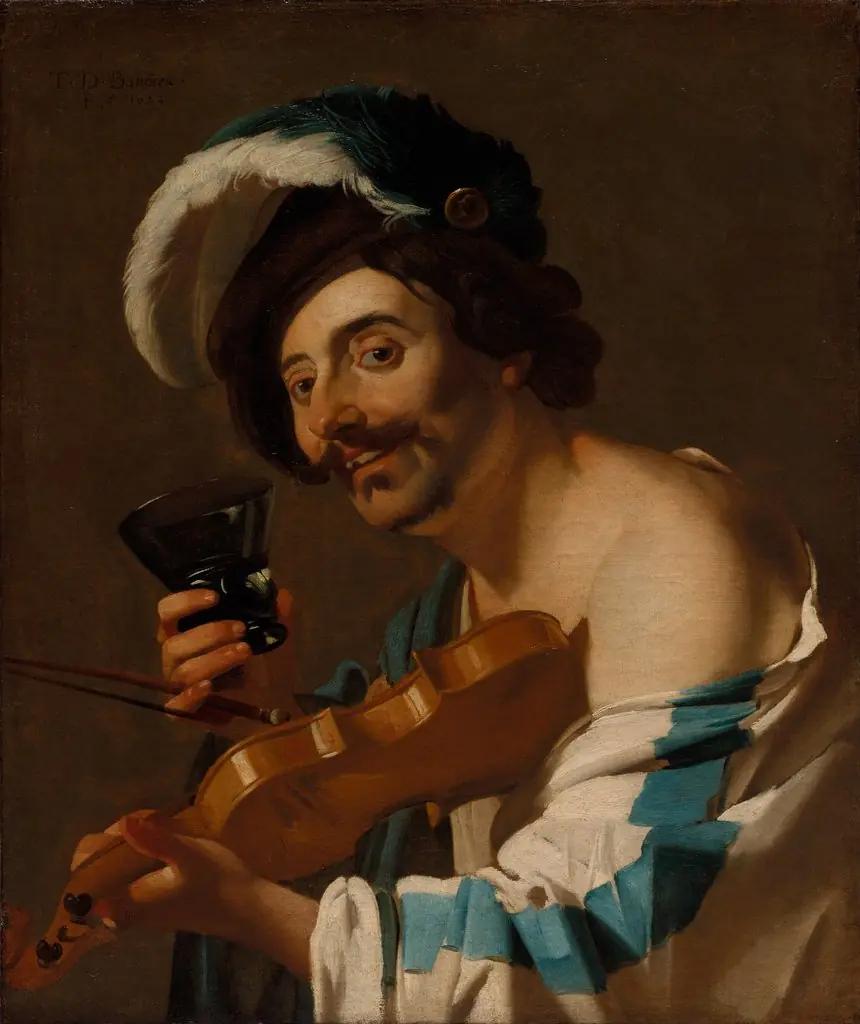 Violin Player with a Wine Glass
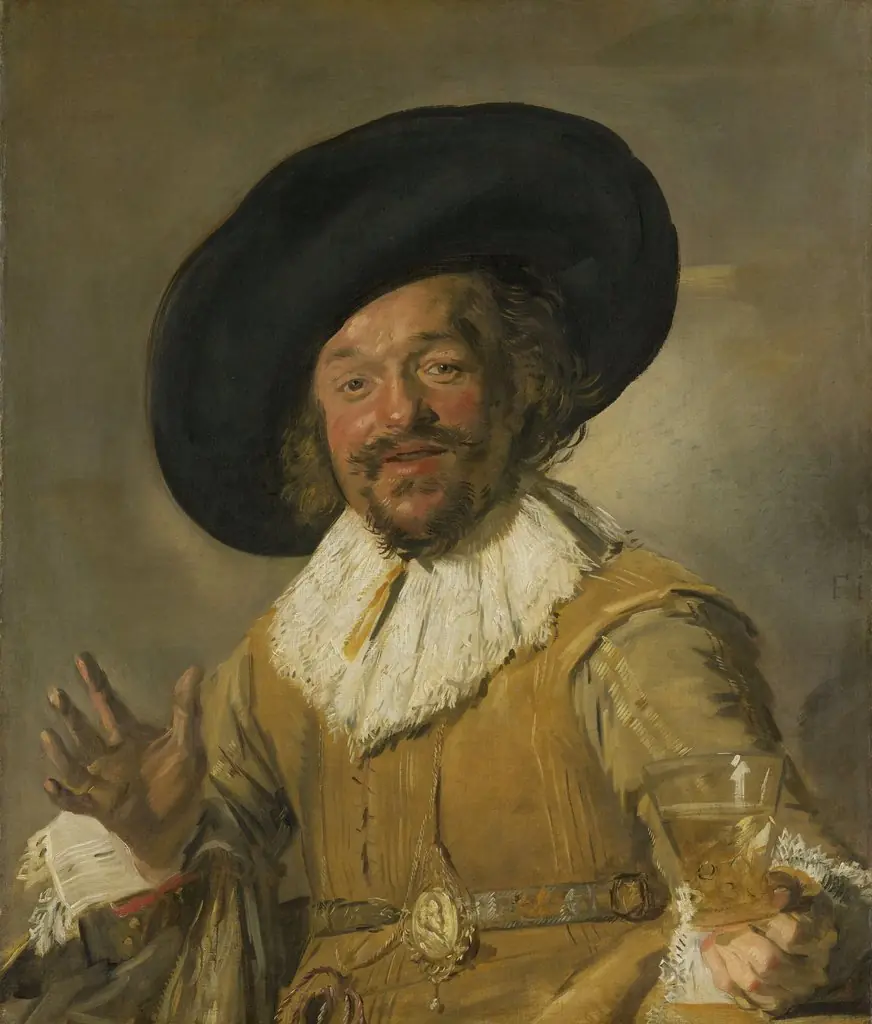 A Militiaman Holding a Berkemeyer, Known as the ‘Merry Drinker’
 Violin Player with a Wine Glass
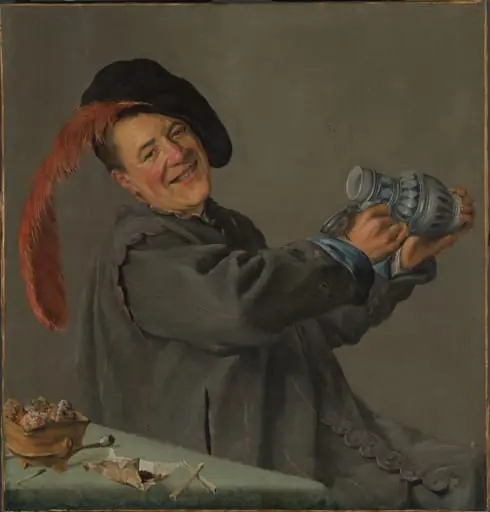 De vrolijke drinker
 Breakfast of a Young Man
 A soldier with a wineglass and pipe
 Drinking Man and an Old Smoking Man
 The Jolly Drinker
 Een vrolijke vioolspeler