Artwork
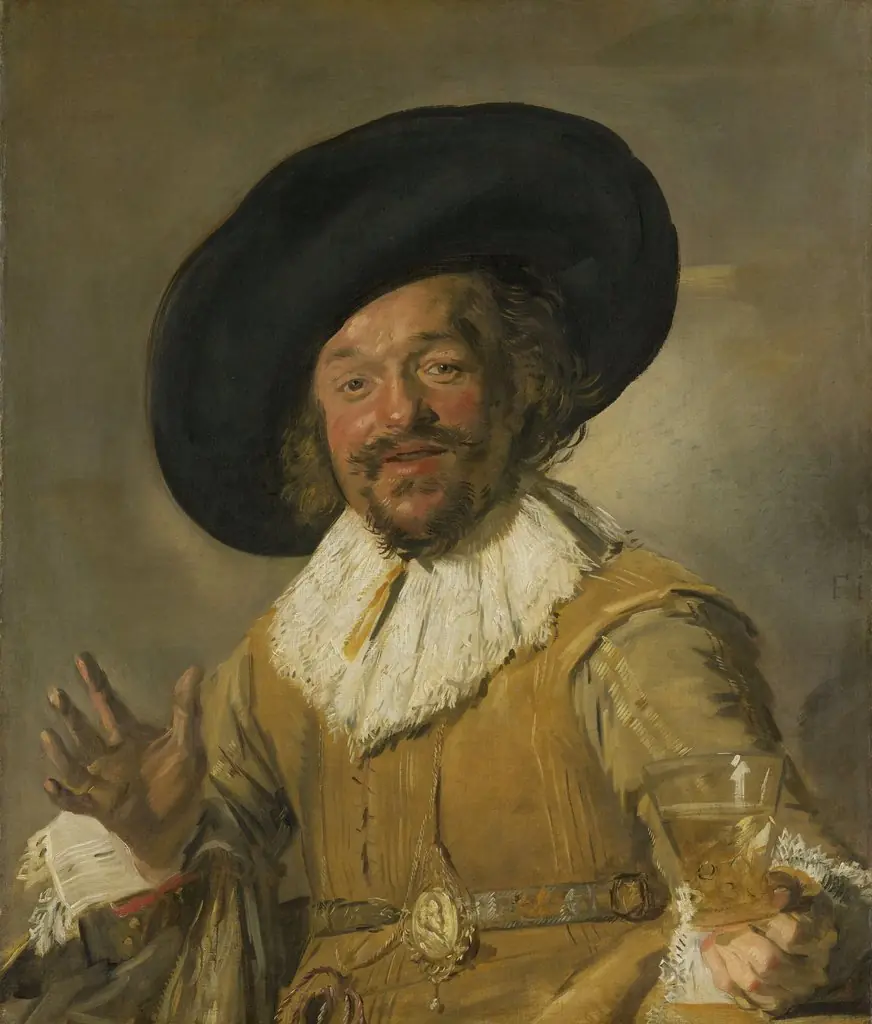
De vrolijke drinker
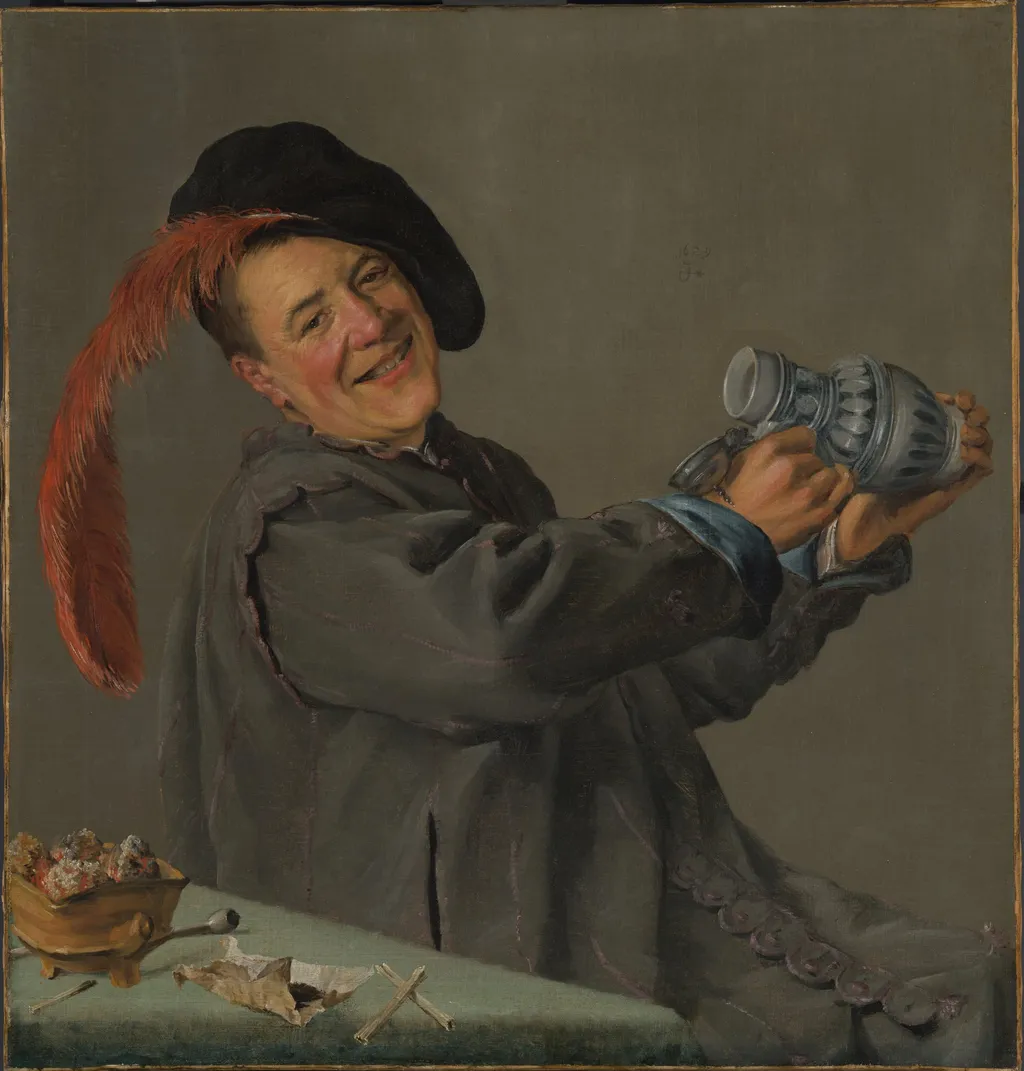
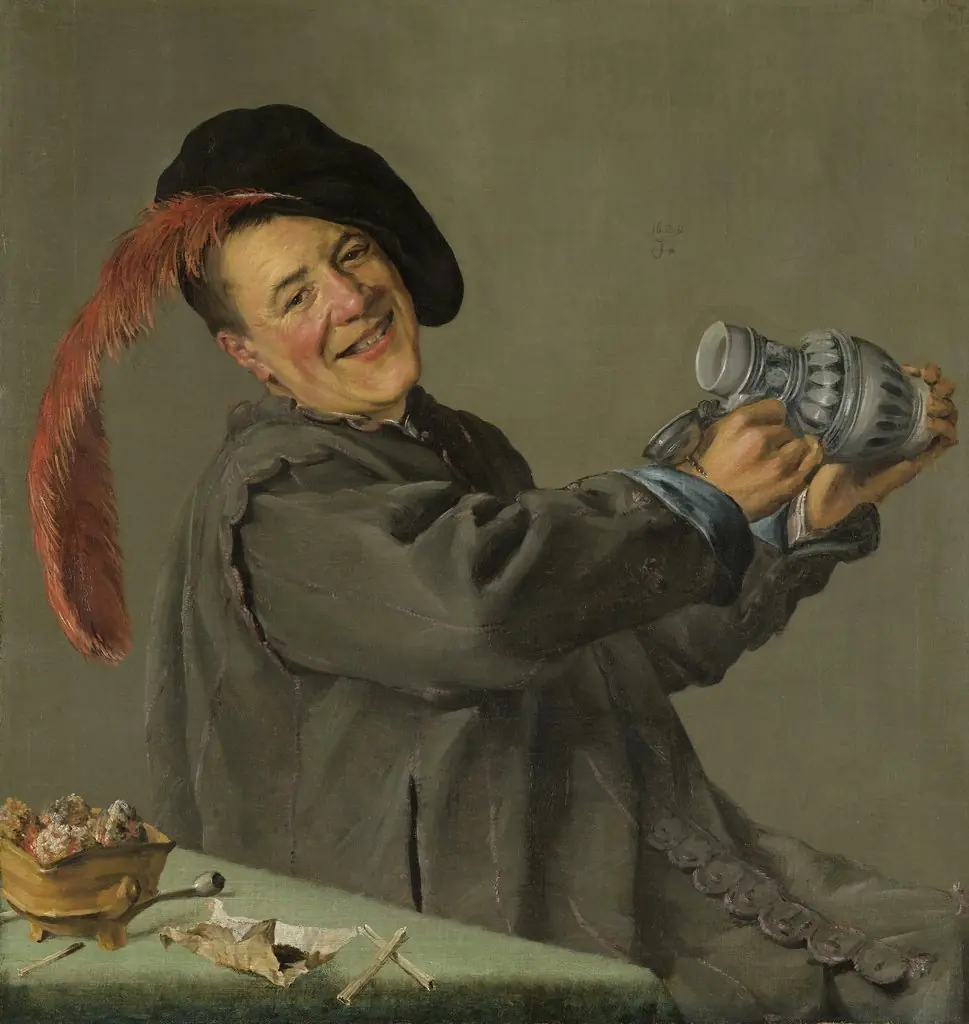
De vrolijke drinker is an unspecified painting by the Dutch Golden Age artist Unknown. It dates from 1629 and is held in the collection of the Rijksmuseum. This oil painting depicts a man raising an empty jug in a moment of mirth, his face flushed and attire disheveled.
About this work
Overview
Leyster, one of the few documented female painters in 17th-century Holland, specialized in genre scenes capturing informal, lively moments of daily life.
This oil painting depicts a man raising an empty jug in a moment of mirth, his face flushed and attire disheveled. Long misattributed to Frans Hals, the work was correctly identified as by Judith Leyster after her signature—JL with a star—was discovered above the jug in 1893. Leyster, one of the few documented female painters in 17th-century Holland, specialized in genre scenes capturing informal, lively moments of daily life.
Subject & Meaning
The figure embodies a moment of unrestrained merriment, his grin and flushed cheeks suggesting the effects of drink. The empty jug, held triumphantly, signals both indulgence and the transient nature of pleasure. Such scenes were common in Dutch genre painting, reflecting social customs and moral ambiguities around conviviality. Leyster’s portrayal avoids moralizing, instead emphasizing the humanity and spontaneity of the moment.
Technique & Style
Leyster employs loose, energetic brushwork reminiscent of Frans Hals, with rapid strokes defining the man’s hat, beard, and clothing. The face is rendered with subtle tonal shifts, capturing the glow of alcohol and the texture of skin. Backgrounds are left suggestively vague, focusing attention on the figure’s expression and gesture. Her handling of light and movement reflects a keen observation of real-life behavior.
History & Provenance
The painting remained attributed to Frans Hals for centuries until 1893, when Leyster’s monogram was identified near the jug. Her signature, previously overlooked, confirmed her authorship and challenged assumptions about gender and artistic authority in the Dutch Golden Age. The work’s reattribution helped revive scholarly interest in Leyster’s oeuvre, which had been largely obscured by misattribution.
Context
In 17th-century Haarlem, women were rarely admitted to painters’ guilds or ran independent workshops. Leyster, one of the few exceptions, operated a successful studio and trained apprentices. Her genre scenes, often depicting drinkers, musicians, and children, aligned with popular tastes but were frequently credited to male contemporaries due to prevailing biases in art documentation and collecting.
Legacy
The rediscovery of Leyster’s signature transformed her status from a footnote to a recognized figure in Dutch art history. Her work, once overshadowed, now exemplifies the overlooked contributions of women artists. Scholars increasingly study her brushwork and subject choices as evidence of a distinct female perspective within a male-dominated field, reshaping narratives of the Dutch Golden Age.
Artist & collection

 Domestic Scene
 Giacomo and Cardinal Marco, investing Andrea, Abbot of San Zeno, with his Benefice
 The Nymph of Fontainebleau
 Portrait of a Woman
 Madonna and Child with Saints in the Enclosed Garden
 Venus and Minerva
 Family Group of Four on Sofa
 Wall painting from Room H of the Villa of P. Fannius Synistor at Boscoreale