Artwork
The Ruins of the Colosseum
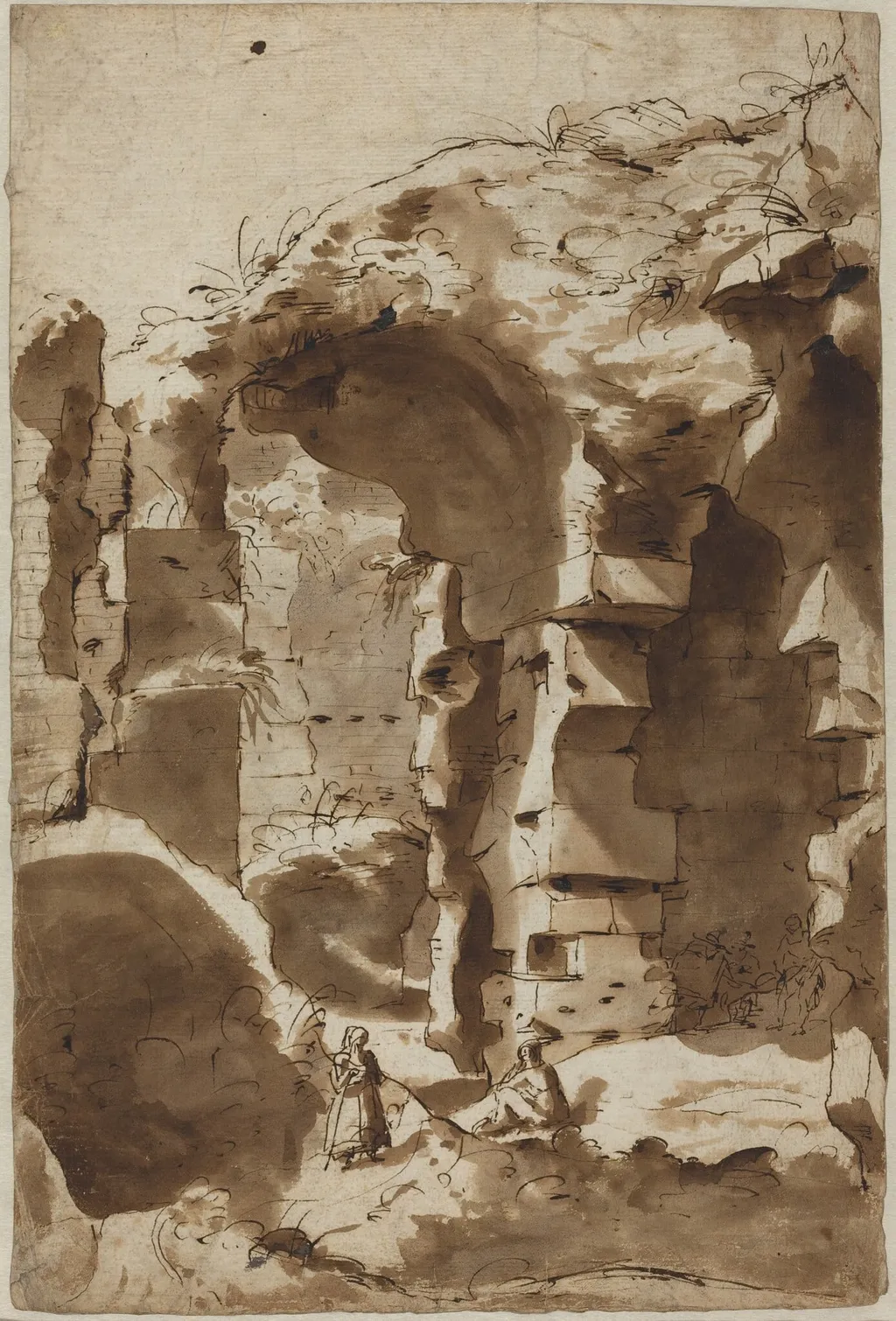
The Ruins of the Colosseum is an ink drawing by the Baroque artist Jan Asselijn. It dates from 1631 and is held in the collection of the National Gallery of Art.
About this work
Overview
Jan Asselijn’s 1631 drawing, titled The Ruins of the Colosseum, is executed in pen and brown ink with a brown wash. The work presents a fragmented view of the ancient arena, its broken stonework rendered in uneven, dark strokes that leave portions of the paper almost untouched. A diminutive figure appears in the lower left corner, emphasizing the scale of the decay.
Subject & Meaning
The composition focuses on the disintegrating architecture of the Colosseum, a visual reminder of the passage of time and the impermanence of human achievement. The solitary figure, rendered at a much smaller scale, underscores the contrast between individual presence and the monumental remnants of antiquity, inviting contemplation of history’s lingering traces.
Technique & Style
Asselijn employs rapid, sketchy lines to convey the ruin’s texture, avoiding smooth contours in favor of jagged edges and broken forms. Cross‑hatching builds tonal depth, while the brown wash adds atmospheric shading. The loose, gestural strokes that suggest a windy sky reflect a 17th‑century practice of studying ruins as studies of decay and atmosphere.
History & Provenance
Created in 1631, the drawing belongs to Asselijn’s early period, when he frequently explored topographical subjects. The work has remained within European collections, documented in several 19th‑century catalogues of Dutch drawings, though its precise ownership trail before the modern era is not fully recorded.
Artist & collection


 Ruins
Ruins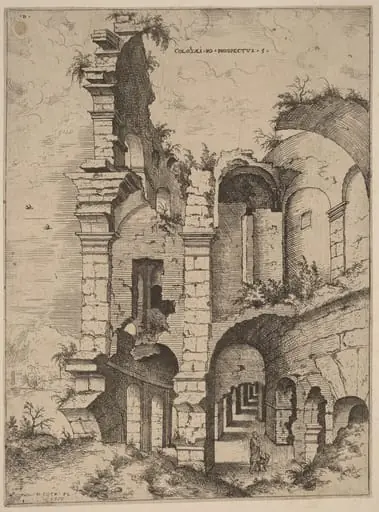 Fifth View of the Colosseum
![The Fantastic Rocks and Castle at Bomarzo [recto], by Bartholomeus Breenbergh](https://artifactworldgallery.com/img/bartholomeus-breenbergh--the-fantastic-rocks-and-castle-at-bomarzo-recto--e05f03da6f1f9c0a-w320.webp) The Fantastic Rocks and Castle at Bomarzo [recto]
The Fantastic Rocks and Castle at Bomarzo [recto] Untitled
 Figures by a Rocky Pool
 Landscape
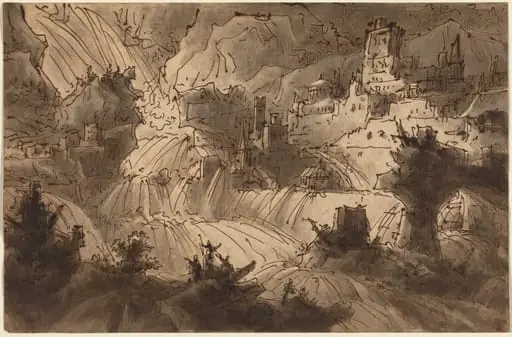 Mountain Torrents Flooding a City
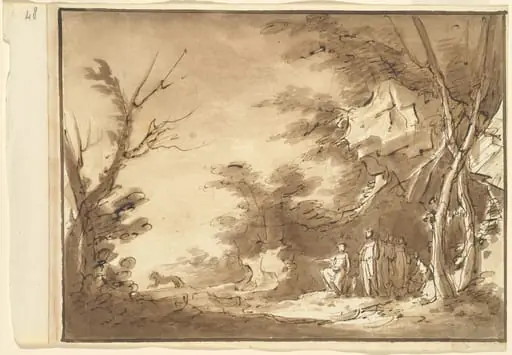 Diana and Her Companions in a Landscape
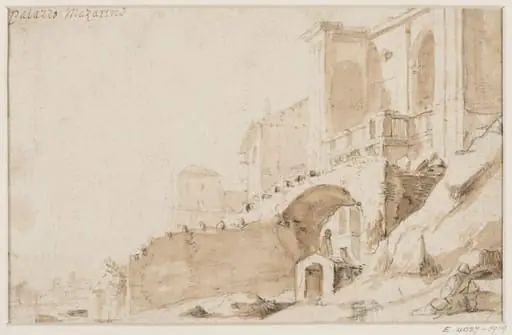 Palazzo Mazzarini, Rome
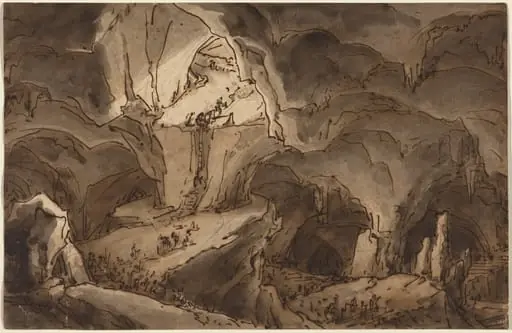 Entrance to the Bowels of the Earth
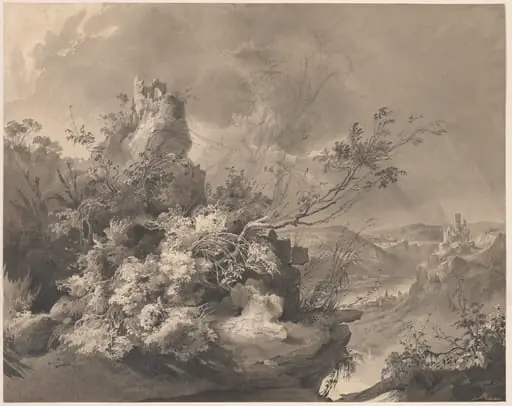 Ruined Towers Overlooking the Rhine
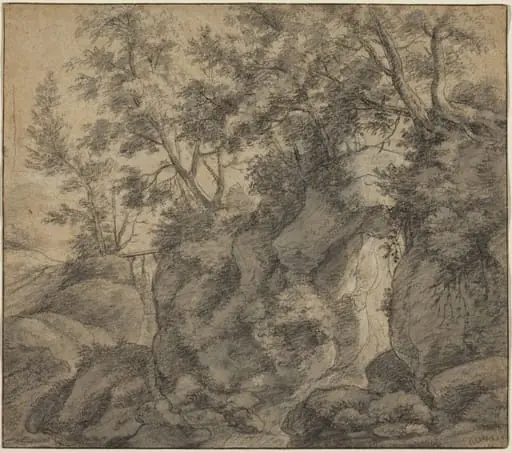 Landscape with a Wooded Ravine