Artwork
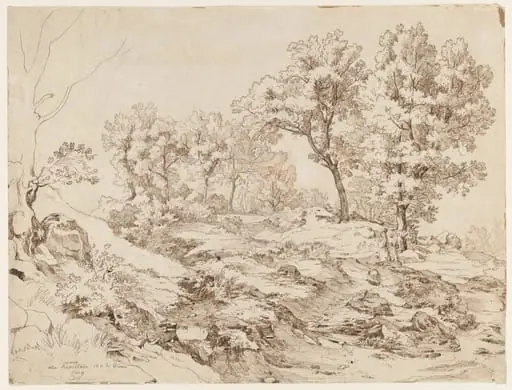
Landscape with a Wooded Ravine
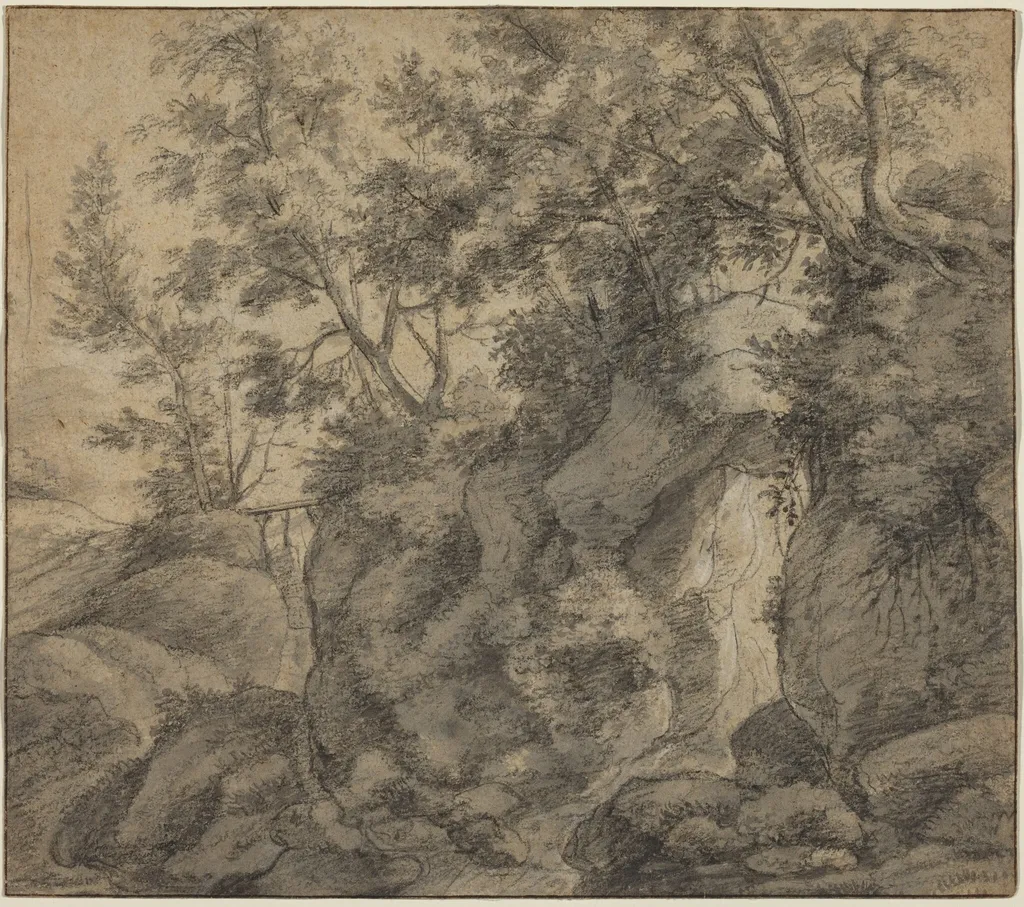
Landscape with a Wooded Ravine is a chalk drawing by the Baroque artist Antonie Waterloo. It dates from 1650 and is held in the collection of the National Gallery of Art.
About this work
Overview
Landscape with a Wooded Ravine is a drawing executed by the Dutch artist Anthonie Waterloo around 1650. Rendered on laid paper, the work measures the artist’s interest in natural scenery, depicting a forested gorge with a sense of depth and atmosphere.
Technique & Style
The composition is rendered in black chalk, over which Waterloo applied a gray wash to model form and tone. Highlights of white pigment are added to intensify light effects, creating contrast between shadowed foliage and illuminated spaces. The use of laid paper contributes a subtle texture that enhances the drawing’s tonal range.
Subject & Meaning
The image presents a wooded ravine, a common motif in 17th‑century Dutch landscape art that reflects an appreciation for untamed nature. The secluded gorge invites contemplation of the interplay between light and shadow, suggesting a quiet, perhaps pastoral, environment beyond human activity.
History & Provenance
Created circa 1650, the drawing remains a representative example of Waterloo’s oeuvre, though details of its ownership history are sparse. Its survival on paper indicates careful preservation, allowing contemporary viewers to assess the artist’s handling of medium and composition.
Own this work as a print
Artist & collection

 La Serpentara near Olevano
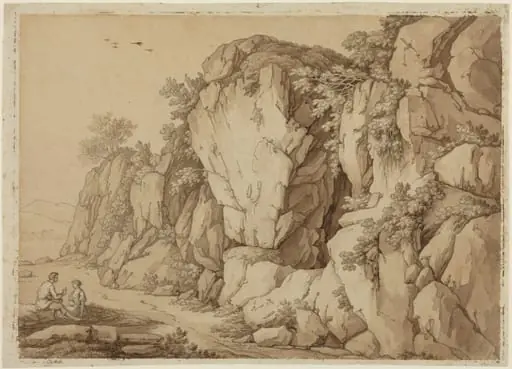 A Young Couple Seated near a Massive Rock Formation
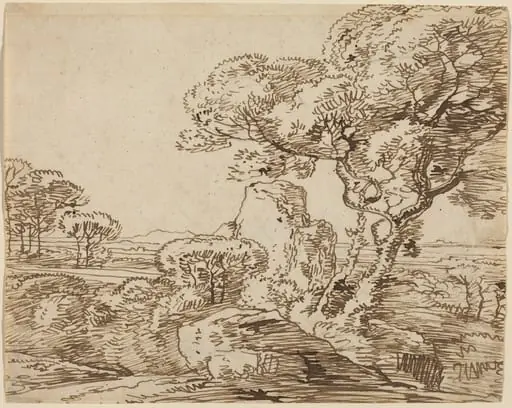 Landscape with Trees and Craggy Rocks
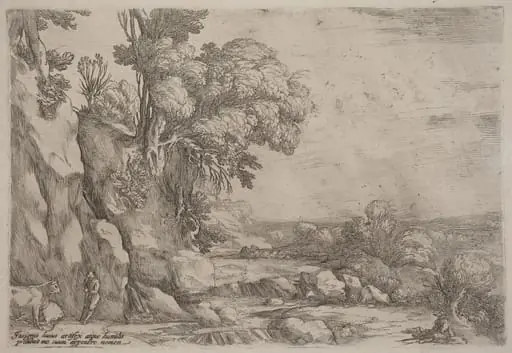 Landscape with Resting Herdsmen
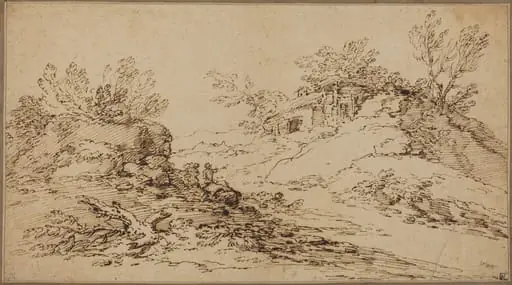 Rocky Landscape with a Rustic House
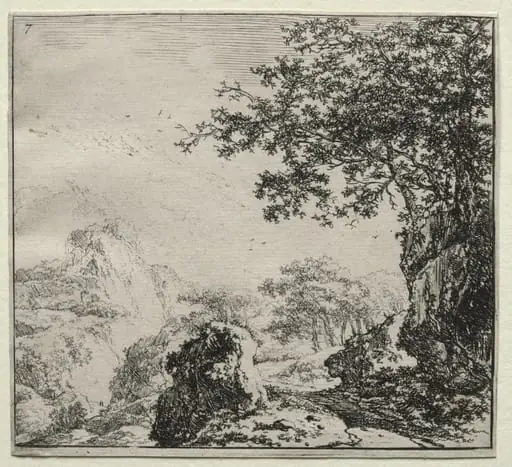 The Road near the Rocks
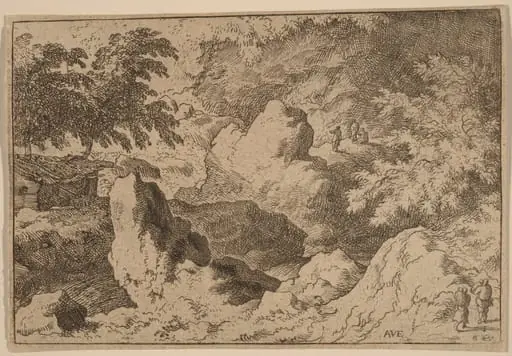 Three Men on a Rock
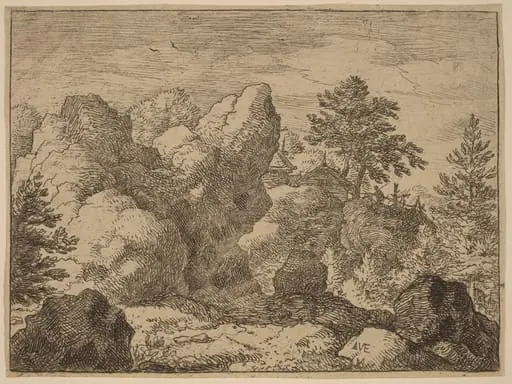 The Pointed Rock
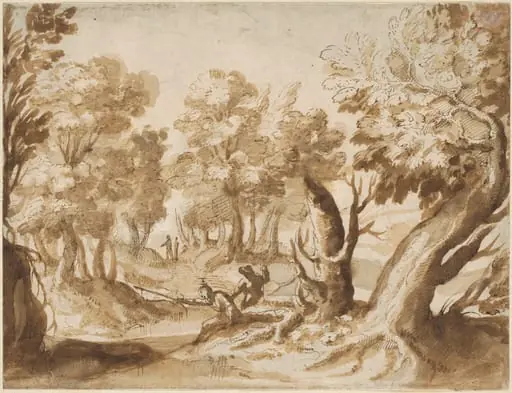 Two Figures Fishing in a Landscape
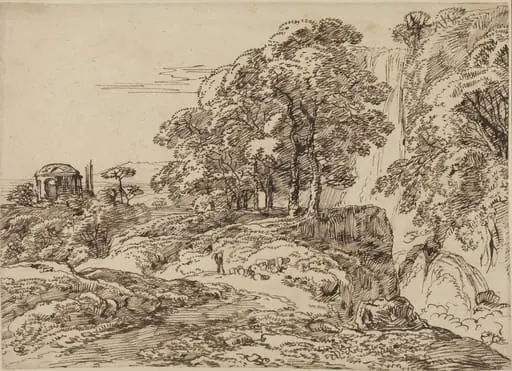 Pastoral Landscape with a Waterfall and a Temple
 Figures by a Rocky Pool
 Wooded Landscape with a Road