Artwork
Maica Domnului cu Pruncul
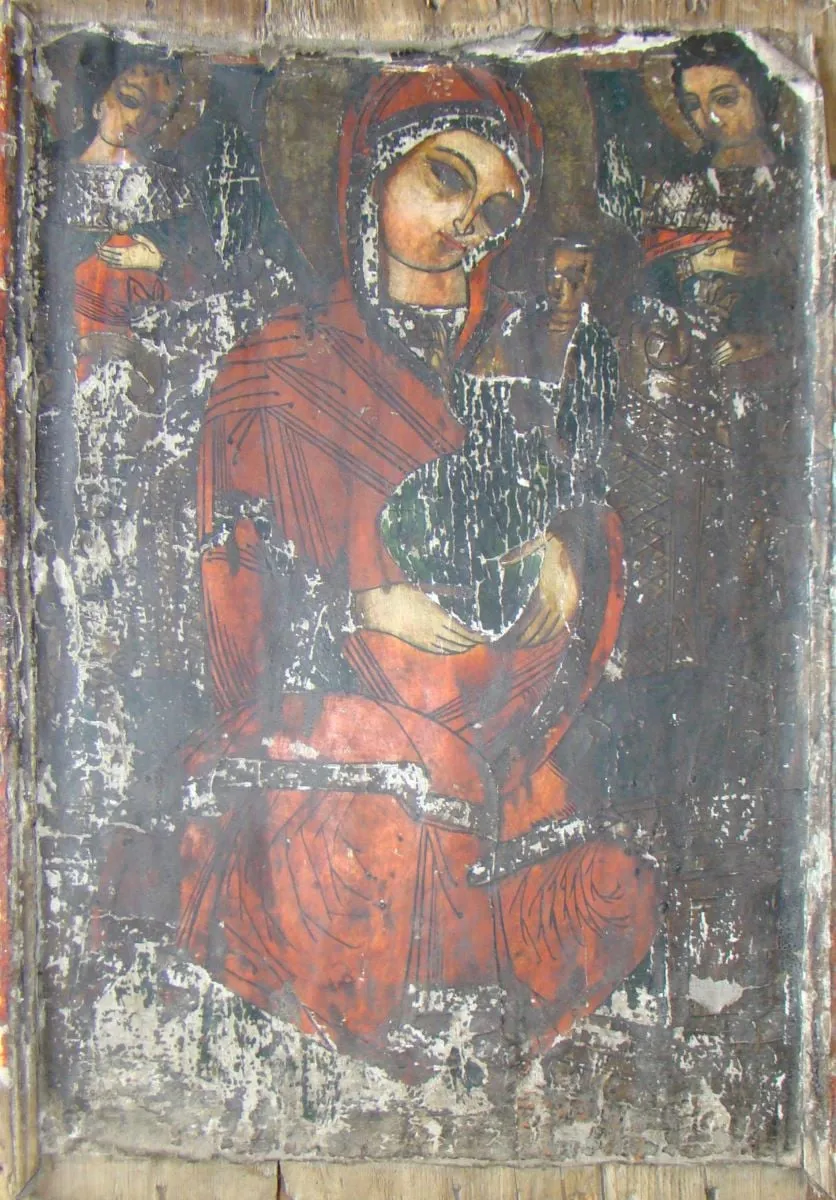
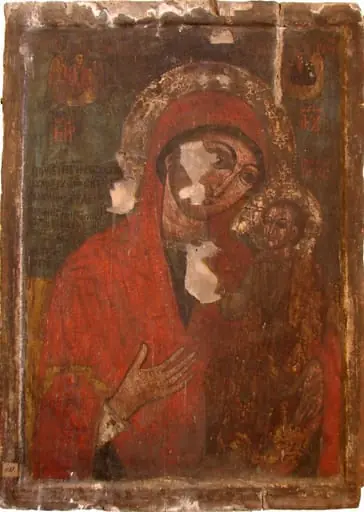
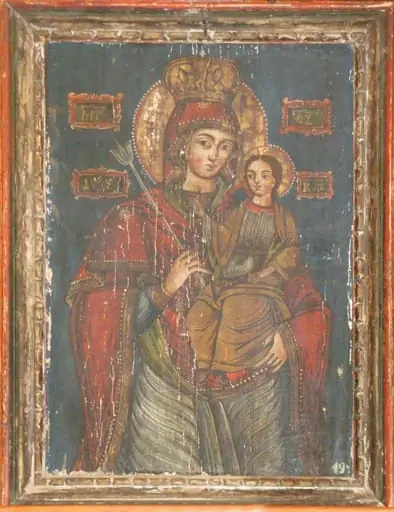
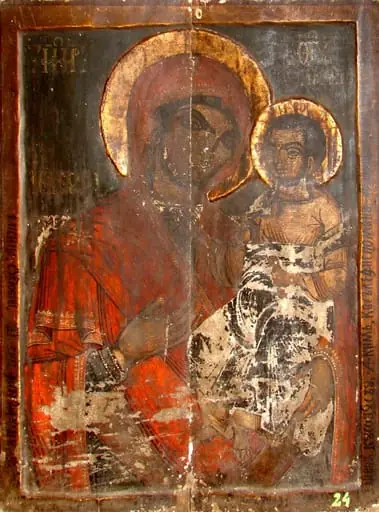
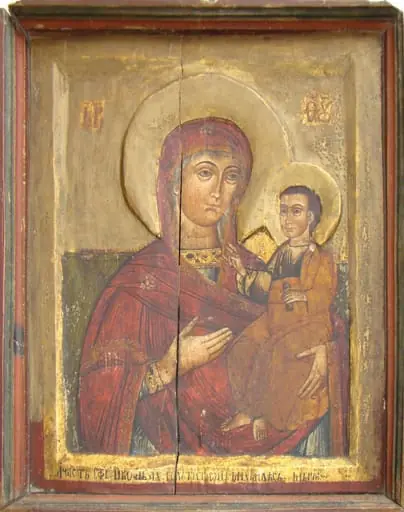
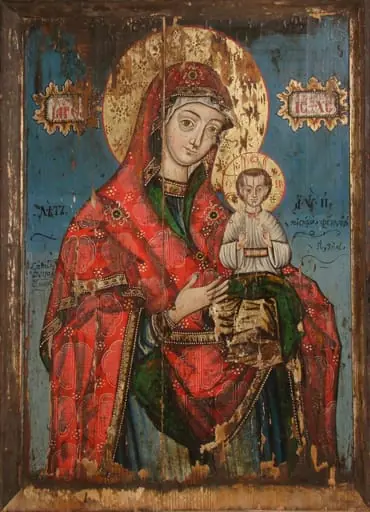
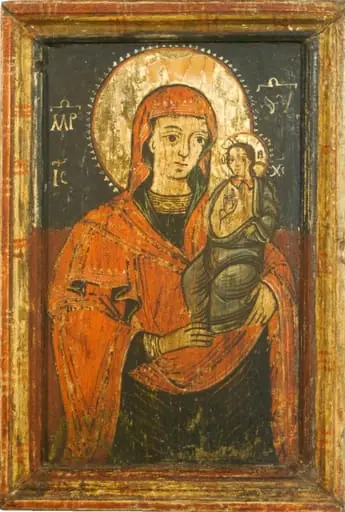
Maica Domnului cu Pruncul is a drawing by atelierul lui Iacov din Rășinari. It is held in the collection of the Alba Iulia Orthodox Archdiocese. This painted panel depicts the Virgin Mary holding the infant Christ, flanked by two smaller figures.
About this work
Overview
The surface shows significant aging, with pigments faded and layers worn, yet traces of original color—particularly red and blue—remain visible.
This painted panel depicts the Virgin Mary holding the infant Christ, flanked by two smaller figures. The composition is symmetrical and hierarchical, with the central figures larger and more prominent. The surface shows significant aging, with pigments faded and layers worn, yet traces of original color—particularly red and blue—remain visible. The work reflects early devotional painting traditions, likely created for private or liturgical use.
Subject & Meaning
The Virgin and Child represent central figures of Christian veneration, symbolizing divine motherhood and salvation. The two attendant figures, possibly angels or saints, direct attention inward, reinforcing the sacred focus. Their presence suggests a heavenly court, emphasizing the holiness of the central pair. The simplicity of expression and frontal posture align with Byzantine iconography, where spiritual presence outweighs naturalistic detail.
Technique & Style
The artist employed flat planes of color with minimal modeling, typical of medieval icon painting. Cross-hatching—delicate, overlapping lines—was used to suggest the folds of the Virgin’s robe, creating subtle volume without true perspective. Outlines are bold and dark, defining forms clearly. The technique prioritizes symbolic clarity over realism, reflecting a tradition rooted in liturgical function rather than individual expression.
History & Provenance
The painting’s worn condition indicates prolonged exposure to light, handling, or environmental factors, common in works used in domestic or chapel settings. Its style and materials suggest a production date between the 12th and 14th centuries, likely from a region influenced by Byzantine artistic norms. No documented ownership history survives, but its preservation implies it was valued enough to be maintained over centuries.
Context
Created during a period when religious imagery served as a bridge between the faithful and the divine, this work belongs to a broader tradition of Eastern Christian icons. Such panels were often carried in processions, placed in home altars, or hung in churches. The use of durable pigments and linear techniques reflects both spiritual intent and practical constraints of pre-Renaissance workshop practices.
Legacy
Though not widely known today, this painting exemplifies the enduring influence of Byzantine iconography on later European devotional art. Its restrained aesthetics and symbolic language informed regional styles across the Orthodox and Catholic worlds. Surviving examples like this one help scholars trace the transmission of religious imagery and the evolution of visual theology before the rise of naturalism.
Artist & collection
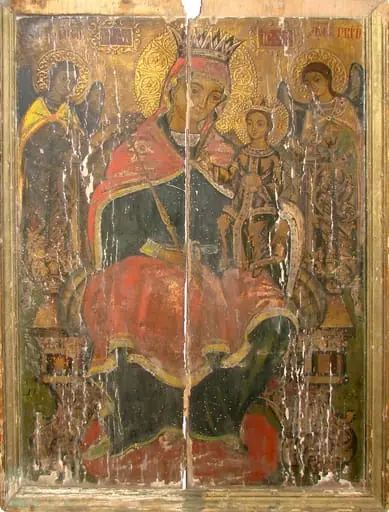 Maica Domnului cu Pruncul
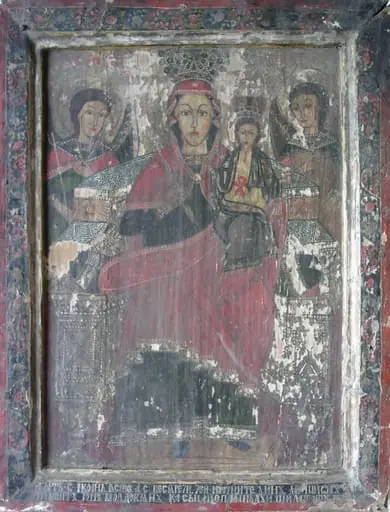 Maica Domnului cu Pruncul
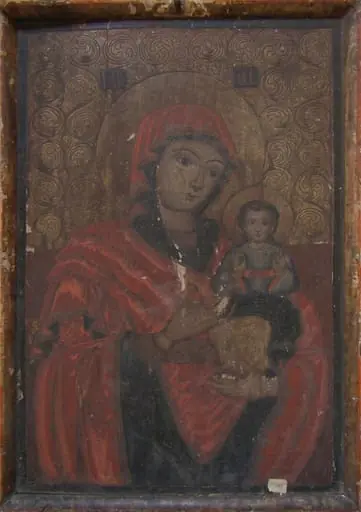 Maica Domnului cu Pruncul
 Maica Domnului cu Pruncul
 Maica Domnului cu Pruncul
 Maica Domnului cu Pruncul
 Maica Domnului cu Pruncul
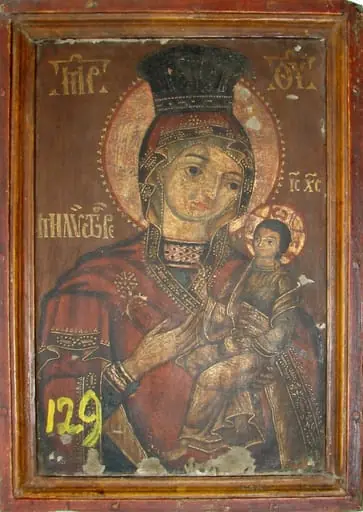 Maica Domnului cu Pruncul
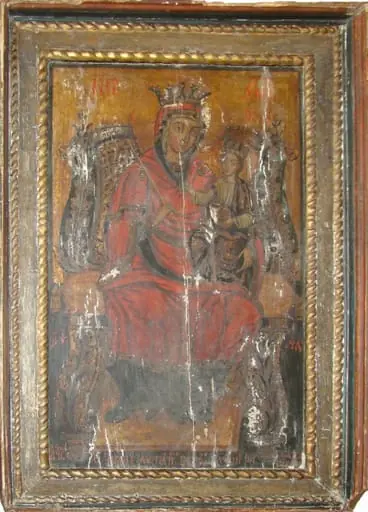 Maica Domnului cu Pruncul
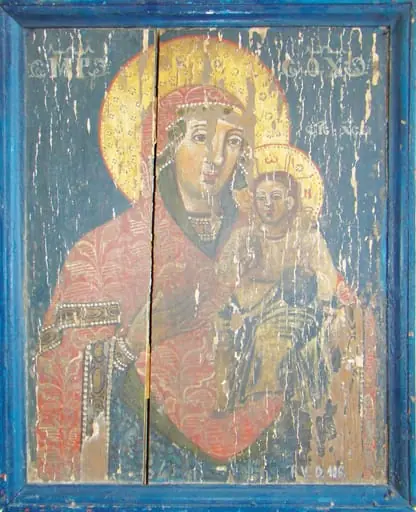 Maica Domnului cu Pruncul
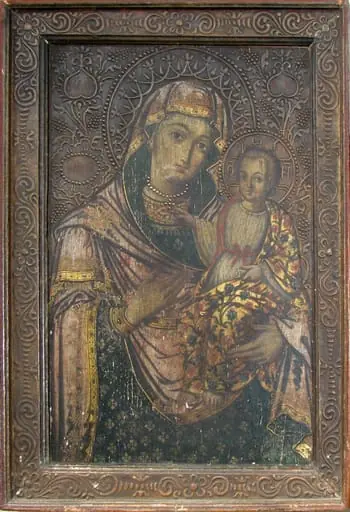 Maica Domnului cu Pruncul
 Maica Domnului cu Pruncul