Artwork
Maica Domnului cu Pruncul, floarea neveștejită
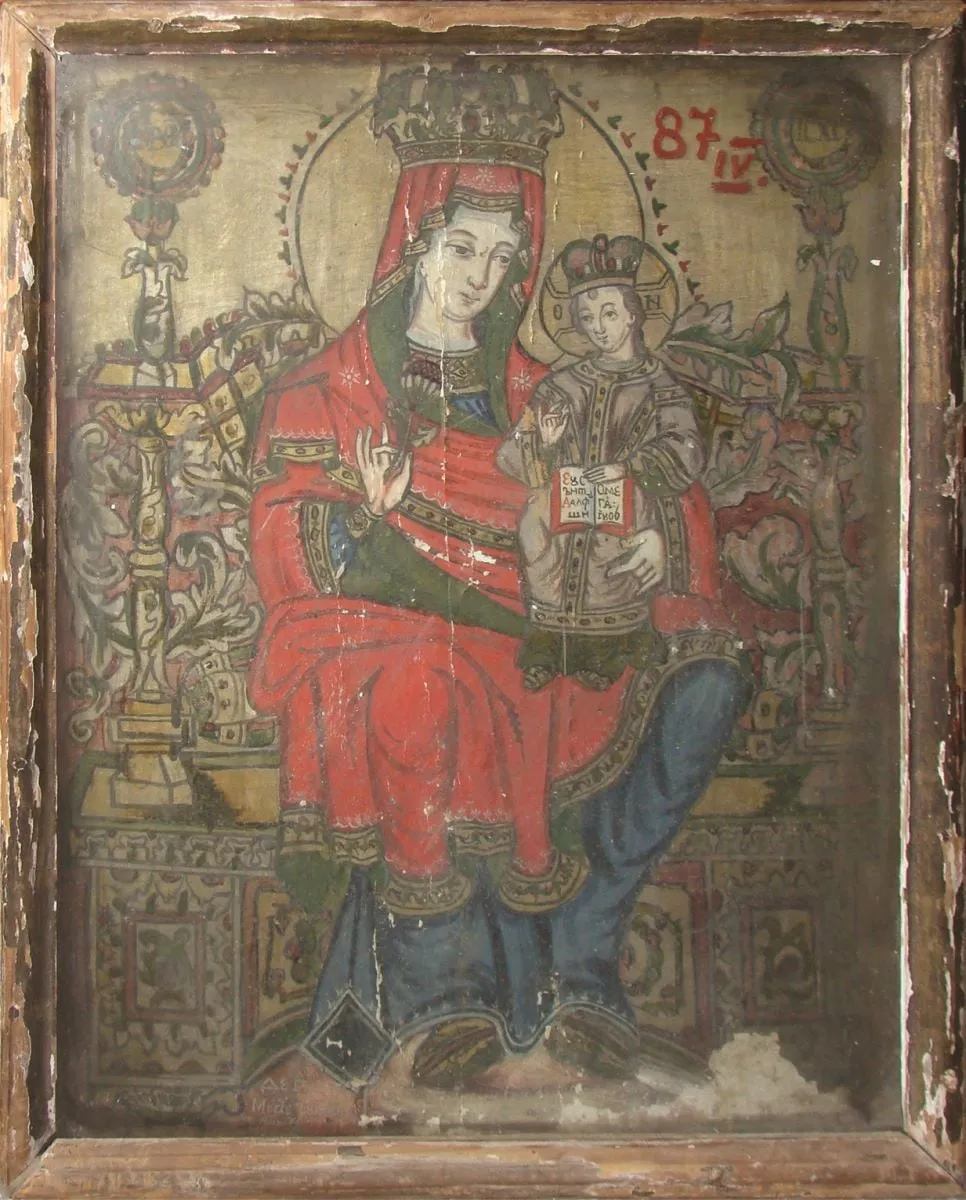
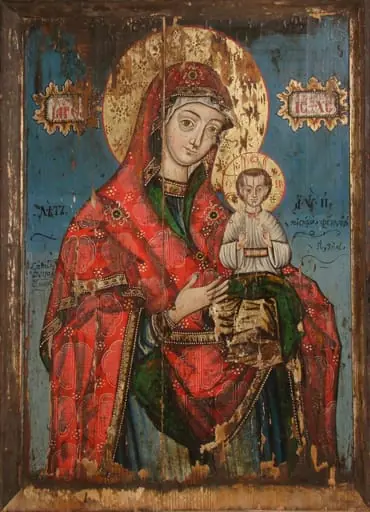
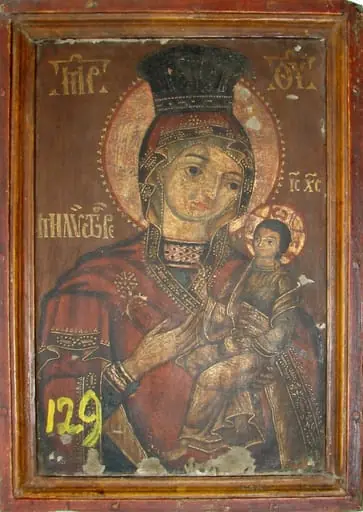
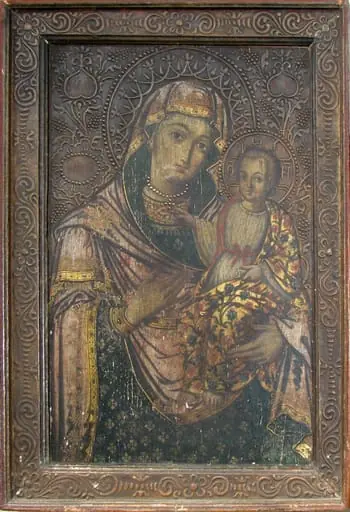
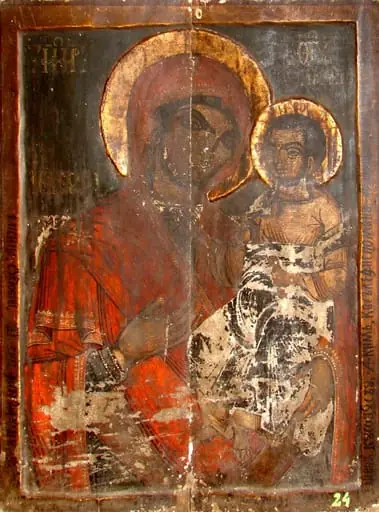
Maica Domnului cu Pruncul, floarea neveștejită is an unspecified painting by the Baroque artist Moise Borșoș. It dates from 1806 and is held in the collection of the Alba Iulia Unification National Museum.
About this work
Overview
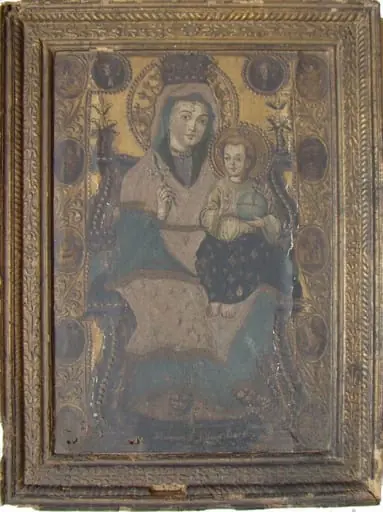
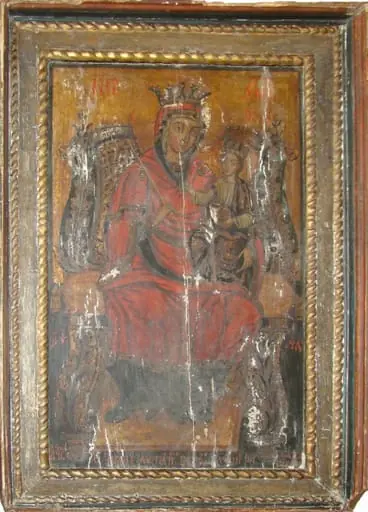
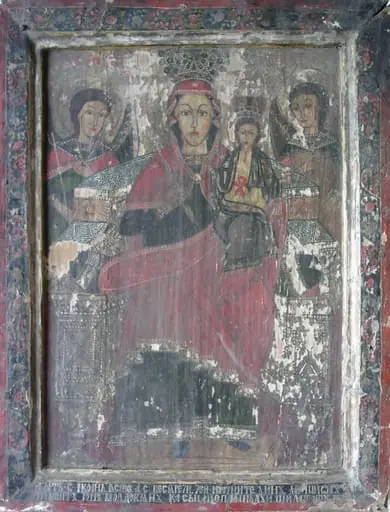
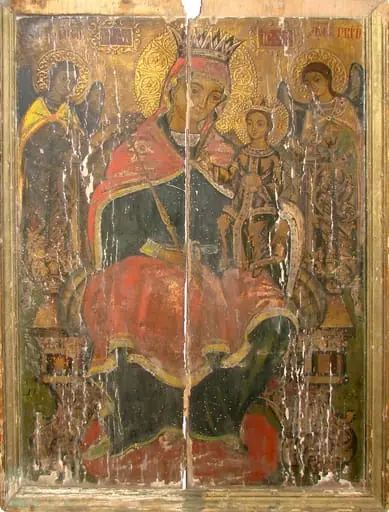
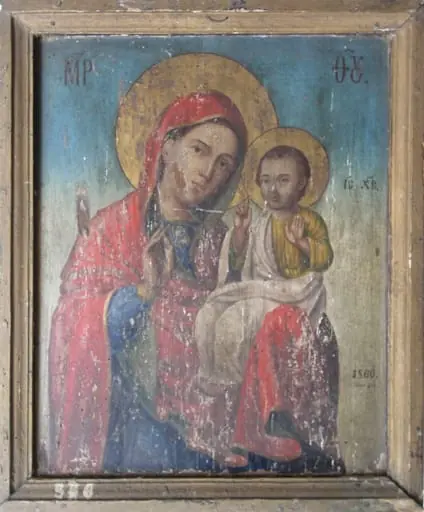
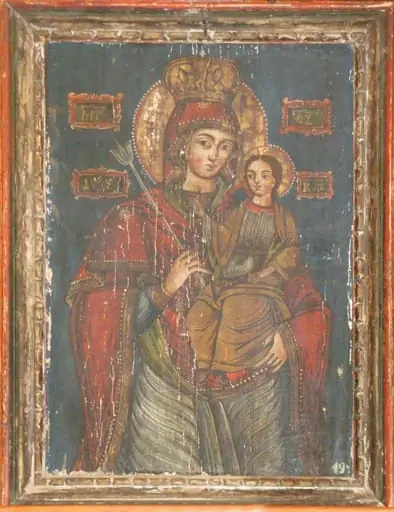
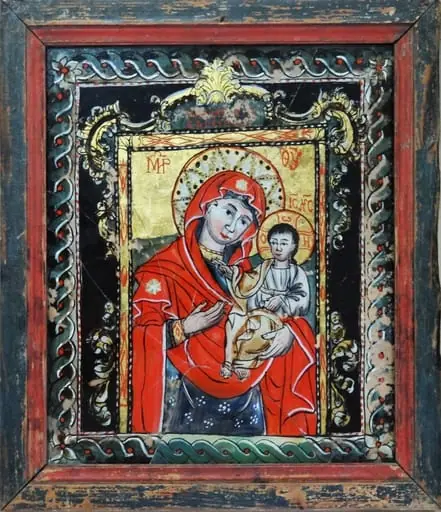
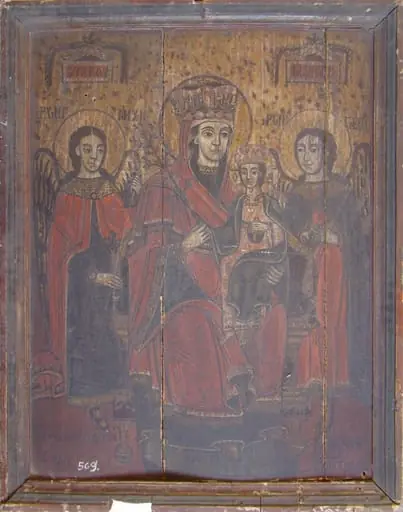
Created in 1806 by the Romanian painter Moise Borșoș, this panel—titled *Maica Domnului cu Pruncul, floarea neveștejită*—is part of the collection of the Museum of Ethnography. It presents a formal, devotional image of the Virgin Mary with the infant Jesus, rendered with meticulous attention to ornamental detail.
Subject & Meaning
The central figures are the Mother of God, robed in vivid red and crowned, seated upon an elaborately carved throne, and the child Jesus, cradled on her lap and clutching a small book. Their calm expressions and downward gazes convey a sense of quiet reverence, emphasizing the intimate bond between mother and child within a sacred context.
Technique & Style
Borșoș employs a rich palette of reds, greens, and gold leaf, highlighting the sumptuous fabrics and the throne’s foliage motifs. Fine brushwork delineates the intricate patterns on the garments and the decorative foliage, while a muted background recedes to focus attention on the figures, creating a balanced composition typical of early 19th‑century Romanian ecclesiastical art.
History & Provenance
The work has remained in Romanian hands since its creation, eventually entering the Museum of Ethnography’s holdings, where it serves as a representative example of regional religious painting from the early 1800s. Its preservation in a public institution ensures continued scholarly access and public viewing.
Artist & collection
Artist
Moise Borșoș made religious paintings in 1806, during a time when icon traditions were strong in Romanian churches.
Museum
Alba Iulia Unification National Museum
Continue through works from the same source collection.