Artwork
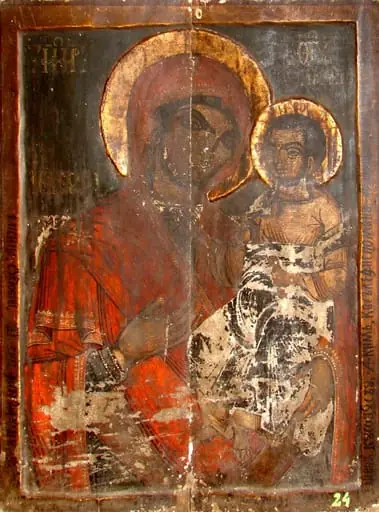
Maica Domnului cu Pruncul
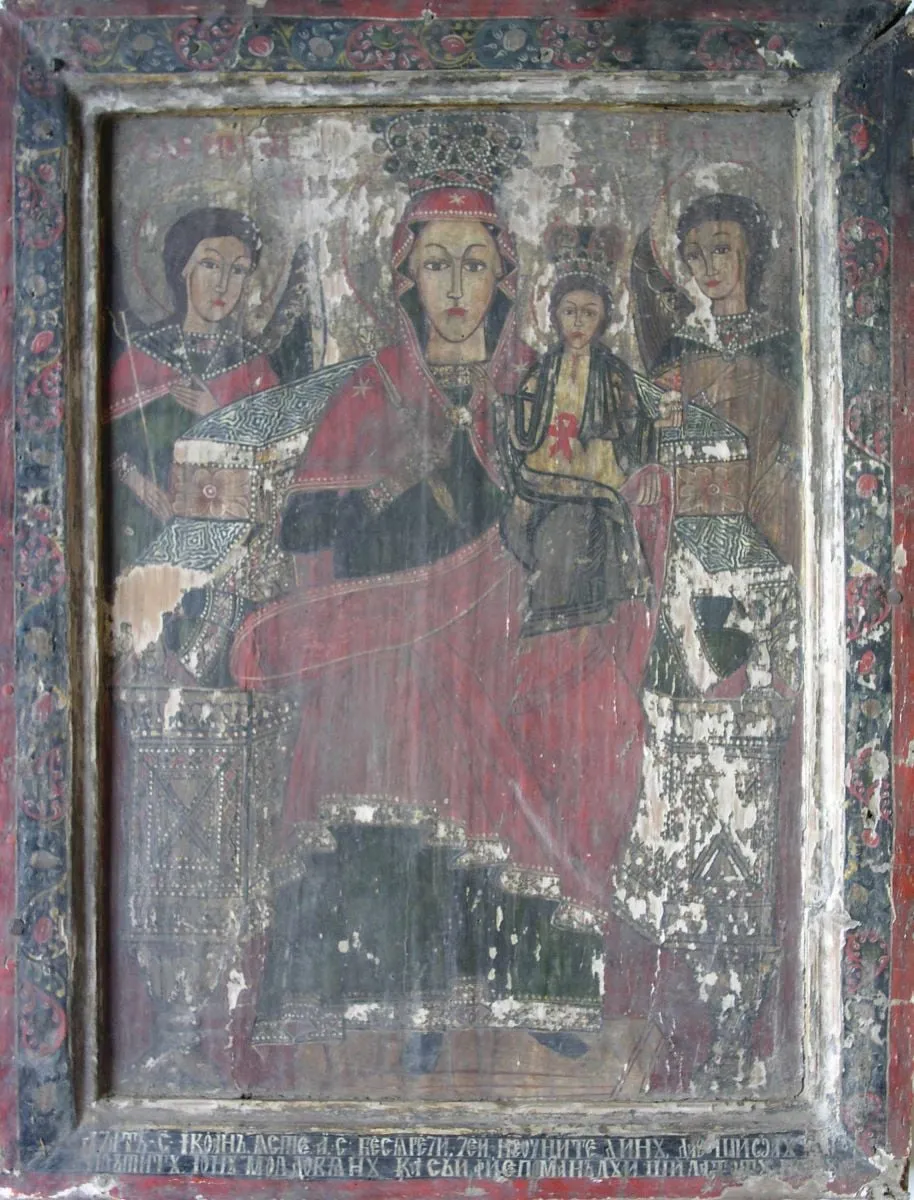
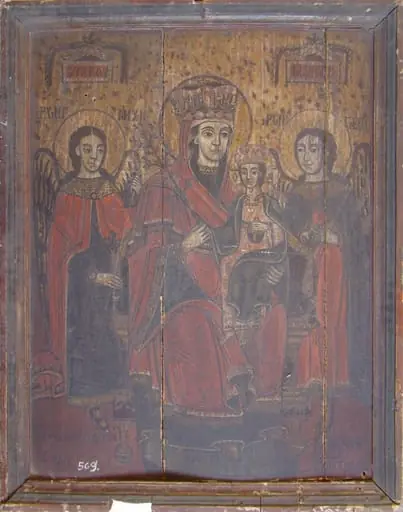
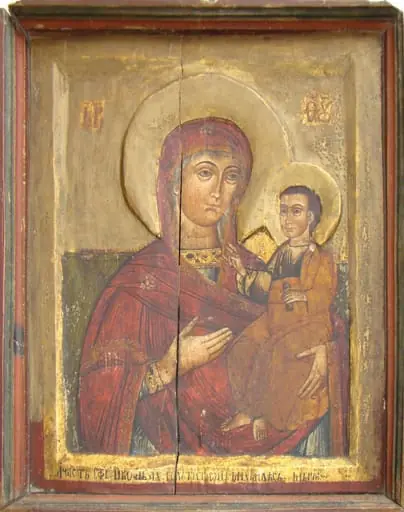
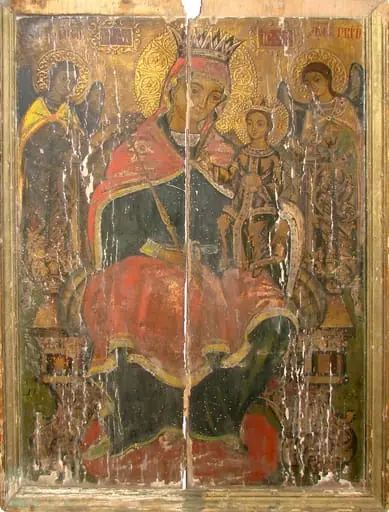
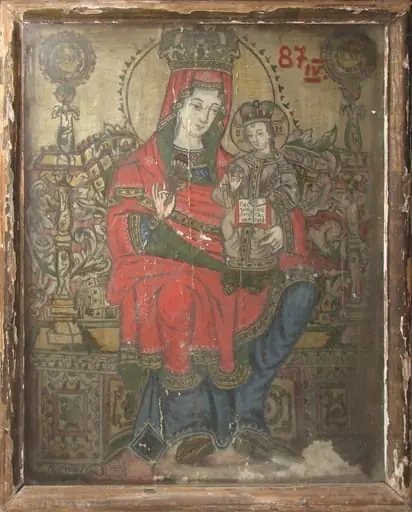
Maica Domnului cu Pruncul is an unspecified painting by the Byzantine icon painting artist Petru din Topârcea. It is held in the collection of the Alba Iulia Orthodox Archdiocese. This painted panel depicts the Virgin Mary with the Christ Child, flanked by two attendant figures.
About this work
Overview
The figures are rendered with minimal depth, emphasizing line over modeling, characteristic of early Byzantine traditions.
This painted panel depicts the Virgin Mary with the Christ Child, flanked by two attendant figures. The composition is symmetrical and hierarchical, with the central pair elevated in scale and position. Colors remain vivid despite extensive fading, particularly the reds and golds of the garments. The figures are rendered with minimal depth, emphasizing line over modeling, characteristic of early Byzantine traditions.
Subject & Meaning
The central figure is the Theotokos, the Mother of God, holding the Christ Child, signifying divine incarnation. The flanking figures likely represent saints or angels, one holding a codex to denote scripture, the other a liturgical object, perhaps a censer or scepter. Their solemn expressions reinforce the sacred nature of the scene, intended for veneration rather than narrative storytelling.
Technique & Style
The painting employs tempera on wood, with bold outlines defining forms and flat areas of color minimizing three-dimensionality. Gold leaf accents, now partially worn, once highlighted halos and decorative elements. The lack of shading and rigid posture reflect pre-Renaissance conventions, prioritizing spiritual symbolism over naturalistic representation.
History & Provenance
The work’s origins are uncertain, but its style suggests production in the Byzantine sphere, possibly in the Balkans or Anatolia, between the 12th and 14th centuries. Its condition indicates prolonged exposure to light and environmental wear, likely from use in a domestic chapel or small church. No documented ownership history survives prior to modern acquisition.
Context
This image aligns with devotional icons produced for private or monastic use during the late medieval period. Such panels served as focal points for prayer and ritual, often carried in processions or placed above household altars. The persistence of archaic forms in provincial workshops reflects enduring liturgical traditions despite evolving artistic trends in major centers.
Legacy
Though not widely known, the painting exemplifies the continuity of Byzantine iconography beyond imperial courts. Its preservation offers insight into regional practices and the endurance of symbolic visual language in Orthodox Christian communities. Modern scholarship values it as a testament to the quiet, persistent transmission of sacred imagery across centuries.
Artist & collection
Artist
This Romanian artist painted vivid religious scenes on wood—think bold colors against dark backgrounds, fine linework, and ornate frames.
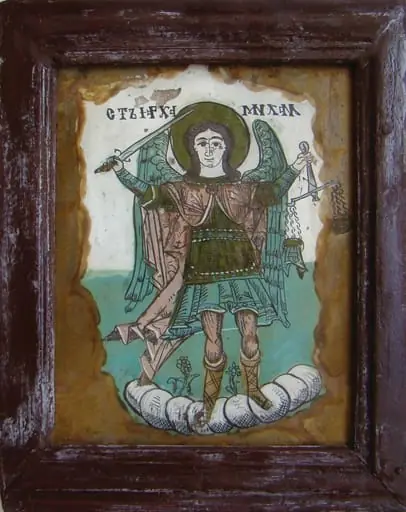 Arhanghelul Mihail
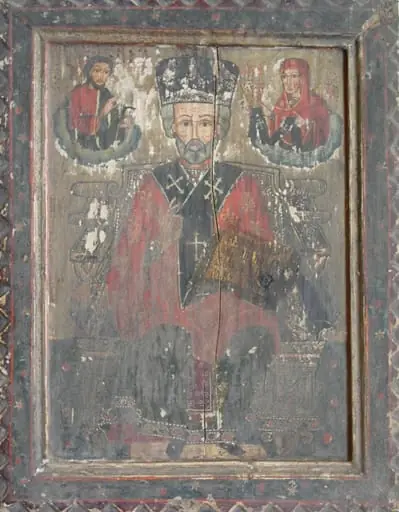 Sf. Nicolae
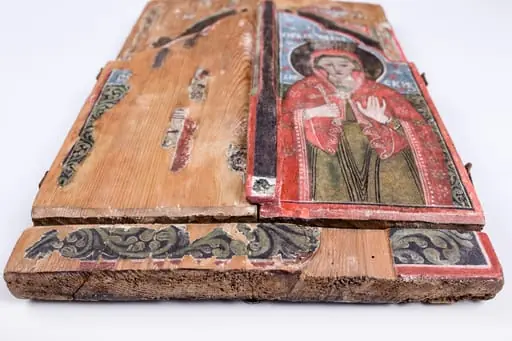 Tripticul de față are pe laterala din stângă o icoană, care o reprezintă pe Sfânta Mare Cuvioasă Parascheva din Epivat, Tracia, cu Sfintele Moaște la Iași. Are crucea în mâna dreaptă și o ramură de finic în mâna stângă. Este îmbrăcată în cămașă lungă albă - sacos, acoperit cu veșmânt roșu vermillon, cu interiorul căptușit cu verde și griuri. Maforiomul este închis la gât cu o broșă - fibulă. Peste maforionul roșu, sfânta cuvioasă are coroniță și aureolă. Fondul icoanei este cerul albastru de un ton cobalt, cu stele roșii. Icoana este foarte frumos realizată artistic și estetic, finețea nuanțelor cromatice și expresivitatea sfintei cuvioase remarcându-se într-un mod deosebit. Inscripția din româno-chrilică se traduce Sf Parascheva. Cromatica este armonioasă: roșu, albastru, verde, gri, negru, alb.
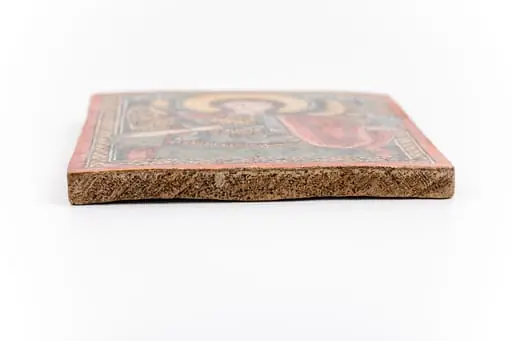 Sfântul Arhanghel Mihail este unul dintre mai-marii voievozi ai oștilor cerești. Sfântul Arhanghel Mihail este numit slujitorul Legii. Este îmbrăcat în haine de oștean militar, cavaler, cu cămașă verde, vestă de zale, cu solzi aurii, cu tunică și mantie roșie-vermillon. Ține în mâna dreaptă spada de război ridicată, fiind un sfânt luptător și apărător al Creștinismului și în mâna stângă Potirul pictat cu nuanțe de negru-gri-alb, pentru a arăta argintul. Are aureolă și aripi ocru-galbene. Fondul icoanei este negru. Icoana are un chenar decorativ geometrizant, bogat ornamentat, format dintr-un lanț împletit de romburi ondulatorii, pictate cu roșu și galben alternativ. Rama pictată din aceeași bucată de lemn a icoanei este roșie-cărămizie. Trăsăturile feței sunt foarte fin realizate, cu minuțiozitatea detaliului. Cromatica armonioasă este alcătuită din: roșu-vermillon, cărămiziu, ocru-galben, verde, gri,brun-roșcat, alb, bej, negru, acajou. Inscripția din româno-chirilică se traduce Sfântul Arhanghel Mihail.
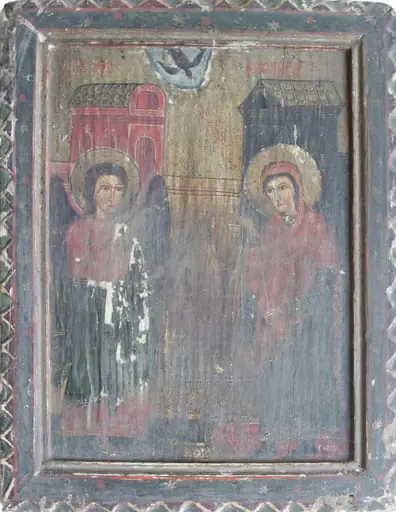 Buna Vestire
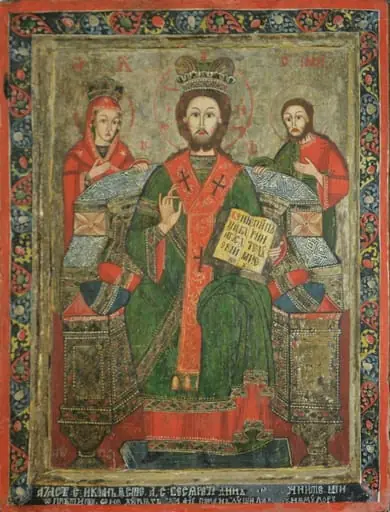 Deisis
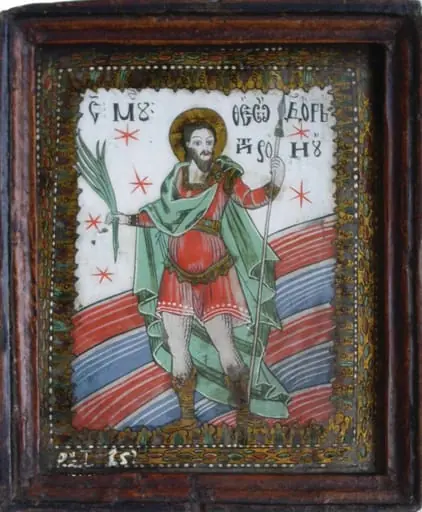 Sf. Teodor Tiron
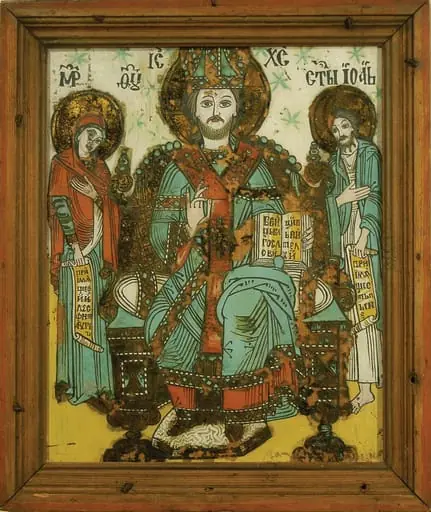 Deisis
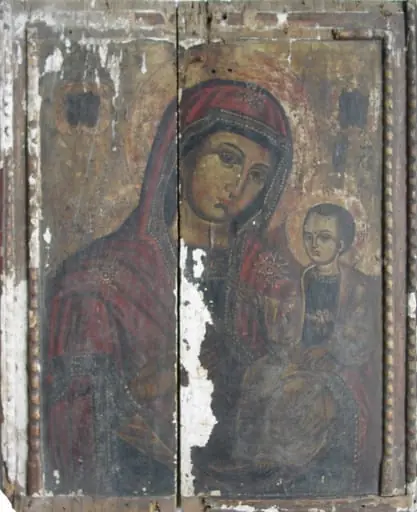 Maica Domnului cu Pruncul
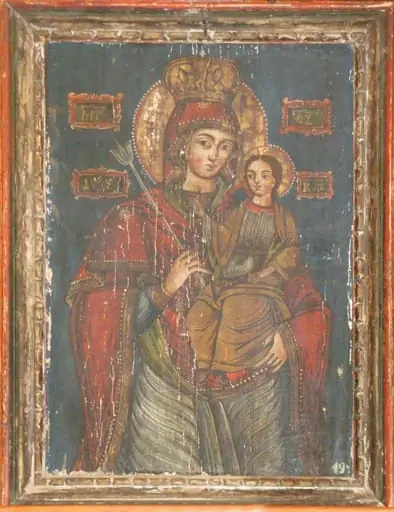 Maica Domnului cu Pruncul
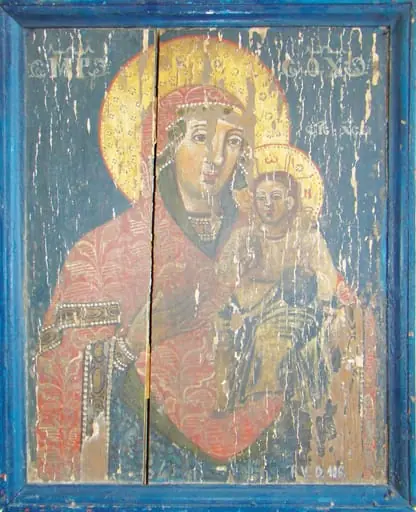 Maica Domnului cu Pruncul
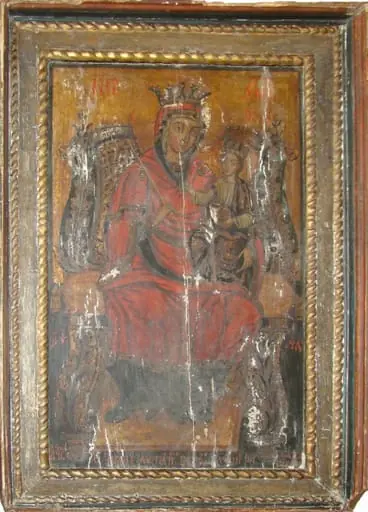 Maica Domnului cu Pruncul
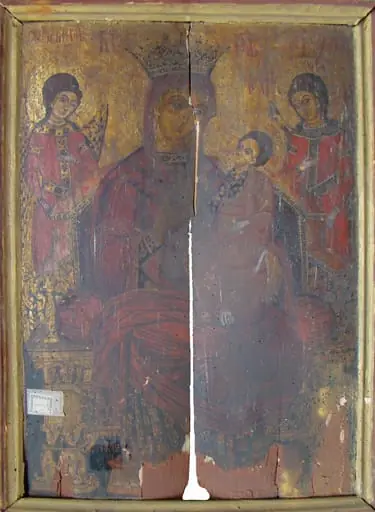 Maica Domnului cu Pruncul
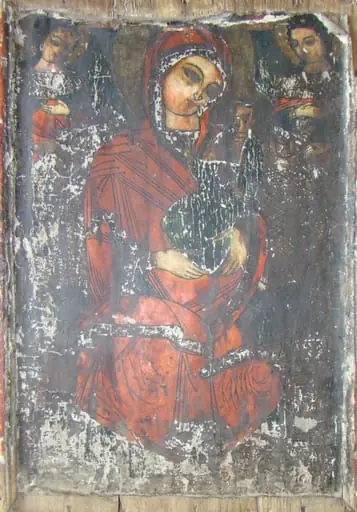 Maica Domnului cu Pruncul
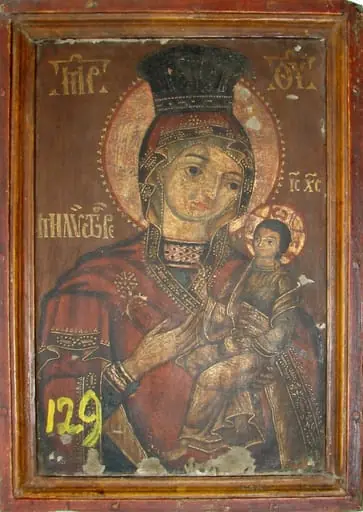 Maica Domnului cu Pruncul
 Maica Domnului cu Pruncul
 Maica Domnului cu Pruncul
 Maica Domnului cu Pruncul
 Maica Domnului cu Pruncul, floarea neveștejită
 Maica Domnului cu Pruncul