Artwork
Landscape Idyll
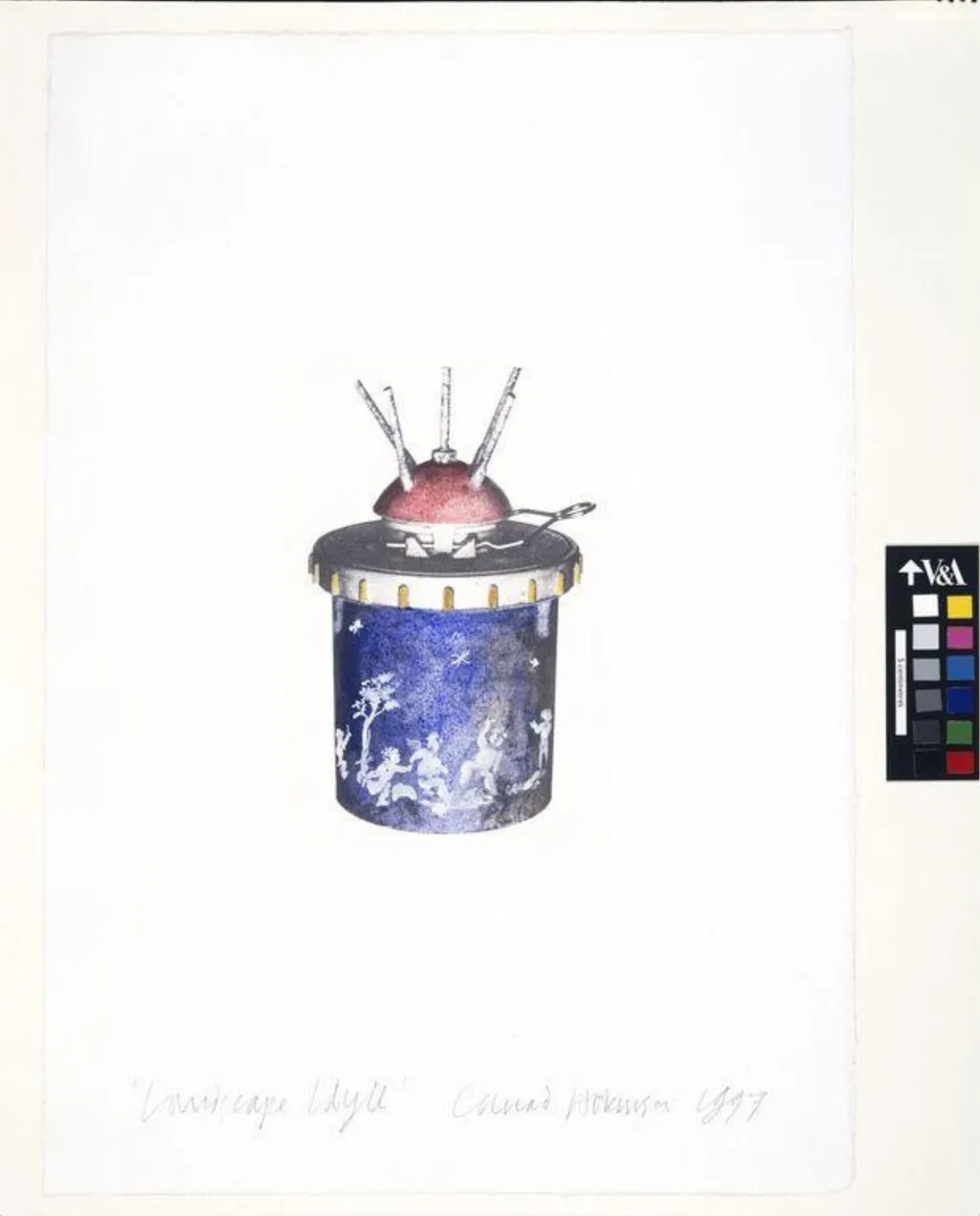
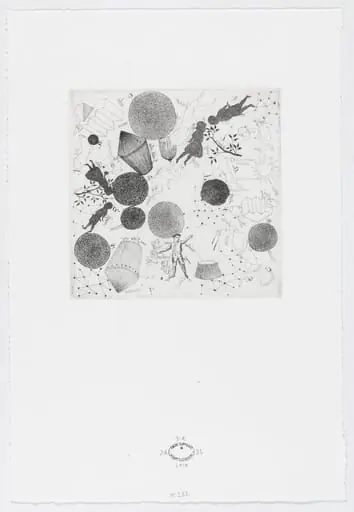
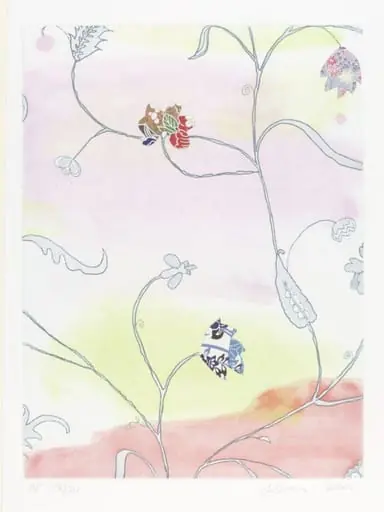
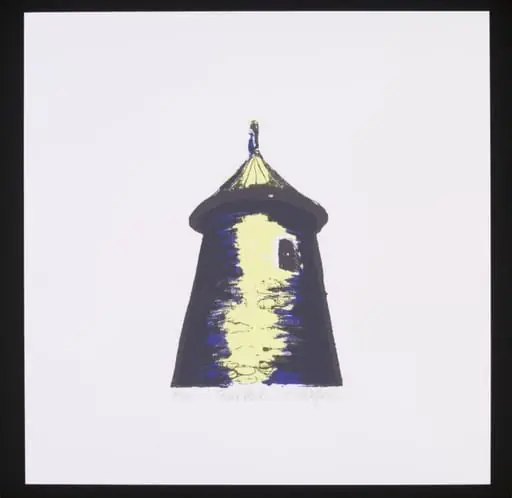
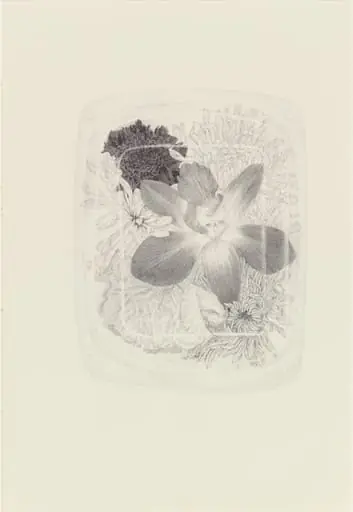
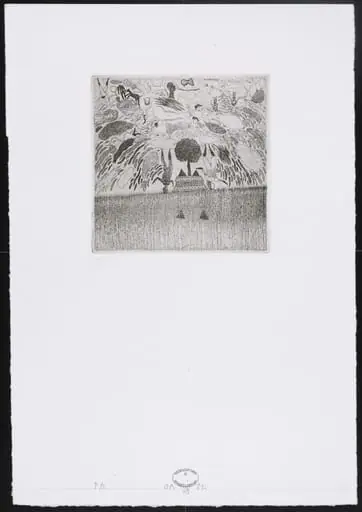
Landscape Idyll is a print by Conrad Atkinson. It dates from 1997 and is held in the collection of the Victoria and Albert Museum.
About this work
Check out the Victoria and Albert Museum to learn more about this and other artworks.
The title of this print is Landscape Idyll.
It was made by Conrad Atkinson in 1997.
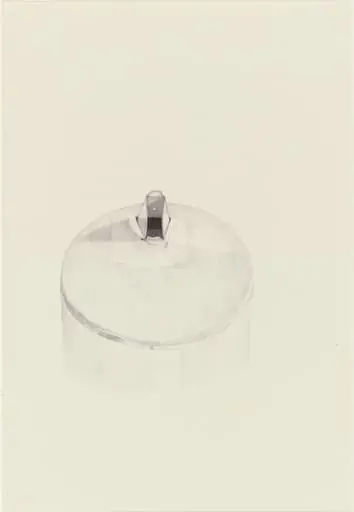
The print is held at the Victoria and Albert Museum, and its creation is connected to the issue of landmines, which the artist explored in his work, including an installation where he used ceramic objects to raise awareness about the problem.
Check out the Victoria and Albert Museum to learn more about this and other artworks.
Overview
Landscape Idyll is a 1997 print by Conrad Atkinson, part of a broader project addressing the hidden violence embedded in everyday culture. Created in response to his 1996 installation at Tullie House, the work extends his exploration of landmines through the visual language of mass-produced imagery. The print functions both as a standalone piece and as a dissemination tool for ideas initially presented in three-dimensional form.
Subject & Meaning
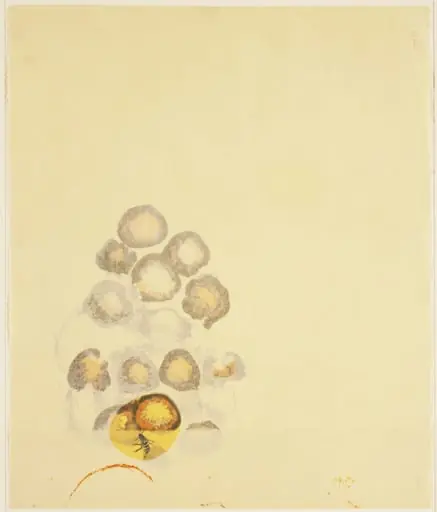
The print juxtaposes serene, idealized landscapes with the latent threat of landmines. By referencing decorative motifs commonly found on souvenirs—flowers, babies, classical paintings—it draws a parallel between the banal objects that populate domestic spaces and the deadly devices buried in conflict zones. The title’s irony underscores how beauty is used to mask danger, suggesting that cultural artifacts and weapons emerge from the same societal systems.
Technique & Style
Atkinson employed printmaking to replicate the aesthetic of cheap, mass-produced imagery, mimicking the visual grammar of tourist memorabilia. The composition is deliberately harmonious, evoking traditional landscape prints, yet the underlying reference to landmines disrupts this calm. The technique’s reproducibility aligns with the work’s intent: to circulate unsettling ideas widely, mirroring how souvenirs and weapons alike are manufactured in vast quantities.
History & Provenance
The print originated from Atkinson’s 1996 installation at Tullie House, where ceramic objects disguised as landmines were scattered among museum artifacts. Each bore familiar cultural icons, creating dissonance for viewers. Landscape Idyll was produced in 1997 as a printed extension of this project, intended to reach audiences beyond the gallery. It entered the Victoria and Albert Museum’s collection as part of its documentation of politically engaged contemporary printmaking.
Context
In the mid-1990s, international attention to landmines surged, particularly after the Ottawa Treaty. Atkinson’s work responded to this moment by shifting focus from the physical device to its cultural analogues. He questioned how societies that produce weapons also produce comforting, decorative objects—both serving as markers of collective memory, one lethal, the other sentimental, yet both deeply embedded in daily life.
Legacy
Landscape Idyll remains a quiet but persistent critique of how violence is normalized through cultural production. It contributes to a broader tradition of artists using print media to challenge public perception of conflict. The work’s endurance lies in its ability to prompt reflection on the quiet complicity between aesthetic pleasure and political harm, encouraging viewers to see the familiar as potentially charged with hidden meaning.
Artist & collection