Artwork
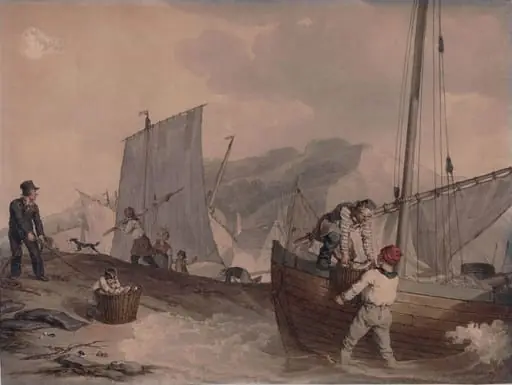
Fishing boats going out
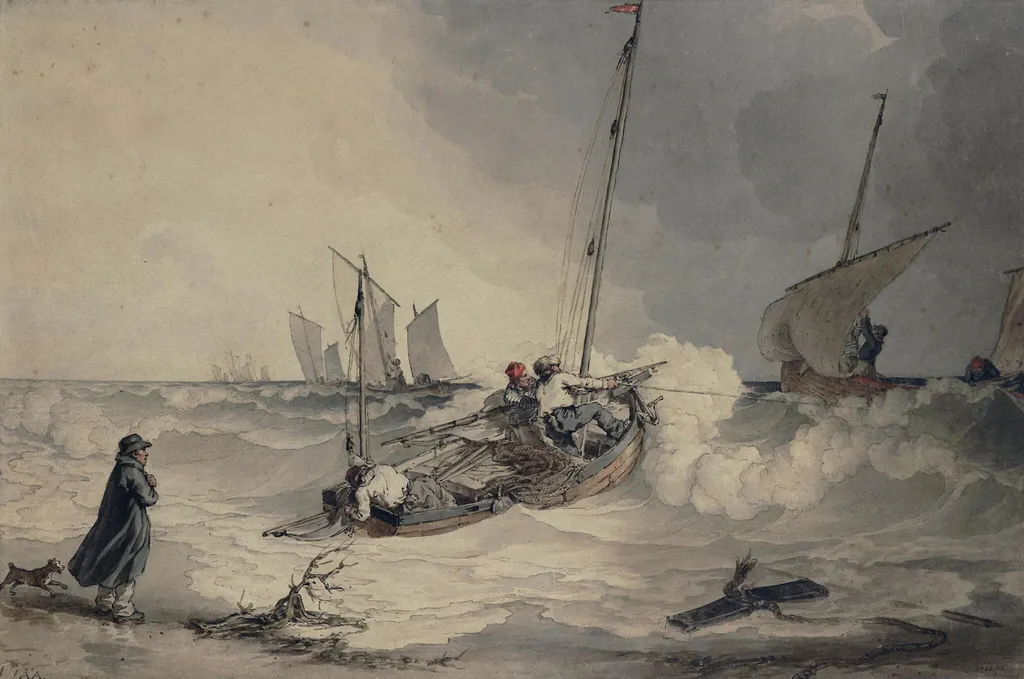
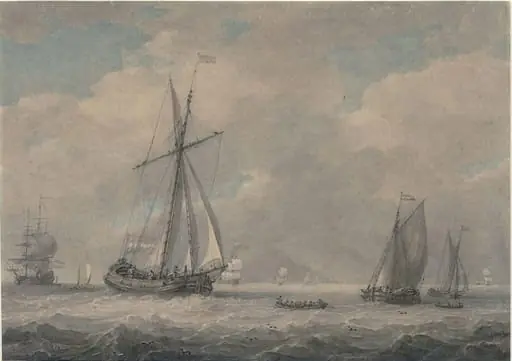
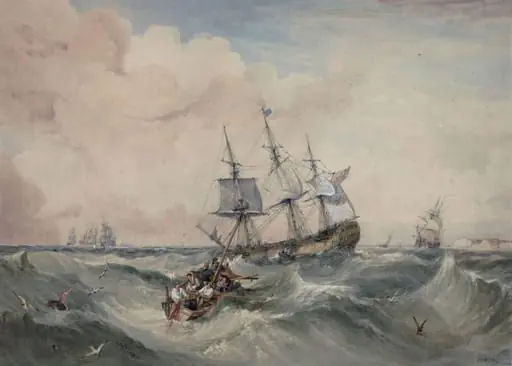
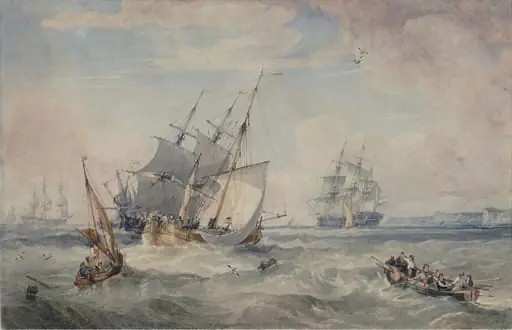
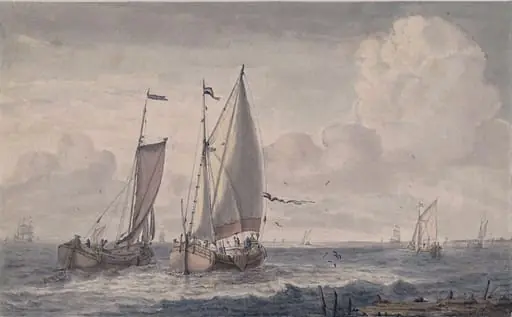
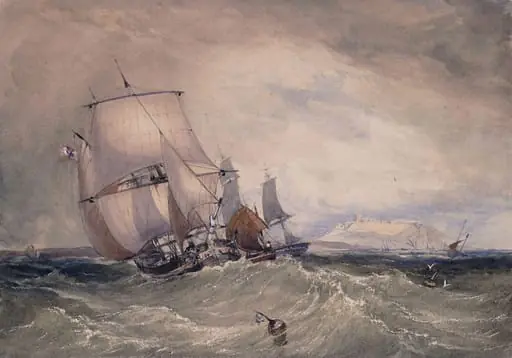
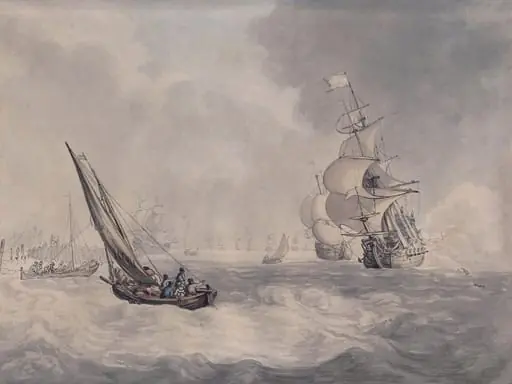
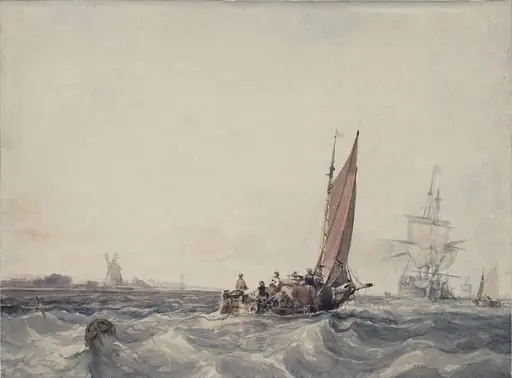
Fishing boats going out is a watercolor work on paper by the Romanticist artist John Augustus Atkinson. It dates from 1800 and is held in the collection of the Victoria and Albert Museum. This watercolour depicts a coastal scene at dawn or dusk, with small fishing boats departing from shore into turbulent seas.
About this work
Overview
This watercolour depicts a coastal scene at dawn or dusk, with small fishing boats departing from shore into turbulent seas. The composition emphasizes movement and atmosphere, using layered washes to suggest the motion of waves and the weight of clouds. A solitary figure on the beach observes the vessels, anchoring the viewer’s perspective to the land.
Subject & Meaning
The painting captures the quiet ritual of fishermen setting out to sea, a daily act of labor and risk. The lone observer on shore may represent a family member, a local, or an anonymous witness to the cycle of departure and return. The scene avoids drama, instead conveying the routine resilience of coastal life through restrained detail and muted tones.
Technique & Style
The artist employs transparent watercolour washes to build atmospheric depth, with subtle gradations of grey and blue suggesting wind-swept skies and churning water. Light is suggested rather than defined, creating a soft chiaroscuro effect that enhances the sense of space without sharp contrasts. Brushwork is loose yet deliberate, capturing texture through wet-on-wet blending.
History & Provenance
The work’s origin is undocumented, but its style aligns with 19th-century British marine watercolours, often produced for private collectors interested in coastal life. No record of exhibition or ownership prior to its current location is available, suggesting it may have remained in private hands since creation.
Context
During the 1800s, watercolour became a respected medium for landscape and maritime subjects, particularly in Britain, where coastal communities were both economically vital and culturally romanticized. Artists often depicted fishing scenes not as grand narratives but as intimate, observational moments reflecting everyday endurance.
Legacy
This piece contributes to a broader tradition of quiet marine observation in watercolour, distinct from the dramatic seascapes of oil painting. Its understated tone and focus on ordinary labor reflect a shift toward realism in 19th-century British art, influencing later regional painters who valued authenticity over spectacle.
Artist & collection