Artwork
Grandmother with her granddaughter
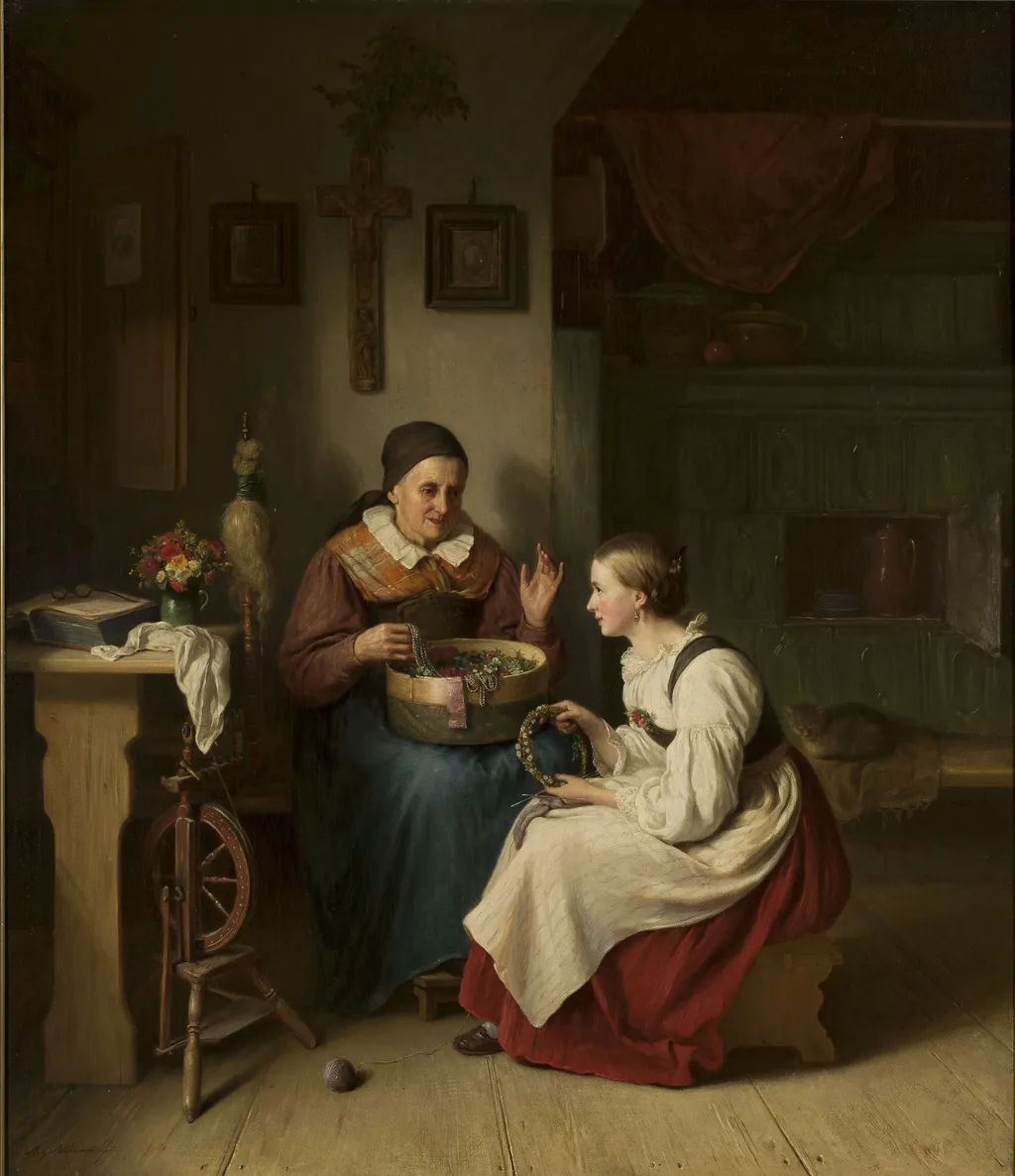
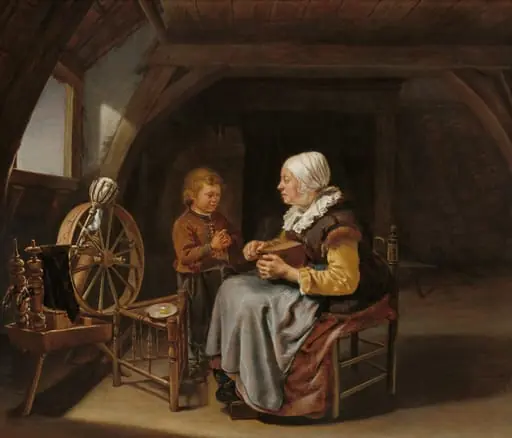
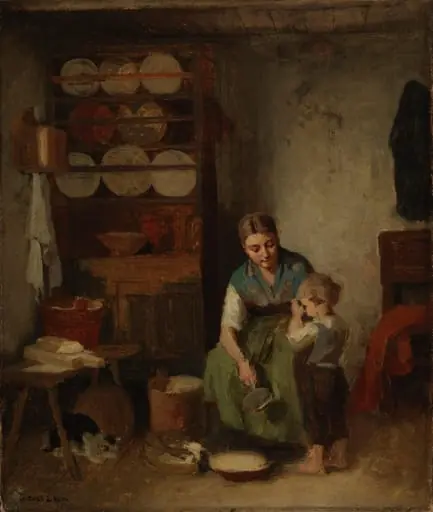
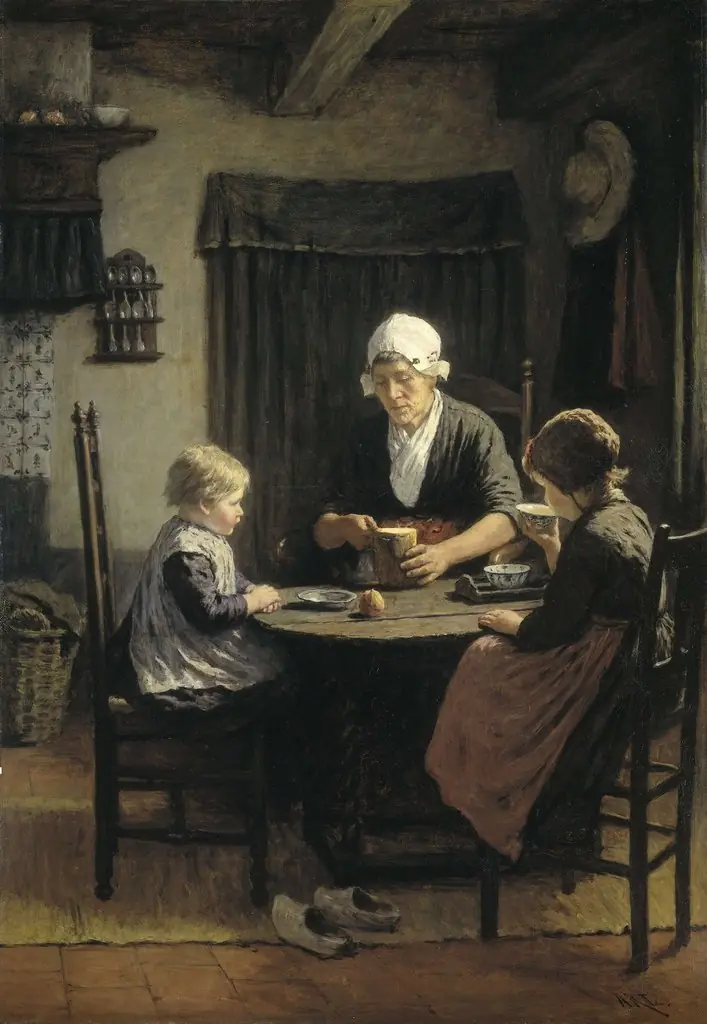
Grandmother with her granddaughter is an oil painting by August Heinrich Niedmann. It dates from 1876 and is held in the collection of the National Museum in Warsaw.
About this work
Overview
Painted around 1876 by August Heinrich Niedmann, this oil work depicts a quiet moment between an elderly woman and her young granddaughter. The scene unfolds in a modest interior, rendered with careful attention to light and texture. The painting resides in the National Museum in Warsaw, where it is recognized for its tender portrayal of intergenerational connection within a domestic setting.
Subject & Meaning
No narrative action is depicted, yet the intimacy of their proximity and the warmth in their expressions suggest a bond rooted in care and continuity.
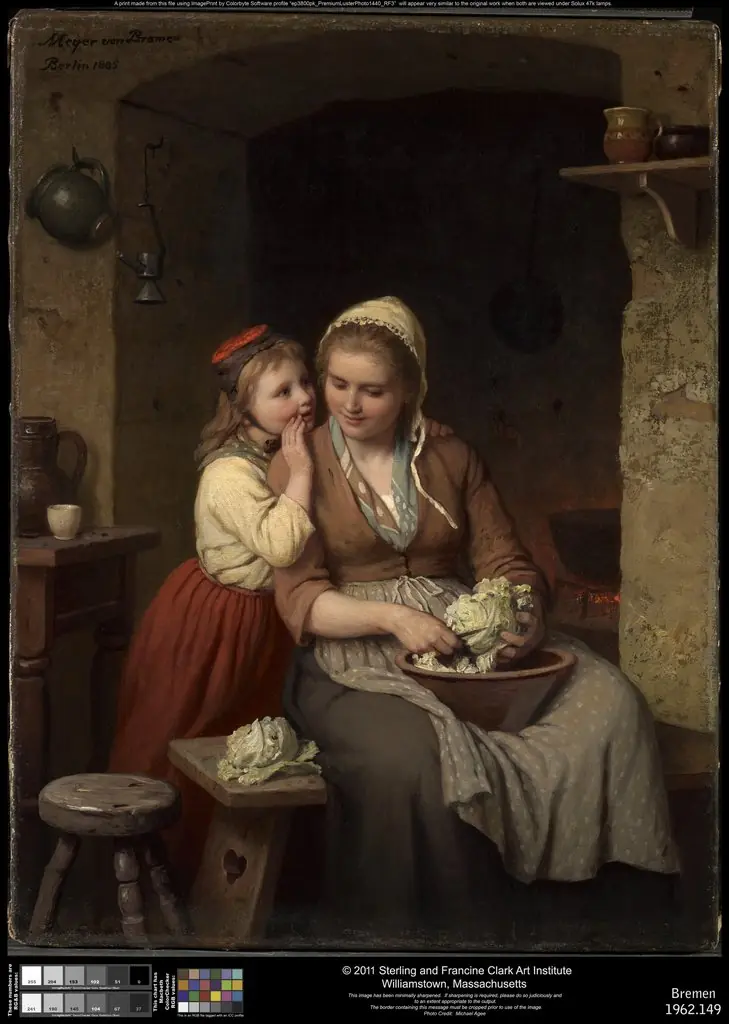
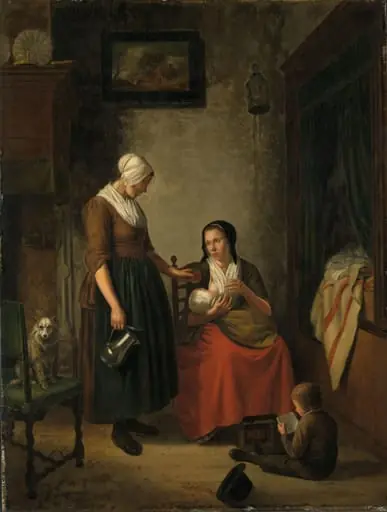
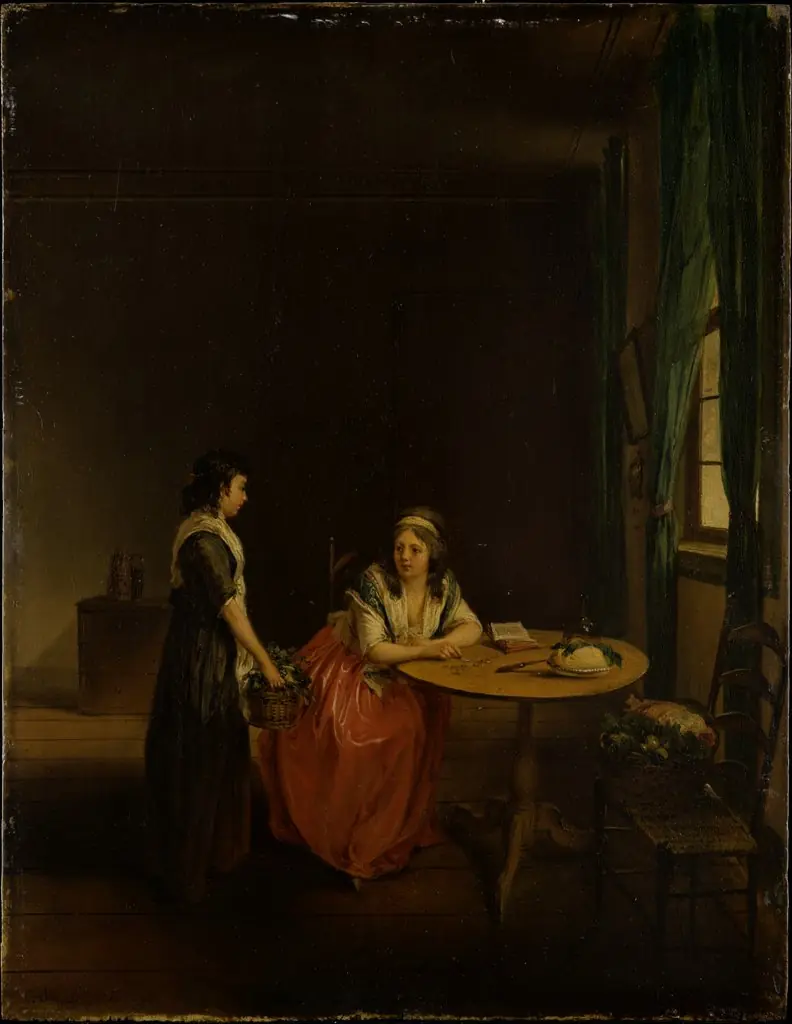
The painting captures a silent exchange between generations: the grandmother, seated with a basket of flowers, offers quiet presence, while the child gazes upward with open curiosity. No narrative action is depicted, yet the intimacy of their proximity and the warmth in their expressions suggest a bond rooted in care and continuity. The inclusion of domestic objects implies a life shaped by routine, tradition, and quiet devotion.
Technique & Style
Niedmann employs chiaroscuro to model forms with soft contrasts, enhancing the tactile quality of fabric and skin. The dim interior is illuminated by a single, unseen light source, casting gentle shadows that deepen the sense of enclosure. Brushwork is restrained, favoring subtle transitions over detail, which lends the scene a contemplative stillness. The palette is muted, dominated by earth tones with restrained accents of white and red.
History & Provenance
The painting entered the collection of the National Museum in Warsaw in the late 19th or early 20th century, likely acquired through state or institutional channels. Little is documented about its early ownership or exhibition history. Its presence in the museum’s holdings reflects a broader interest in domestic genre scenes from regional artists of the period, though Niedmann’s broader oeuvre remains largely unstudied.
Context
Created during a time when European art increasingly turned to everyday life, this work aligns with the rise of genre painting in Central Europe. Unlike grand historical or mythological subjects, it focuses on the unremarkable yet emotionally resonant moments of rural or small-town domesticity. The spinning wheel and religious symbol hint at traditional values, grounding the scene in a world still shaped by pre-industrial rhythms.
Legacy
Though August Heinrich Niedmann is not widely known outside regional art histories, this painting endures as a quiet testament to the dignity of ordinary life. Its preservation in a major national collection underscores its value as an example of 19th-century Polish genre painting. It continues to invite viewers to reflect on the quiet strength found in familial bonds, unadorned and uncelebrated by grand gestures.
Own this work as a print
Artist & collection
Artist
August Heinrich Niedmann (1826–1910) was an artist, born in Brunswick.