Artwork
Reiterkavalkade mit Hunden
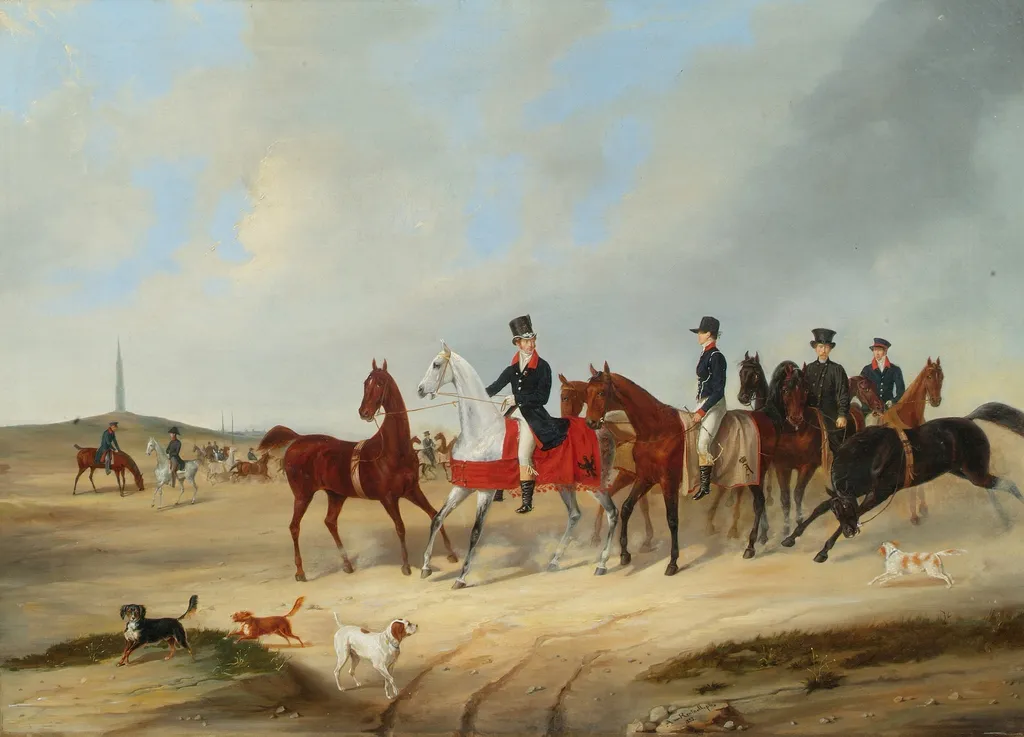
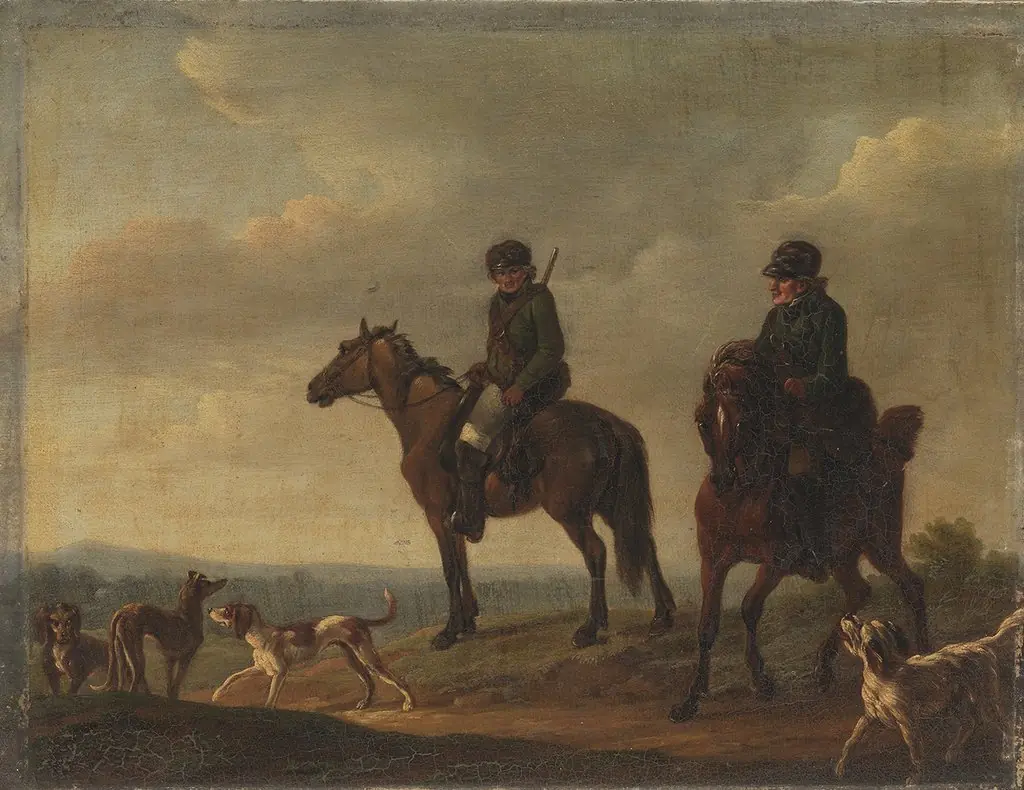
Reiterkavalkade mit Hunden is an oil painting by August von Rentzell. It dates from 1833 and is held in the collection of the Kunsthistorisches Museum.
About this work
Overview
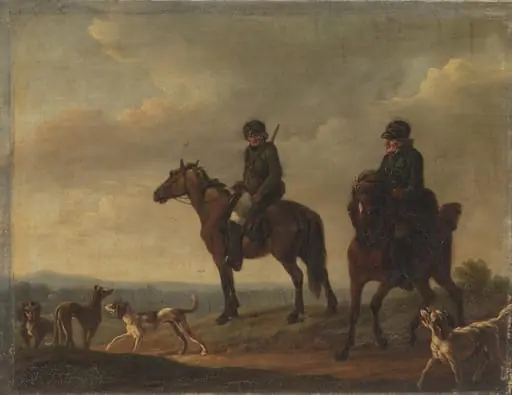
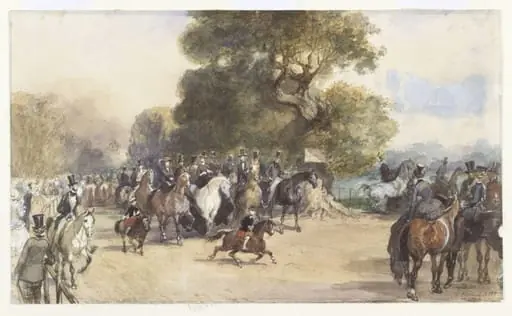
Painted in 1833 by August von Rentzell, this oil-on-canvas work captures a mounted procession accompanied by dogs. It is part of the collection at the Kunsthistorisches Museum in Vienna. The scene unfolds under a muted, overcast sky, suggesting an outdoor activity of some formality or routine. The composition emphasizes movement and group cohesion among riders and animals.
Subject & Meaning
The setting implies a rural or estate landscape, typical of aristocratic pastimes in early 19th-century Central Europe.
The painting portrays a group of horsemen, one distinguished by a white coat, possibly indicating rank or role. The presence of dogs suggests a hunting expedition rather than a purely military maneuver. The figures appear engaged in coordinated motion, conveying purpose rather than leisure. The setting implies a rural or estate landscape, typical of aristocratic pastimes in early 19th-century Central Europe.
Technique & Style
Rentzell employs a restrained palette dominated by earth tones and gray skies, reinforcing the somber mood. Brushwork is precise in rendering horse anatomy and fabric folds, while background figures are rendered with looser strokes to suggest depth. The dogs, rendered with dynamic energy, contrast with the controlled posture of the riders, adding rhythmic variety to the composition.
History & Provenance
The painting has remained in the collection of the Kunsthistorisches Museum since its acquisition, likely shortly after its completion. No public records detail its early ownership, but its subject matter aligns with aristocratic patronage common in the Austrian Empire during the 1830s. It was not exhibited widely outside institutional contexts during the artist’s lifetime.
Context
In the early 1830s, equestrian scenes were popular among Central European elites as expressions of status and tradition. Hunting, in particular, served both recreational and social functions. Rentzell, though not a major historical figure, contributed to this genre, reflecting the enduring cultural value placed on horsemanship and rural pursuits among the nobility.
Legacy
The work remains a modest example of 19th-century Austrian genre painting, valued for its documentation of equestrian customs rather than artistic innovation. It contributes to the museum’s broader collection of regional scenes, offering insight into the daily rituals of the period’s upper classes without overt political or narrative ambition.
Own this work as a print
Artist & collection