Artwork
To jægere til hest
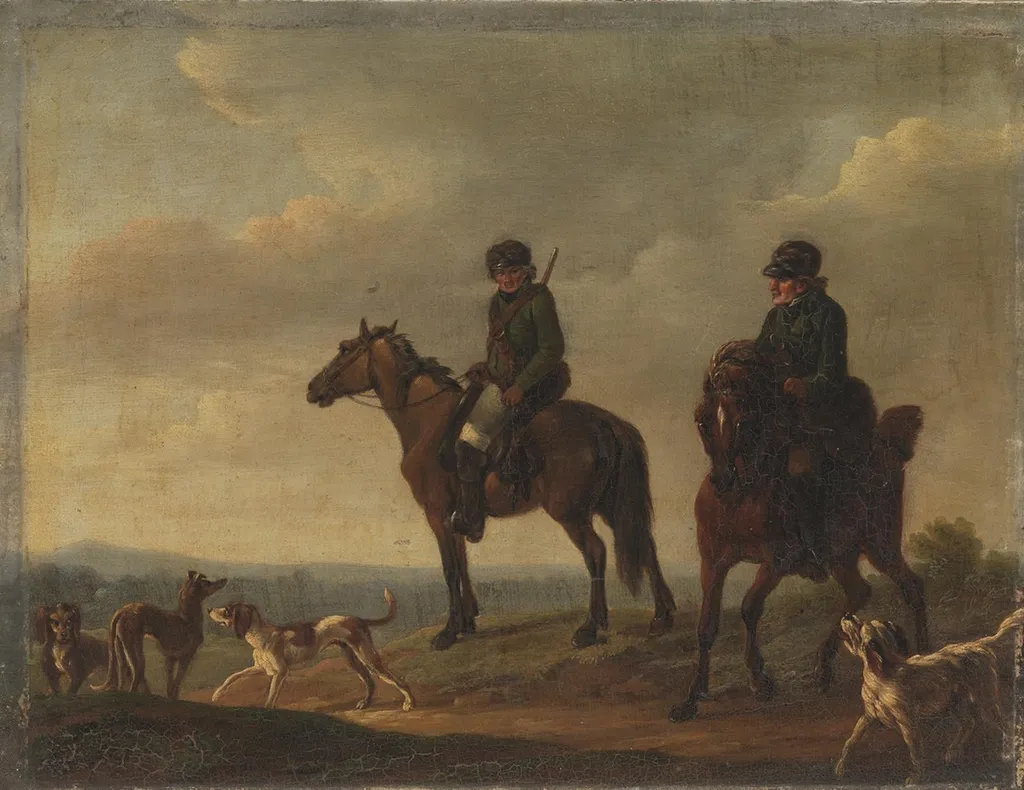
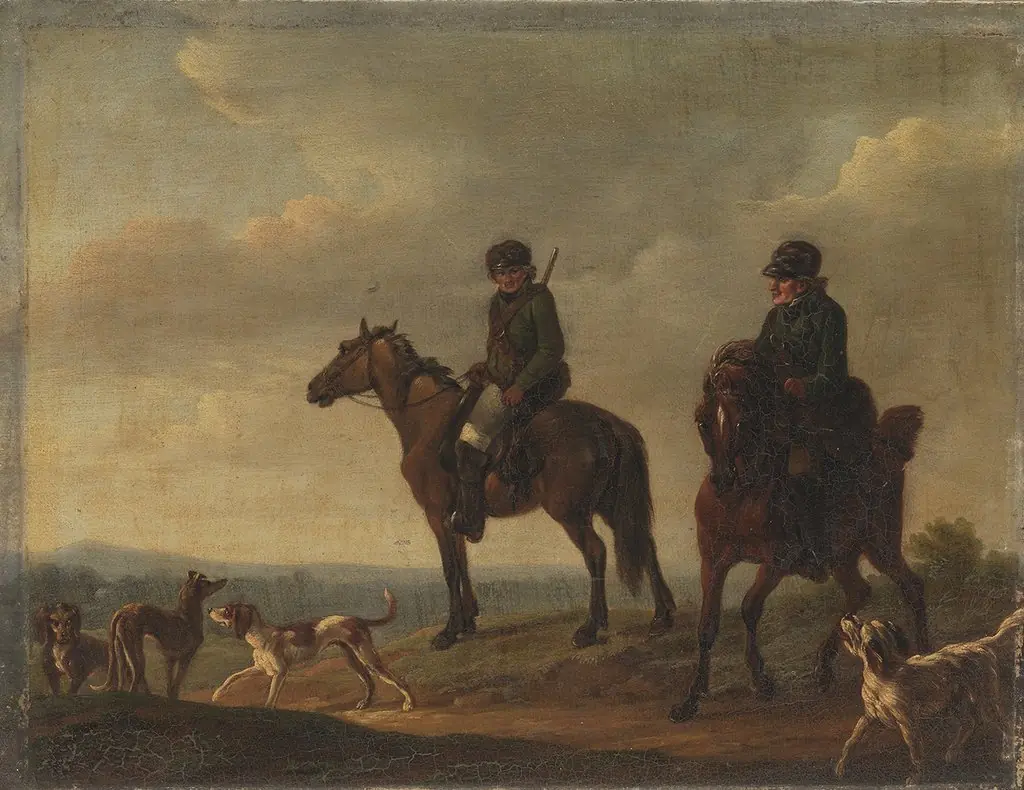
To jægere til hest is a photography by Unknown. It dates from 1750 and is held in the collection of the Statens Museum for Kunst. Created around 1750, this painting depicts two hunters on horseback traversing an open landscape.
About this work
Overview
Five dogs occupy the foreground, their postures suggesting recent activity—some alert, others in motion—as if tracking or flushing game.
Created around 1750, this painting depicts two hunters on horseback traversing an open landscape. The scene captures a moment of pause during a hunt, with the riders appearing composed rather than in motion. Five dogs occupy the foreground, their postures suggesting recent activity—some alert, others in motion—as if tracking or flushing game. The work is held in the collection of the Museum of Ethnography.
Subject & Meaning
The painting portrays a routine aspect of rural hunting life, emphasizing the partnership between humans and dogs in subsistence activities. The relaxed demeanor of the riders contrasts with the dogs' alertness, hinting at a rhythm of patience and sudden action. No overt symbolism is present; instead, the scene offers a quiet observation of daily practice, rooted in local tradition rather than ceremonial display.
Technique & Style
The composition balances figures and animals across a horizontal plane, with the dogs anchoring the foreground and the riders receding slightly into the field. Brushwork is straightforward, prioritizing clarity over ornamentation. Light falls evenly across the scene, with subtle tonal shifts suggesting natural daylight rather than dramatic chiaroscuro. The style reflects a regional, observational approach common in 18th-century Nordic genre scenes.
History & Provenance
The painting entered the Museum of Ethnography’s collection as part of a broader effort to document Nordic rural life. Its origins are likely local, possibly commissioned by or created for a landowning family in Denmark or southern Sweden. No documentation of its early ownership survives, but its subject matter aligns with other ethnographic records from the mid-1700s.
Context
In mid-18th century Scandinavia, hunting was both a practical necessity and a social activity among landholders. This image reflects a time before industrialization, when rural communities relied on game for food and materials. Similar depictions appear in folk art and estate records, suggesting this was a familiar, unglamorized moment in seasonal life.
Legacy
The painting remains a modest but valuable record of everyday rural practice in northern Europe. It contributes to ethnographic studies by illustrating human-animal dynamics and equipment use without idealization. Though not widely reproduced, it continues to inform exhibitions on Nordic material culture and pre-industrial subsistence.
Artist & collection

 Domestic Scene
 Giacomo and Cardinal Marco, investing Andrea, Abbot of San Zeno, with his Benefice
 The Nymph of Fontainebleau
 Portrait of a Woman
 Madonna and Child with Saints in the Enclosed Garden
 Venus and Minerva
 Family Group of Four on Sofa
 Wall painting from Room H of the Villa of P. Fannius Synistor at Boscoreale
 The Death of the Fox
 Two Horses with a Groom
 Hare-Hunt with Falconer
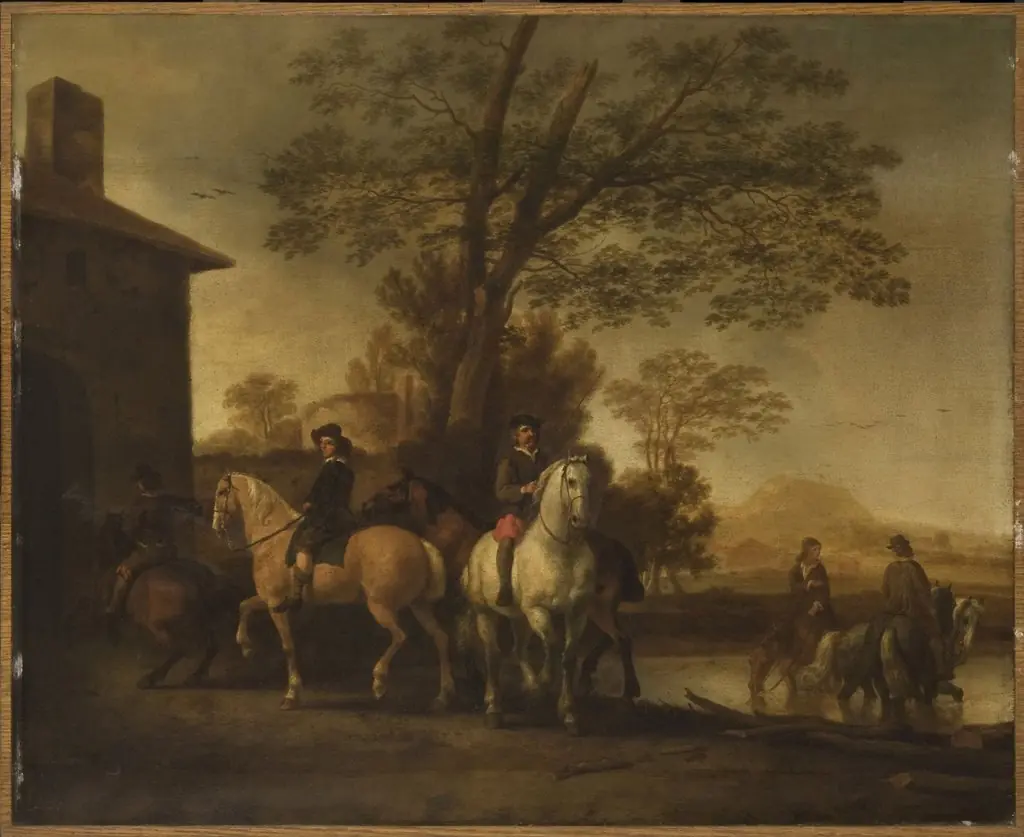 Horsemen Watering Their Horses
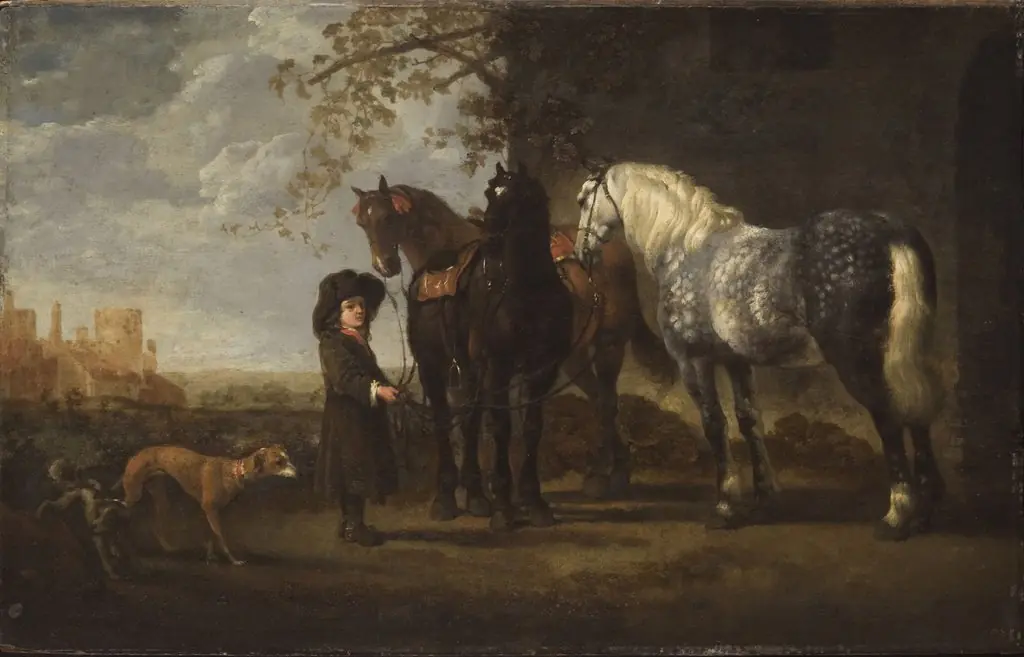 Groom with Three Horses and Two Dogs
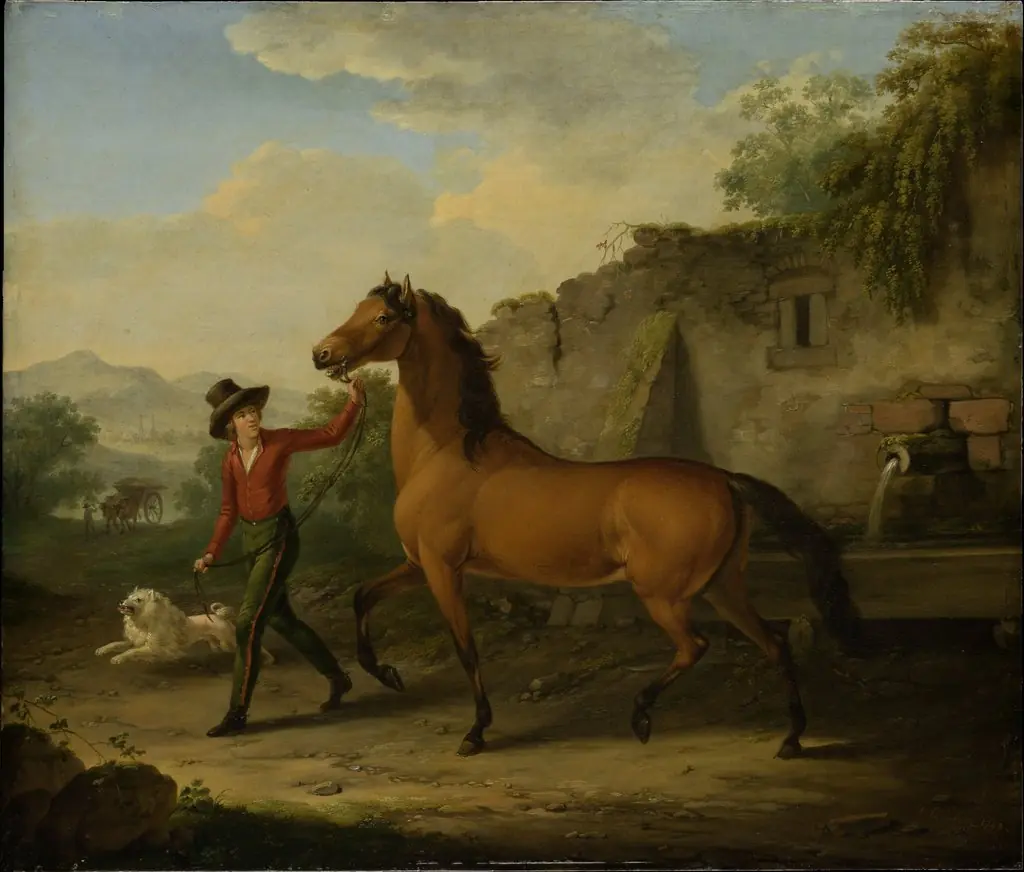 A Groom Leading a Stallion from the Drinking Trough
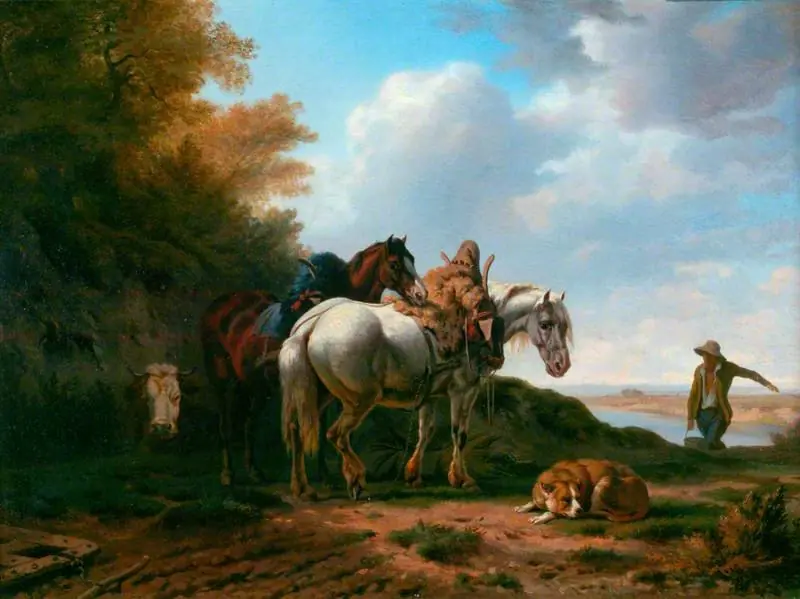 Horses at Plough
 Von Ulanen geführter Transport
 Portrait of a Horseman
 En jagt af kongelige personer
 A Groom Leading two Horses to the Water
 To jægere til hest