Artwork
To jægere til hest
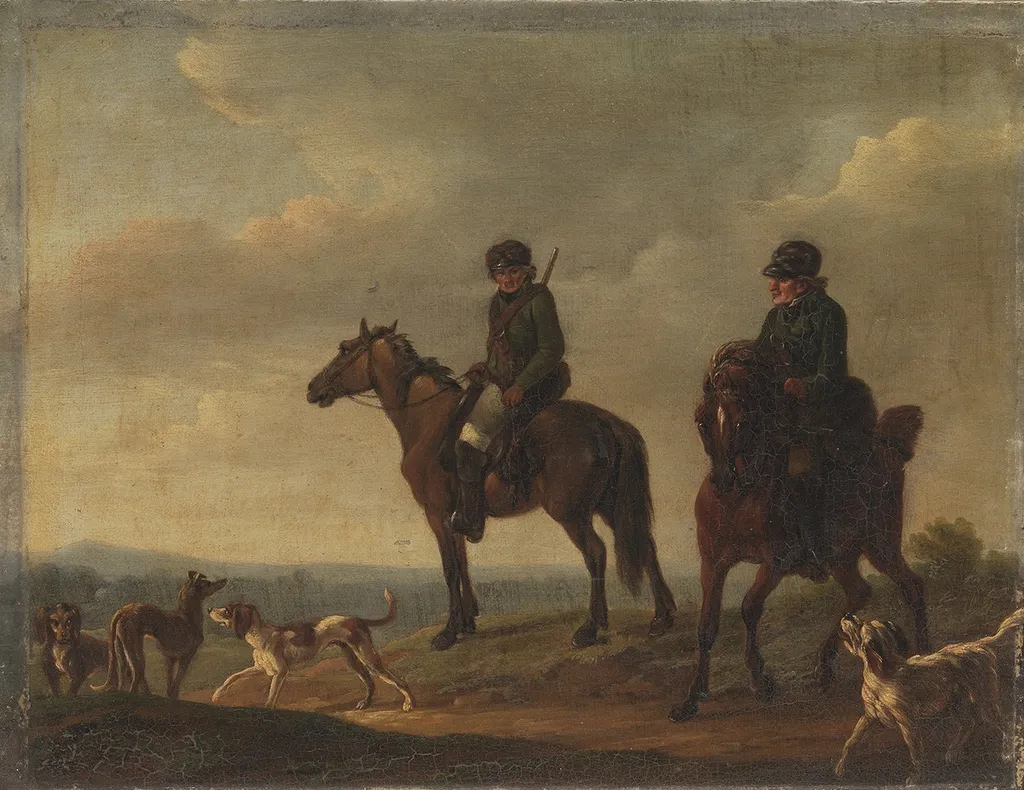
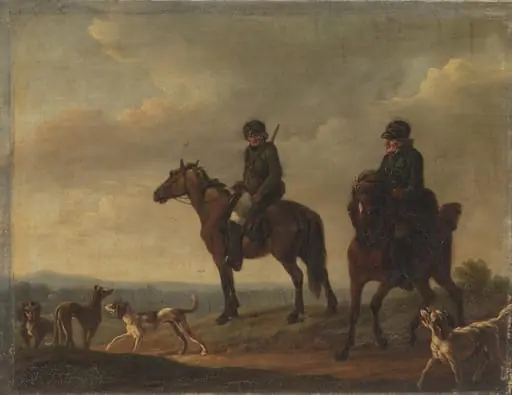
To jægere til hest is an oil painting by Christian David Gebauer. It dates from 1811 and is held in the collection of the Statens Museum for Kunst.
About this work
The artist has used oil paint to create this scene, which is held at the Statens Museum for Kunst.
This painting depicts two men on horseback, accompanied by dogs, in a landscape setting. The men wear dark-colored clothing and hats, with one holding a rifle. The horses are brown, and the dogs are various breeds. The background features a cloudy sky and distant hills.
The artist has used oil paint to create this scene, which is held at the Statens Museum for Kunst. The painting is titled "To jægere til hest" and was created in 1811.
To learn more about the artist's use of light and shadow, explore the technique of chiaroscuro.
Overview
Painted in 1811 by Danish artist Christian David Gebauer, *To jægere til hest* is an oil-on-canvas landscape depicting two hunters on horseback. The work reflects Gebauer’s focus on rural life and natural settings, combining figures with the Danish countryside. It resides in the collection of Statens Museum for Kunst in Copenhagen, where it remains a quiet example of early 19th-century Nordic realism.
Subject & Meaning
The painting portrays two hunters, dressed in dark attire and wearing broad-brimmed hats, riding through a quiet rural expanse. One carries a rifle; both are accompanied by dogs of differing breeds. The scene suggests a moment of pause during a hunt, emphasizing stillness over action. It conveys a sense of daily life in the Danish countryside, where hunting was both practical and customary, without overt symbolism or drama.
Technique & Style
Gebauer employed oil paint to render subtle atmospheric effects, with soft transitions between the hazy sky and rolling hills. The figures and animals are rendered with restrained detail, avoiding idealization. Light falls evenly across the scene, creating a muted tonal harmony rather than dramatic contrasts. The brushwork is deliberate but unobtrusive, prioritizing naturalism over theatricality.
History & Provenance
Created in 1811, the painting entered the collection of Statens Museum for Kunst early in its history, likely acquired during the museum’s formative years in the 19th century. Gebauer, active as both painter and etcher, was known for his depictions of animals and rural scenes, and this work aligns with his broader output. Its continuous presence in the museum’s holdings underscores its recognized place in Danish art history.
Context
In early 19th-century Denmark, there was a growing interest in national identity expressed through depictions of everyday rural life. Gebauer’s work emerged alongside this trend, reflecting a cultural shift toward valuing the ordinary and the local. Unlike grand historical or mythological subjects favored elsewhere in Europe, this painting finds dignity in the quiet routines of the Danish landscape and its inhabitants.
Legacy
While not widely reproduced or celebrated in popular culture, *To jægere til hest* remains a representative example of Danish Romantic-era landscape painting. It contributes to the understanding of how local artists documented their environment with quiet sincerity. The work continues to inform scholarly study of Nordic art’s engagement with nature and rural tradition during the period.
Artist & collection
Artist
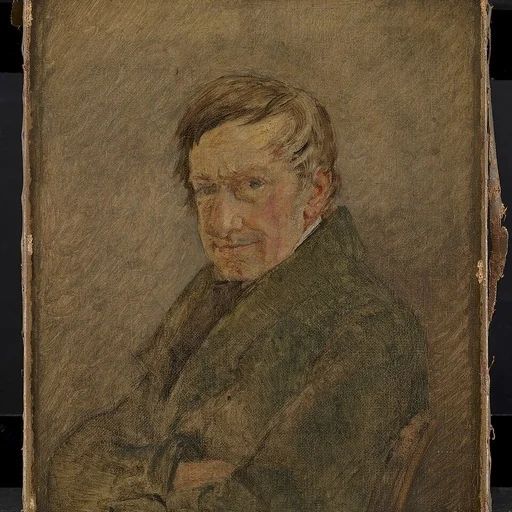
Christian David Gebauer (15 October 1777 – 15 September 1831) was a Danish animal and landscape painter. He was also known for etchings.

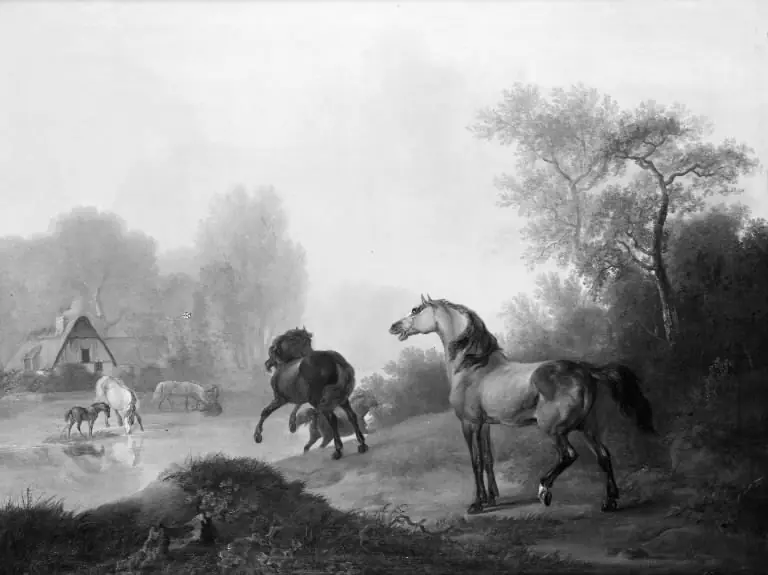 Vilde heste i et stutteri
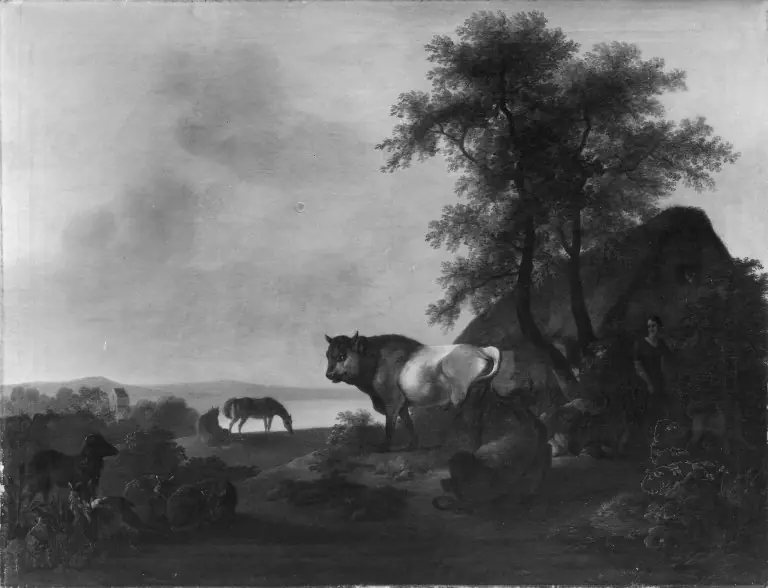 Kvæg i et landskab
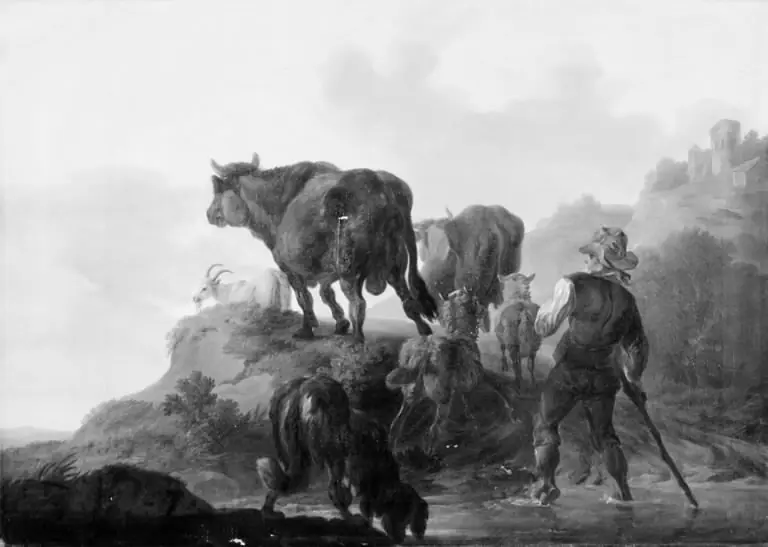 En hyrde driver okser, geder og får
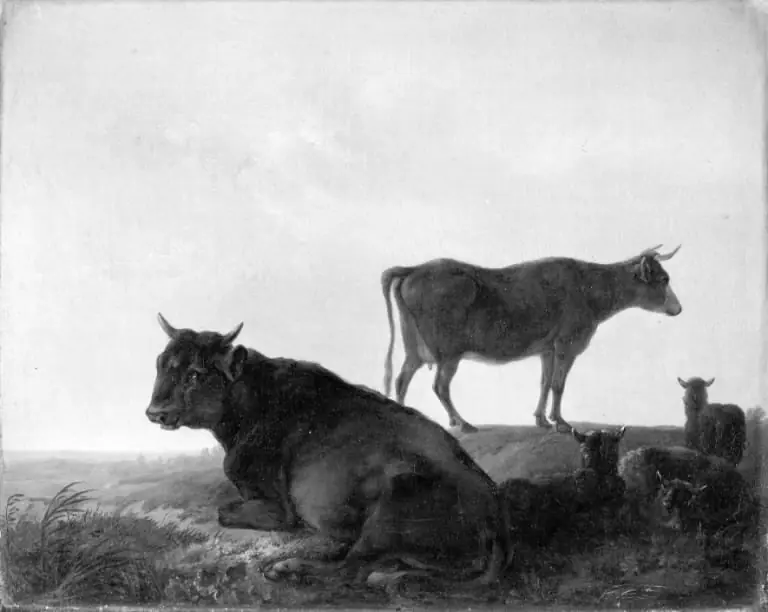 Et kvægstykke
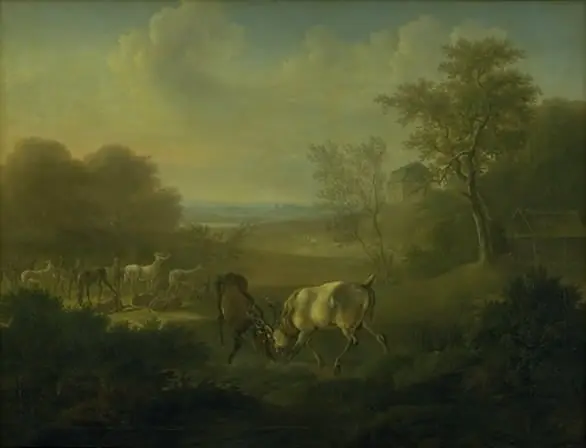 Hjorte i Dyrehaven, i baggrunden Eremitagen
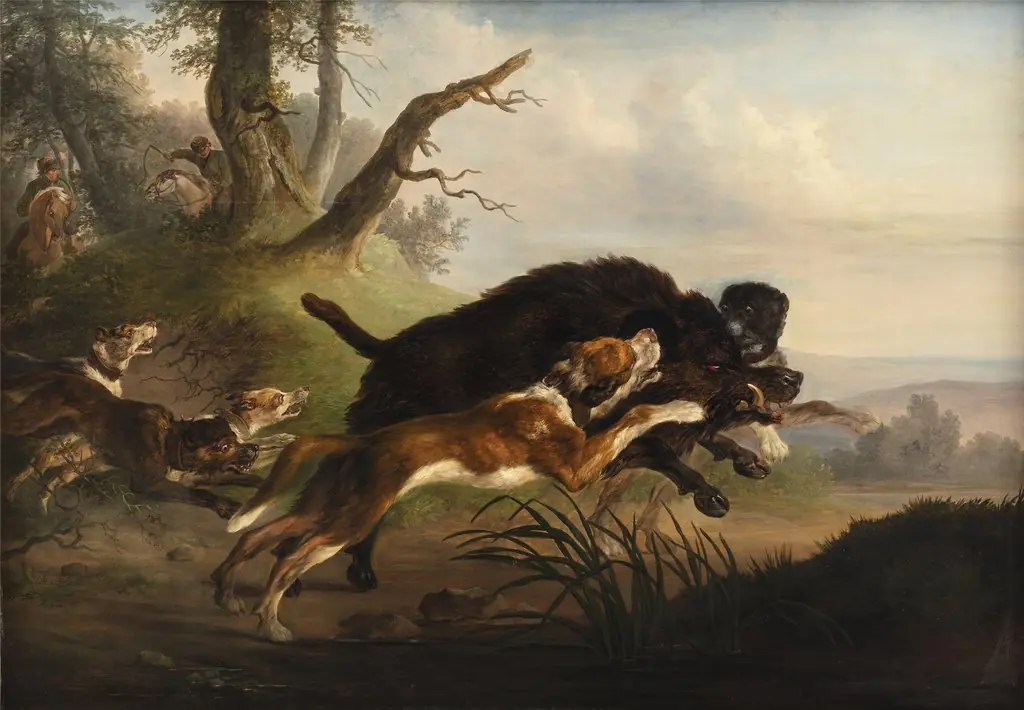 En vildsvinejagt
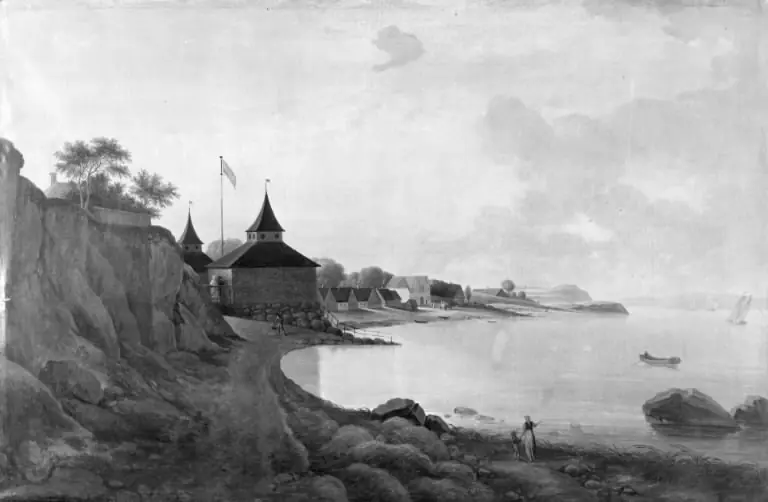 Landskab ved en bugt. Parti fra "Alexandria" ved Vedbæk
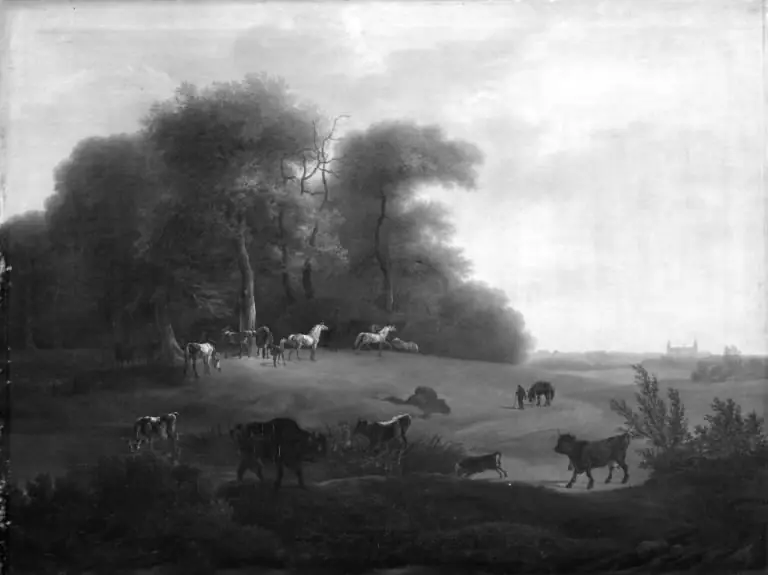 Keld Skov ved Frederiksborg med en del af det kongelige stutteri. I forgrunden schweizer- og tyrolerkvæg
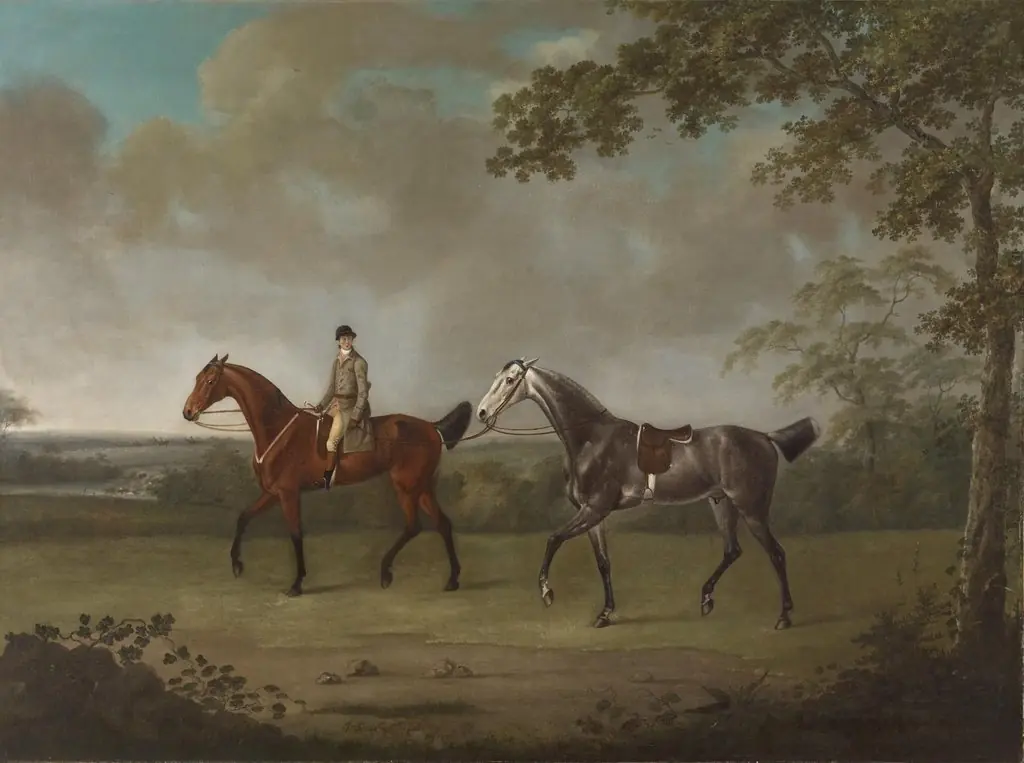 Two Horses with a Groom
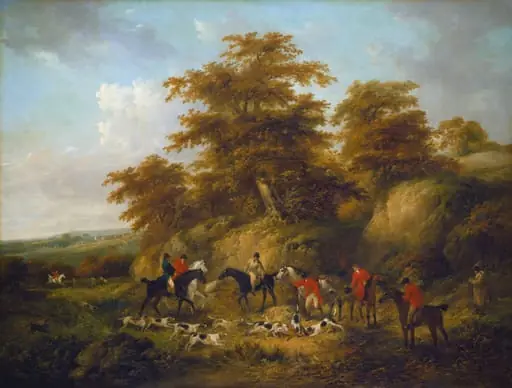 The Death of the Fox
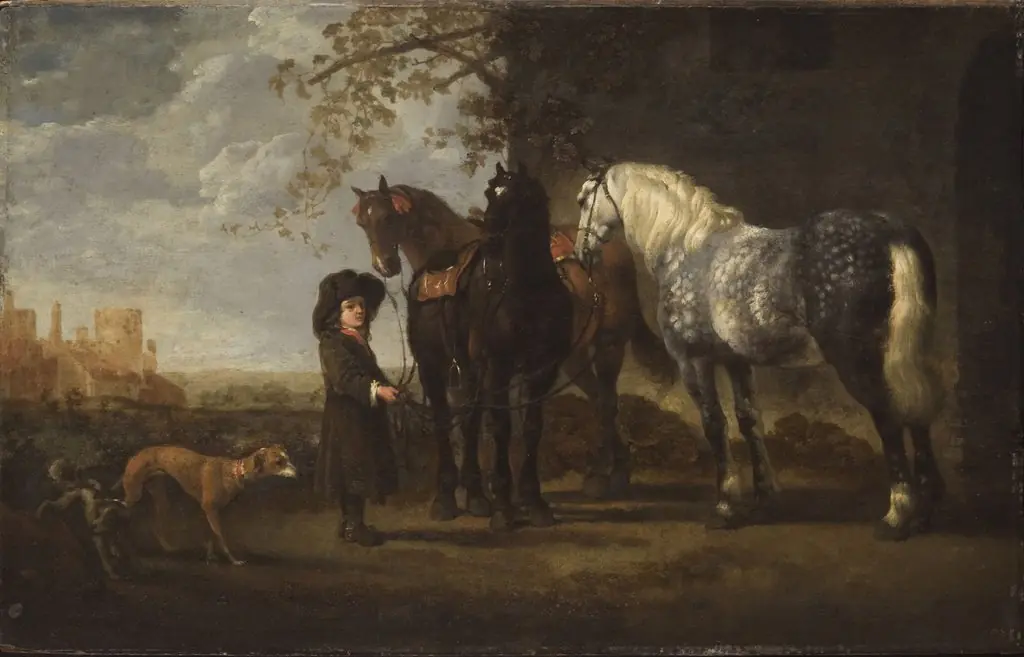 Groom with Three Horses and Two Dogs
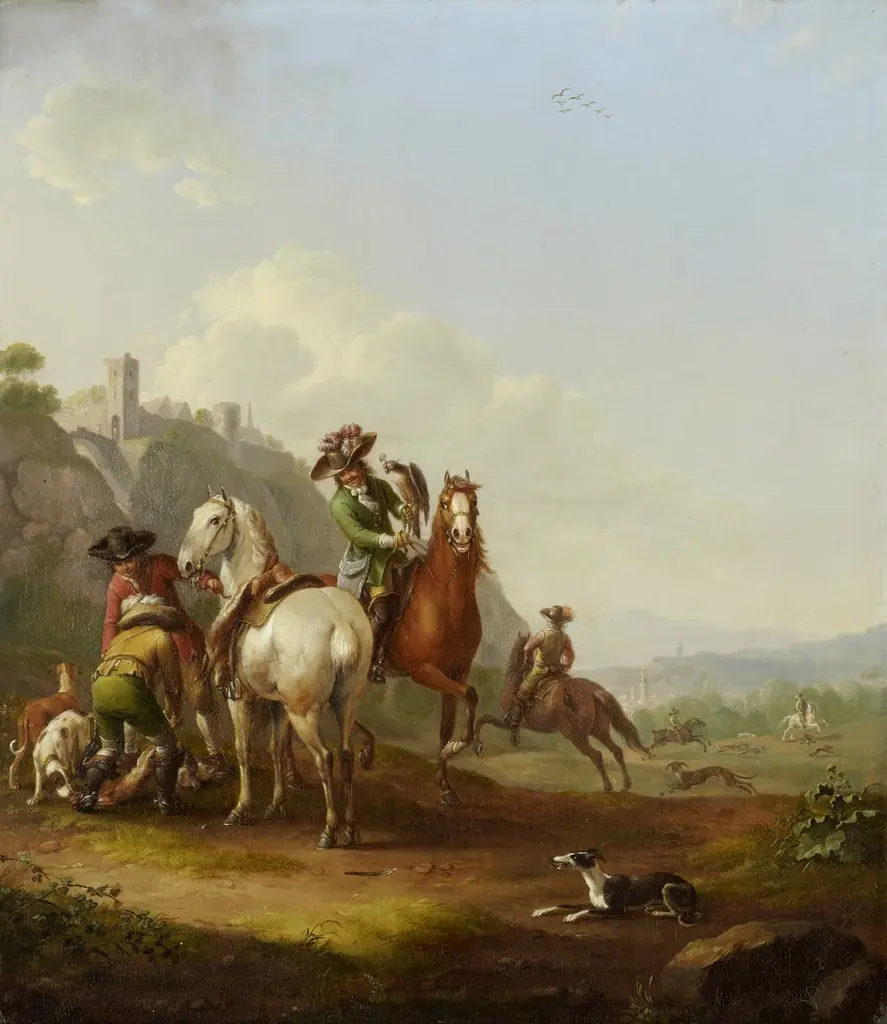 Hare-Hunt with Falconer
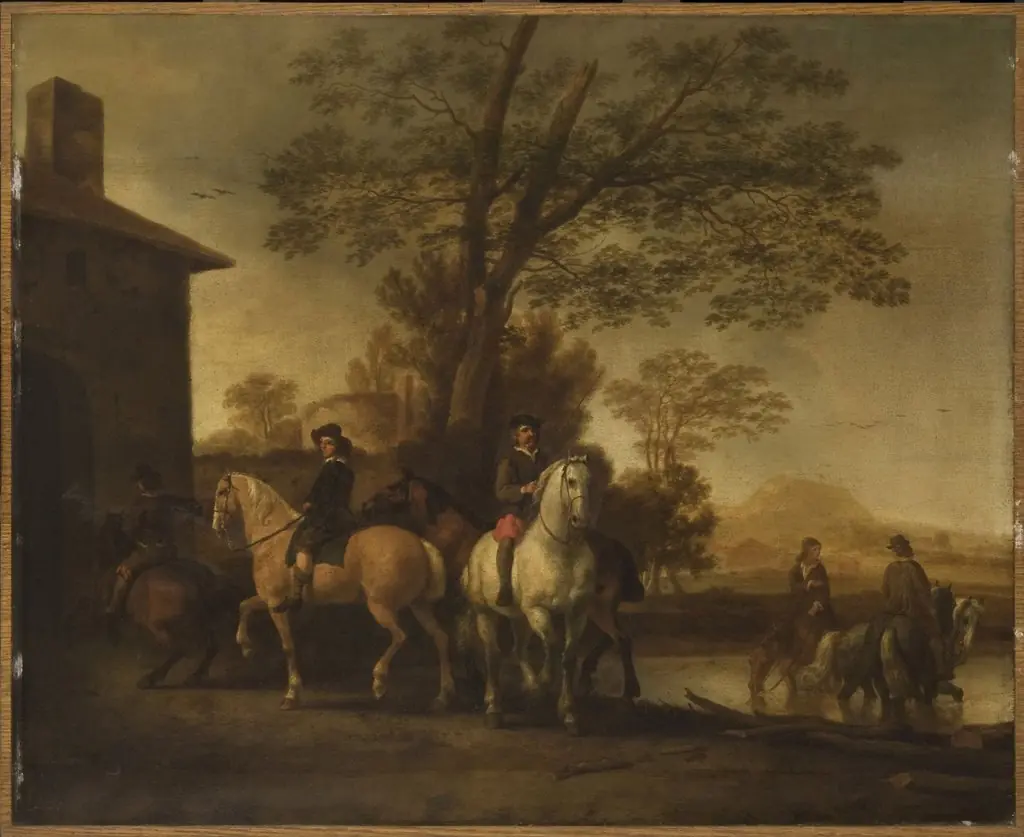 Horsemen Watering Their Horses
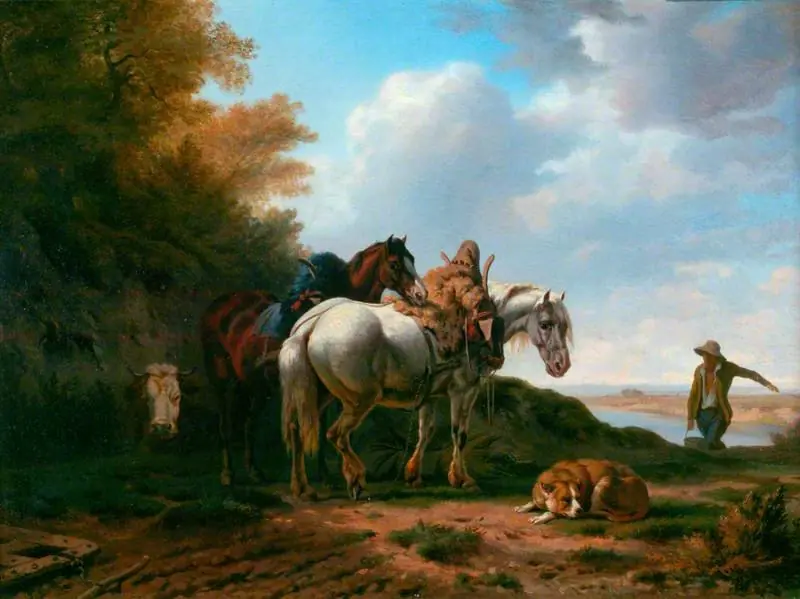 Horses at Plough
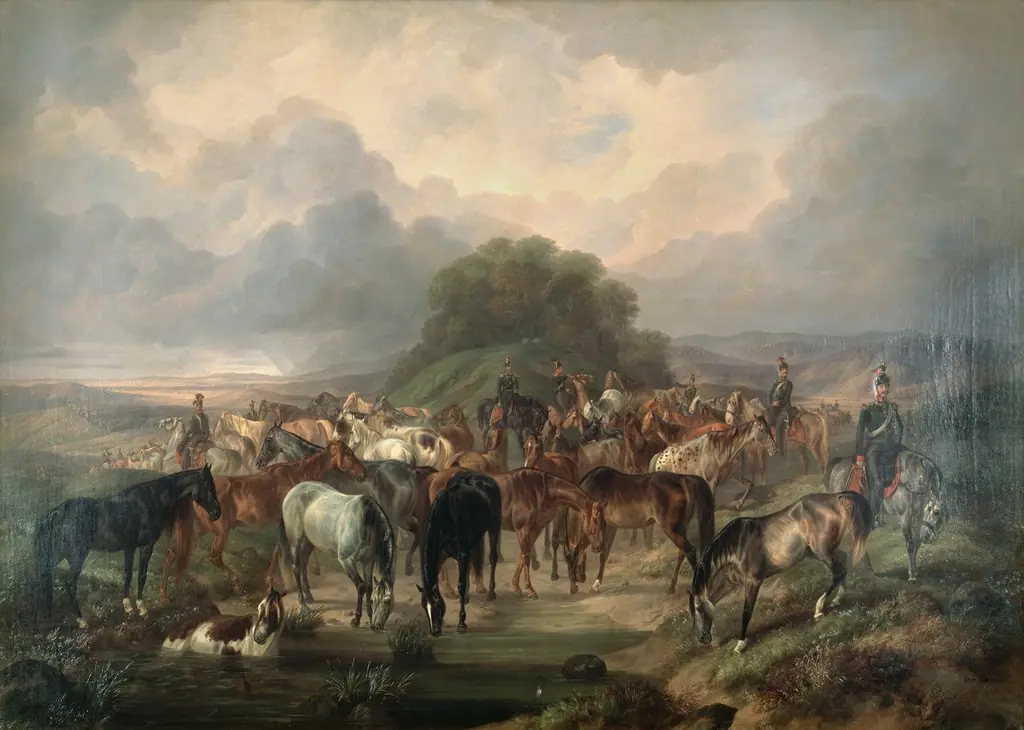 Von Ulanen geführter Transport
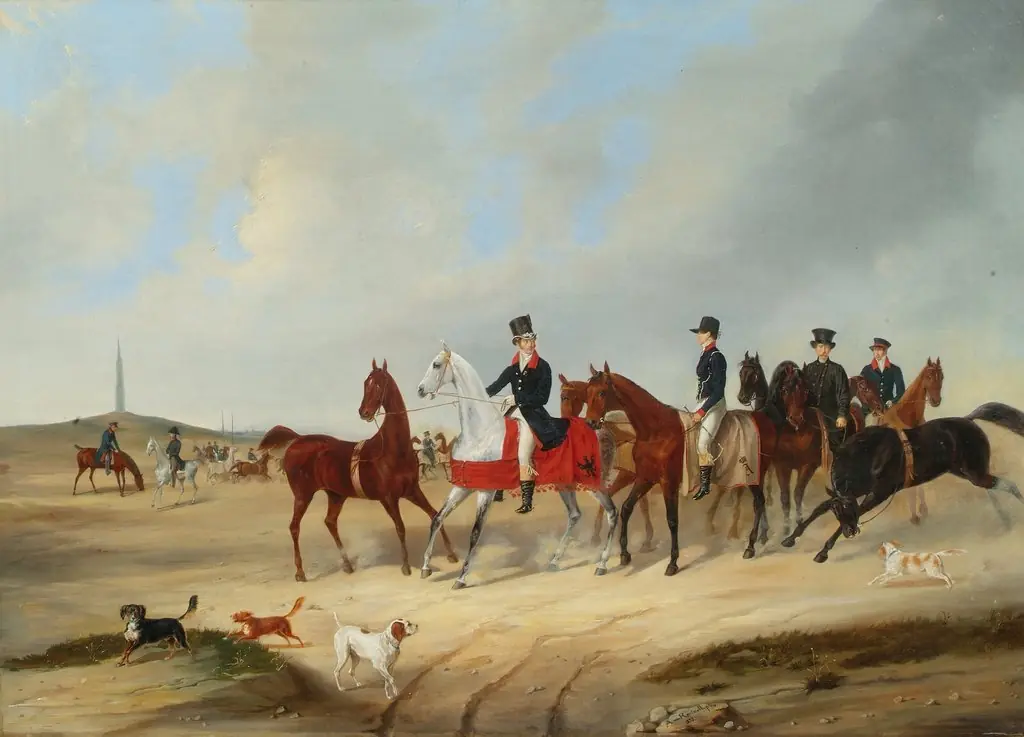 Reiterkavalkade mit Hunden
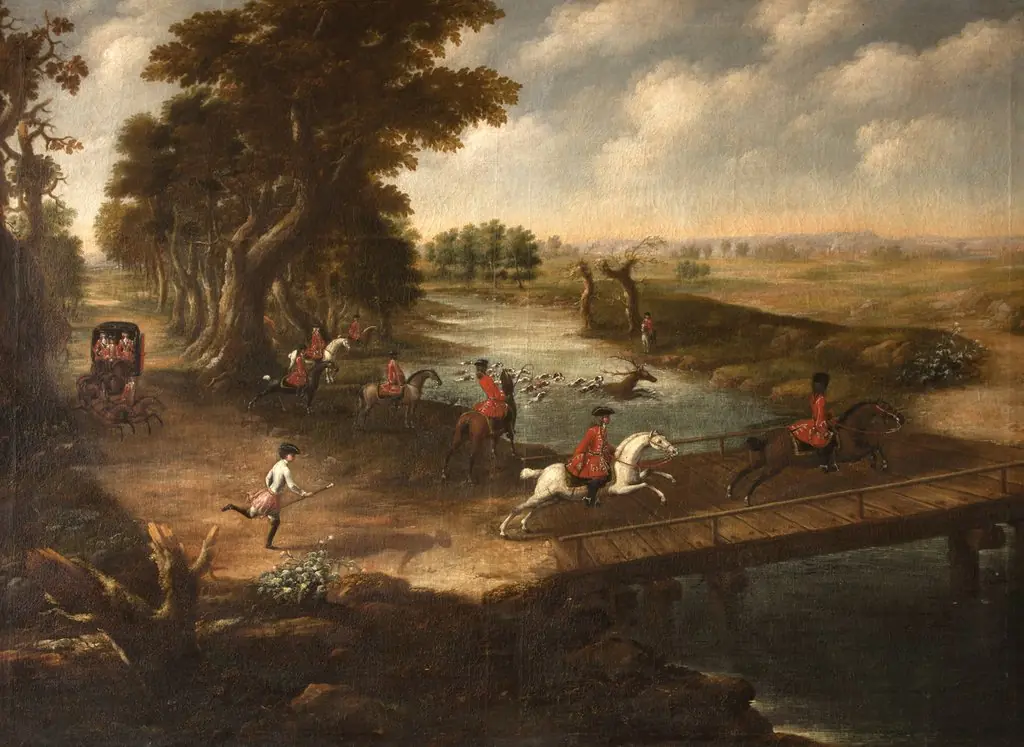 En jagt af kongelige personer
 En jagt af kongelige personer
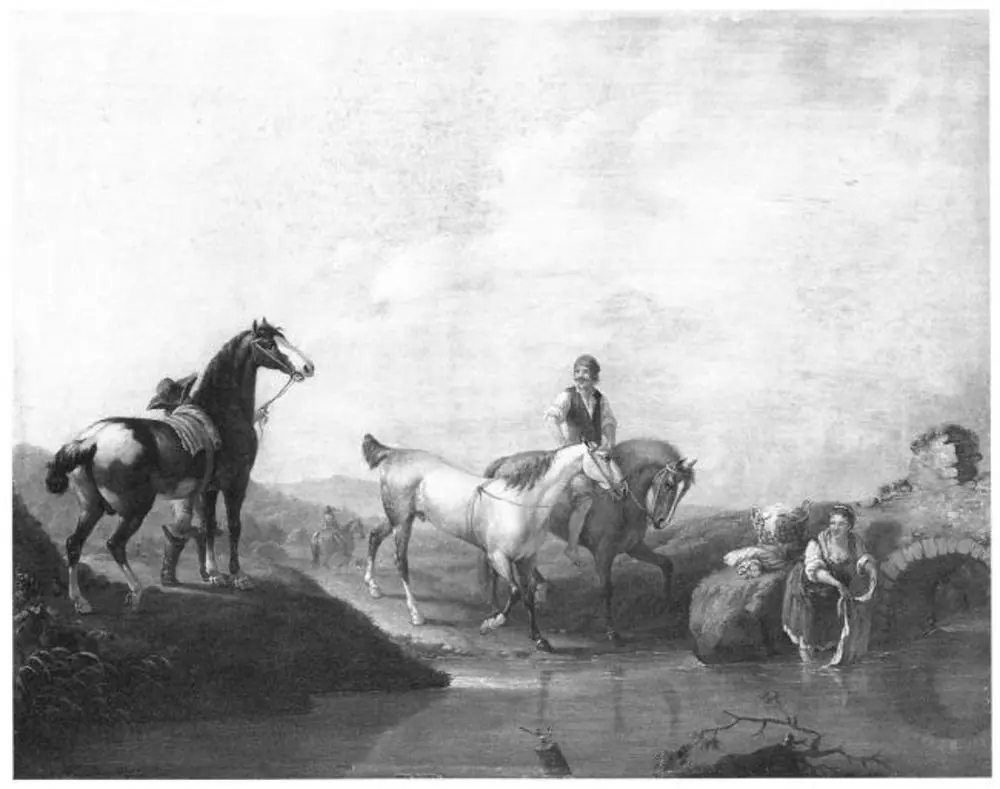 A Groom Leading two Horses to the Water
 To jægere til hest