Artwork
Album for 1832: Un famous diplomat à dit...
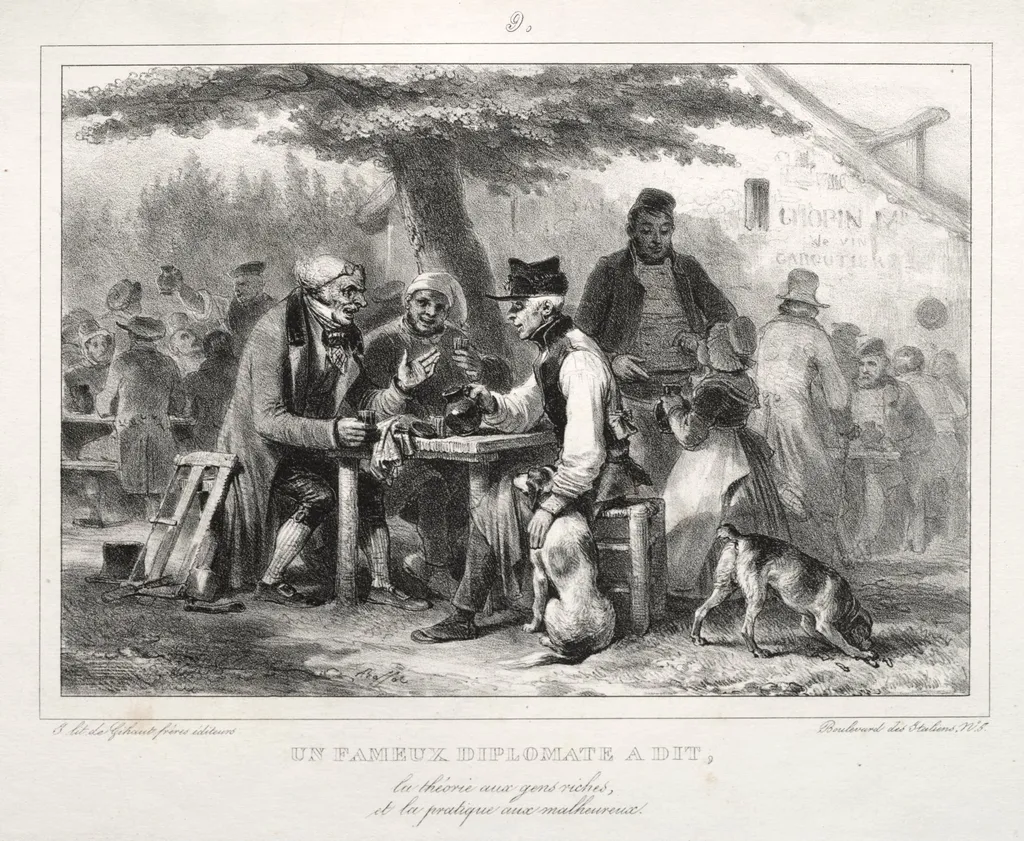
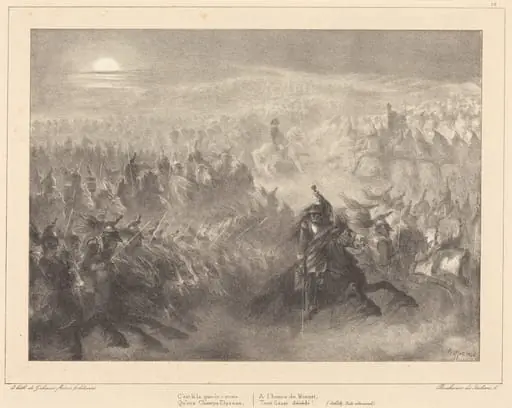
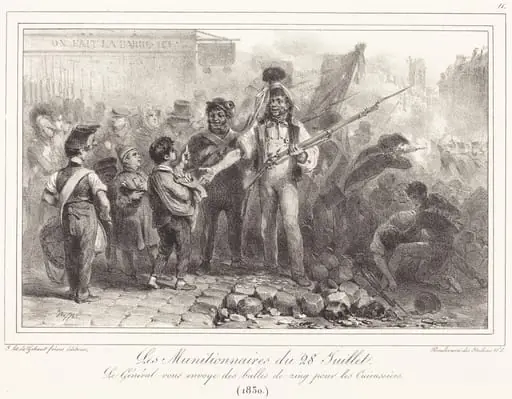
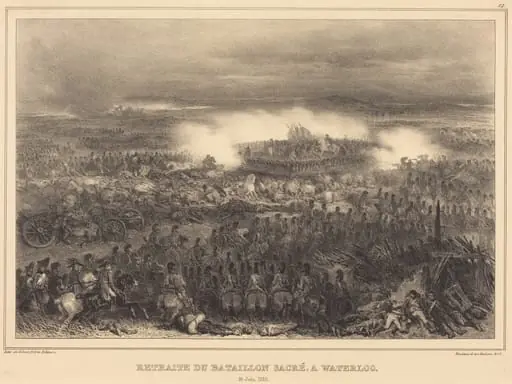
Album for 1832: Un famous diplomat à dit... is a print by the Romanticist artist Auguste Raffet. It dates from 1832 and is held in the collection of the Cleveland Museum of Art.
About this work
Overview
Created in 1832 by French lithographer Auguste Raffet, this print is part of an album capturing moments from contemporary French society.
Created in 1832 by French lithographer Auguste Raffet, this print is part of an album capturing moments from contemporary French society. Raffet, trained in the tradition of political illustration, used lithography to document urban life with observational precision. The work belongs to a series that blends satire with documentary detail, reflecting the growing public appetite for images of everyday scenes rather than idealized history painting.
Subject & Meaning
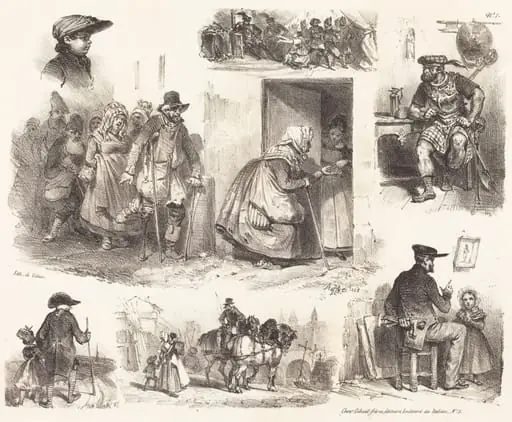
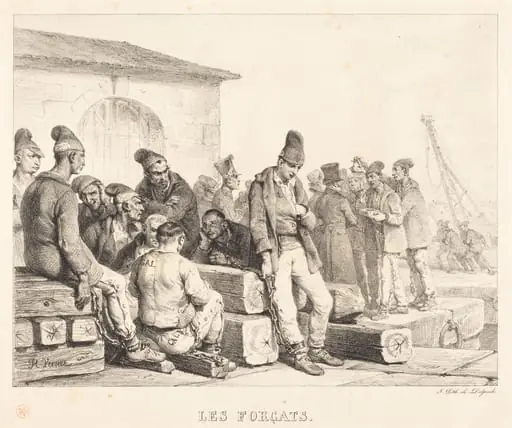
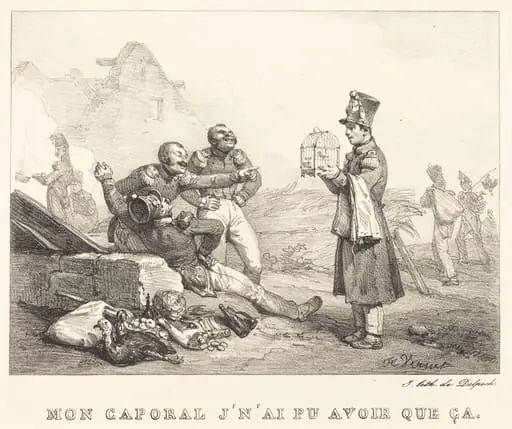
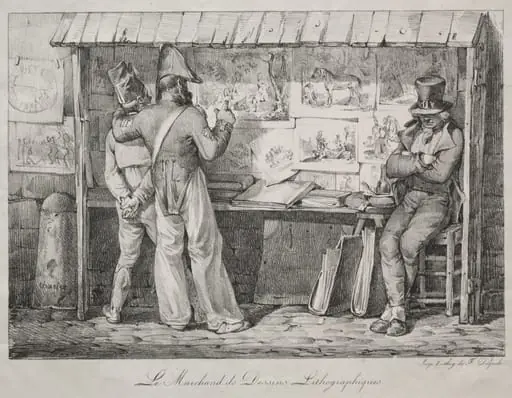
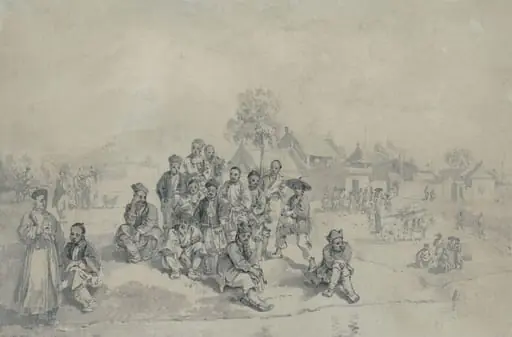
The scene depicts a group of patrons in a dim tavern, engaged in conversation while a dog rests at their feet. A sign on the wall and onlookers in the background suggest a public, slightly chaotic space. The caption beneath mocks the duplicity of a diplomat who speaks differently to the wealthy and the poor, turning the image into a quiet critique of class hypocrisy. Raffet uses humor to expose social contradictions without overt political rhetoric.
Technique & Style
Raffet employed lithography to achieve rapid, expressive lines and tonal contrasts suited to capturing fleeting moments. His brushwork is loose yet controlled, emphasizing gesture over detail. The composition is crowded and asymmetrical, drawing the eye across the scene through diagonal groupings and layered figures. Shadows are deepened to suggest the tavern’s dim interior, enhancing the sense of intimacy and spontaneity.
History & Provenance
The print was produced during a period of political instability in France, following the July Revolution of 1830. Raffet’s albums were widely circulated among the middle class, serving as both entertainment and social commentary. Though individual sheets were often sold separately, this piece was likely bound into a thematic collection. Its survival in institutional collections today reflects its role in documenting public discourse of the era.
Context
Raffet’s work emerged alongside the rise of illustrated periodicals and the Romantic movement’s turn toward realism. While contemporaries painted heroic battles or pastoral idylls, he focused on taverns, streets, and ordinary interactions. His images resonated with readers weary of official narratives, offering instead a view of society shaped by class, drink, and whispered gossip — a visual counterpart to the satirical literature of Balzac and Daumier.
Legacy
Raffet’s album prints helped establish lithography as a medium for social observation in France. His unidealized depictions of common life influenced later generations of illustrators and caricaturists, particularly those documenting urban experience. Though less celebrated than his military scenes, this work exemplifies his quieter contribution: transforming the mundane into a mirror of societal tensions, accessible to a broad, literate public.
Artist & collection
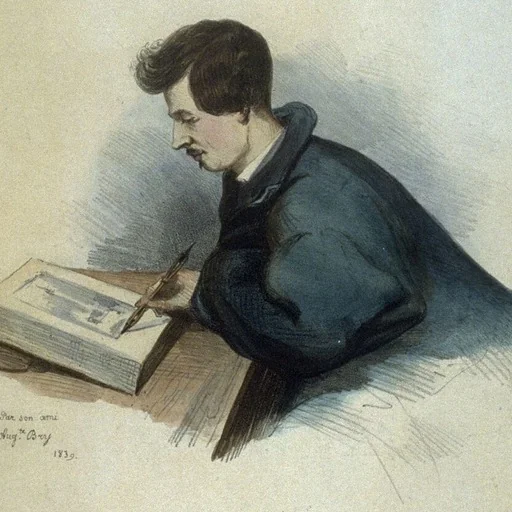
Artist
Denis Auguste Marie Raffet (2 March 1804 – 16 February 1860) was a French illustrator and lithographer. He was a student of Nicolas Toussaint Charlet, and was a retrospective painter of the Empire.