Artwork
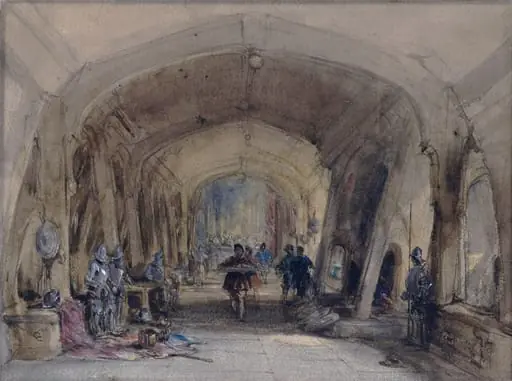
Interior of the Gothic Hall, Kneuterdijk Palace, The Hague
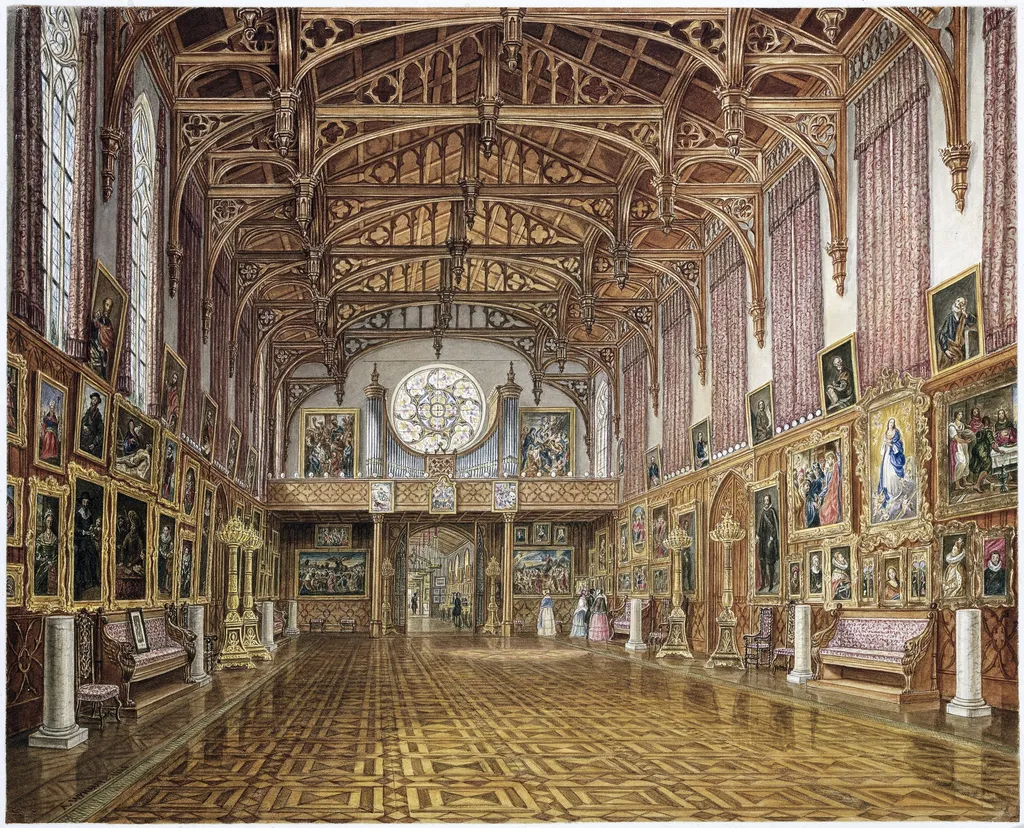
Interior of the Gothic Hall, Kneuterdijk Palace, The Hague is a watercolor painting by Augustus Wijnantz. It dates from 1846 and is held in the collection of the Rijksmuseum.
About this work
Overview
The composition centers on a large, ornamented round window, through which light filters onto the room’s elaborate carvings and modest furnishings.
Augustus Wijnantz’s 1846 watercolor presents the interior of the Gothic Hall at Kneuterdijk Palace in The Hague. Rendered in a delicate wash, the work captures the spaciousness of the high‑ceilinged chamber, its polished wooden floor, and the array of framed artworks that line the walls. The composition centers on a large, ornamented round window, through which light filters onto the room’s elaborate carvings and modest furnishings.
Subject & Meaning
The scene depicts a gathering of members of the Confraternity of Perugia within the palace’s Gothic Hall, suggesting a ceremonial or cultural function. By foregrounding the art collection displayed on the walls, Wijnantz emphasizes the hall’s role as a curated space for both religious brotherhood and the appreciation of visual art, reflecting 19th‑century interests in historic interiors and institutional identity.
Technique & Style
Executed in watercolor, the painting employs transparent layers to convey the subtle interplay of light and shadow across the marble‑like floor and the intricate ceiling tracery. Wijnantz’s handling of the medium yields a soft atmospheric quality, while fine brushwork delineates architectural details and the texture of framed pictures, balancing precision with the fluidity characteristic of mid‑19th‑century Dutch watercolor practice.
History & Provenance
Created in 1846, the work entered the Rijksmuseum’s collection, where it remains on view. Its acquisition reflects the museum’s broader effort to document Dutch architectural heritage and the interiors of notable civic buildings, situating Wijnantz’s piece within a national narrative of cultural preservation.
Context
The Gothic Hall, originally part of the Kneuterdijk Palace, served as a venue for official functions and artistic display during the 19th century. Wijnantz’s depiction aligns with contemporary interest in historicist architecture, where revivals of medieval forms were celebrated as symbols of national identity and aesthetic refinement.
Artist & collection

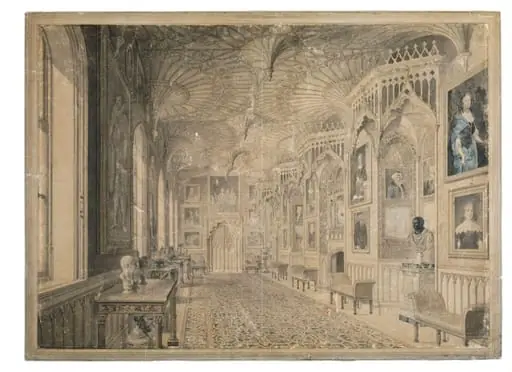 The Gallery at Strawberry Hill
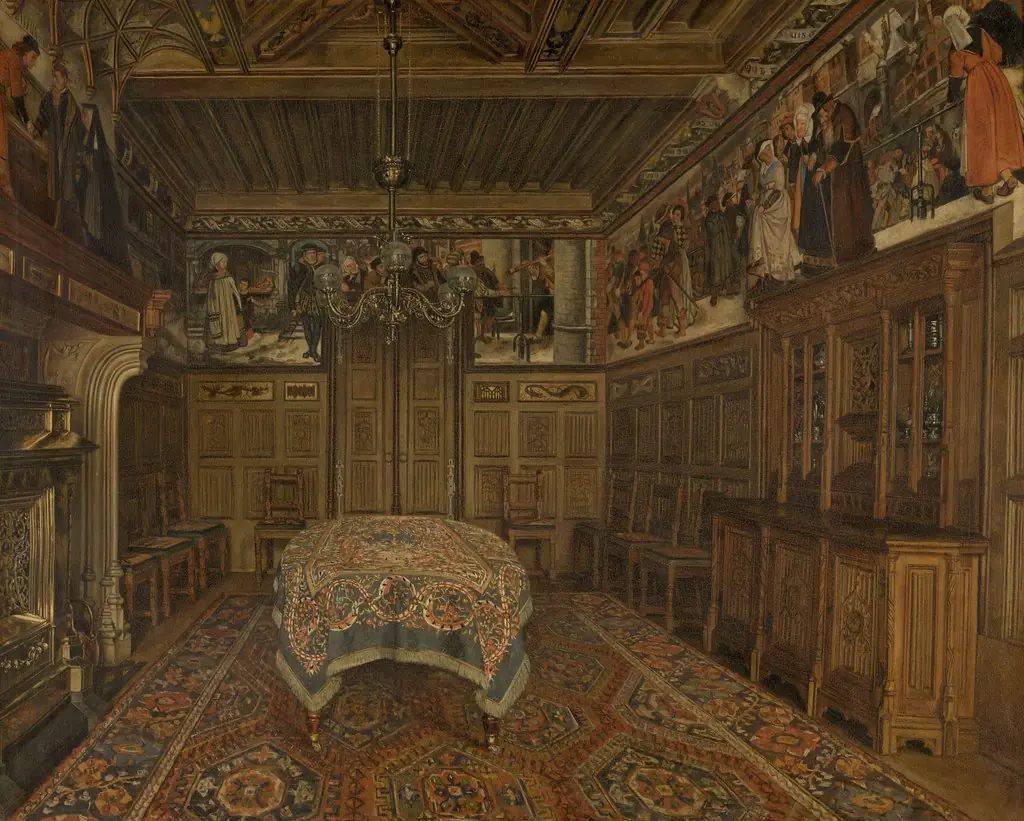 The Dining Room at the Home of the Artist Henri Leys
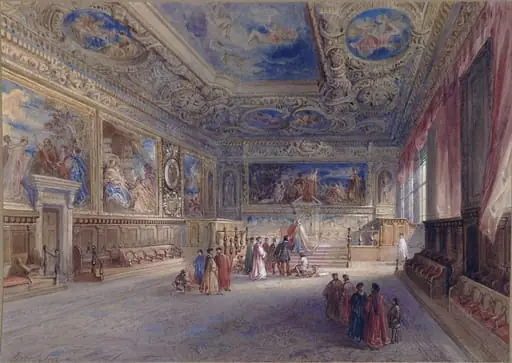 The hall of the council, Doge's Palace, Venice
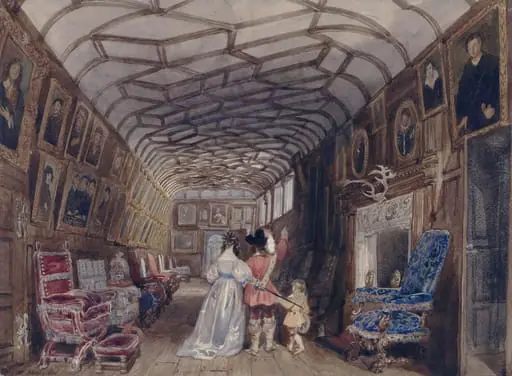 The Long Gallery, Knole
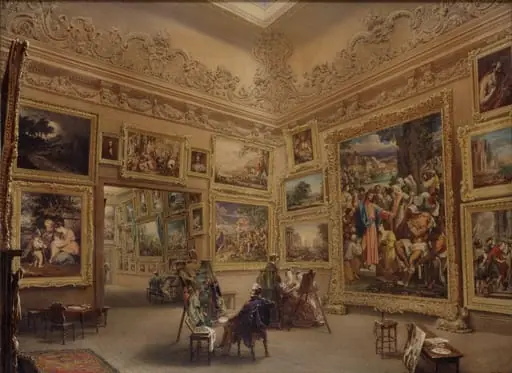 The National Gallery when at Mr J. J. Angerstein's House, Pall Mall
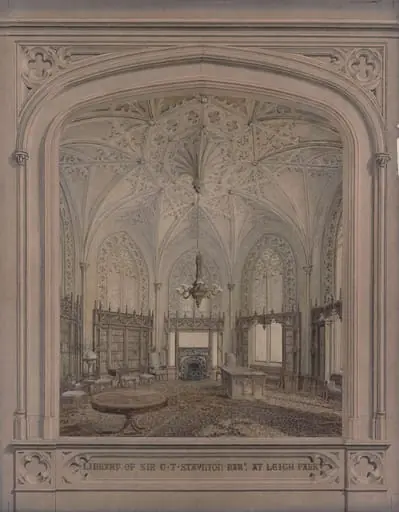 Library of Sir George Thomas Staunton, Bart, at Leigh Park
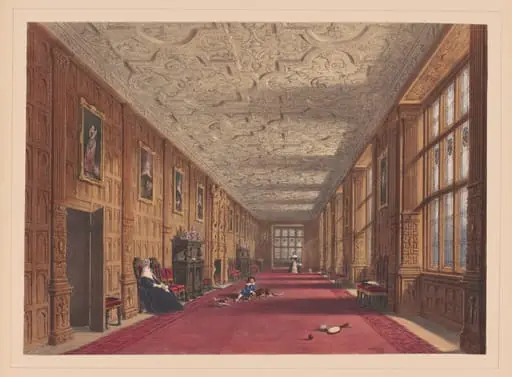 Gallery, Aston Hall, Warwickshire
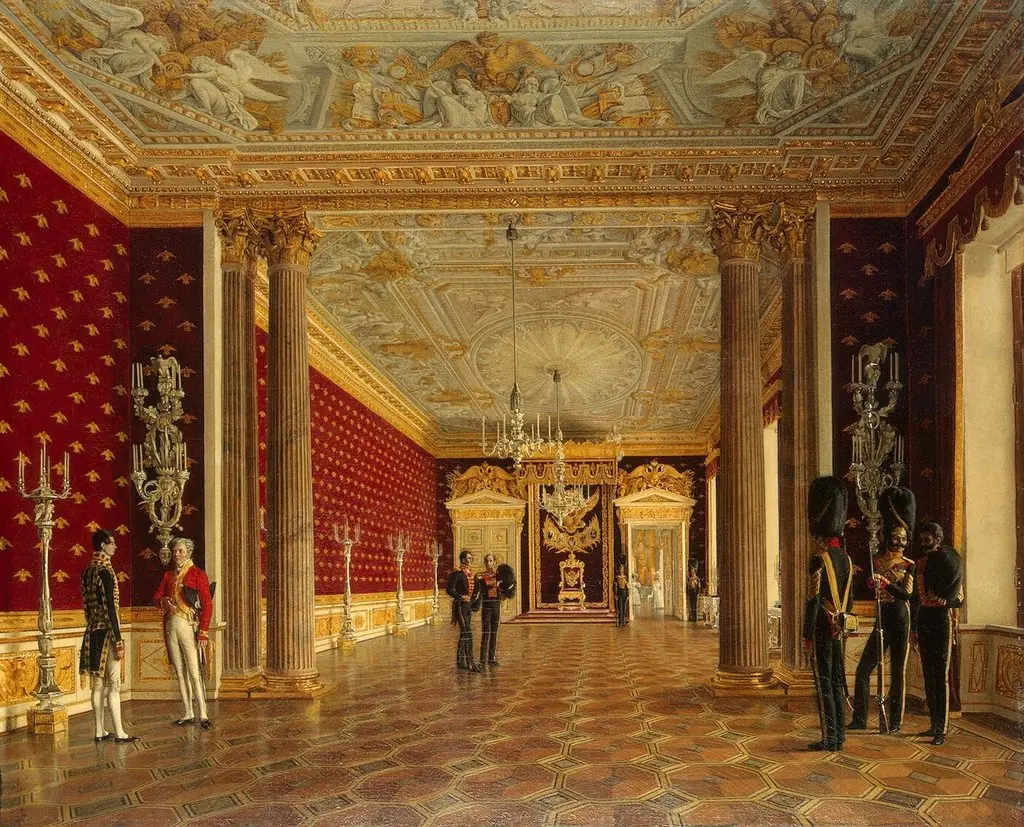 The Throne Room of Empress Maria Fiodorovna in the Winter Palace
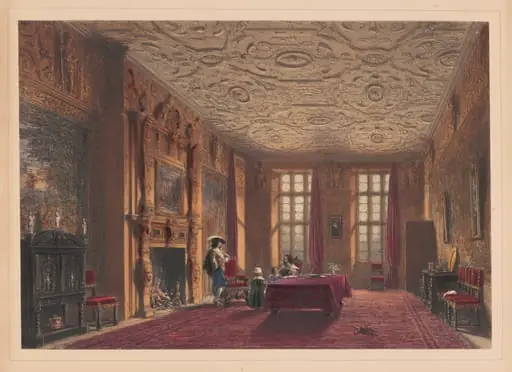 The Drawing Room, Aston Hall, Warwickshire
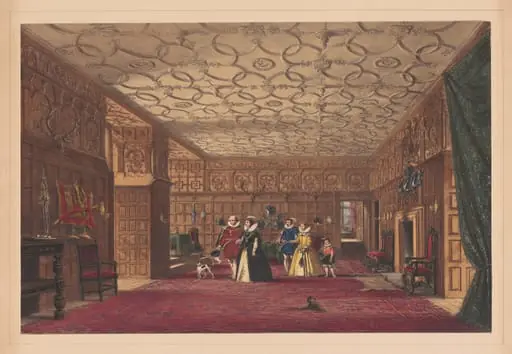 The Hall, Levens, Westmorland
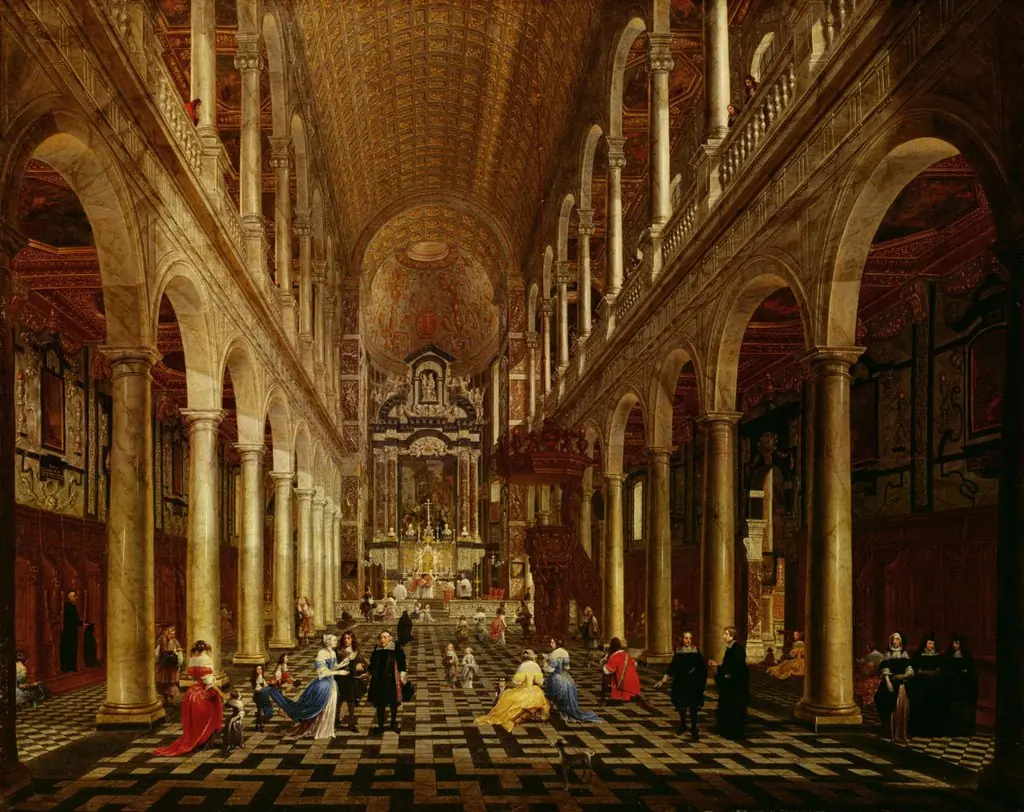 Interior of the Jesuit church in Antwerp
 Interior of a baronial hall