Artwork
Ménages d'artistes; Le Maître
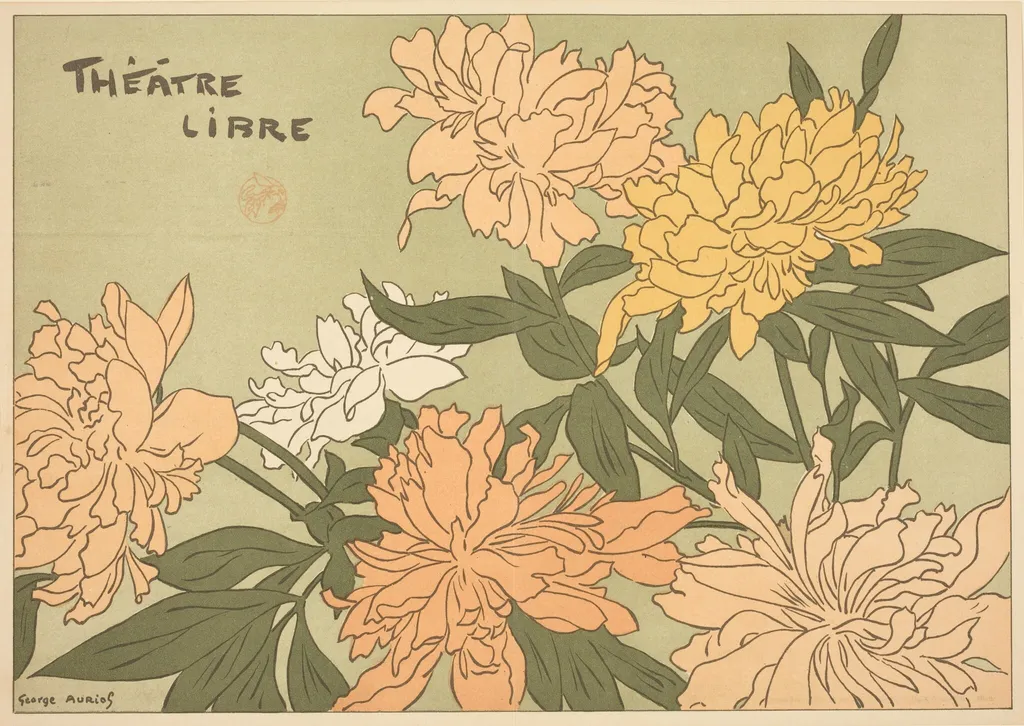
Ménages d'artistes; Le Maître is an ink print by the Impressionist artist George Auriol. It dates from 1890 and is held in the collection of the National Gallery of Art.
About this work
Overview
George Auriol, a Parisian artist active in the late 19th century, produced *Ménages d'artistes; Le Maître* in 1890 as a five-color lithograph on wove paper.
George Auriol, a Parisian artist active in the late 19th century, produced *Ménages d'artistes; Le Maître* in 1890 as a five-color lithograph on wove paper. Part of his broader practice in graphic design, the work emerged from his involvement with illustrated publications and decorative arts. Auriol’s background as a poet and songwriter informed his visual style, blending literary sensibility with graphic precision in the context of Art Nouveau’s ornamental trends.
Subject & Meaning
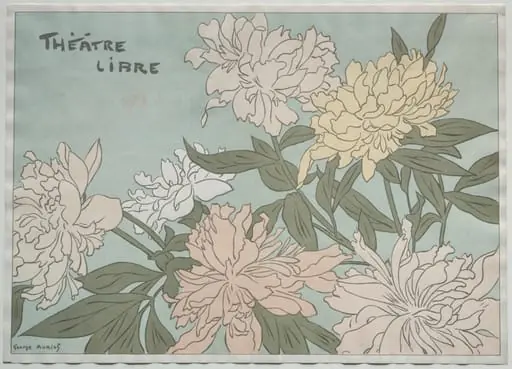
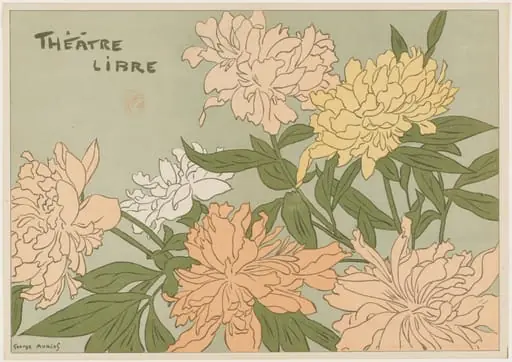
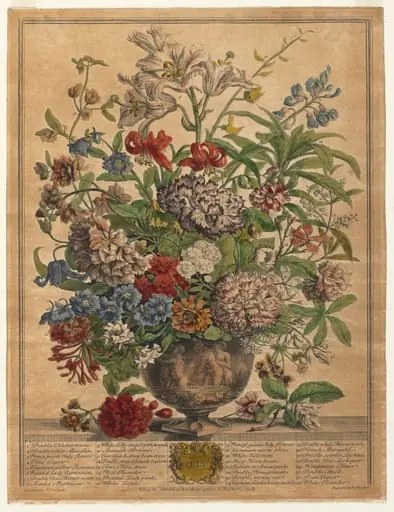
The print features a lush arrangement of flowers in yellow, peach, and white, set against a muted green ground. Dark green stems and leaves ground the composition, creating rhythmic contrast. Above, the bold inscription 'THEATRE LIBRE' anchors the image to Paris’s avant-garde theater scene, suggesting the floral motif as a symbolic tribute to artistic freedom. The flowers function not as mere decoration but as emblems of creative vitality tied to the cultural milieu of the time.
Technique & Style
Auriol employed a five-color lithographic process to achieve subtle gradations and flat, saturated tones. The design favors clean lines and stylized forms, characteristic of Art Nouveau’s rejection of academic realism. Rather than naturalistic rendering, the flowers are simplified into rhythmic shapes, emphasizing pattern and harmony. The integration of text as a compositional element reflects Auriol’s interest in uniting typography and imagery, a hallmark of his graphic work.
History & Provenance
Created in 1890, the lithograph was likely produced for distribution through Parisian artistic circles connected to the Théâtre Libre, an experimental theater founded by André Antoine. Auriol’s association with this venue and its publications suggests the print may have served as promotional material or a collectible illustration. Its survival in private and institutional collections reflects its niche but enduring appeal among collectors of fin-de-siècle graphic art.
Context
The work emerged during a period when Parisian artists increasingly blurred boundaries between fine and applied arts. Auriol’s engagement with theater, music, and publishing mirrored broader trends in Art Nouveau, where design permeated everyday cultural life. The Théâtre Libre, championing naturalist drama, represented a radical alternative to mainstream theater, and Auriol’s imagery aligned with its ethos of artistic autonomy and innovation.
Legacy
Though not widely known outside specialized circles, Auriol’s lithographs, including this one, contributed to the visual language of late 19th-century French graphic design. His fusion of typography, floral motifs, and theatrical symbolism influenced later illustrators and poster artists. The print remains a quiet testament to the interdisciplinary spirit of Art Nouveau, where art, literature, and performance converged in printed form.
Artist & collection

Artist
George Auriol, born Jean-Georges Huyot (26 April 1863) – February 1938, Paris), was a French poet, songwriter, graphic designer, type designer, and Art Nouveau artist.