Artwork
"Myrane" et "Les Chapons"
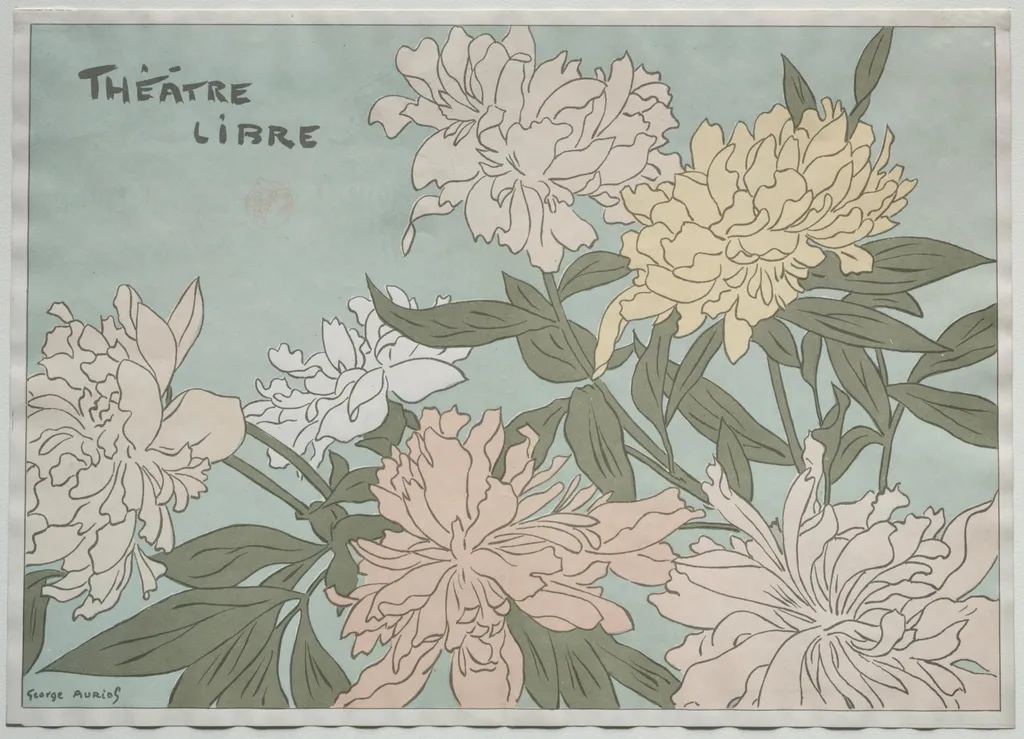
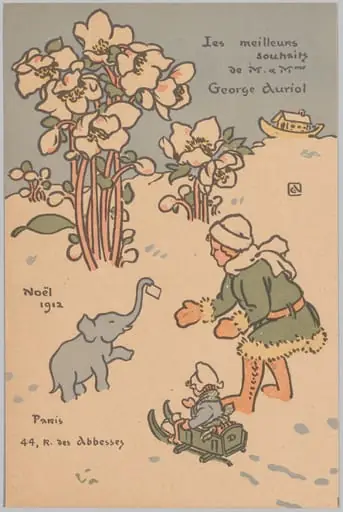
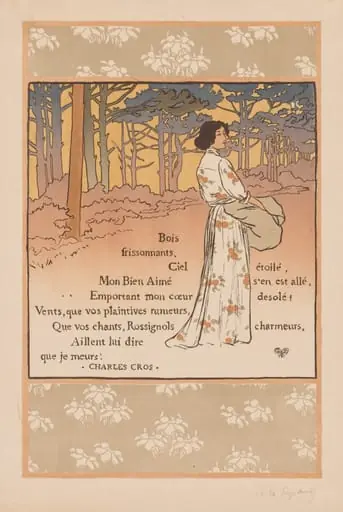
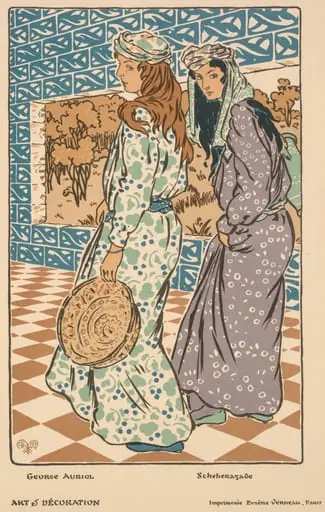
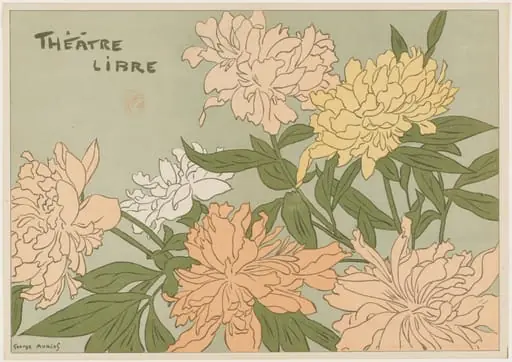
"Myrane" et "Les Chapons" is a print by the Impressionist artist George Auriol. It dates from 1890 and is held in the collection of the Cleveland Museum of Art.
About this work
Overview
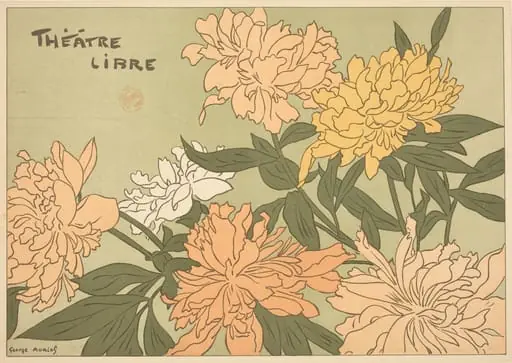
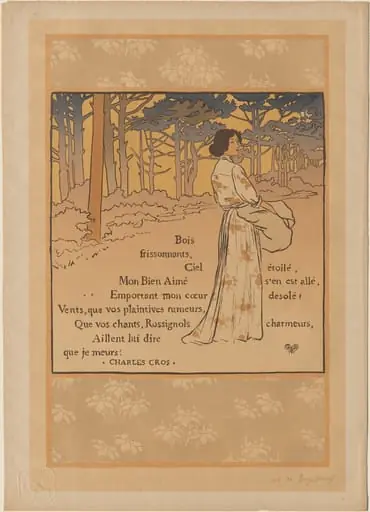
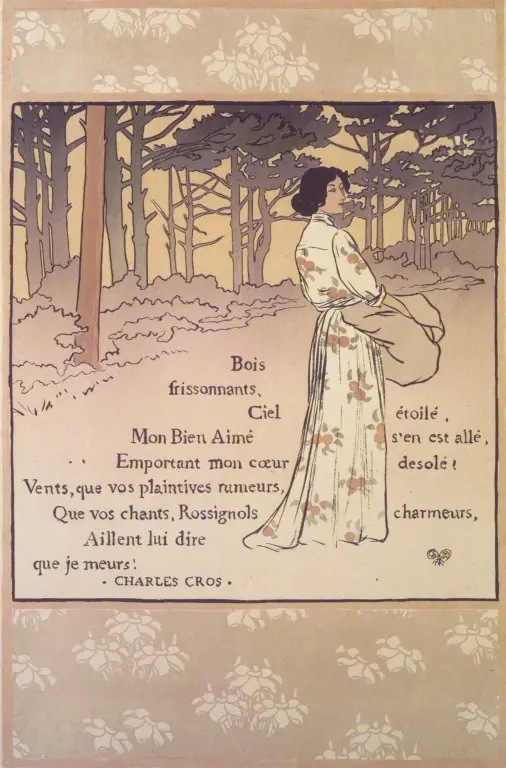
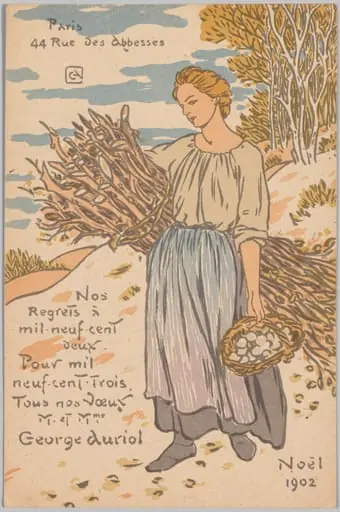
Both works feature stylized figures and animals rendered in flat, saturated hues and strong outlines, reflecting the decorative sensibilities of the era.
Created in 1890 by French designer George Auriol, the prints 'Myrane' and 'Les Chapons' are examples of late 19th-century graphic art. They belong to a wave of poster design that blended illustration with commercial appeal. Both works feature stylized figures and animals rendered in flat, saturated hues and strong outlines, reflecting the decorative sensibilities of the era. The pieces are held in the collection of The Cleveland Museum of Art.
Subject & Meaning
One print depicts a woman in a striped garment standing beside two roosters, their forms exaggerated and expressive. Her face is featureless, suggesting anonymity or symbolic representation rather than portraiture. The roosters, rendered with whimsical detail, may allude to rural life or folk symbolism. The pairing of human and animal figures evokes a quiet, almost theatrical narrative, common in Auriol’s playful approach to visual storytelling.
Technique & Style
Auriol employed bold, unmodulated colors and clean, curving outlines characteristic of Art Nouveau graphic design. The absence of shading and the emphasis on flat planes align with contemporary poster aesthetics, influenced by Japanese woodcuts and emerging commercial printing techniques. The stylization of both figure and fowl suggests a deliberate move away from naturalism toward decorative abstraction, prioritizing rhythm and pattern over realism.
History & Provenance
These prints were produced during a period when Auriol was active in Parisian artistic circles, contributing to illustrated journals and designing typography. They were likely created as standalone posters or illustrations for publications. The Cleveland Museum of Art acquired them as part of its broader collection of European graphic arts from the fin de siècle, preserving them as examples of transitional design between fine art and mass media.
Context
In the 1890s, Paris saw a surge in poster art driven by advances in lithography and growing urban consumer culture. Auriol’s work fits within this movement, sharing affinities with contemporaries like Toulouse-Lautrec and Mucha. Yet his style is more intimate and less theatrical, reflecting his dual identity as a writer and visual artist. His illustrations often carried literary undertones, bridging visual and textual expression.
Legacy
Auriol’s prints, though not widely known today, represent a quieter strand of Art Nouveau that emphasized wit and subtlety over grandeur. His integration of poetic sensibility into graphic design influenced later illustrators interested in narrative economy. The survival of 'Myrane' and 'Les Chapons' in museum collections underscores their value as artifacts of a moment when illustration began to claim artistic legitimacy beyond commercial function.
Artist & collection

Artist
George Auriol, born Jean-Georges Huyot (26 April 1863) – February 1938, Paris), was a French poet, songwriter, graphic designer, type designer, and Art Nouveau artist.