Artwork
Monuments of Ninevah: Plate 3, Human-headed Bull and Winged Figure from a Gateway in the Wall Surrounding Kouyunjik (Quyunjik)
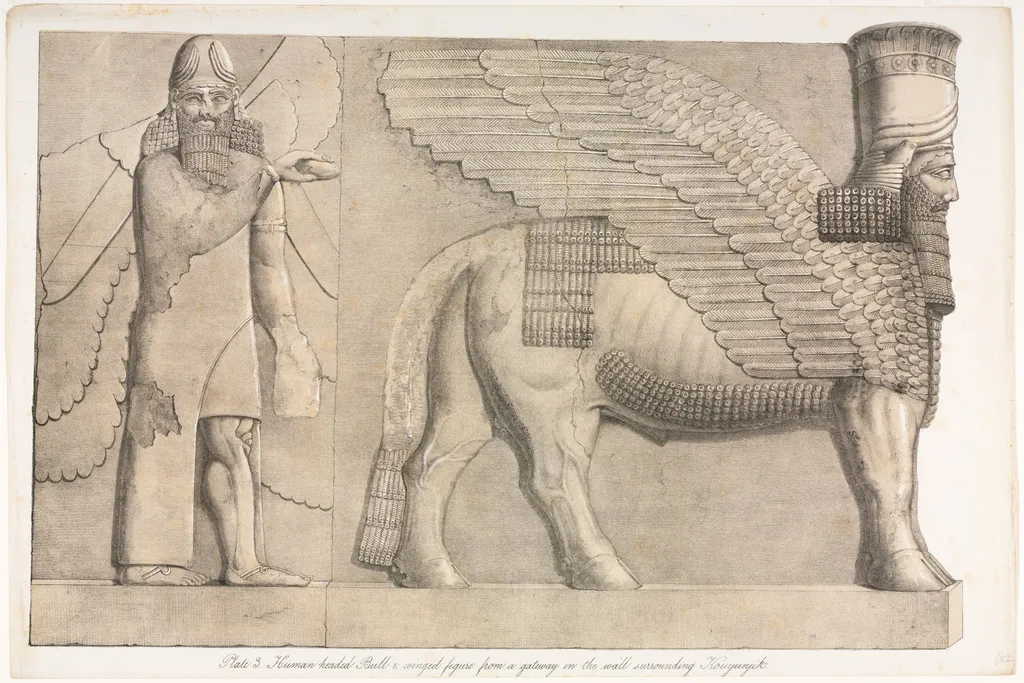
Monuments of Ninevah: Plate 3, Human-headed Bull and Winged Figure from a Gateway in the Wall Surrounding Kouyunjik (Quyunjik) is a print by the Impressionist artist Austen Henry Layard. It dates from 1853 and is held in the collection of the Cleveland Museum of Art. This print, published in 1853, is part of a series documenting ancient Assyrian reliefs uncovered during excavations near Mosul.
About this work
Overview
This print, published in 1853, is part of a series documenting ancient Assyrian reliefs uncovered during excavations near Mosul.
This print, published in 1853, is part of a series documenting ancient Assyrian reliefs uncovered during excavations near Mosul. Created by Austen Henry Layard, it reproduces a stone gateway sculpture from the palace complex at Kouyunjik, one of the mounds forming the ancient city of Nineveh. The image was produced to disseminate archaeological findings to a European audience unfamiliar with Mesopotamian art.
Subject & Meaning
The relief depicts a lamassu—a protective deity with the body of a bull, wings of an eagle, and the head of a human. Positioned at palace gateways, such figures were believed to ward off evil and symbolize royal authority. The human face conveys intelligence, the bull represents strength, and the wings suggest divine mobility, combining earthly and celestial power in a single form.
Technique & Style
Layard’s print is an engraving based on field sketches made during excavation. The composition emphasizes symmetry and monumental scale, faithful to the original bas-relief’s formal rigidity. Fine lines define muscular contours and feathered wings, while the flat, hierarchical spacing reflects Assyrian artistic conventions rather than Renaissance perspective.
History & Provenance
The original stone sculpture was removed from Kouyunjik in the 1840s by Layard’s expedition and later transported to the British Museum. The print was produced for his publication 'Monuments of Ninevah,' intended to record and preserve the appearance of artifacts before their dispersal. The Cleveland Museum of Art acquired the print as part of its 19th-century archaeological illustration collection.
Context
Published during a period of heightened European interest in biblical archaeology, Layard’s work linked Assyrian ruins to biblical narratives of Nineveh. The print contributed to the emerging field of Assyriology, offering visual evidence of a civilization previously known only through texts. It also reflected colonial-era practices of removing and documenting antiquities from the Ottoman Empire.
Legacy
Layard’s plates became foundational references for scholars studying Assyrian art and architecture. While modern archaeology has moved beyond his methods, the prints remain valuable as historical records of artifacts now fragmented or lost. They also mark a turning point in how ancient Near Eastern culture was visually communicated to the Western public.
Artist & collection

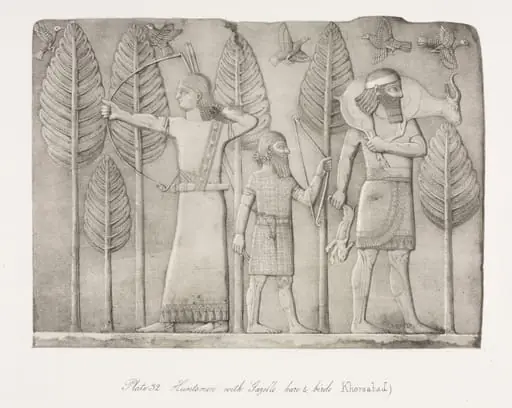
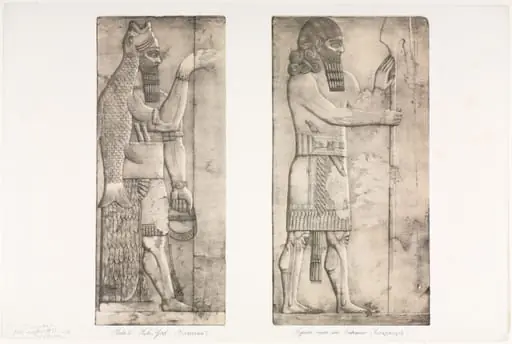
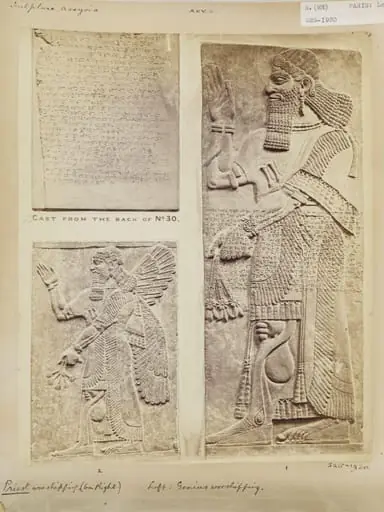 Assyrian sculpture, priest worshipping and genius worshipping, Paris: Louvre
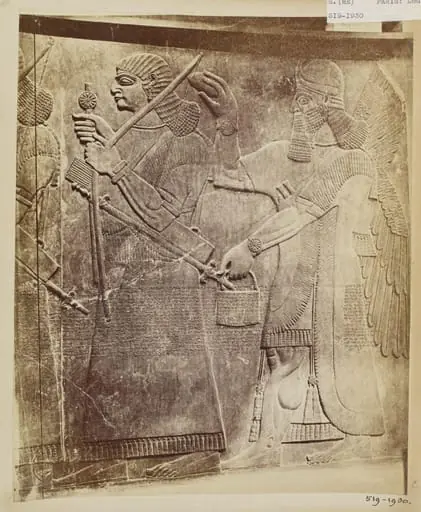 Sculpture depicting a royal Assyrian armsbearer with attendant genius from the period of Ashur-nasir-pal II (885-860 B.C.), Louvre, Paris
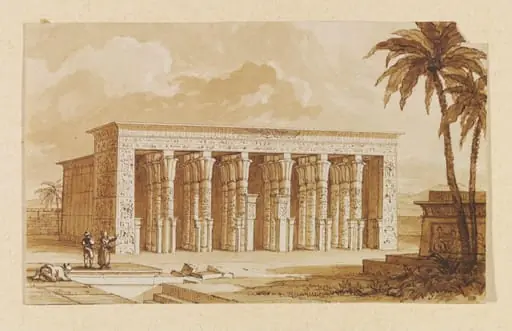 Perspective view of the Temple of Antaeopolis
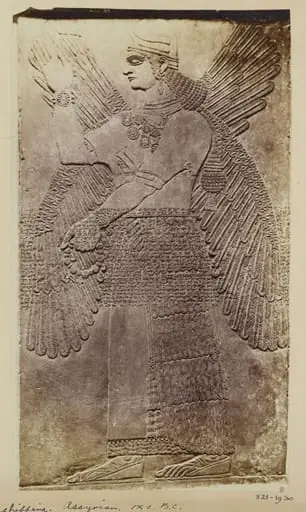 Assyrian sculpture of genius, worshipping, ninth century B.C., Louvre, Paris
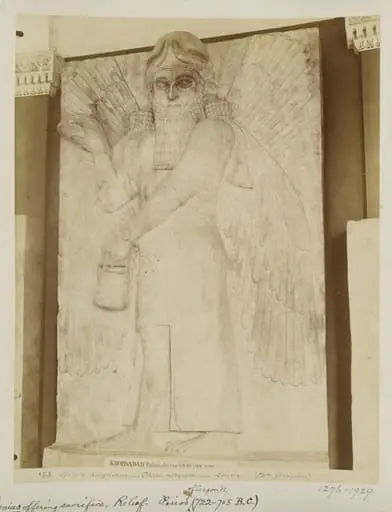 Relief of a genius offering sacrifice, period of Sargon II (722-705 B.C.) from Palace of Khorsabad. Paris: Louvre
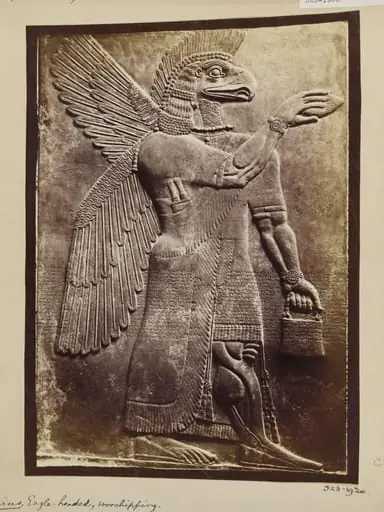 Assyrian sculpture of an eagle-headed genius, worshipping, Paris, Louvre
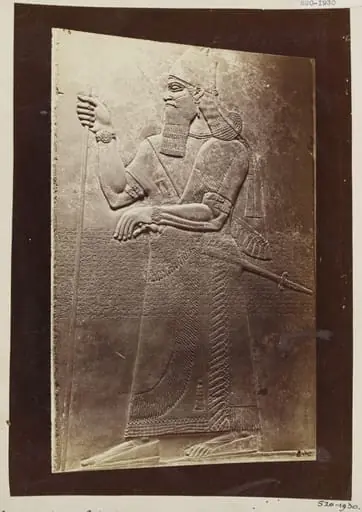 Relief depicting Assyring King Ashur-Nasir-Pal II (885-860 B.C.), Louvre, Paris
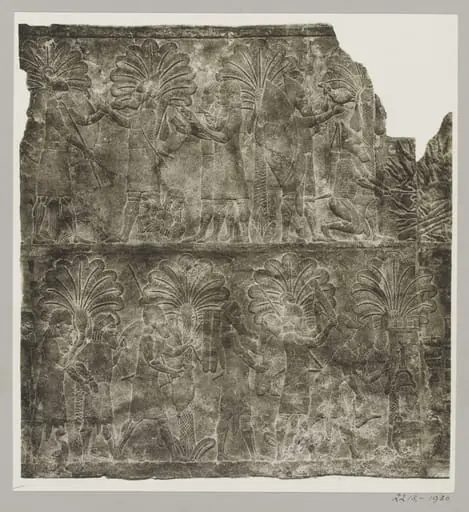 Assyrian reliefs depicting Ashurbanipal and warriors in their camp at Nineveh (Kuyuryick). London, British Museum