Artwork
Relief depicting Assyring King Ashur-Nasir-Pal II (885-860 B.C.), Louvre, Paris
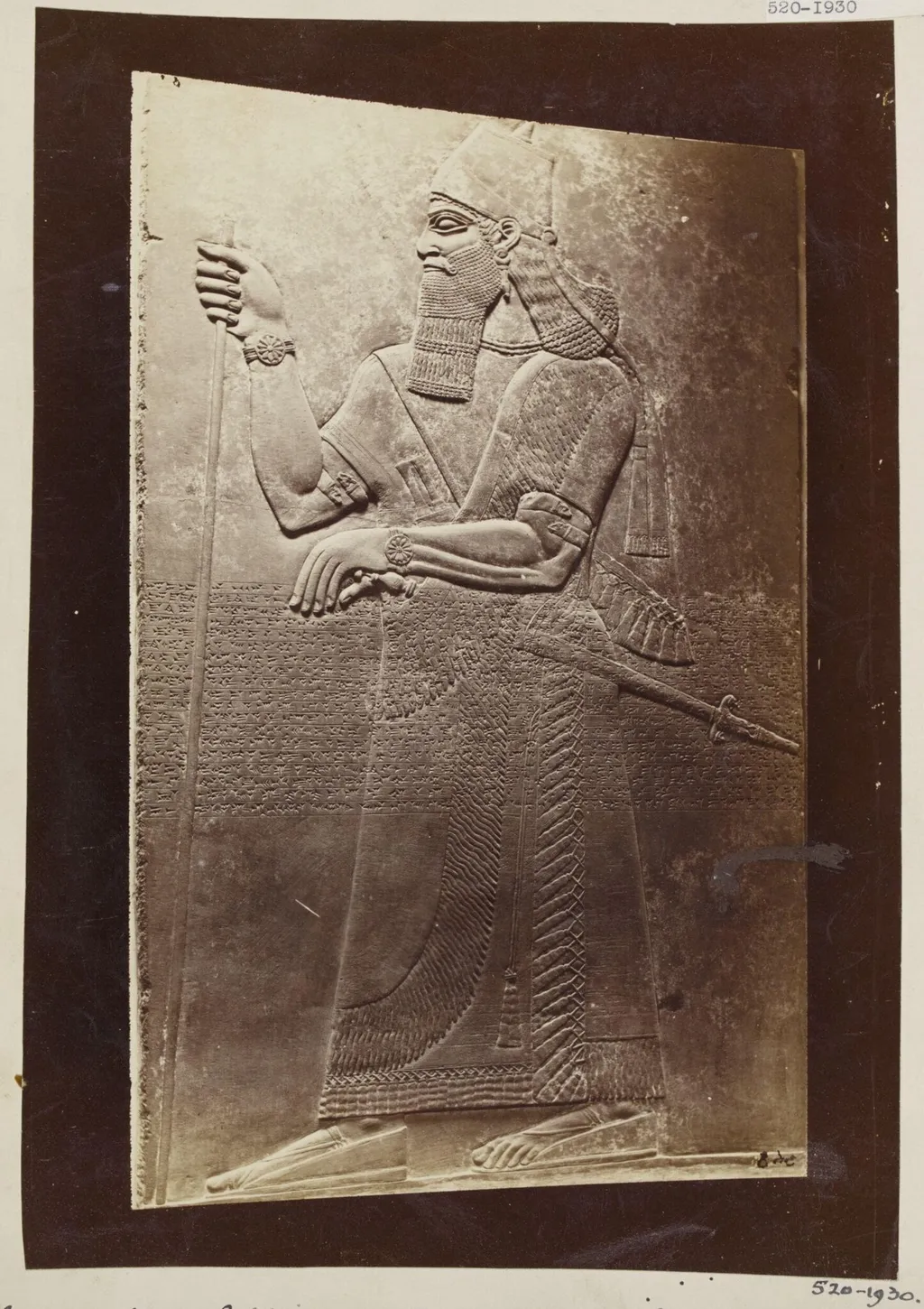
Relief depicting Assyring King Ashur-Nasir-Pal II (885-860 B.C.), Louvre, Paris is a photographic photography by the Impressionist artist Unknown. It dates from 1884 and is held in the collection of the Victoria and Albert Museum. This photograph captures a stone relief of Ashur-Nasir-Pal II, an Assyrian ruler from the 9th century BCE, now housed in the Louvre.
About this work
Overview
This photograph captures a stone relief of Ashur-Nasir-Pal II, an Assyrian ruler from the 9th century BCE, now housed in the Louvre.
This photograph captures a stone relief of Ashur-Nasir-Pal II, an Assyrian ruler from the 9th century BCE, now housed in the Louvre. It is one of 611 images collected by John Singer Sargent during his travels across Europe, North Africa, and the Middle East. Acquired by the Victoria and Albert Museum in 1925, the collection was originally intended as a reference for artistic study, organized by geographic and thematic content rather than as fine art.
Subject & Meaning
The relief depicts Ashur-Nasir-Pal II in traditional Assyrian regalia, likely part of a palace wall narrative emphasizing royal authority and divine favor. Though the carving dates to antiquity, the photograph preserves its sculptural depth through careful lighting, highlighting the king’s stylized features and hierarchical scale. Sargent’s interest in such imagery stemmed from his research into historical iconography, particularly for religious murals in Boston.
Technique & Style
The photograph employs strong directional light to accentuate the relief’s carved contours, creating a pronounced three-dimensional effect. The composition is straightforward, avoiding embellishment to prioritize documentary clarity. Though Sargent was an amateur photographer, the image’s technical precision suggests it was likely made by a professional local artisan, consistent with the majority of his collection, which he assembled for study rather than aesthetic display.
History & Provenance
The photograph was part of a personal archive Sargent compiled between the 1870s and 1910s, stored in bound albums with his handwritten annotations. After his death in 1925, his sisters donated the entire collection to the Victoria and Albert Museum. The museum cataloged the images by region and subject, integrating them into its sculpture and photographic archives, where they were valued for their scholarly utility rather than artistic merit.
Context
Sargent’s photographic travels coincided with his work on The Triumph of Religion, a mural cycle requiring deep engagement with ancient Near Eastern and Mediterranean visual traditions. His collection included architectural details, religious sculptures, and inscriptions from sites he visited, serving as visual notes for compositional research. These images reflect a broader 19th-century practice among artists of using photography to document historical artifacts abroad.
Legacy
The photograph remains part of a significant archival resource at the Victoria and Albert Museum, illustrating how 19th-century artists engaged with antiquity through mechanical reproduction. While Sargent’s own paintings are widely studied, his photographic collection offers insight into his methodological process and the cross-cultural influences shaping his later work. The images continue to support academic research into historical art and its documentation.
Artist & collection

 Domestic Scene
 Giacomo and Cardinal Marco, investing Andrea, Abbot of San Zeno, with his Benefice
 The Nymph of Fontainebleau
 Portrait of a Woman
 Madonna and Child with Saints in the Enclosed Garden
 Venus and Minerva
 Family Group of Four on Sofa
 Wall painting from Room H of the Villa of P. Fannius Synistor at Boscoreale
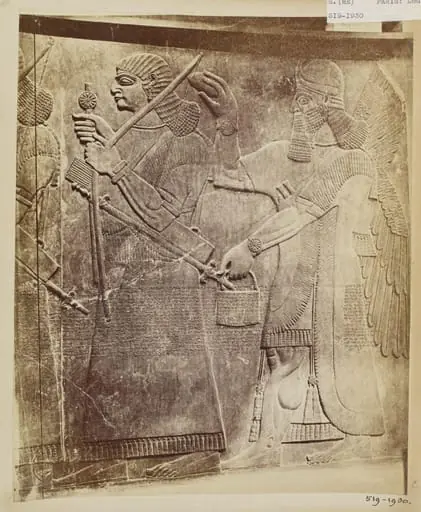 Sculpture depicting a royal Assyrian armsbearer with attendant genius from the period of Ashur-nasir-pal II (885-860 B.C.), Louvre, Paris
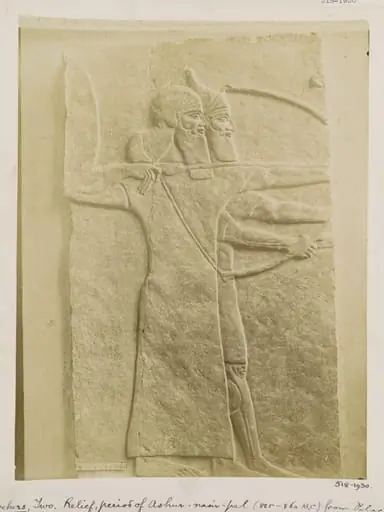 Relief depicting two Assyrian archers from the period of Ashur-Nasir-Pal II (885-860 B.C.) from the Palace of Nimrud. Louvre, Paris
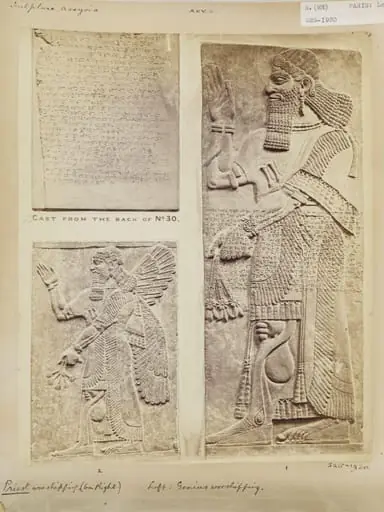 Assyrian sculpture, priest worshipping and genius worshipping, Paris: Louvre
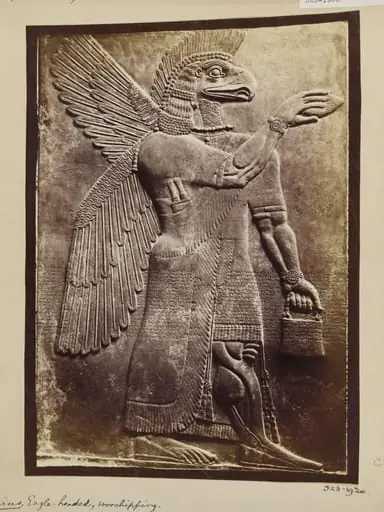 Assyrian sculpture of an eagle-headed genius, worshipping, Paris, Louvre
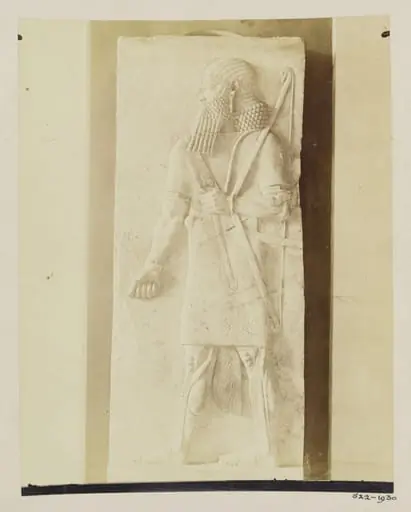 Sculpture of Assyrian archer, 9th century B.C., Louvre, Paris
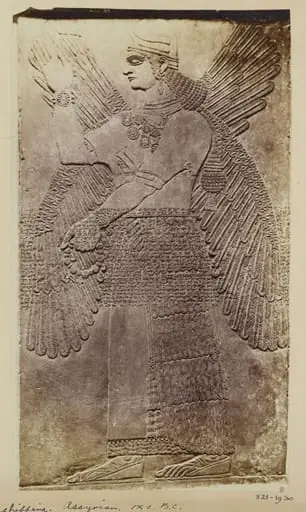 Assyrian sculpture of genius, worshipping, ninth century B.C., Louvre, Paris
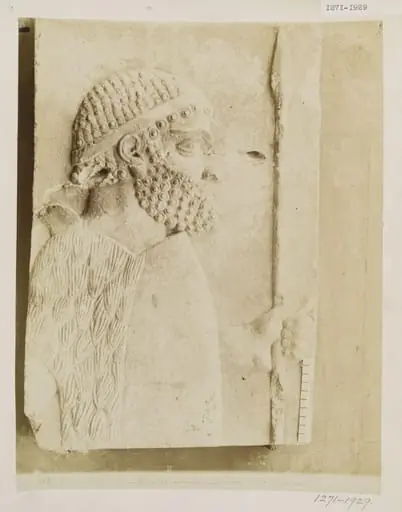 Bas-relief of a warrior, Louvre, Paris
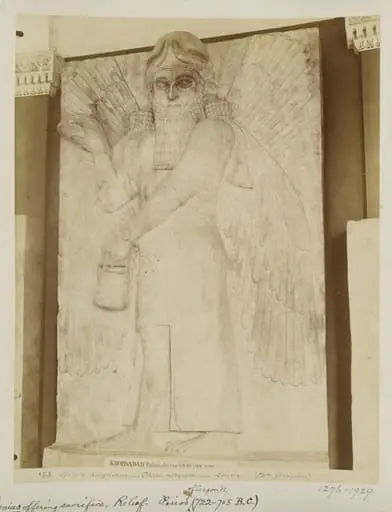 Relief of a genius offering sacrifice, period of Sargon II (722-705 B.C.) from Palace of Khorsabad. Paris: Louvre
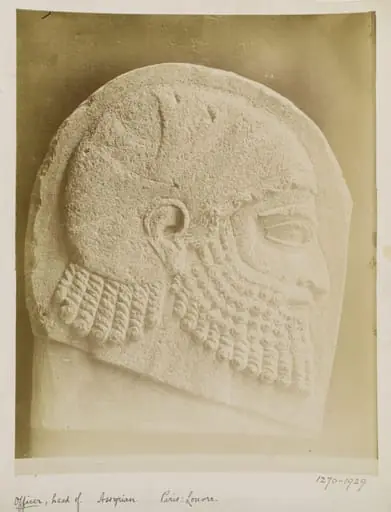 Relief of head of Assyrian officer. Paris: Louvre
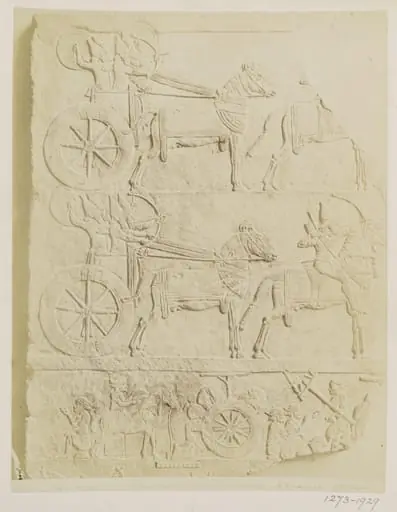 Bas-relief showing chariots, war and mounted warriors and a bivouac from Palace of Kuyunjik, period of Ashua-bari-pal (668-626 B.C.). Paris: Louvre
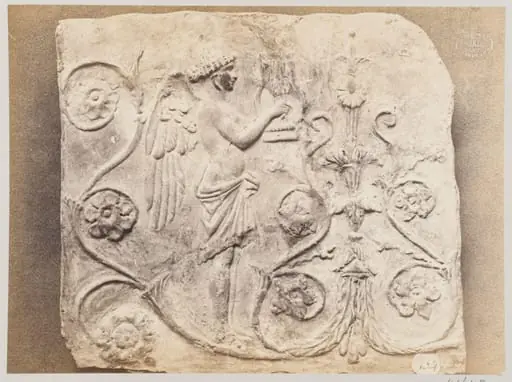 Bas-relief of a geni and a lyre in terra cotta