Artwork
Figure Studies
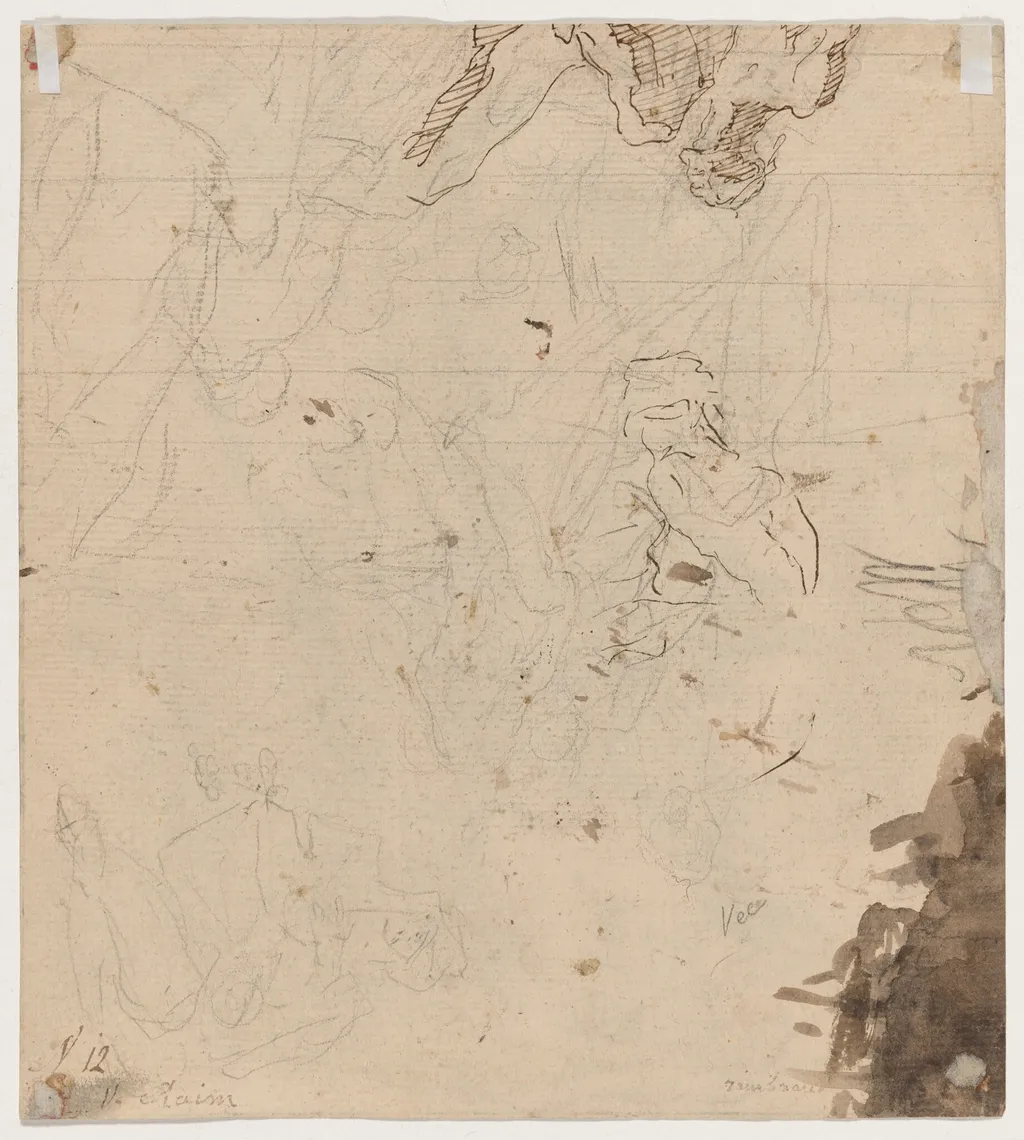
Figure Studies is a chalk drawing by the Baroque artist Austrian 18th Century. It dates from 1750 and is held in the collection of the National Gallery of Art.
About this work
Overview
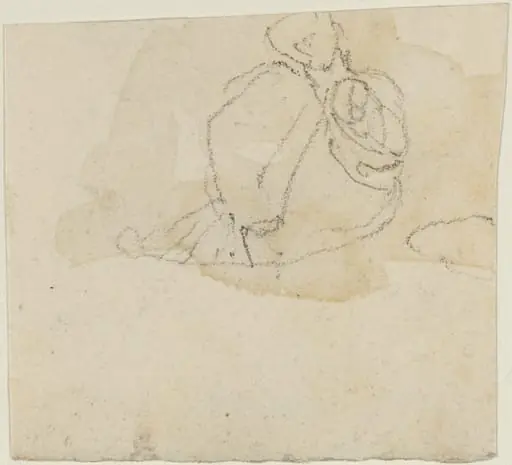
The paper’s light brown tone shows areas where ink has faded or been smudged, and a small accidental brown splash appears in the lower right corner.
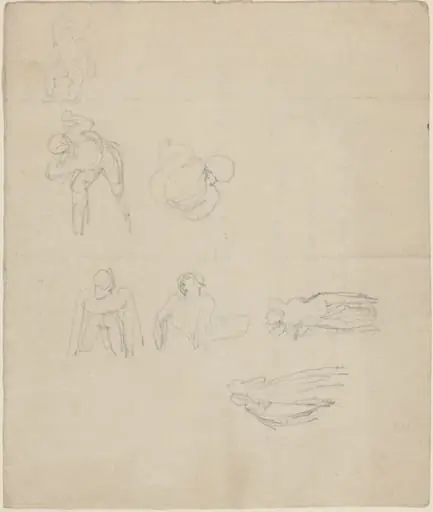
Figure Studies is a drawing executed on laid paper using black chalk, pen, brown ink and a brown wash. The sheet contains a series of rapid, gestural sketches of human figures captured in a range of awkward positions—standing, crouching, stretching—rendered with faint black outlines. The paper’s light brown tone shows areas where ink has faded or been smudged, and a small accidental brown splash appears in the lower right corner.
Subject & Meaning
The work functions as a study of the human form, focusing on the exploration of posture and movement rather than narrative content. By depicting figures in unguarded, often contorted poses, the artist investigates the anatomy of gesture and the expressive potential of informal, spontaneous drawing.
Technique & Style
The artist combines black chalk for initial contours with pen and brown ink to define line weight, employing cross‑hatching to suggest volume and depth. A diluted brown wash adds tonal variation, creating contrast between lighter sketchy areas and darker, more deliberate passages. The overall effect is loose and provisional, characteristic of preparatory sketchbooks.
History & Provenance
No specific provenance is recorded for Figure Studies; the drawing appears to be a personal exercise sheet rather than a finished commission. Its material composition and informal handling suggest it was produced as part of the artist’s preparatory routine, likely retained in a private collection or studio archive before entering a public holding.
Context
Such figure studies were commonly used by artists in the 19th and early 20th centuries to refine observational skills and to experiment with line and wash techniques before undertaking larger compositions. The mixed media approach reflects pedagogical practices that encouraged versatility across drawing media.
Artist & collection

Artist
This Austrian artist worked in the 1700s, sketching religious scenes and classical figures in ink and chalk.

![Figure Studies [verso], by Giovanni Battista Cipriani](https://artifactworldgallery.com/img/giovanni-battista-cipriani--figure-studies-verso--9d89c1dfd297f554-w320.webp)
![Figure Studies [verso], by Thomas Sully](https://artifactworldgallery.com/img/thomas-sully--figure-studies-verso--951eb42592bb5e4f-w320.webp)
![Figure Studies [verso], by George Romney](https://artifactworldgallery.com/img/george-romney--figure-studies-verso--19708132818b32a0-w320.webp)
![Figure Studies [recto], by Giovanni Battista Cipriani](https://artifactworldgallery.com/img/giovanni-battista-cipriani--figure-studies-recto--32b47b1a71716a78-w320.webp)